Health and Nutrition
Calf muscle fiber tear without hematoma: signs and recovery
Sudden pain, pulling sensation, and little visible bruising: a calf injury that often goes unnoticed at first.

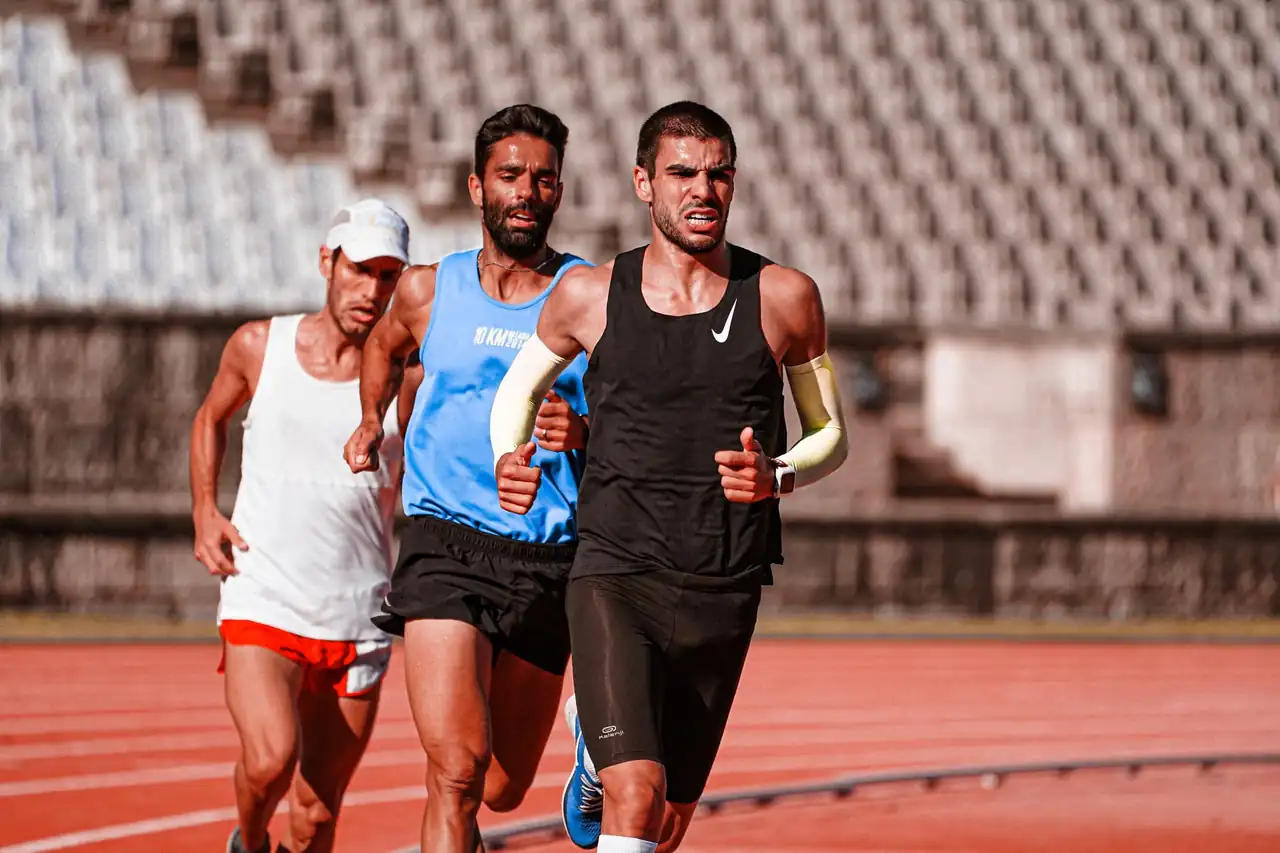
A calf muscle injury without visible bruising can be just as real as a tear with a bruise, and often more confusing for the person who suffers it. The pain appears suddenly, like a whip crack or a blow to the calf, but the skin keeps a normal appearance for hours or even days. That detail sometimes delays suspicion and pushes people to keep walking or training when the tissue has already given way.
In runners, footballers, and track or mountain athletes, this situation is especially delicate because the calf works like a spring with every stride. The absence of bruising does not rule out a muscle fiber tear; in many cases the bleeding remains deep, inside the muscle, and cannot be seen from the outside. The condition can range from a mild microtear to a larger tear, and the difference is not measured by the color of the leg, but by the pain, the loss of strength, and the calf’s actual function.
How a calf injury that leaves no external mark occurs
The calf is part of the triceps surae, along with the soleus, and it bears high loads during propulsion, braking, and changes of pace. When the muscle contracts while already stretched, or when it is asked to accelerate suddenly without enough preparation, some fibers tear. The tear is usually located at the muscle-tendon junction, a transition zone that suffers more during sprints, jumps, and starts.
The fact that no visible bruise appears does not mean the damage is mild. Sometimes the bleeding is small; other times it is contained between muscle layers and the eye cannot detect it. In clinical practice, that lack of external bruising can occur in recent injuries, microtears, or cases in which the body contains part of the inflammation within the tissue. The calf may look almost normal on the outside and still hurt with every step.
Biomechanics also matter. A cold, fatigued, or less elastic calf responds worse to sudden changes. The same happens if ankle mobility is poor, if the stride is short and rigid, or if the runner is carrying a previous overload. The muscle then acts like a taut rope: a poorly measured tug is enough for some fibers to give way without leaving an obvious external sign.
Signs that point beyond the bruise
The most typical symptom is sudden, localized, stabbing pain in the calf. Many people describe an invisible blow, a stone-like impact, or a sharp pulling sensation that forces them to stop. The pain often appears during a sprint, a climb, a jump, or on pushing off after a turn, but it can also show up when going downstairs or standing up after a short rest.
Along with pain, there is usually a clear loss of strength. Rising onto tiptoes, pushing off the ground, or walking fast becomes harder than expected. In some cases there is a feeling of intense stiffness, a protective spasm around the injured area, and discomfort that increases when the leg is stretched with the knee extended. Functional inability matters more than the appearance of the skin: if a basic movement becomes awkward or painful, the problem deserves attention.
There may also be mild swelling, tenderness to touch, and a kind of hollow or dip if the tear is larger. A bruise, when it appears, does not always show up right away; it can take hours. And in an injury with no external mark, that wait creates a false sense of security. The muscle, however, is still injured and can worsen if you insist on running or forcing aggressive stretches.
Why the calf can tear without visible bleeding
The explanation is simple and useful: not every muscle fiber tear produces a superficial bruise. The bleeding may be minimal, remain between muscle layers, or stay confined within the muscle belly. In that case, the skin does not turn purple and the condition looks more like a strong overload than a clear tear, which makes early recognition harder.
This happens fairly often in small or moderate injuries. The tissue tears, becomes inflamed, and loses its ability to contract, but a vessel does not always open widely enough to stain the outside. The body can contain part of the damage internally, and only a proper examination or an ultrasound can show the true size of the injury. From the outside, the calf is misleading; inside, the muscle is protesting.
That is why the phrase without bruising must be interpreted with caution. It is not a closed diagnostic category, but an incomplete visual clue. A serious diagnosis does not come from a quick look, but from combining pain, injury mechanism, loss of strength, and imaging tests when needed. In muscle injuries, the absence of color does not mean the absence of damage.
What to do in the first few hours
The first hours matter a great deal for recovery. The first step is to stop the activity and avoid continuing to run, jump, or walk long distances if every step triggers pain. Pushing through while warm can enlarge the tear and prolong recovery. Local cold helps reduce discomfort and can be applied indirectly, without direct contact with the skin, in short intervals.
Gentle compression and elevating the leg can also be useful if there is a feeling of swelling. The idea is not rigid immobilization or absolute rest for whole days, but reducing the load on the injured tissue. The goal is to protect, not punish or overprotect. The calf needs time, but also very carefully measured stimulus once the acute phase settles.
Strong stretching should be avoided in the first 48 to 72 hours. That common gesture of pulling on the calf to see whether it can cope usually irritates the tear more. Massaging the painful area intensely is also not a good idea, nor is returning to intervals because the initial pain has eased a little. In muscle injuries, temporary silence of pain does not always mean healing.
How the diagnosis is confirmed
Clinical evaluation begins with the account of the exact moment the pain appeared. An internal blow, a sprint start, or a sudden braking movement provides important clues. The examination then looks for very specific tender points, changes in contraction, and strength differences compared with the healthy leg. The most useful test for seeing the tissue is a muscle ultrasound, because it can show the size of the tear, the internal bleeding, and the muscle’s evolution quite quickly.
In an injury without visible bruising, ultrasound becomes more valuable because it clears up doubts. It can show a hypoechoic area, a small tear, or an intramuscular hematoma not obvious to the naked eye. In more complex injuries, or when the picture does not fully fit, an MRI can provide more detail. Even so, a full battery of tests is not always necessary: in many cases, the combination of medical history and examination is enough to guide treatment.
The key is not to rely only on the mirror. A calf that looks intact on the outside may be limited on the inside. That is why a reliable diagnosis is not based on external appearance, but on the sum of symptoms, injury mechanism, and functional assessment. That broader view avoids both unnecessary alarm and mistakes caused by misplaced caution.
Recovery time and return to running
The timeline varies greatly depending on the severity of the injury. In a microtear, improvement may come in one or two weeks, provided the load is adjusted well. If the tear is partial and affects more fibers, the process can take three to six weeks. In large or very painful injuries, talking about eight to twelve weeks is not exaggerated. The clock matters less than function: coming back too soon is an invitation to relapse.
For a runner, the big question is not when the pain decreases, but when the calf can accept impact again without complaining. Walking without limping, raising the heel without discomfort, and tolerating small bounces are more useful signs than the passage of days alone. A well-managed recovery usually moves from initial unloading to gentle mobility, then to controlled strength, and later to progressive running.
Returning to training should feel more like a dial than a switch. First easy jogging, then brief changes of pace, and later hills or intervals. If the muscle responds with persistent tightness or localized pain the next day, the tissue is still asking for caution. In this injury, patience is not passivity; it is part of treatment.
Why it is confused with a muscle spasm
A spasm and a tear are not the same, even though they may share the same outward scene: a hard, tense, uncomfortable calf. In a spasm, there is no structural fiber rupture; the muscle is overloaded, but intact. In a muscle fiber tear, there is real tissue damage, and that changes both the pain and the course of recovery. A structural injury deserves more respect than simple overload.
The practical difference is seen in how it begins. A spasm usually causes a more gradual discomfort, still allowing some movement, while a tear usually announces itself with a specific movement and a sudden stop in activity. The loss of strength also matters, and it is much more striking in a tear. Even so, it is unwise to diagnose by intuition: subjective sensation is easily misleading, especially when no bruise is visible.
In veteran runners or in people returning to training after a break, confusion is common. The logic is tempting: if there is no bruise, it must be a simple overload. But the muscle does not always leave display-window signs. A small injury can hurt a lot, and a dramatic bruise can be less serious than it looks. Clinical judgment, once again, is worth more than first impressions.
Treatment and tissue readaptation
Once the acute phase has passed, treatment revolves around progressive loading. The muscle needs to move again, contract, and absorb impact, but in doses the tissue can tolerate. The goal is not to rest until all trace of pain disappears, but to restore function with an orderly progression. That difference changes the final outcome and reduces the risk of relapse.
In the early stages, gentle contractions, pain-free mobility, and short isometric exercises are prioritized. Later come concentric movements and then eccentric work, which is especially important in this area because it teaches the calf to brake and absorb load. That capacity is crucial in running, where the muscle does not only push: it also cushions.
Manual therapy, physiotherapy, and other complementary techniques can help modulate pain and improve mobility, but the center of recovery remains strength progression. In injuries without visible bruising, it should not be assumed that the case is trivial. A small tear that is poorly managed can turn into a recurring relapse, and the calf is especially sensitive to that back-and-forth pattern.
How a runner knows they are ready to come back
The return to training should not depend on hurry or on a round date. A runner is closer to returning when they can walk without pain, go up and down stairs normally, do heel raises, and tolerate small impacts without the calf tightening the next day. Regaining confidence also helps, because the fear that the muscle will pull again changes the way you run and loads other areas.
A useful return is usually gradual and almost quiet: short jogs, comfortable paces, flat ground, and no sudden changes. If the discomfort returns like a tight cord or a well-localized stab, the calf has not yet finished adapting. In recent injuries, the costliest mistake is to interpret improvement as premature clearance. Pain reduction is good news, but not always permission.
The context also matters. Poor sleep, a week of excessive volume, or interval work introduced too soon can reopen the door to injury. The calf works like a suspension part: if it is hit again too early, it complains. If load is returned methodically, it usually responds well.
Real prevention so the story does not repeat
Prevention starts long before the painful moment. A warm-up with ankle mobility, progressive activation, and a few minutes of easy running prepares the triceps surae for what is coming. Strength work also matters, especially eccentric work, because it teaches the muscle to handle braking and changes of pace. A strong calf is not the one that contracts the most, but the one that tolerates braking best.
Fatigue is another silent enemy. Many tears appear when too much volume or intensity is chained together without giving the tissue time to recover. In runners, that translates into weeks when everything seems fine until one day the muscle fails during a start, a hill, or the final stretch of a long run. Hydration and nutrition also help, although they are not a magic shield: they support recovery, but they do not replace well-planned loading.
Anyone who has already had a calf injury should pay more attention to the return. Scarred tissue does not behave like healthy tissue right away, and strength asymmetry can remain hidden for weeks. That is why prevention is not just about avoiding one specific movement, but about sustaining habits of strength, mobility, and progression over time. It is a routine, not a trick.
When the bruise does not appear, the problem is still there
The most misleading image of this injury is an apparently clean calf. The body seems intact, the skin gives no warning, and yet the muscle has suffered a tear. The lack of visible bruising does not reduce the importance of the pain or the loss of function. In running, that false normality is often paid for with a relapse that extends the stop much longer.
A calf injury with no external mark requires reading the body more carefully. Sharp calf pain, weak push-off, or discomfort when rising onto the toes are already enough signs to stop. Ultrasound helps name and size the damage, but common sense comes first: do not keep running on an area that has already said enough. In that act of stopping in time, much of the recovery is often decided.
Medical reference: Calf muscle strains and tears, NHS.



How to prevent thigh chafing: causes and real solutions

Women’s running windbreakers: seven jackets and how to choose

Do more workouts get rid of soreness? A guide for runners

Jaén Half Marathon 2026: Record 3,800 Runners Registered

Men’s short running tights: how to choose the right pair

World Triathlon confirms data breach involving medical data

Izan Edo targets podium at Miyazaki World Cup

María Pérez ranks ninth in World Athletics’ 2026 top ten

Dos Santos, Duplantis and Sawe: World Athlete of the Year finalists

San Silvestre Vallecana 2026: 42,000 places, prices and start times

 Races3 months ago
Valencia Half Marathon 2027: date and registration

 Races3 months ago
Valencia Marathon 2026: entry, ballot and course

 Reviews and Comparisons4 months ago
Asics Gel-Roadmiles 3 for men: review and current price

 Reviews and Comparisons4 months ago
Asics Gel Sonoma 8 Gore-Tex: complete analysis for trail and rain

 Sneakers3 months ago
Saucony Endorphin Pro 4: full review and verdict

 News5 months ago
Strava API 2026: what changes for clubs, challenges and runner apps?

 Reviews and Comparisons5 months ago
Nike Alphafly 3: opinions, sensations, and real key points

 Reviews and Comparisons4 months ago
Under Armour running shoes review 2025-2026: models and key features

 Sports Equipment4 months ago
Shoe sizes in cm: a clear guide to getting the right fit for your footwear

 Sneakers3 months ago
Skechers GO RUN Consistent 2.0 analysis: comfort and limits

 News5 months ago
Valencia Marathon 2026 route: key tips to train and run better

 Sneakers4 months ago
Adidas Adizero Boston 13 for men: review and verdict