Health and Nutrition
Treatment for pain on the instep: causes, relief, and timelines
Keys to relieving discomfort in the top of the foot, distinguishing its causes, and preventing it from getting worse.

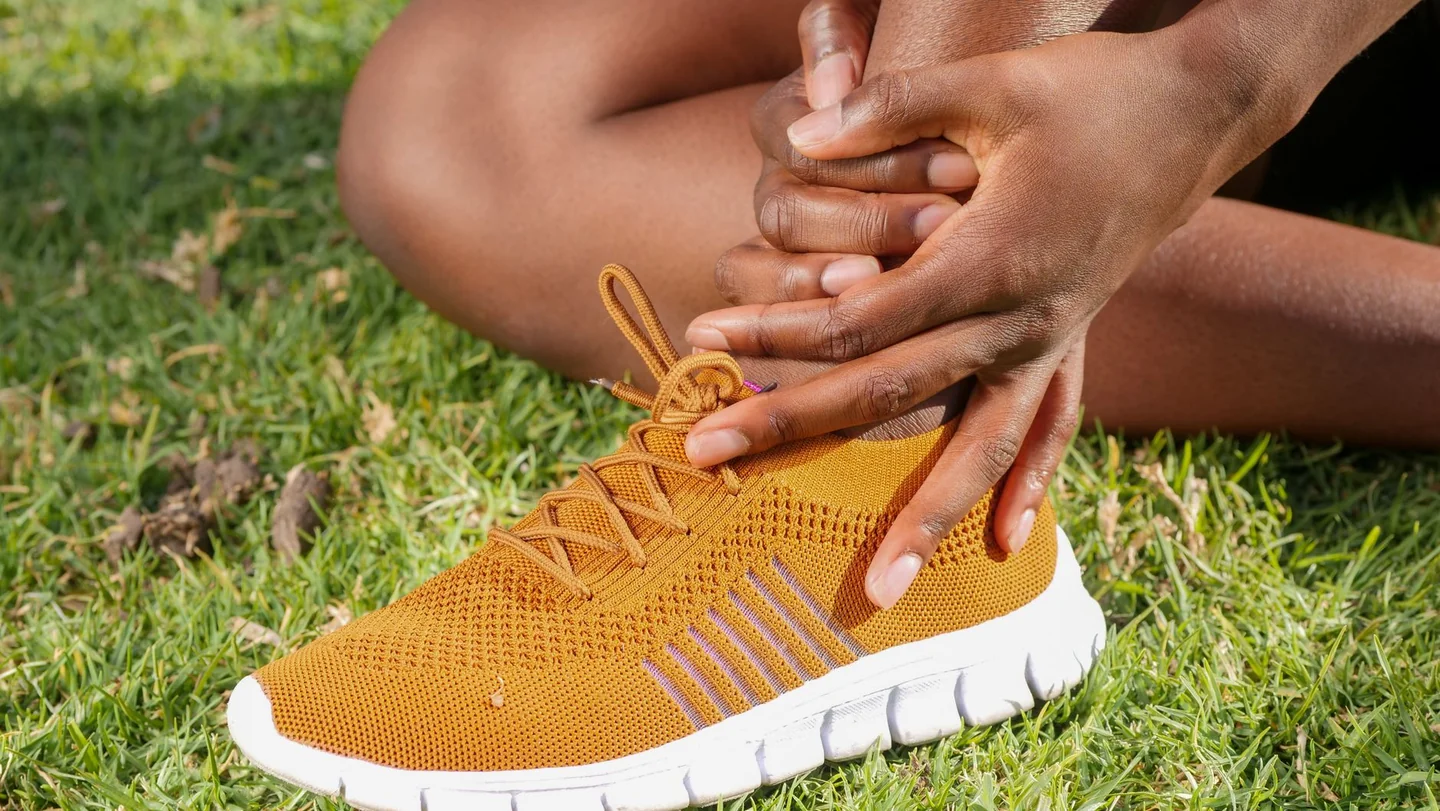
Pain in the top of the foot usually appears when tendons, bones, joints, or nerves are subjected to more load than they can tolerate. In runners, frequent walkers, and people with tight footwear, that discomfort can range from simple irritation to an injury that requires rest and medical evaluation.
The right approach changes a lot depending on the cause: tendinitis from overuse is not the same as a stress fracture, midfoot osteoarthritis, or nerve compression. The most useful treatment usually combines relative rest, activity control, less aggressive footwear, and, when appropriate, physiotherapy and progressive exercise.
What lies behind pain in the top of the foot
The instep is a narrow and highly active passage area. Under the skin run the extensor tendons, several bones of the midfoot and forefoot, small joints, vessels, and nerves. All of this works like a system of hinges and cables that tightens with each stride, when climbing stairs, or when changing pace.
When any of those tissues becomes irritated, the body does not always warn you with a clear symptom. A sharp twinge, a burning sensation, pressure under the laces, or a diffuse pain that worsens at the end of the day may appear. In runners, that warning is often first noticed with repeated impact; in less active people, it sometimes appears after wearing new shoes or spending many hours on their feet.
The location provides useful clues. If the pain is closer to the toes, it usually points to the forefoot; if it is in the central area, it may involve the midfoot tendons or joints; if it radiates toward the ankle, structures running across the top of the foot are often involved. That anatomy explains why the same phrase, pain in the instep, can hide very different problems.
Common causes and how each one usually presents
Extensor tendinopathy is one of the most common causes. The tendons that lift the toes and help stabilize the stride become irritated by overuse, a sudden increase in load, or pressure from footwear. The pain usually grows when walking or running and gets worse with tight laces, as if a cord were pulling the top of the foot from the inside.
Another possibility is a stress fracture, especially in the metatarsals. Here the problem is not just tendon inflammation, but a small bone crack from repeated loading. The pain is usually more localized and persistent, sometimes with very specific tenderness when touching a point on the instep. In runners and people who suddenly increase training volume, it is a cause that should not be overlooked.
Midfoot osteoarthritis can also cause discomfort in that area, especially if there is morning stiffness, a feeling of tired feet, or crackling when moving it. Added to this are biomechanical changes such as high arches, claw toes, or a way of stepping that concentrates too much pressure on the dorsum. In some cases, burning, tingling, or small cramps point toward nerve irritation, a kind of cable being pinched between rigid structures.
Signs that help distinguish overload from a more serious injury
Pain that appears only with activity and improves with rest usually fits with overload or tendinopathy. It typically bothers at the start of exercise, after long walks, or when the foot is inside tight footwear. Although it can be very uncomfortable, this pattern usually allows conservative management if the load is adjusted properly.
Different is the case of pain that gets worse every day, becomes very localized, prevents normal weight-bearing, or wakes you at night. Persistent swelling, bruising after a hit, visible deformity, or a whipping sensation when moving the foot are also warning signs. When the instep behaves like this, it is worth considering bone or ligament injuries rather than a simple passing ache.
In running, the trend matters more than the pain threshold. A runner may keep jogging with mild discomfort for a few minutes, but if the symptom worsens with each outing, appears earlier, and takes longer to settle, the load is already exceeding the tissue’s capacity. That downward curve is often the first sign that the process needs to be slowed before it becomes chronic.
What treatment usually works best at the beginning
The first step is to reduce load, not to immobilize by default. Cutting back mileage, avoiding repeated impacts, limiting hills, and putting aside for a few days exercises that trigger pain usually gives the tissues more room to recover. In mild cases, that is enough for the irritation to start easing; in more persistent ones, it is only the starting point.
Footwear deserves special attention. Narrow, stiff shoes or very tight laces press exactly where the foot needs pressure the least. A painful instep usually benefits from a wider toe box, less compression over the dorsum, and support that does not strangle. Sometimes a simple lace adjustment changes the whole day, like loosening an overly tight clamp.
If there is inflammation, cold may provide temporary relief. Applied for a few minutes, it reduces the sensation of irritation in recent phases. It does not cure the problem by itself, but it helps get through the acute stage. Gentle ankle and toe mobility can also be useful, always without forcing pain or turning the session into a test of endurance.
The role of exercise and physiotherapy in recovery
Well-dosed exercise is the cornerstone of recovery. The top of the foot does not improve with endless rest alone; it needs to tolerate load again progressively. That is why, in tendinopathy or overload cases, the work usually progresses from gentle, controlled movements to strength and stability exercises that retrain support and stepping mechanics.
Physiotherapy offers a more precise reading of the problem. It can assess how the ankle moves, whether the midfoot is stiff, whether there are compensations while walking, or whether the step distributes load poorly. When the cause lies in walking mechanics, treating only the symptom is like drying the floor without turning off the tap. The functional source that keeps the irritation going needs to be corrected.
In some cases, complementary techniques such as manual therapy or, when the process is longer, shock waves are used. Their role is to support recovery, not replace it. What truly changes the prognosis is a coherent progression: reduce, recover, reload, and check whether the tissue responds without complaint.
How long it takes to improve and what factors prolong the process
Timeframes depend on the cause and how long it has been going on. A mild tendinopathy may improve in 2 to 4 weeks if the load is corrected in time. Moderate cases usually require between 4 and 8 weeks. If the problem has lasted for months, recovery may extend beyond 8 or 12 weeks, especially when there is already pain while walking and fear of moving normally again.
Stress fractures and some midfoot injuries can take much longer, because the bone needs a real period of unloading and medical monitoring. Forcing a return too early is one of the fastest ways to turn discomfort into a recurring injury. By contrast, when the diagnosis is correct and the return to activity is properly staged, the outlook is usually good.
There are factors that complicate recovery: continuing to train as before, wearing unsuitable shoes, sleeping badly, carrying excess weight, having a poor stepping pattern, or ignoring inflammation that had already been warning you for days. In running, the most expensive mistake is usually confusing tolerance with permission to keep pushing.
When it is worth seeking a medical or physiotherapy assessment
If the pain lasts more than one or two weeks, returns easily, or limits normal walking, it deserves an assessment. Also if the area is swollen, warm, very tender to the touch, or if the discomfort started after a blow, a twist, or a sudden increase in activity. In those scenarios, it is important to rule out bone, joint, or nerve injury.
The appointment also becomes more important when burning, tingling, or electric shock-like sensations appear. Those symptoms do not fit as well with simple muscle overload and may suggest nerve compression on the top of the foot. Sometimes the key is not the bone or tendon, but the space: too narrow, too tense, too repetitive.
A good diagnosis saves time and mistakes. X-rays, MRI, or ultrasound are not always necessary, but they may be when the clinical pattern is unclear or when the pain persists despite initial measures. The examination and the course of the symptoms matter more than any general assumption.
How to return to running and walking without relapses
The return to activity should look like a staircase, not a leap. First, irritation is reduced; then mobility is restored; and after that, load is reintroduced gradually. Walking without worsening, climbing and descending stairs with tolerance, and completing basic exercises without significant pain are usually good signs before returning to running.
In runners, progression is usually safer when days are alternated, paces are reduced, and intensity and volume are not increased at the same time. The good sign is not the complete absence of sensations, but that the pain stays low, leaves no after-effects the next day, and does not increase over the week. That nuance separates normal adaptation from a relapse waiting to happen.
It is also worth checking small details that matter a lot: tongue placement, the shoe’s true size, the condition of the sole, the type of surface, and the amount of accumulated impact. Sometimes the instep complains less because of one isolated injury than because of a sum of microscopic frictions, as if several grains of sand had ended up forming a stone.
A small pain that can tell different stories
The top of the foot rarely fails by chance. When it hurts, it is usually telling a story of poorly distributed load, unfriendly footwear, a too-rapid increase in activity, or an injury that has not yet fully declared itself. Listening to that warning in time changes the prognosis and prevents a manageable discomfort from becoming a repeated pain pattern.
In the context of running, the instep is a discreet but decisive area. It withstands fine and continuous tensions, exactly the ones that allow you to run, brake, turn, and push off again. That is why the most useful treatment is not limited to soothing; it also aims to restore load capacity, movement, and confidence. That combination, more than any isolated remedy, is what makes the difference.
When pain is addressed early, sensibly, and without drama, most cases resolve with conservative measures. And when they do not, the instep still leaves clues. The key is to read them before they turn into a bigger problem.
Medical reference: Pain in the top of the foot, NHS.



How to prevent thigh chafing: causes and real solutions

Women’s running windbreakers: seven jackets and how to choose

Do more workouts get rid of soreness? A guide for runners

Jaén Half Marathon 2026: Record 3,800 Runners Registered

Men’s short running tights: how to choose the right pair

World Triathlon confirms data breach involving medical data

Izan Edo targets podium at Miyazaki World Cup

María Pérez ranks ninth in World Athletics’ 2026 top ten

Dos Santos, Duplantis and Sawe: World Athlete of the Year finalists

San Silvestre Vallecana 2026: 42,000 places, prices and start times

 Races4 months ago
Valencia Half Marathon 2027: date and registration

 Races4 months ago
Valencia Marathon 2026: entry, ballot and course

 Reviews and Comparisons4 months ago
Asics Gel-Roadmiles 3 for men: review and current price

 Reviews and Comparisons4 months ago
Asics Gel Sonoma 8 Gore-Tex: complete analysis for trail and rain

 Sneakers3 months ago
Saucony Endorphin Pro 4: full review and verdict

 News5 months ago
Strava API 2026: what changes for clubs, challenges and runner apps?

 Reviews and Comparisons5 months ago
Nike Alphafly 3: opinions, sensations, and real key points

 Reviews and Comparisons4 months ago
Under Armour running shoes review 2025-2026: models and key features

 Sports Equipment4 months ago
Shoe sizes in cm: a clear guide to getting the right fit for your footwear

 Sneakers3 months ago
Skechers GO RUN Consistent 2.0 analysis: comfort and limits

 News5 months ago
Valencia Marathon 2026 route: key tips to train and run better

 Sneakers4 months ago
Adidas Adizero Boston 13 for men: review and verdict