Health and Nutrition
Tendons on the top of the foot when running: causes and relief
Discomfort in the upper part of the foot usually reveals a tendon overload, often linked to footwear or the way you walk.

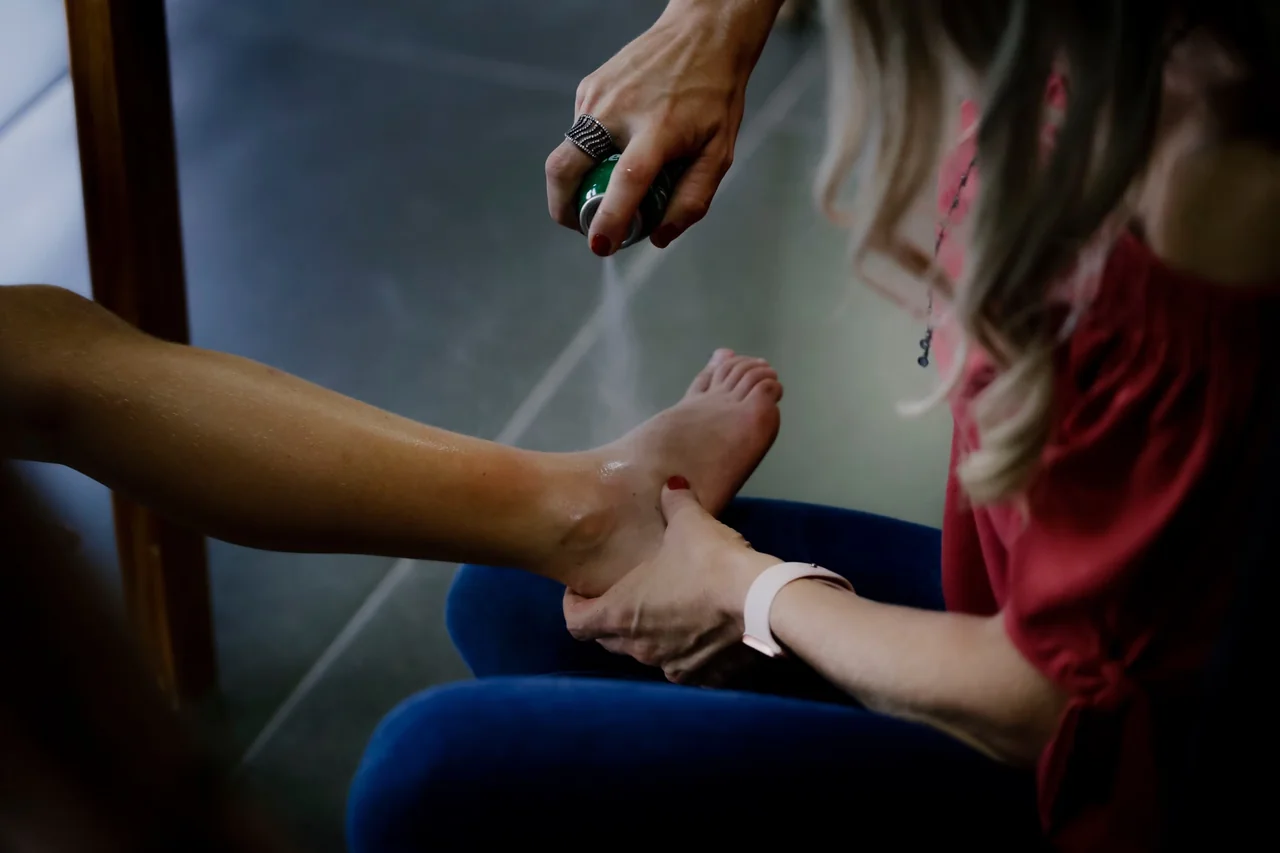
For runners, pain in the upper part of the foot can begin quietly: first it bothers you when your shoe is tight, then when you push off, and, if your training load does not change, even at rest. In most cases, it is not due to a serious injury, but to progressive irritation of the tendons that cross the top of the foot and help lift the toes and stabilise your stride.
In runners, brisk walkers, and people who spend many hours on their feet, that area becomes a taut cord under constant pressure. Tendon overload, a sudden change in training, or footwear that is too stiff or too tight is enough to trigger a bothersome, limiting condition that, if you keep pushing it, becomes increasingly persistent.
What structures become irritated on the top of the foot
Several extensor tendons run across the instep, including those that lift the toes and the one that helps raise the foot during support. These are thin, gliding structures that are highly exposed to rubbing from footwear, repeated impact, and changes in pace. When they become inflamed or sensitive, pain usually appears on the upper surface of the foot and may feel like tightness, a sharp stab, or a burning sensation.
The tibialis anterior, the extensor digitorum longus, and the extensor hallucis longus are the names most often mentioned in this type of discomfort. You do not need to memorize anatomy to understand the problem: they are the “cables” that help keep the foot from dragging the toes while walking and make the stride smooth. If one of those cables gets fatigued, the area complains with every push-off.
The key point is that the tendon does not suffer from a single step, but from the sum of many small demands. Hills, inclines, hard surfaces, fast intervals, or even laces that are too tight can compress the top of the foot and make it sensitive. Repeated friction is often just as important as the effort itself.
How the pain presents and what signs are worth noticing
The most common symptom is localized pain on the top of the foot that gets worse when walking, running, climbing stairs, or lifting the toes. Sometimes it appears when activity starts and then eases somewhat, like a hinge that needs to warm up; other times it is there from the first steps and forces you to change how you place your foot.
You may also notice tenderness to touch, stiffness after rest, and discomfort with footwear. The skin may feel a bit tight or the instep may look slightly swollen, although there is not always visible swelling. That explains why many people underestimate the problem at first: there is no large lump or striking deformity, just a subtle warning that keeps repeating.
It is worth paying attention to how the foot responds to load. If the pain appears with less effort than before, lasts longer after training ends, or spreads to the toes or ankle area, the tissue is asking for more room. Progressive worsening is usually the most useful clue for distinguishing a passing ache from an evolving tendinopathy.
Why it appears in runners and active people
In running, the instep is especially stressed when mileage increases without giving the body time to adapt. A change of shoes, a hurried return after a break, or a session with more elevation gain than usual can suddenly increase the load on the extensor tendons of the foot. The tendon does not understand good intentions; it only responds to the sum of stimuli.
Shoe pressure also matters. Very snug shoes on the upper part, tight laces, or models with a rigid toe box and instep can compress the area right where the tendons pass. On long runs, that continuous rubbing behaves like a small stone inside the shoe: it may not always stop you from continuing, but it wears on you with every kilometer.
There is another frequent and less visible factor: biomechanics. A high-arched foot, stiffness in the midfoot, or a way of landing that concentrates too much impact on the forefoot can increase dorsal tension. Your gait is not a fixed snapshot; it changes with fatigue, speed, and terrain, and many overload problems slip in through that variation.
How it differs from other causes of pain on the instep
Not all pain in the upper part of the foot is tendon-related. A stress fracture, for example, usually causes deeper, more pinpoint, and more disabling pain when weight-bearing. In these bone injuries, the discomfort is not only present during exercise; it can persist and become more intense as hours or days pass.
It can also be confused with the aftermath of an ankle sprain. When the ankle loses mobility or stability, the body compensates and shifts effort toward the instep. In that context, dorsal pain may be secondary, not the main source, and the treatment focus changes because calming the tendon is not enough: the support pattern has to be restored.
Other times the cause is nerve irritation, a ganglion cyst, early osteoarthritis, or deformities such as a high-arched foot or flatfoot. Location helps, but it does not solve everything. Pain that changes with shoe type, speed, or foot stiffness points toward tendon overload; pain that is more fixed, night-time, or very localized suggests another cause.
Which treatment usually works best
The most solid approach is usually conservative. Reducing the load that causes pain does not mean immobilizing the foot completely, but temporarily removing what irritates it while maintaining as much movement as possible. In practice, this usually means cutting mileage, avoiding hills or jumps, and replacing intense sessions for a few days with less aggressive activity.
Footwear deserves a careful review. Loosening laces, choosing a shoe with more room over the instep, or avoiding overly rigid models can bring surprising relief. The top of the foot tolerates sustained pressure poorly, so small mechanical changes help more than they may seem. Less rubbing, less irritation; that simple and that important.
Active treatment is central to the process. Ankle mobility, strengthening work for the foot and leg, and a gradual return to running help the tendon regain tolerance. The goal is not to rest until the pain disappears, but to teach the tissue to handle load again without complaining at the first sign of stress.
In some cases, complementary measures are used to ease symptoms, such as local ice in painful phases or painkillers and anti-inflammatory medications prescribed by a healthcare professional when appropriate. But none of those measures replace load management. Real improvement usually depends on how effort is dosed, not on turning off the pain for a few hours.
The role of physiotherapy and functional recovery
Physiotherapy is helpful when pain limits walking, training, or day-to-day life, or when the problem tends to recur easily. The clinical assessment helps determine whether the issue comes from the tendon, ankle mobility, gait, or a chain compensation. That detailed reading avoids generic treatments that provide little relief and do not last.
The work usually combines therapeutic exercise, load progression, and movement control. The goal is not only to reduce the perceived inflammation, but to restore the tendon’s ability to tolerate impact, acceleration, and braking. In running, that matters a lot, because the foot does not live at rest: every stride is a small negotiation between stability and propulsion.
When the discomfort has been present for some time, it is also worth reviewing the whole system: calf, ankle, plantar foot, and running technique. Sometimes the top of the foot suffers because other parts of the system are not doing their share properly. Restoring function means organizing that chain, not looking only at the painful spot.
How long it usually takes to improve
There is no single timeline, but mild cases usually improve in two to four weeks if the load is corrected early and the tissue has not accumulated too much stress. When the irritation has been going on for a while, recovery may extend to between four and eight weeks, and even a bit longer if the activity that triggers pain is continued.
Timelines depend more on the tendon’s history than on the name of the injury. A recent condition, caught in time, responds sooner; one that has been living alongside several shoe changes, long runs, or intense training sessions usually requires patience. The tendon improves at the pace of adaptation, not at the pace of desire.
Returning too soon to the same running volume is one of the most common reasons for relapse. Feeling better does not always mean being ready to repeat the previous load. It is important to distinguish between being pain-free at rest and truly tolerating impact, because that is where much of the success or setback lies.
What happens if the problem is ignored
If the overload continues, the pain can become persistent and alter the way you walk. That seemingly small change redistributes effort toward the ankle, knee, or even the hip. The body compensates along a chain, and what started as discomfort on the top of the foot sometimes ends up as a much broader problem.
Chronification usually does not happen all at once. First the pain appears with certain activities, then before starting, later also while walking, and finally even with the simple rubbing of footwear. That stepwise drop in tolerance is the clearest sign that the tissue is not receiving the right management.
Ignoring the discomfort also increases the risk of confusing the condition with other more serious injuries. If the pain becomes very localized, occurs at night, or prevents normal weight-bearing, a clinical evaluation is needed to rule out bone injury or another cause. Not all instep pain is solved with rest, and not every painful instep is a tendon problem.
How to reduce the risk of it coming back
Prevention in this area has a lot to do with everyday habits. A gradual increase in training, choosing shoes with enough room, and reviewing technique or support mechanics reduce the likelihood of recurrence. The foot appreciates consistency, not sudden shocks.
It also matters not to normalize discomfort from footwear. A shoe that presses on the top of the foot is not a minor detail; it can be the very cause that keeps the problem alive. Instep fit should leave room for the foot to expand during walking and running, especially in long sessions or in warm weather.
Strengthening the foot and leg, maintaining ankle mobility, and reintroducing impact logically are parts of the same story. When one of them fails, the dorsal tendon often pays the bill. In running, where each movement is repeated hundreds or thousands of times, prevention is not a luxury: it is the ground everything else stands on.
How runners can look after the tendons on top of the foot
When you run, the extensor tendons on top of the foot help lift the toes and support foot movement. A sudden increase in mileage, hills, speed sessions or back-to-back demanding runs can raise the load before your body has adapted. Pressure from tight laces or a stiff, narrow shoe upper may also irritate the area. Pain on top of the foot can have different causes, so do not assume that a tendon is necessarily responsible.
Notice when discomfort appears: at the start of a run, during it, as you push off, or afterwards. Watch for pain that starts with less effort than before, lasts longer after a run, increases when you lift your toes or changes the way you land. Tenderness, stiffness after rest and any swelling are also worth noting. If the pain is getting worse, affecting your stride or persisting, seek advice from a healthcare professional rather than trying to run through it.
While you monitor your response, reduce or pause runs that bring on the pain; do not compensate by adding speed or hills. Loosening the laces over the top of the foot and checking that your shoes do not press on the area may help reduce friction. If an alternative activity is comfortable, it may let you stay active without repeating the painful movement. Return to running gradually once everyday activities feel comfortable, and check how the foot feels during and after each run. Avoid increasing several training variables at once, and allow recovery between demanding sessions. If the discomfort returns, reduce the load again and seek professional guidance.
Instep pain as a warning of poorly distributed load
The top of the foot acts like a very fine tension line. It usually does not break without warning; it first signals with discomfort, stiffness, or sensitivity that appears at specific moments. Listening to that early message makes the difference between a brief irritation and an injury that drags on for months.
In the context of running, the value of that warning is even greater. The top of the foot summarizes, in just a few centimeters, the relationship between footwear, impact, technique, and adaptation. When it starts to hurt, it is rarely pointing to just one spot: it is saying that the load has become more than the tissue can handle at that moment.
That is why the most useful approach does not stop at eliminating the symptom. You have to understand why it appeared, what keeps it going, and how to restore the foot’s usual tolerance. The good news is that most cases improve with sensible activity adjustment, friendlier footwear, and a well-planned gradual recovery.
Medical reference: Extensor tendinopathy of the foot, NHS.



How to prevent thigh chafing: causes and real solutions

Women’s running windbreakers: seven jackets and how to choose

Do more workouts get rid of soreness? A guide for runners

Jaén Half Marathon 2026: Record 3,800 Runners Registered

Men’s short running tights: how to choose the right pair

World Triathlon confirms data breach involving medical data

Izan Edo targets podium at Miyazaki World Cup

María Pérez ranks ninth in World Athletics’ 2026 top ten

Dos Santos, Duplantis and Sawe: World Athlete of the Year finalists

San Silvestre Vallecana 2026: 42,000 places, prices and start times

 Races3 months ago
Valencia Half Marathon 2027: date and registration

 Races3 months ago
Valencia Marathon 2026: entry, ballot and course

 Reviews and Comparisons4 months ago
Asics Gel-Roadmiles 3 for men: review and current price

 Reviews and Comparisons4 months ago
Asics Gel Sonoma 8 Gore-Tex: complete analysis for trail and rain

 Sneakers3 months ago
Saucony Endorphin Pro 4: full review and verdict

 News5 months ago
Strava API 2026: what changes for clubs, challenges and runner apps?

 Reviews and Comparisons5 months ago
Nike Alphafly 3: opinions, sensations, and real key points

 Reviews and Comparisons4 months ago
Under Armour running shoes review 2025-2026: models and key features

 Sports Equipment4 months ago
Shoe sizes in cm: a clear guide to getting the right fit for your footwear

 Sneakers3 months ago
Skechers GO RUN Consistent 2.0 analysis: comfort and limits

 News5 months ago
Valencia Marathon 2026 route: key tips to train and run better

 Sneakers4 months ago
Adidas Adizero Boston 13 for men: review and verdict