Health and Nutrition
Benefits of the dry sauna: what it contributes to the body and to rest
Heat, rest, and circulation: how the dry sauna affects the body and in which cases it’s best to avoid it.

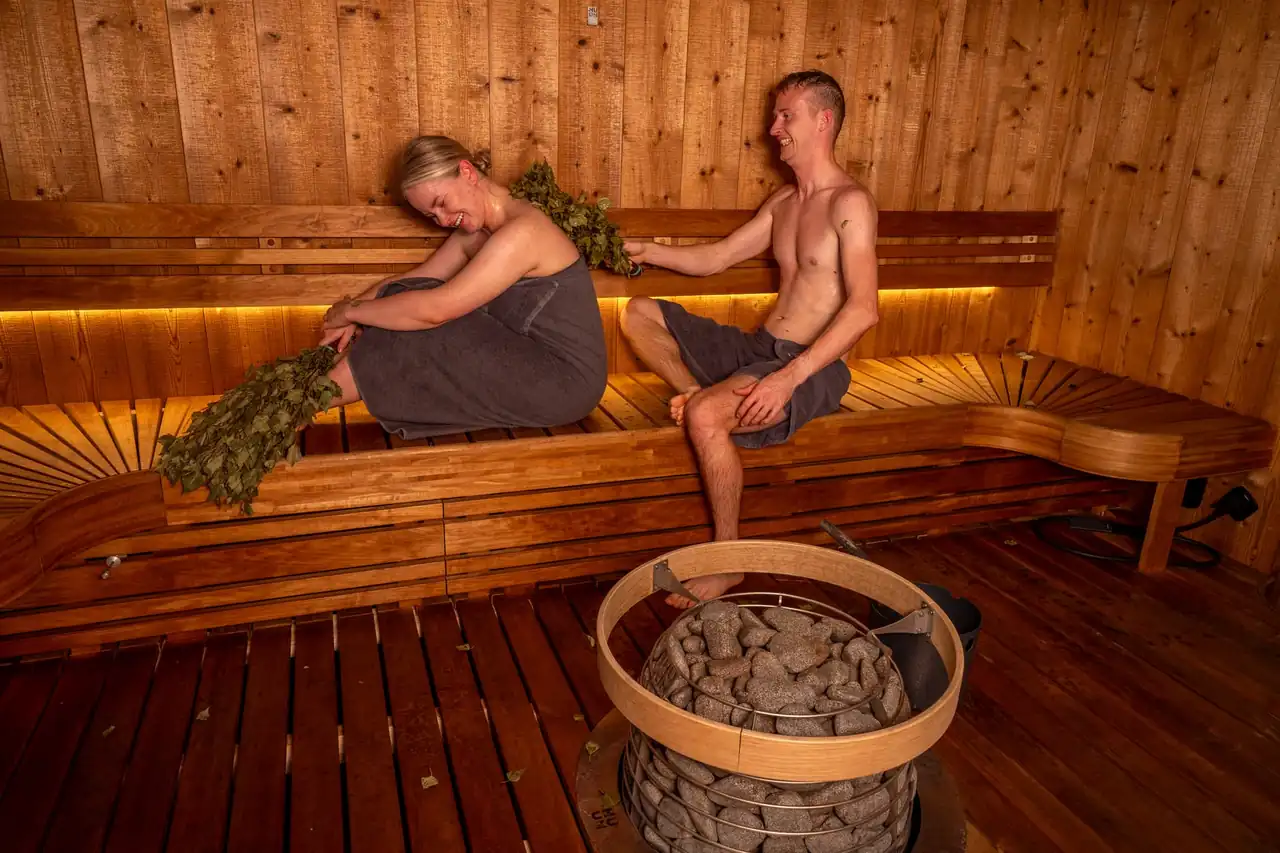
Dry sauna concentrates a clear physiological effect in just a few minutes: it raises body temperature, causes intense sweating, and triggers a relaxation response that can be felt in the muscles, in breathing, and in the rest that follows. That is why it has gone from being a Nordic ritual to a regular feature in gyms, spas, and sports centers, where many runners and exercise enthusiasts seek it as a pause of heat after days of exertion or accumulated tension.
Its value lies not in promising miracles, but in the combination of dry heat, silence, and thermal contrast. Used well, it can promote a sense of muscular relief, improve the perception of recovery, and help disconnect from the daily pace; used badly, it can end in dizziness, dehydration, or an excessive burden on the circulatory system.
Dry heat and its real effect on the body
Finnish sauna works with temperatures that usually range between 80 and 90 °C, with low humidity that rarely exceeds 20%. That environment forces the body to defend itself with sweat and vasodilation, two mechanisms that increase blood flow to the skin and sharply change the thermal sensation. It is not a gentle heat in the domestic sense; it is a controlled, brief, and deliberate thermal stress.
Part of its appeal lies in that response. The body interprets the heat as a challenge and activates adaptation processes similar, on a smaller scale, to those that appear with moderate physical effort. The heart beats a little faster, blood vessels dilate, and the skin becomes the main organ for heat dissipation. That internal shift explains why many users describe a kind of lightness after leaving the cabin.
The feeling of relief does not come only from sweating. The context also matters: sitting or lying down, without screens, without noise, and without external demands, reduces mental activation. In an accelerated society, that pause of heat acts like a deceleration chamber. It does not cure chronic tiredness or replace nighttime sleep, but it can promote a state of calm that the body appreciates.
Why it relaxes so much on a muscular and mental level
One of the major arguments in favor of dry sauna is its effect on the muscles. Heat helps tissues feel less rigid, so the sensation of tension in the back, neck, or legs temporarily decreases. For someone who arrives with heavy shoulders or tired legs after training, that subjective release is very useful.
For runners and active people, the relief can be especially noticeable in the post-exercise phase, when the body is no longer producing effort but trying to return to calm. Dry sauna does not erase an overload or repair an injury, but it can contribute to a more favorable setting for perceived recovery. The heat also promotes superficial circulation, and that greater blood flow is usually associated with a feeling of looser muscles.
On the mental side, the most commonly repeated benefit is a reduction in tension. Sustained heat, stillness, and the absence of external stimuli nudge the nervous system into a calmer mode. Popular literature often links this with activation of the parasympathetic system, responsible for calm and recovery. In everyday language: the body stops being on guard and gradually enters rest mode.
That change has practical consequences. Someone who leaves a well-tolerated session usually notices less agitation, less hurry, and in some cases an easier time falling asleep if the session is taken with enough time before bed. The key is for heat to work as a transition, not as a shock.
Circulation, sweat, and that oft-repeated idea of detoxification
Dry sauna stimulates circulation because it dilates blood vessels and forces the heart to work somewhat harder to move blood toward the skin. That response is one of the points best accepted in medical education: there is a real hemodynamic change, even if its intensity depends on duration, temperature, and individual tolerance.
Where nuance is needed is in the language of detoxification. Sweat removes water, salts, and a small amount of other compounds, but it does not turn the sauna into a cleansing machine. The kidneys and the liver remain the body’s true waste-removal systems. Sauna helps you sweat; it does not replace biological cleansing processes.
Even so, the feeling of cleanliness it produces has a understandable basis. The skin is cleansed, pores seem more open, and sweat carries away surface residue. In a hygienic and controlled context, that impression of renewal is highly valued. It is not magic or excessive rhetoric; it is a combination of heat, low humidity, and skin response.
For someone who runs frequently, this part feels almost like a workshop break. After the load, the body enters a maintenance state. And as in any fine machinery, the benefit appears when the session is moderate, not when it is pushed beyond reason.
What it can provide after training
Dry sauna is especially interesting for people who play sports because it can fit well into a passive recovery routine. After a long run, a demanding workout, or a strength session, the heat helps slow things down, and that slowdown can be valuable for those who feel stiff when they finish.
The sensation of heavy legs, mild muscle tightness, or lower-back stiffness can temporarily decrease. Some people also appreciate a reduction in the perception of delayed muscle soreness, although that effect should not be confused with faster tissue repair. Sauna improves comfort; it does not replace rest, hydration, or sensible training progression.
For regular athletes, it can also serve as a psychological transition space. Finishing an intense session, showering, warming up again, and then cooling down calmly creates a kind of closing ritual. That simple structure helps organize the day’s effort and separate physical load from the rest of the day.
That is why many running enthusiasts associate it more with well-being than with direct performance improvement. It is a piece of the recovery ecosystem, not the center of the system. Its usefulness appears when it is integrated with enough rest, fluid intake, and sensible training load.
The skin, breathing, and other effects that are often noticeable
On the skin, dry heat has an immediate effect: it increases sweating and leaves a feeling of deep cleanliness. That can be pleasant for people with oily skin or simply for those who appreciate a heat bath that does not leave sticky moisture behind. The skin texture seems softer after the session, although that feeling is usually temporary.
In the airways, hot, dry air can bring relief to some people, especially when combined with the subsequent cooling contrast. It is by no means a universal respiratory therapy, but some users do feel that breathing becomes clearer. Dry sauna is not the same as a steam bath: here there is no moisture-heavy environment, but rather an intense atmosphere that forces the body to adapt in a different way.
There is also a subjective component that should not be dismissed. The body comes out with flushed skin, slightly deeper breathing, and a quieter mind. That combination gives the impression of a reset, as if the organism had spent a few minutes inside a heat bell and then emerged with a different rhythm. In health and wellness, perception matters, as long as it is not exaggerated.
The visible benefits, therefore, do exist, but they are usually modest and depend on the context of use. Dry sauna stands out more for its ability to create an intense relaxation experience than for radically transforming health on its own.
What the evidence says about the heart, blood pressure, and longevity
The available research, especially that coming from Finland, has observed interesting associations between frequent sauna use and certain cardiovascular indicators. Some studies have linked repeated sessions with a lower risk of cardiac events and better tolerance of heat by the circulatory system, although it is worth remembering that association does not equal direct cause.
In medical education, usage patterns of several sessions per week, with moderately high temperatures, are often cited as those linked to better health profiles. But those data should not be read as a universal prescription. A healthy, active person does not respond in the same way as someone with hypertension, a history of heart disease, or circulation problems.
Blood pressure may drop temporarily in some people after heat and cooling, while in others the response may be less favorable. That variability calls for caution, not automatic enthusiasm. The benefit exists mainly if sauna is used as part of a sensible lifestyle, not as a shortcut to compensate for unhealthy habits.
In that sense, dry sauna is more like walking briskly, sleeping better, or making time for calm than like a closed medical intervention. It is a supportive habit, not a miracle treatment.
How to use it so the benefit is real and not just simple overheating
Duration matters as much as temperature. A typical session usually lasts between 10 and 15 minutes per entry, with a total stay rarely exceeding one hour or an hour and a half if breaks and cooling periods are included. Staying too long inside the cabin increases the risk of distress, headache, and dehydration.
The order also matters. The body needs to go in calmly, preferably not right after intense effort or a heavy meal. It is recommended to sit or lie down on a towel, breathe calmly, and leave as soon as a clear feeling of saturation appears. In the sauna, the optimal point is not maximum suffering, but the balance between heat and tolerance.
The cooling phase afterward is part of the benefit. A cold or lukewarm shower or an immersion bath produces a contrast that activates peripheral circulation and returns the body to its usual temperature. That alternation between heat and cold is, for many users, the true essence of the ritual. Without that return, the session feels incomplete.
Afterward, it is advisable to rest and rehydrate calmly. Sweat can cause a loss of between half a liter and two liters of fluid, depending on duration and intensity, so drinking water is essential. The benefit of dry sauna grows when the body leaves strengthened, not emptied.
When it is better to avoid it or be especially cautious
Not everyone should enter a dry sauna without first considering their health status. Classic contraindications include a recent heart attack, decompensated heart failure, cerebrovascular circulation disorders, very high blood pressure, significant venous insufficiency, fever, acute infections, and the first months of pregnancy.
There are also reasons for caution in people with low blood pressure, glaucoma, hyperthyroidism, or a history of dizziness. In veteran runners or endurance athletes, the temptation is to think that a trained body can tolerate any stimulus; that is not always true. Fitness does not immunize you against extreme heat or prevent dehydration.
There is another basic warning: do not use the sauna as a test of endurance. The idea of staying in until you sweat more and more usually leads to worse sessions, not better ones. When palpitations, distress, nausea, blurred vision, or a feeling of weakness appear, you should leave immediately. The benefit lies in adaptation, not in excess.
Nor should you enter with rings, watches, chains, or electronic devices, because they heat up and can cause burns or damage. Caution is part of the benefit itself: a well-managed sauna is an experience of control, not recklessness.
Why it has become so popular among those seeking well-being
Dry sauna fits well into a wellness culture that no longer seeks only to sweat, but to feel better in a global sense. Its appeal combines tradition, ritual, intense bodily sensation, and a simple promise: sit, sweat, cool down, and leave with the body feeling a little lighter. That simplicity, in an environment of overstimulation, carries a lot of weight.
In gyms and spas, it also works as a pause space. No talking, no running, no screen. That rarity, almost minimalist, makes it especially valuable in cities where rest has become scarce and fragmented. The sauna does not compete with training; it competes with noise.
In the world of running, the interest is easy to understand. After repeated effort, the body asks for heat, stillness, and recovery. Dry sauna offers exactly that, with the advantage that using it requires no sports technique or complex equipment. Only tolerance, moderation, and a certain respect for one’s own body.
Its most solid benefit may be this: it helps organize the relationship with fatigue. It does not eliminate it, but it makes it more manageable. And in a discipline so closely tied to sustained effort as running, learning to manage fatigue is almost as valuable as training.
A useful habit when understood as part of a larger balance
The benefit of dry sauna does not lie in a single virtue, but in the sum of several: heat, relaxation, circulatory stimulation, muscular relief, and mental pause. That combination makes it a highly appreciated practice for healthy users, athletes, and people who simply need to slow down at the end of the day.
But its value depends on the framework. Without hydration, without rest, and without respect for contraindications, the same heat that relaxes can become a burden. By contrast, when used sensibly, dry sauna leaves a recognizable trail: flushed skin, calmer breathing, less tense muscles, and an almost home-like feeling of returning to balance.
That is, in fact, its greatest contribution: it does not promise new health, but a brief restoration of internal order. And in times of hurry, that kind of benefit still carries a lot of weight.
Medical reference: Sauna benefits, Cleveland Clinic.



How to prevent thigh chafing: causes and real solutions

Women’s running windbreakers: seven jackets and how to choose

Do more workouts get rid of soreness? A guide for runners

Jaén Half Marathon 2026: Record 3,800 Runners Registered

Men’s short running tights: how to choose the right pair

World Triathlon confirms data breach involving medical data

Izan Edo targets podium at Miyazaki World Cup

María Pérez ranks ninth in World Athletics’ 2026 top ten

Dos Santos, Duplantis and Sawe: World Athlete of the Year finalists

San Silvestre Vallecana 2026: 42,000 places, prices and start times

 Races3 months ago
Valencia Half Marathon 2027: date and registration

 Races3 months ago
Valencia Marathon 2026: entry, ballot and course

 Reviews and Comparisons4 months ago
Asics Gel-Roadmiles 3 for men: review and current price

 Reviews and Comparisons4 months ago
Asics Gel Sonoma 8 Gore-Tex: complete analysis for trail and rain

 Sneakers3 months ago
Saucony Endorphin Pro 4: full review and verdict

 News5 months ago
Strava API 2026: what changes for clubs, challenges and runner apps?

 Reviews and Comparisons5 months ago
Nike Alphafly 3: opinions, sensations, and real key points

 Reviews and Comparisons4 months ago
Under Armour running shoes review 2025-2026: models and key features

 Sports Equipment4 months ago
Shoe sizes in cm: a clear guide to getting the right fit for your footwear

 Sneakers3 months ago
Skechers GO RUN Consistent 2.0 analysis: comfort and limits

 News5 months ago
Valencia Marathon 2026 route: key tips to train and run better

 Sneakers4 months ago
Adidas Adizero Boston 13 for men: review and verdict