Health and Nutrition
Footwear to relieve lower back pain: what to choose and what to avoid
Shoes with good support, medium cushioning, and a moderate heel can make a difference in the lower back.

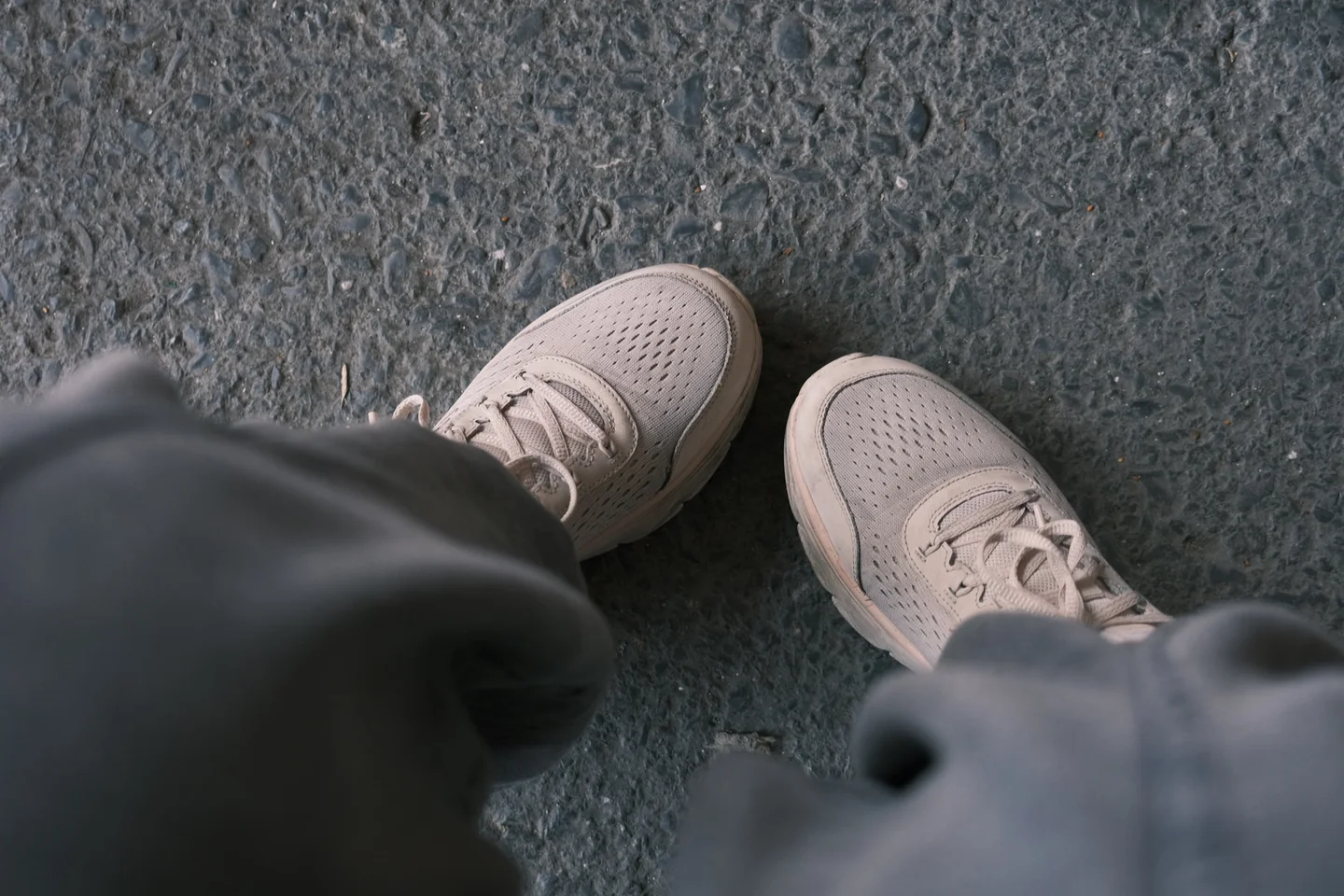
Footwear can load or unload the lumbar region with every step. It acts not only on the foot: it also changes the way the leg, pelvis, and, ultimately, the lower back move. That is why, when there is low back discomfort, a shoe stops being an aesthetic detail and becomes part of the problem or the solution.
The most reasonable option usually combines firm support, moderate cushioning, and a slight heel lift. Extremes are usually costly: a completely flat shoe, an excessively soft one, or a high heel can increase mechanical stress and worsen the feeling of load in the spine. The key is to find a balance that supports the gait without forcing it.
How footwear influences the lower back
The lower back responds to small changes in the support base. If the foot loses stability, the knee and hip compensate, and that chain of adjustments ends up affecting the pelvis and the lumbar curve. It is not a magical or linear relationship, but it is biomechanical: the body distributes effort from top to bottom and from bottom to top at the same time.
An unstable shoe forces the postural muscles to work harder. This may be especially noticeable in people who walk a lot, spend hours standing, or already have discomfort due to osteoarthritis, hip stiffness, overweight, or a history of injury. In those cases, footwear does not solve the pain by itself, but it can prevent more load from building up on an already sensitive back.
The type of surface and the length of use also matter. A model that is tolerable for a short stroll can become insufficient over a full workday. The lower back does not only complain because of impact; it also does so because of the fatigue of holding a posture that the foot does not help stabilize.
What features to look for in a shoe for low back pain
The sole should be neither a plank nor an unstable mattress. Moderate cushioning is usually the best ally because it absorbs part of the shock when the heel lands and promotes a gentler transition to the forefoot. Too much softness, however, may feel pleasant when trying it on and become clumsy after several minutes, like walking on a base that sinks.
Stability matters as much as immediate comfort. It is worth looking for a firm heel counter, a wide base, and a sole that does not twist easily. If the shoe bends or torsions like a wet towel, the foot loses control and the kinetic chain becomes less efficient.
Fit also matters more than it seems. Footwear that pinches at the toe box or slips at the heel forces continual corrections with the toes, ankle, and calf. That extra work does not stay in the foot: it travels like a taut rope up to the hip and can end up in the lumbar area.
The ideal shape usually leaves room for the toes and enough support in the midfoot. A wide toe box helps if there is a wide foot, bunions, or claw toes. Lace-up or Velcro closures usually offer better control than slip-on models, especially if the goal is to walk regularly or stand for several hours.
Heel height: the middle ground is usually the most useful
A high heel clearly changes posture. It shifts the weight forward, alters pelvic position, and can increase the lumbar curve. The higher and longer it is used, the more likely lower back discomfort becomes, especially if there is muscle fatigue or previous low back pain.
For everyday use, the safest range is usually between 2 and 4 cm. That slight elevation can relieve some of the tension in the posterior chain without forcing the body into a strained posture. For people who do not tolerate completely flat shoes well, that range can make a notable difference in the feeling of load.
Heels above 5 cm are not the best choice if the lower back is acting up. They may be reserved, at most, for occasional and brief use, but not for walking for several hours or for days with many stops, stairs, or uneven surfaces. The same applies to zero-drop footwear for people who are not adapted: what is natural for some trained feet can be a source of unexpected tension for others.
Cushioning, drop, and stability: the triangle that matters most
Cushioning should absorb impact without deadening the stride. A midsole with intermediate density usually works better than one that is extremely squishy, because it protects without making the support unstable. In simple terms, the goal is not for the ground to disappear, but for it to stop feeling like a slab.
The drop, that is, the height difference between heel and forefoot, also helps guide the choice. In many cases, a range of about 4 to 10 mm offers a reasonable compromise between comfort and control. It is not a universal law, but it is a useful reference when trying to ease the back without forcing abrupt biomechanical changes.
Stability becomes more important when the gait already shows compensations. Someone who overpronates a lot, notices the ankle collapsing inward, or has a fatigued gait will usually benefit more from a secure base than from an extremely light sneaker. For the lower back, less flash and more consistency is usually the right formula.
Flat shoes, soft sneakers, and other choices that often fail
Very thin soles transmit more impact and offer little room for correction. That happens with some minimalist shoes, ballet flats, or very worn-out models. They may seem discreet and comfortable in appearance, but they punish posture when worn daily without enough support.
Flip-flops and shoes without support also usually fare poorly. The foot grips with the toes so the shoe does not slip off, and that repeated gesture alters the entire mechanics of walking. This is not a minor issue: what starts in the forefoot can end in low back overload through a chain of compensations.
Excessively soft sneakers are not an automatic solution either. Too much foam can feel relieving at first, but it can reduce precision, stability, and control. It is a bit like walking on a very thick carpet: it cushions, yes, but it also forces you to correct your balance with every step.
Sports shoes, walking shoes, and work shoes: the same rules do not apply
There is no single model that works for every situation. Someone walking around the city does not need the same support as someone who spends an entire shift standing in a store, hospital, or kitchen. Nor is a walking shoe the same as one designed for running or for use on uneven terrain.
In everyday use, the balance between comfort and firmness is key. A walking shoe with a stable sole, moderate cushioning, and good support may be more useful than a shoe that is too technical. In contrast, for long periods of walking, a sneaker with a good heel, wide base, and smooth transition usually fits better.
For standing work, the goal is to reduce fatigue without losing control. Heel stability and arch support help more than extreme softness. When the workday is long, the back appreciates support that does not force it to work overtime.
When insoles may help and when they do not change much
Insoles are not a universal solution, but they can be useful for specific profiles. They are often considered when there is a rigid flat foot, a very high arch, marked pronation, or a difference in leg length. In those cases, they can redistribute load better and soften part of the work that ends up affecting the back.
They do not always provide a clear improvement in isolated low back pain. If the pain comes from a muscle spasm, training overload, poor ergonomics, or a spinal injury, the insole alone may fall short. It works better as part of a whole, not as an isolated solution.
Generic ones do not always solve the problem they promise to solve. A support that is too aggressive or poorly fitted can even create new discomfort in the foot or knee. That is why, when they are used, they should respond to a real need and not just to the general idea of improving the gait.
What signs indicate that a shoe is not good for the back
The body gives warning signs before it gives up completely. If you feel more lumbar stiffness at the end of the day, if the sensation of load increases when walking, or if the back starts complaining soon after breaking in a new model, footwear should be suspected. The feet do too: blisters, pressure on the toes, or instability when stepping are often very reliable clues.
A suitable shoe should not require weeks of adaptation. Some models feel better after a short period of use; but if the discomfort persists, the prudent choice is not to insist. Functional comfort is not a luxury, but a basic condition for support to help rather than hinder.
Previous history matters a lot. Someone with osteoarthritis, an old ankle fracture, lumbar surgery, or marked ankle stiffness is not starting from zero. In those situations, footwear should respect the available mechanics, not try to impose one that the body no longer tolerates naturally.
The real role of footwear in lumbar care
The right shoe does not cure low back pain, but it can take fuel away from the fire. The lower back responds to a mix of factors: physical activity, rest, muscle strength, body weight, stress, hours of sitting, and ergonomics. Within that map, footwear occupies an important place because it accompanies every movement, every support, and every turn.
That is why the best choice is usually the least extreme one. A model with a moderate heel, stable sole, medium cushioning, enough toe room, and a good fit usually offers a sensible base for walking without adding unnecessary tension. There is no need to complicate what the body appreciates as simple: a safe platform, a reasonable distribution of impact, and a shape that does not force compensations.
In practice, the question is not only which footwear relieves the lower back, but which allows you to walk without fighting your own body. That answer, almost always, points to a firm shoe, comfortable from first wear, and suited to the real context of the person wearing it. The back, in the end, asks for something very basic: stable support under the feet and less mechanical noise with each step.
The comfort you feel in your feet and pay for in your back
Footwear choice says a lot about how effort is distributed in the body. A suitable model stops being noticeable after a few minutes: it does not pinch, it does not wobble, it does not force changes in gait, and it does not multiply fatigue. That discretion is precisely its value, because it protects without drawing attention to itself.
When the lumbar area is sensitive, the best shoe is usually the one that adds stability without excessive rigidity. Neither a soft sole that sinks, nor a hard plank that transmits every shock, nor a heel that throws the pelvis out of alignment. Between those extremes lies the most useful ground for anyone who needs to walk with less load on the lower back.
The decision, in reality, starts on the ground. What touches the asphalt, the office floor, or the home floor becomes the first line of defense for the spine. Choosing well does not eliminate all the causes of low back pain, but it does remove one of the most silent and persistent ones.
Footwear matters when you run, too
For runners, footwear can affect how each step feels, but no shoe can fix lower-back pain on its own. A secure fit, good stability and cushioning that feels comfortable—without feeling overly soft or unstable—may help your foot land with confidence. Responses differ from person to person, so how you feel during a run matters more than any single shoe feature.
If discomfort develops or gets worse, avoid testing new shoes on a long or demanding run. Try them on an easy outing first and notice how you feel during and afterwards. It is also worth reviewing your training volume and intensity, since footwear cannot make up for a workload your body is not coping with. If pain or other symptoms persist, seek advice from a healthcare professional.
You may also like: Proper footwear for lower back problems: practical tips for making the right choice.
Medical reference: Back Pain, MedlinePlus (U.S. National Library of Medicine).



How to prevent thigh chafing: causes and real solutions

Women’s running windbreakers: seven jackets and how to choose

Do more workouts get rid of soreness? A guide for runners

Jaén Half Marathon 2026: Record 3,800 Runners Registered

Men’s short running tights: how to choose the right pair

World Triathlon confirms data breach involving medical data

Izan Edo targets podium at Miyazaki World Cup

María Pérez ranks ninth in World Athletics’ 2026 top ten

Dos Santos, Duplantis and Sawe: World Athlete of the Year finalists

San Silvestre Vallecana 2026: 42,000 places, prices and start times

 Races3 months ago
Valencia Half Marathon 2027: date and registration

 Races3 months ago
Valencia Marathon 2026: entry, ballot and course

 Reviews and Comparisons4 months ago
Asics Gel-Roadmiles 3 for men: review and current price

 Reviews and Comparisons4 months ago
Asics Gel Sonoma 8 Gore-Tex: complete analysis for trail and rain

 Sneakers3 months ago
Saucony Endorphin Pro 4: full review and verdict

 News5 months ago
Strava API 2026: what changes for clubs, challenges and runner apps?

 Reviews and Comparisons5 months ago
Nike Alphafly 3: opinions, sensations, and real key points

 Reviews and Comparisons4 months ago
Under Armour running shoes review 2025-2026: models and key features

 Sports Equipment4 months ago
Shoe sizes in cm: a clear guide to getting the right fit for your footwear

 Sneakers3 months ago
Skechers GO RUN Consistent 2.0 analysis: comfort and limits

 News5 months ago
Valencia Marathon 2026 route: key tips to train and run better

 Sneakers4 months ago
Adidas Adizero Boston 13 for men: review and verdict