Health and Nutrition
Pes anserine exercises for runners: a practical guide
A clear guide to strengthen the inner knee area, relieve overuse, and understand which exercises usually help.

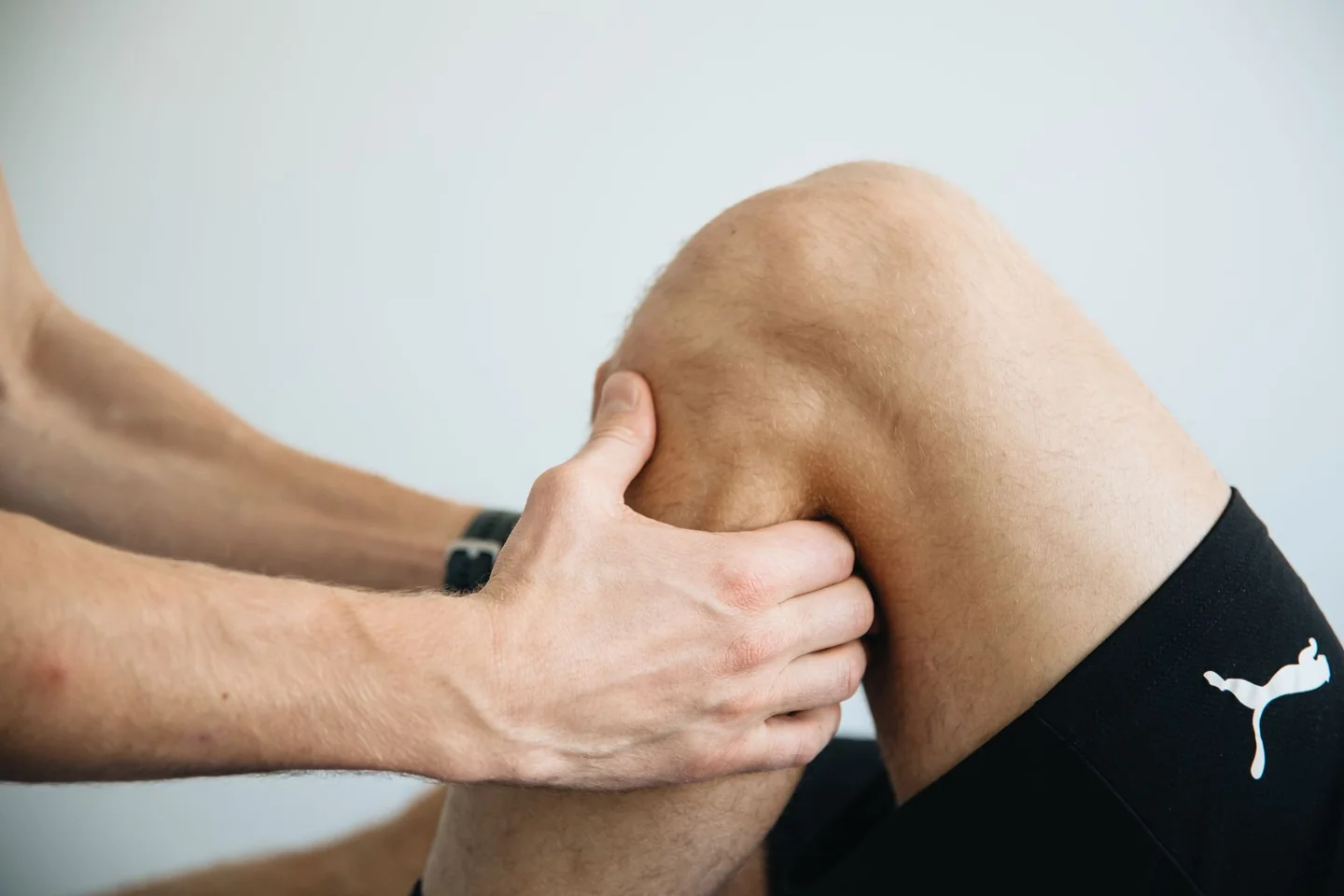
Pain on the inner side of the knee can affect runners who increase their mileage too much, train with poor alignment, or return from inactivity with sudden, strenuous efforts. In that context, a well-planned routine for the area known as the pes anserine can help prevent discomfort from lingering and support a steadier, more comfortable running stride.
The key is not to hammer the knee, but to reduce irritation, gain control, and distribute the load better. That means working not only the tendons involved, but also the hip, glutes, thigh, and foot, because the knee rarely complains on its own: it is almost always compensating for something above or below it.
What is really being treated when the pes anserine area hurts
The so-called pes anserine is an insertion area located on the inner side of the tibia, just below the knee, where several tendons converge. The most commonly cited in the literature are the sartorius, gracilis, and semitendinosus, although in clinical practice the term is also often linked to the bursa surrounding that insertion. When it becomes inflamed or irritated, the pain is usually felt when climbing stairs, running uphill, standing up from a chair, or turning on a planted foot.
In runners, this discomfort usually appears because of a mix of factors: repeated overload, muscle fatigue, excessive pronation, knee valgus, overly rapid pace changes, or inefficient technique. There is not always a serious injury behind it, but there is a sensitive tissue that needs the load dialed back. The most common mistake is trying to keep training as if nothing were wrong, forcing a structure that is already sending warnings.
It is also worth distinguishing between tendon pain, bursitis, and other causes of medial knee pain, because not everything that hurts in that area has the same origin. A meniscus issue, medial collateral ligament problem, or even osteoarthritis can mimic similar symptoms. That is why an exercise routine makes sense when it is part of a cautious approach, not as an isolated fix or shortcut.
Why a specific routine helps more than complete rest
For years it was thought that any irritated tendon should stop completely. Today we know that appropriately dosed movement is usually more useful than prolonged rest, as long as pain stays within reasonable levels. Total inactivity switches off strength, worsens coordination, and leaves the leg clumsier precisely when it needs to stabilize again.
For a runner, this makes a lot of sense. The knee does not act alone with each stride; it absorbs forces coming from the ankle, hip, and trunk. If the gluteus medius works too little, if the foot collapses inward, or if the quadriceps does not brake well, the inner side of the knee pays the price. A good exercise plan is not just about easing symptoms, but about redistributing tension and improving load tolerance.
In addition, proper strengthening can help the return to running be less erratic. It is not about going back to running with the same mechanics as before, but about arriving with more functional reserve. In simple terms: a tendon that receives support from the rest of the chain notices the load less, like a rope that no longer has to carry the entire weight of the bridge alone.
What a well-designed routine should be like
A useful routine for this area does not start with spectacular exercises. It starts with control, isometrics, basic strength, and gradual progression. In the early stages, when the discomfort is more active, short and precise work tends to work better than endless repetitions. As the tissue tolerates load better, the exercises progress toward more dynamic work and then toward patterns similar to running.
The intensity should be adjusted to the knee’s actual condition. If pain clearly increases during the exercise or flares up afterward, the dose is too high. A certain mild, controlled discomfort may be acceptable in some phases, but not a sharp pain that leaves the leg sensitive the next day. Movement quality matters more than quantity, an idea that is worth its weight in gold in rehabilitation.
It is also important not to focus all the work on the painful area. The routine should include glutes, abductors, hamstrings, calves, and foot work, because the knee functions as an intermediate hinge. When one piece of the chain falls behind, others pay for the imbalance. And in running, that shows up with every step.
Exercises that usually fit best in the early stages
At the start, the idea is to calm things down without immobilizing. A simple quadriceps isometric exercise, for example, can help activate the muscles without sudden movement. Sitting or lying down with the leg extended, you try to press the back of the knee against the surface for a few seconds. The feeling should be of solid work, not a hammer blow.
Glute bridges are another classic with good reason. By lifting the pelvis with both feet on the ground, you activate the posterior chain and give useful work to the glutes, which help stabilize the pelvis and keep the knee from collapsing inward. A strong glute unloads the knee, and in runners that translates into a cleaner stride, especially when fatigue sets in.
Hip abduction exercises can also be useful, whether lying on your side or with a light resistance band. The goal is not to feel a heroic effort, but to regain control of the leg in the frontal plane. When the knee caves inward on landing, there is usually a combination of hip deficit and loss of trunk control. That detail, small at first glance, can matter a great deal over several kilometers.
A reasonable sequence to gain strength without further irritating the area
A sensible routine usually starts with a short activation block and ends with slightly more demanding exercises. A common pattern combines isometrics, bridges, leg raises, partial squats, and single-leg balance work. There is no need to turn the session into an equipment circus; in fact, the clearer the execution, the better the response tends to be.
Partial squats, for example, allow you to work on knee control without demanding deep flexion from day one. If done in front of a mirror, it is easier to watch that the knee does not collapse inward. A stable line from hip to ankle is usually a more useful sign than chasing depth at any cost.
Single-leg balance also deserves space, because running is, in essence, a succession of unstable balances. Standing on one leg, first still and then with small movements or arm reaches, forces the hip, knee, and foot to adjust at the same time. It is simple work, but very close to what the body does in continuous running.
An orientative routine that makes sense for runners and active people
Without turning it into a fixed recipe, a practical session can combine a few minutes of gentle activation, two or three basic strength exercises, and a final block of postural control. Glute bridges, hip abductions, partial squats, and single-leg support usually fit well within that logic. The number of repetitions should not be read as a magic figure, but as a guide to maintain good technique without becoming exhausted.
If the tissue is very sensitive, it is wiser to work with short sets and generous rest periods. If the knee already tolerates load better, difficulty can be increased with a resistance band, a greater range of motion, or more time under tension. Useful progression is the kind that does not break continuity; a brilliant session does little good if it leaves two days of protest.
For runners, the return to running can coexist with this routine as long as the volume is adjusted. Sometimes it is wise to keep runs very easy and reduce hills, intervals, or sloped surfaces while the inner side of the knee stabilizes. Rehabilitation is not about heroics, but about managing available energy well.
Which complementary exercises add more than they seem to
Hip work is often the big forgotten piece, and yet it is one of the most worthwhile. The gluteus medius, in particular, helps keep the pelvis more stable when one leg takes load. If it fails, the knee tends to seek a less favorable position and the inner side ends up paying for the disorder. That is why banded variations, lateral steps, and side leg raises make so much sense.
The hamstrings also deserve attention, but not just as strength muscles. They need eccentric strength, meaning the ability to brake movement while lengthening. That work appears in actions such as lowering from a squat, absorbing a stride, or controlling foot strike while running. Braking well is just as important as pushing, an idea that often goes unnoticed until pain appears.
The foot and ankle complete the picture. If the inner arch collapses easily or the ankle does not control pronation well, the knee receives a less favorable force line. Balance exercises, calf raises, and barefoot standing on a stable surface can be small actions with real impact. In running, as in an assembly line, the failure of one link is transmitted to the next.
Signs that the load is well adjusted
A good sign is that pain does not clearly increase during the session or the next day. Another positive clue is that the movement feels cleaner, less clumsy, with less need to compensate. The body does not always speak loudly; sometimes it is enough to notice that the knee stops demanding constant attention in everyday movements.
Recovery between sessions also matters. If the area feels more stable after a few days of orderly work, the response is heading in the right direction. Improvement is rarely linear: there are better days and flatter ones, but the overall trend should be favorable. When that does not happen, it is usually necessary to reduce volume, review technique, or rule out another diagnosis.
For runners, a practical reference is to observe whether discomfort appears before, during, or after runs. If the pain is limited to harder efforts and eases over time, the load may be tolerable. If it settles in at rest, hurts when walking, or there is marked swelling, it is best not to blame everything on simple overload.
What usually makes the situation worse without being noticed at first
The most common mistake is trying to maintain exactly the same training despite the discomfort. Hills, pace changes, plyometric work, and steep descents are often fuel for an irritated area. Poorly executed strength sessions do not help either, with knees collapsing inward or a trunk that shifts too much.
Another problem is impatience. A tissue that has been sensitive for a while does not reorganize itself in two sessions. Real improvement usually takes weeks, not days, and it is accompanied by a certain boring discipline: repeating exercises, respecting rest, and not confusing fatigue with progress. Hurry, in tendons, usually comes at a price.
Footwear and surface also matter. Very worn shoes, sudden changes in model, or always training on the same sloped profile can add lateral and medial load to the knee. Sometimes the problem is not only in the leg, but in a combination of small factors that line up like dominoes.
When a routine is not enough and it is worth looking further
There are conditions that resemble pes anserine irritation but have a different origin. Very localized pain with persistent swelling, locking, instability, painful clicking, or persistent night pain deserves a more complete medical or physiotherapy assessment. Not all inner knee pain is the same, and not everything is solved by strengthening.
In people who run a lot or return too quickly after a previous injury, more than one problem may coexist. Sometimes there is tendon overload and, at the same time, a hip issue, an ankle mobility limitation, or a running technique that puts too much torsion on the knee. The routine helps, but it does not replace diagnosis when the picture does not fit.
That is why, in health and sports journalism, it is wise to avoid universal recipes. The usefulness of a routine depends on the stage, the pain level, and individual tolerance. The sensible approach is to think in terms of progression, not an eternal routine. When the knee cooperates, training picks up pace again; when it does not, caution is worth more than stubbornness.
How runners can adapt pes anserine exercises to training
If you feel discomfort on the inner side of your knee, don’t try to make up for it by running harder or sticking to every planned session. Temporarily reduce the training load that aggravates it. That might mean cutting back on mileage, hills, speed work or long runs. If easy running does not worsen your symptoms, you may be able to keep short, gentle runs; if pain increases during a run or afterwards, pause that activity and choose an alternative you can tolerate.
A routine for this area should progress gradually. It can begin with control and basic strength work, including isometric exercises if they feel comfortable, then move towards dynamic movements and tasks that more closely resemble running. The focus need not be only on the knee: the hips, glutes, thighs and feet also help control each stride. Move with control and adjust the effort if pain clearly increases during an exercise or symptoms worsen afterwards.
Pay attention to how you feel not only during the session, but also in the hours afterwards and the next day. If discomfort stays stable or improves and everyday activities do not become harder, the load may be more tolerable; this is not a reason to rush straight back to intervals or hills. First rebuild consistency with easy runs, then increase one training factor at a time. Swelling, severe pain, difficulty bearing weight or symptoms that persist are reasons to consult a healthcare professional. Exercises can support recovery, but they cannot replace an assessment when the cause of knee pain is unclear.
A stronger knee is built from the whole chain
The inner side of the knee does not usually improve with local exercises alone, just as a tent does not stand thanks to a single rope. What helps most is a combination of hip strength, knee control, foot stability, load management, and patience. That combination is less flashy than a quick fix, but much more reliable for someone who runs regularly.
In the end, the best exercise routine for this area is not the longest or the most intense. It is the one that gets the knee to stop living defensively and return to tolerating movement with less protest. For a runner, that means something very concrete: getting back to adding kilometers without every step reminding you of the discomfort.
And that is the difference between enduring and rebuilding. The first option gets you through the day; the second prepares you for the next season.



How to prevent thigh chafing: causes and real solutions

Women’s running windbreakers: seven jackets and how to choose

Do more workouts get rid of soreness? A guide for runners

Jaén Half Marathon 2026: Record 3,800 Runners Registered

Men’s short running tights: how to choose the right pair

World Triathlon confirms data breach involving medical data

Izan Edo targets podium at Miyazaki World Cup

María Pérez ranks ninth in World Athletics’ 2026 top ten

Dos Santos, Duplantis and Sawe: World Athlete of the Year finalists

San Silvestre Vallecana 2026: 42,000 places, prices and start times

 Races3 months ago
Valencia Half Marathon 2027: date and registration

 Races3 months ago
Valencia Marathon 2026: entry, ballot and course

 Reviews and Comparisons4 months ago
Asics Gel-Roadmiles 3 for men: review and current price

 Reviews and Comparisons4 months ago
Asics Gel Sonoma 8 Gore-Tex: complete analysis for trail and rain

 Sneakers3 months ago
Saucony Endorphin Pro 4: full review and verdict

 News5 months ago
Strava API 2026: what changes for clubs, challenges and runner apps?

 Reviews and Comparisons5 months ago
Nike Alphafly 3: opinions, sensations, and real key points

 Reviews and Comparisons4 months ago
Under Armour running shoes review 2025-2026: models and key features

 Sports Equipment4 months ago
Shoe sizes in cm: a clear guide to getting the right fit for your footwear

 Sneakers3 months ago
Skechers GO RUN Consistent 2.0 analysis: comfort and limits

 News5 months ago
Valencia Marathon 2026 route: key tips to train and run better

 Sneakers4 months ago
Adidas Adizero Boston 13 for men: review and verdict