Health and Nutrition
How to Treat a Heel Spur When You Run: Symptoms and Care
Heel pain, diagnosis, causes, and effective treatments to restore your stride.

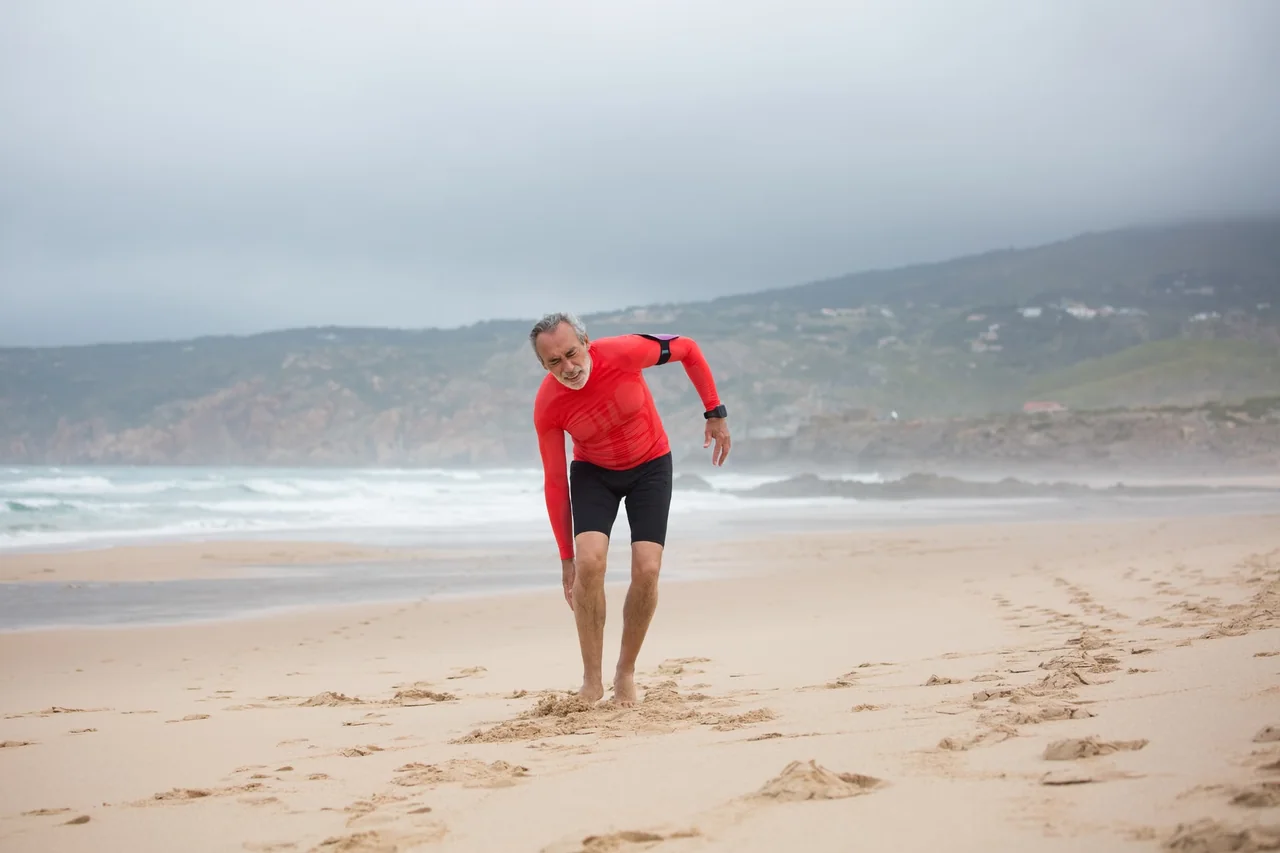
Heel pain that appears while running, when you get out of bed, or during your first steps of the day rarely has just one cause. With a calcaneal spur, discomfort is often linked to chronic overload of the plantar fascia, repeated friction and tension that can make every foot strike feel sharp. The bony growth may be present for months without causing symptoms; often, the issue lies in the surrounding soft tissue.
The cure is not about erasing a bone with a quick fix. What truly sets the course is calming inflammation, unloading the area, correcting foot mechanics, and allowing the tissues to heal. In most cases, the pain improves with conservative treatment, even if the spur itself remains visible on an X-ray. That difference, small at first glance, completely changes the medical approach and the patient’s expectations too.
What the heel spur really is
The calcaneal spur is a bony growth shaped like a beak or spike that usually appears on the underside of the calcaneus, right where the plantar fascia attaches. It can also, less frequently, be found at the back of the heel, near the Achilles tendon. That radiological image is striking, but it does not always explain the pain by itself: some people have a spur and no discomfort at all, while others have intense pain without a large visible protrusion.
The plantar fascia acts like a taut band under the sole of the foot. It supports the arch, absorbs part of the impact, and helps propel the step forward. When that structure works under excessive tension for a long time, the body responds with micro-injuries, inflammation, and, in some cases, calcification at the attachment site. The spur usually does not appear as an isolated accident, but as the footprint of repeated load, almost like the groove left by a rope being tightened over and over again.
That is why the problem is often confused with plantar fasciitis, and not by chance. In clinical practice, both processes are closely related. Fasciitis is the inflammation or degeneration of the tissue; the spur is a possible consequence of that persistent traction. Separating both concepts helps explain why sometimes the bone remains and the pain disappears, or why a striking X-ray does not necessarily mean surgery is needed.
Why it appears and who is at higher risk
The most common cause is repeated overloading of the foot, especially when combined with poor biomechanics, shoes with little cushioning, or a sudden increase in activity. In runners, the pattern repeats quite often: increasing volume or intensity too quickly, accumulating impact on hard surfaces, or ignoring early signs of fatigue in the sole of the foot and the calf. The tissue receives more than it can tolerate and starts to protest.
There are factors that clearly increase the likelihood of developing it. Excess weight increases pressure on the heel with every step. Standing for many hours at work adds a sustained load that gives the fascia no rest. Flat feet and very high arches also alter force distribution, as do tight calves or a less flexible Achilles tendon. Age adds another element: over the years, tissue loses elasticity and tolerates repetitive impact less well.
In sport, the risk shoots up when preparation does not match the movement. Running with poor technique, without progression, in worn-out shoes, or on overly hard soles leaves the plantar fascia acting as the main shock absorber for too long. Added to this are other less visible factors, such as limited hip or pelvic mobility, which can alter load distribution and shift weight toward a more overworked heel than the other. Pain, in the end, is usually the last piece in a long chain.
How it shows up in daily life and training
The classic symptom is a stabbing pain in the heel, especially in the first steps of the morning. It also appears after sitting for a while and then standing up again. Many describe it as if there were a stone, a nail, or an edge under the heel. It is not a vague, diffuse pain: it is usually very localized, and walking barefoot at home can turn a short trip into a small ordeal.
In runners, the condition often begins in a deceptive way. One day it is only noticeable at the start. Another day it hurts after a long session. Later it appears when going down stairs, walking quickly, or making pace changes. When weight-bearing becomes uncomfortable, the body compensates and running mechanics get thrown off: stride shortens, the painful leg is protected, and the opposite side, the knee, or even the hip can end up being overloaded.
Pain intensity does not depend on the size of the spur. That is one of the most misunderstood key points. A large spur may cause no symptoms, and a small one can be very bothersome if the fascia is irritated. That is why diagnosis relies not only on imaging, but also on medical history, palpation, and, if needed, tests such as X-rays or ultrasound. The foot speaks through touch, movement, and the timeline of pain, not just through a picture of the bone.
What the doctor does before talking about treatment
First, it is confirmed that the pain really comes from the heel and not from another nearby injury. The examination looks for tender points at the fascia insertion, calf stiffness, limited ankle motion, and changes in gait. An X-ray may show the spur, but the image does not always explain the full clinical story. Ultrasound, when used, helps assess the state of the fascia and distinguish whether there is thickening, inflammation, or tissue degeneration.
Other causes of pain in the area should also be ruled out: a stress fracture of the calcaneus, nerve entrapment, bursitis, tendinopathies, or broader biomechanical issues. The heel is a weight-bearing point, yes, but it is also an intersection of tendons, ligaments, plantar fat, and nerves. Reducing the diagnosis to a single word can lead to mistakes. And in overuse injuries, the most costly mistake is often pushing through where damage already exists.
The right approach starts by measuring the load. What is done, how much walking, how much running, what footwear is used, how long the person stands, and how the pain responds after rest. That practical reading of daily life is more useful than many labels. From there, a decision is made about whether relative rest is enough, whether orthotics are needed, whether physiotherapy is advisable, or whether the inflammation now requires a more specific medical intervention.
Which treatments usually really work
The foundation of treatment is usually conservative. Rest does not mean total immobilization, but rather removing or reducing what triggers the pain. For a while, it is advisable to reduce impact, avoid demanding runs, and let the tissue calm down. Ice, applied briefly and repeatedly, can help modulate pain. Anti-inflammatory drugs or painkillers may provide relief, although on their own they do not correct the mechanical cause of the problem.
Orthotics or heel cups can be useful when the gait pattern places too much tension on the plantar fascia. They are not a magic wand, but they can redistribute pressure and give the tissue some relief. In some cases, night splints are used to keep the fascia in a more relaxed position during sleep and reduce that very typical pain in the first steps of the morning.
Physiotherapy often plays a central role because it addresses the functional origin of the problem. Calf and soleus stretches, plantar fascia work, ankle mobility, strengthening of the foot, and load management form a coherent block. The goal is not to punish the area, but to restore its capacity to bear load. A stiff, painful heel behaves like a fatigued spring; it needs to regain elasticity, not just temporary numbing.
Among instrumental techniques, shockwave therapy has an important role in persistent cases, especially when plantar fasciitis coexists with the spur and does not respond well to initial measures. Its goal is not only to relieve pain, but also to stimulate tissue repair and improve fascia quality. In some patients, injections are also considered, always with medical judgment and according to the clinical situation. Surgery is left as a last resort and does not guarantee that the pain will disappear on its own unless the underlying causes are corrected first.
How long it takes to improve and what expectations are realistic
There is no exact healing date because the spur does not follow the same timetable as the pain. Symptoms may subside in a few weeks or last for several months, depending on the accumulated load, response to treatment, and consistency with unloading measures. In practice, many people improve before any visible spur changes on the X-ray. Clinical relief and anatomical disappearance do not always go hand in hand.
When the problem is addressed early and the triggering factors are corrected, the prognosis is usually good. On the other hand, if the person keeps running the same way, stands at work without breaks, or wears unsuitable footwear, the tissue enters a cycle of irritation that can become chronic. The heel does not break down overnight; it wears down gradually, like a rope losing fibers from being tightened without pause.
Patience, in this case, is not an empty slogan but part of the treatment. The real goal is not to chase a perfect image on an X-ray, but to regain a less painful, more stable, and more impact-tolerant gait. When that is achieved, the spur may still be there without affecting daily life. And that is, for most patients, the best definition of healing.
What is usually done at home to ease the discomfort
Home can become the first setting for relief if it is handled well. Walking barefoot on hard floors often worsens pain; shoes with some support and cushioning can make a noticeable difference from the very first step in the morning. A gentle massage on the sole, with a soft ball or with the hand, helps wake up the tissue and reduce initial stiffness. It is also a good idea to check the condition of the shoes: a worn-out midsole is like a crushed sponge, it no longer protects the same way.
Calf and plantar fascia stretches are often part of the most useful routines. They do not require heroic movements, but rather consistency and proper dosing. A very intense stretch, done poorly, can irritate more than help. By contrast, gentle, repeated, and well-tolerated work helps the tissue regain length and keeps the heel from feeling like a rusty hinge when getting started in the morning.
The broader context also matters: body weight, hours spent standing, and weekly impact volume. Losing a few kilos when overweight reduces the load on every step; alternating running with cycling or swimming reduces wear and tear; planning rest days allows the fascia not to live at its limit all the time. These are modest adjustments, but often more decisive than any dramatic remedy.
How to prevent it from coming back
Prevention is built on three pillars: load, footwear, and mobility. A gradual running progression, with controlled increases in volume and intensity, protects the plantar fascia. Hard surfaces and worn-out shoes increase the punishment. The foot needs room to adapt, just as a runner needs to recover between demanding sessions. The classic mistake is asking the heel to absorb all at once what used to be better distributed.
Ankle mobility, calf flexibility, and foot strengthening matter more than they may seem. A short calf pulls on the whole posterior chain and turns the stride into an overly tight rope. When the foot does not work well, it looks for compensations elsewhere. Correcting this does not prevent all injuries, but it does reduce the breeding ground for the spur and plantar fasciitis.
In people prone to relapses, prevention is almost a form of maintenance. Checking footwear in time, listening to early pain warnings, and not turning every minor ache into a week of extra effort often prevents the condition from becoming entrenched. The heel warns before giving up. Taking that warning seriously is, in many cases, what separates a passing discomfort from months of injury.
Heel Spurs in Runners: Adjusting Training and Supporting Recovery
A heel spur visible on an X-ray does not necessarily mean the bony growth is causing your pain. In runners, discomfort is often associated with repeated loading of the plantar fascia and other tissues around the heel. So it is not wise to try to “run through it” or assume you must stop running indefinitely: adjust your response to your symptoms and how they change.
Pay attention to pain during your first steps in the morning, at the start of a run, or after sitting. Notice whether it builds during the session or feels worse afterwards. If you start changing your stride to protect the heel, begin limping, or find that walking hurts, stop running and seek advice from a healthcare professional. Get assessed if symptoms persist or worsen; an X-ray showing a spur does not, by itself, determine the right treatment.
In the meantime, temporarily reduce the training that brings on symptoms. You could shorten or space out your easy runs, and pause intervals, hills or long runs if they aggravate the heel. Stick to activities that do not make the pain worse during or after exercise. Check whether your shoes are worn or uncomfortable, and avoid sudden changes in footwear or running surface. Return to running gradually, increasing your training load only if the heel responds well and more intense pain does not return. The aim is to rebuild your tolerance for impact, not necessarily to remove the spur: it may remain visible even after the pain improves.
Calcaneal spur in runners is not cured in a hurry
In running, the best outcome usually comes not from a dramatic fix, but from fine-tuning. Reducing impact, improving technique, strengthening the muscles that unload the foot, and respecting tissue healing time offers more return than chasing a miracle solution. The spur can coexist with a normal sporting life if the symptom is controlled and mechanics stop feeding the inflammation.
The central idea is simple and demanding at the same time: it is not about fighting the bone, but about removing the reasons for pain. When the fascia lowers its tension, the heel stops acting like a lit-up hotspot with every step. And even if the X-ray still shows that small spike, the runner returns to stepping with less fear, less stiffness, and more room to train without turning each stride into an unpaid bill.
The cure, in terms that are useful for real life, is to recover function. That means correct diagnosis, relative unloading, soft-tissue treatment, overuse control, and clinical patience. There are no clean shortcuts or single answers, but there is a fairly clear roadmap: heel pain improves when it is understood as a load injury and not as a simple calcification that must be removed in a hurry.
Medical reference: Heel injuries and disorders, MedlinePlus (U.S. National Library of Medicine).



How to prevent thigh chafing: causes and real solutions

Women’s running windbreakers: seven jackets and how to choose

Do more workouts get rid of soreness? A guide for runners

Jaén Half Marathon 2026: Record 3,800 Runners Registered

Men’s short running tights: how to choose the right pair

World Triathlon confirms data breach involving medical data

Izan Edo targets podium at Miyazaki World Cup

María Pérez ranks ninth in World Athletics’ 2026 top ten

Dos Santos, Duplantis and Sawe: World Athlete of the Year finalists

San Silvestre Vallecana 2026: 42,000 places, prices and start times

 Races4 months ago
Valencia Half Marathon 2027: date and registration

 Races4 months ago
Valencia Marathon 2026: entry, ballot and course

 Reviews and Comparisons4 months ago
Asics Gel-Roadmiles 3 for men: review and current price

 Reviews and Comparisons4 months ago
Asics Gel Sonoma 8 Gore-Tex: complete analysis for trail and rain

 Sneakers4 months ago
Saucony Endorphin Pro 4: full review and verdict

 News5 months ago
Strava API 2026: what changes for clubs, challenges and runner apps?

 Reviews and Comparisons5 months ago
Nike Alphafly 3: opinions, sensations, and real key points

 Reviews and Comparisons4 months ago
Under Armour running shoes review 2025-2026: models and key features

 Sports Equipment4 months ago
Shoe sizes in cm: a clear guide to getting the right fit for your footwear

 Sneakers3 months ago
Skechers GO RUN Consistent 2.0 analysis: comfort and limits

 News5 months ago
Valencia Marathon 2026 route: key tips to train and run better

 Sneakers4 months ago
Adidas Adizero Boston 13 for men: review and verdict