Health and Nutrition
Ice baths in running: what they provide, when to use them, and risks
What does the science say, when they can help after intense effort, and what precautions should be kept in mind.

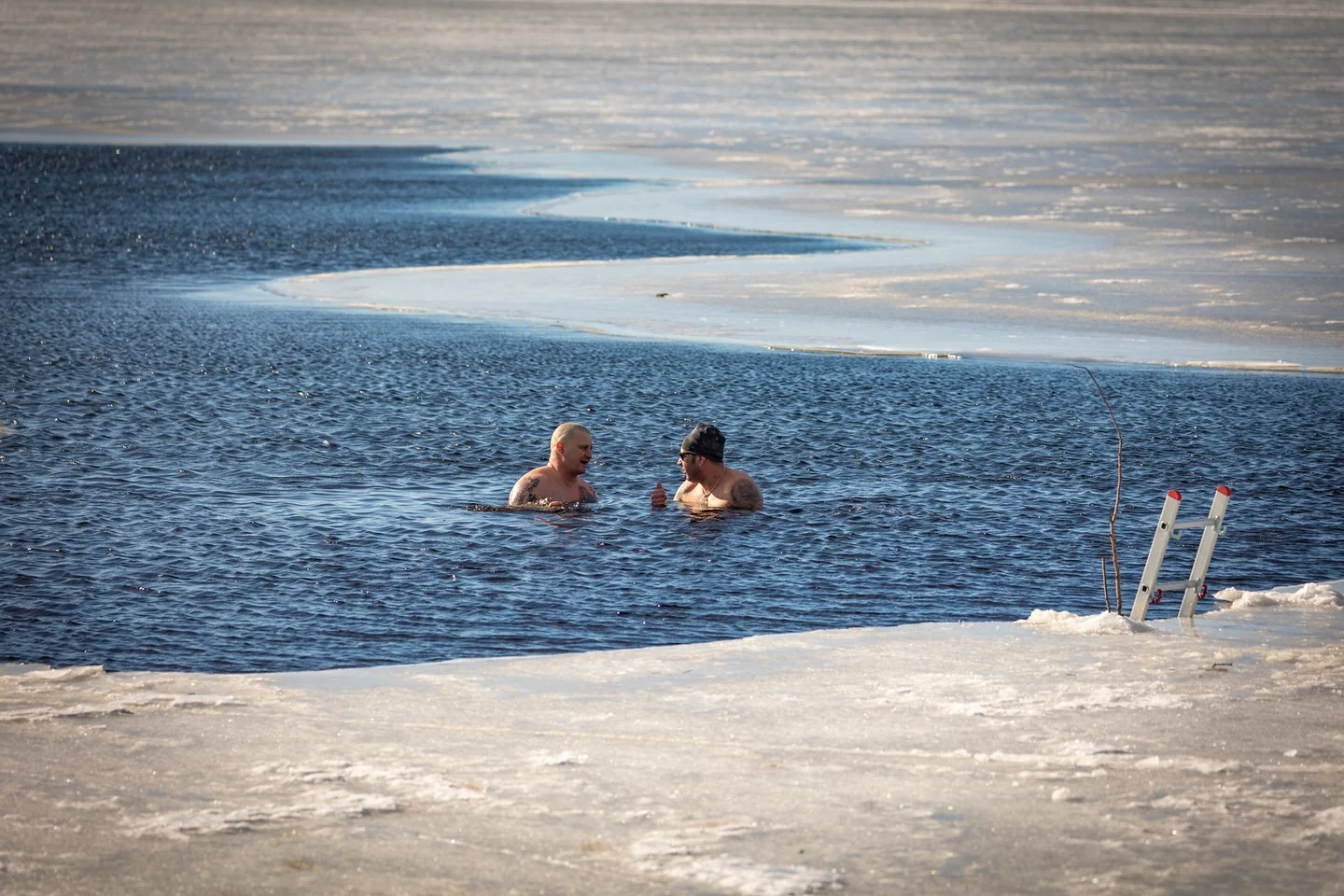
Ice baths have become part of the routine of many runners as a way to ease the load on the legs after long runs, intervals, or weeks with a lot of volume. The image repeats itself in clubs, marathons and recovery centers: legs in the water, breath held, and a promise of relief that does not always come through the same way for everyone.
Current evidence points to a real effect on muscle soreness and the feeling of recovery, although not so much on objective markers such as inflammation or muscle damage. In practice, its usefulness depends on the type of training, the moment it is applied, and each runner’s tolerance to the cold, a detail that is far from minor when we are talking about performing and not just enduring the discomfort.
What happens in the body when the cold arrives
Immersion in cold water triggers an immediate physiological response: blood vessels constrict, peripheral circulation slows down, and the body prioritizes maintaining core temperature. That combination temporarily reduces the perception of pain and can decrease swelling in muscles worn down by effort.
The effect is not limited to a passing sense of relief. When getting out of the water, the body tends to restore blood flow more intensely, as if it suddenly opened a gate. That back-and-forth explains why many athletes talk about lighter legs the next day, even though that improvement does not always translate into faster muscle repair in the strict sense.
There is also a very visible nervous component. The cold reduces the speed of nerve conduction and that dulls the pain signal. For someone who arrives loaded after a demanding session, the difference between still feeling their legs like wood or walking with a bit more ease can be enough to see the experience as useful.
What the evidence says and what is still not clear
Scientific research does not paint a uniform picture, but it does leave a reasonable pattern. Reviews and meta-analyses have found that cold-water immersion can reduce delayed-onset muscle soreness compared with passive rest in different sports contexts. Other studies, however, do not detect clear advantages over simpler or active strategies, and in strength work some results even suggest it could interfere with certain muscle adaptations if used systematically.
That is why the serious conversation is not about whether cold works miracles, but about when it makes sense. In runners, the most sensible answer appears after efforts that leave a high mechanical load: long runs, blocks of intervals, hard hills, or races in hot conditions. That is where the sense of relief and the possible reduction in pain have the most practical logic.
The subjective side weighs more than it seems. In several studies, the most consistent improvement is not found in sophisticated biomarkers, but in how the athlete feels: less perceived fatigue, less heaviness, and a more favorable sense of recovery. That nuance explains why the experience can be valuable even when the lab does not offer a clear-cut victory.
When they fit best into a runner’s routine
The best moment usually comes after a hard session, not after just any easy run. Applying cold after an easy, short, or very undemanding workout adds little and can become an unnecessary discomfort. In contrast, after a long outing or a quality session, the body appreciates a strategy that lowers accumulated stress.
The timing window matters. Many protocols place the immersion right after exercise or within the following 30 minutes, when the inflammatory response and fatigue are more pronounced. It is not about going into automatic mode after every stride of the year, but about reserving it for the moments when the load really justifies it.
In periods of high training density, selective use makes more sense. A runner preparing a marathon, stringing together several demanding sessions per week, or racing on weekends may find cold a useful one-off aid to arrive at the next stimulus with better sensations. Outside that scenario, its value drops and other forms of recovery, like sleeping more, eating well, and moving the legs gently, remain more decisive.
Temperature, time and depth: the practical side
The most accepted ranges place the water between 10 and 15 degrees Celsius, with sessions of 10 to 15 minutes as the usual reference. Going below that range does not usually bring clear additional benefits and does increase discomfort and the risk of an excessive cold response. In other words, more ice does not necessarily mean better recovery.
Depth also changes the effect. For recreational runners, it is not always necessary to submerge the whole body; legs, calves and thighs may be enough if the goal is to ease the load on the lower body. When more areas of the body are covered, the sensation is more intense and the energy cost of maintaining temperature increases, something to keep in mind if the session comes after a long effort.
Adapting to the cold is not improvised in a day. Someone who is not used to it usually notices hyperventilation, chest tightness and a very marked first reaction of rejection. Starting with fewer minutes, controlling the breathing and entering gradually is usually more reasonable than forcing a prolonged immersion from the start.
Which types of runners may notice the biggest difference
Those who accumulate a high load are usually the ones who can get the most out of this practice. Marathoners, middle-distance runners in quality phases, triathletes with high volume, or runners facing back-to-back competition blocks are profiles where cold can fit better as a punctual recovery tool.
It can also be useful on especially hot days. When ambient temperature drives exhaustion through the roof, the cold bath helps lower body temperature and can bring back some physical and mental clarity. In summer, especially during long runs in the Valencian Community, that thermal relief is felt before any physiological theory.
In runners looking to gain muscle mass or improve strength, frequent use requires more caution. The literature has shown that very habitual exposure to cold after strength work could blunt certain adaptations. It is not an absolute prohibition, but it is a reason not to turn it into an automatic reflex after every gym session.
Risks, limits and warning signs
The main risk is hypothermia if exposure lasts too long. Dizziness, faintness, intense shivering, or a cold shock response can also appear in the first seconds. That is why it is not advisable to do it alone, especially the first few times, or to trust intuition when the body starts giving clear signs of saturation.
There are situations in which improvising is not a good idea. People with cardiovascular problems, uncontrolled high blood pressure, circulation disorders, open wounds, or excessive sensitivity to cold should consult a healthcare professional first. It is also not recommended for pregnant women or children, and in any case caution should come before fashion.
Too much can also work against the sporting goal. Staying in too long, using extreme temperatures, or repeating the immersion daily without need can take away more than it adds. Cold does not replace rest, does not make up for poor planning, and does not fix poor recovery on its own.
Full bath, cold shower or partial immersion
You do not need a professional tub to get close to this kind of recovery. At home, a regular bathtub with plenty of cold water and several kilos of ice can work for a basic immersion. If there is no bathtub, a large container, an inflatable pool, or even a partial immersion of legs and hips can offer a functional alternative.
Cold showers appear as a more accessible and less intimidating option. They do not reproduce exactly the same response as an immersion, but they do allow useful exposure to cold, especially when logistics take over and there is no suitable space to prepare a full bath. For the average runner, that ease can be the difference between trying it once or incorporating it into the routine without complications.
Contrast therapy also has a place here. Alternating hot and cold can be more pleasant and, in some contexts, give a feeling of more active circulation. However, for recovery after running, the advantage over a simple cold immersion is not entirely clear and depends a lot on personal preference.
What to do after getting out of the water
Getting out should be calm and steady. The body may be numb, so it is wise to stand up carefully, dry off well, and avoid sudden movements. Once out, the ideal is to warm up again naturally with dry clothes, a warm drink and some time, not with a sudden blast of very hot water.
The body may take between 15 and 20 minutes to return to its usual temperature. During that stretch, the lingering cold sensation is part of the process and does not necessarily indicate a problem. What does matter is listening for unusual signs, such as extreme clumsiness, shivering that does not ease, or persistent general discomfort.
Useful recovery does not end when you turn off the tap. A cold session can lower the perception of fatigue, but sleep, hydration and nutrition remain the pillars that support real adaptation to training. The ice bath can quiet the system, but it does not replace the full architecture of recovery.
How much sense it really makes in a runner’s life
Its strongest value is short-term relief after demanding efforts. For a recreational runner, that is already quite a lot. Arriving the next day with a bit less stiffness, walking better, or facing an easy session with more ease can make a tangible difference in weeks of heavy load.
At the same time, its effectiveness should not be exaggerated. It is not a master key or a manual obligation, and there is not just one correct way to apply it. Some notice clear benefits with just a few sessions a week; others barely notice changes and prefer to walk, jog lightly, or rest completely.
The most honest reading is this: it works better as a punctual tool than as a universal ritual. In a runner’s schedule, cold baths have a useful place when the demands rise, the heat hits hard, or the legs ask for a visible truce. Outside those scenarios, its role becomes more modest and it is worth not pushing aside, because of it, what really sustains long-term performance: consistency, rest and common sense.
The place of cold in modern runner recovery
The fascination with cold comes from both science and experience. The body comes out different from a well-done immersion: numb, lighter, sometimes even with a mental clarity that is hard to explain precisely. That mix of physiological effect and subjective perception explains why the practice has moved from elite sport into the routine of many amateurs.
But running is not solved with a single gesture, however spectacular it may seem. A cold bath can accompany the process, ease discomfort and give room to string together hard sessions with better sensations, though always within a broader strategy. That is its real dimension: a concrete, brief and useful tool, not a total solution.
The best sign that it fits well is simple: the runner gets out of the water without having compromised their safety, feels less heaviness, and can train again with a manageable load. When that happens, the cold has done its job discreetly, which is precisely the mark of well-chosen aids.
Medical reference: Ice baths for post-exercise soreness, Mayo Clinic.



How to prevent thigh chafing: causes and real solutions

Women’s running windbreakers: seven jackets and how to choose

Do more workouts get rid of soreness? A guide for runners

Jaén Half Marathon 2026: Record 3,800 Runners Registered

Men’s short running tights: how to choose the right pair

World Triathlon confirms data breach involving medical data

Izan Edo targets podium at Miyazaki World Cup

María Pérez ranks ninth in World Athletics’ 2026 top ten

Dos Santos, Duplantis and Sawe: World Athlete of the Year finalists

San Silvestre Vallecana 2026: 42,000 places, prices and start times

 Races3 months ago
Valencia Half Marathon 2027: date and registration

 Races3 months ago
Valencia Marathon 2026: entry, ballot and course

 Reviews and Comparisons4 months ago
Asics Gel-Roadmiles 3 for men: review and current price

 Reviews and Comparisons4 months ago
Asics Gel Sonoma 8 Gore-Tex: complete analysis for trail and rain

 Sneakers3 months ago
Saucony Endorphin Pro 4: full review and verdict

 News5 months ago
Strava API 2026: what changes for clubs, challenges and runner apps?

 Reviews and Comparisons5 months ago
Nike Alphafly 3: opinions, sensations, and real key points

 Reviews and Comparisons4 months ago
Under Armour running shoes review 2025-2026: models and key features

 Sports Equipment4 months ago
Shoe sizes in cm: a clear guide to getting the right fit for your footwear

 Sneakers3 months ago
Skechers GO RUN Consistent 2.0 analysis: comfort and limits

 News5 months ago
Valencia Marathon 2026 route: key tips to train and run better

 Sneakers4 months ago
Adidas Adizero Boston 13 for men: review and verdict