Health and Nutrition
What Helps with Muscle Soreness from Running?
Muscle soreness after training: what really helps, what helps little, and how to reduce the discomfort without falling for myths.

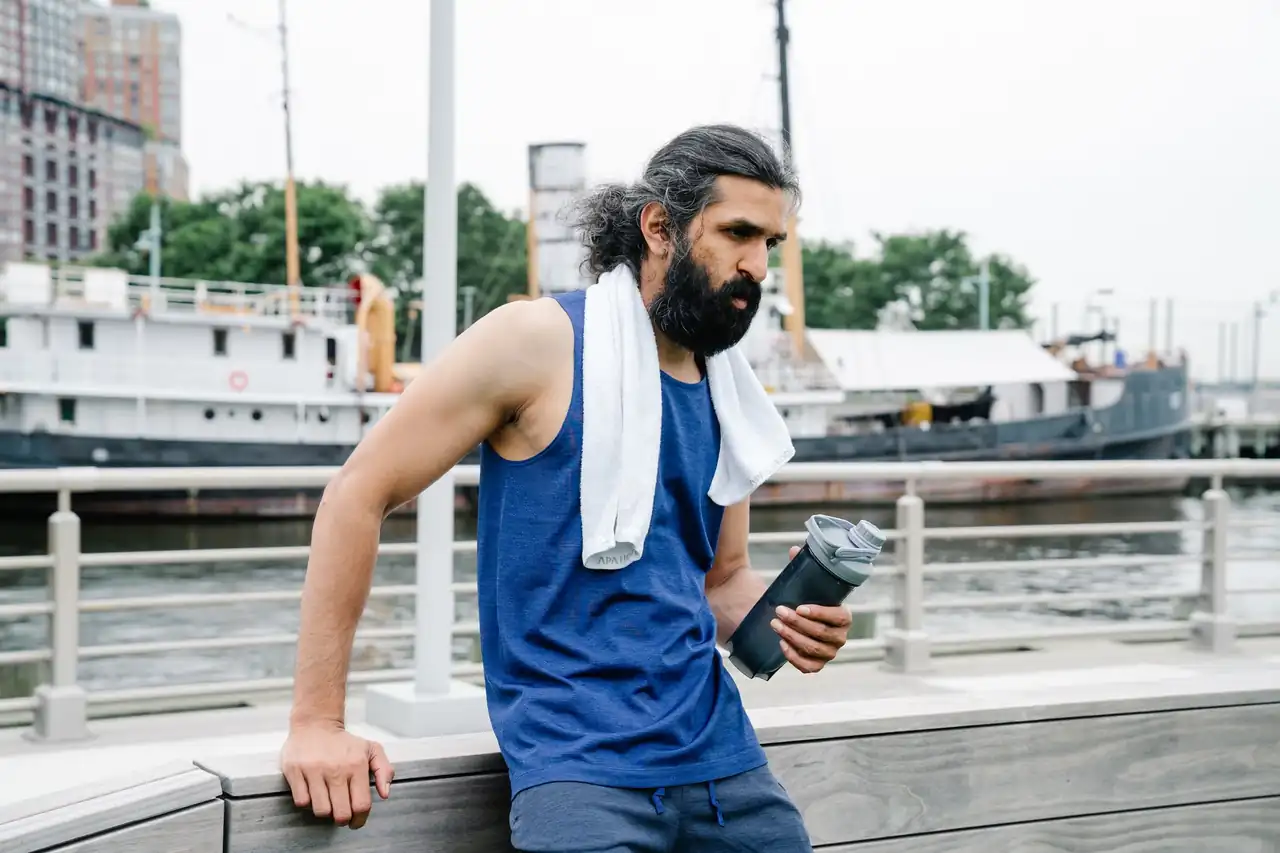
Muscle soreness is not just for beginners or for runners returning after a break. It can follow a harder-than-usual effort or a type of exercise your muscles are not yet used to. Stiffness, tightness and pain when walking downstairs may appear after a longer run, hills, hard intervals or a sudden increase in mileage.
What works best to ease that pain is not a single miracle solution, but a combination of gentle movement, hydration, rest, and enough food. Cold can reduce the feeling of overload in some cases, while heat helps when stiffness is the main issue. Light massage and low-intensity activity can bring relief, but it is worth leaving behind the idea that the body gets fixed through pain or spectacular remedies.
Why they appear and why they hurt so much
The common name coexists with a more precise term: delayed-onset muscle soreness. It usually sets in between 12 and 24 hours after exertion and reaches its most uncomfortable point around 24 to 72 hours later. The most accepted cause is the combination of small microtears in the muscle fibers and a normal inflammatory response from the body. It is not lactic acid buildup, a very repeated explanation for years and now outdated by the evidence.
The pain is felt more when the muscle works eccentrically, that is, when it lengthens while bearing load. Running downhill, braking during intervals, jumping, or doing deep squats are classic examples. In that sort of microscopic wear and tear, the tissue responds with local inflammation, tenderness to the touch, and a temporary loss of strength. The body is not broken; it is repairing itself.
That is why discomfort can be intense without any serious injury. Even so, it is worth distinguishing muscle soreness from warning signs. A stabbing pain, noticeable swelling, bruising, a clear loss of function, or discomfort that worsens over the days no longer fits the usual pattern and deserves a different interpretation. Muscle soreness, although annoying, tends to fade on its own and stops feeling like a badly oiled door when the tissue recovers.
What helps most in the first few hours
The most sensible measure is usually the simplest one: keep moving without punishing the muscle. Walking, easy cycling, very slow jogging, or a few minutes of joint mobility helps circulation and can reduce the feeling of heaviness. The goal is not to train through the pain as if nothing were happening, but to get the body moving without demanding power or high impact.
Rest also matters, but not as complete immobility. A recovering body is more like a city waking up at dawn than a switched-off machine. Sleeping well, easing off for the day, and letting the tissues repair is part of the process. When sleep is cut short or training load piles up, the pain often lasts longer and recovery becomes slower.
Hydration comes into play because the body needs water to move nutrients, manage inflammation, and support muscle repair. Drinking enough does not erase muscle soreness on its own, but it does prevent the body from entering recovery in a dry state. During demanding workouts or in hot weather, an electrolyte drink can be useful to replace sodium and other minerals lost through sweat.
Helpful food to ease the discomfort
Food does not cure muscle soreness like a pill, but it can tip the balance toward smoother recovery. Protein is key because it provides the building blocks the muscle uses to repair its fibers. Eggs, yogurt, fish, legumes, chicken, or tofu fill that role, and it is a good idea to include them in the hours after a hard effort.
Carbohydrates matter more than they are often given credit for. After running, especially if the session has been intense or long, they refill glycogen stores and reduce the feeling of muscle depletion. Rice, potatoes, bread, oats, fruit, or simple pasta help the body avoid having to juggle energy just to rebuild itself. When carbs are lacking, recovery becomes rougher.
Fruits and vegetables provide antioxidants and bioactive compounds that can soften part of the oxidative stress from exercise. Citrus fruits, berries, leafy greens, tomatoes, and kiwi fit well into a recovery diet. Foods rich in magnesium and potassium, such as bananas, nuts, legumes, avocado, and seeds, also stand out, although their role is more supportive of muscle function than a direct remedy.
The well-known juices, smoothies, or blends with pineapple, orange, or cherry have a place among athletes because they make it easier to take in carbohydrates and fluids, and some fruits add mild anti-inflammatory compounds. Even so, they should not be sold as a magic shortcut. They work better as part of a complete eating pattern than as an isolated gesture in the middle of a poorly nourished recovery.
Supplements and remedies that do make some sense
The supplement shelf offers everything, but not everything deserves the same weight. Protein powder can be useful when it is hard to reach daily needs with real food, especially for runners with double sessions, little appetite after training, or tight schedules. It is not essential, but it is practical.
Creatine has solid support in performance and strength-training adaptation, and some studies place it as an indirect aid to muscle recovery. Curcumin, derived from turmeric, is also being studied for its anti-inflammatory profile, although its effect on muscle soreness is neither uniform nor miraculous. Quercetin, glutamine, or BCAAs are often mentioned, but their real usefulness depends on the context, the diet, and the type of training.
Magnesium deserves clarification. It can be valuable if there is a deficiency or if the diet is poor in this mineral, but taking more than needed does not turn your legs into cotton. Something similar happens with zinc, vitamin C, or vitamin B6: they help when there are shortages or high demands, not as an automatic shield against muscle pain.
Ginger, arnica, cooling ointments, or muscle creams are also often mentioned. Some people feel relief from the massage, the thermal sensation, or local relaxation more than from any strong pharmacological action. In other cases, the benefit is modest but real, like a small umbrella in a light rain. It does not change the weather, but it makes the trip more manageable.
Cold, heat, and massage: when they fit best
Cold usually works better when there is a feeling of inflammation, impact from load, or recent overload. Applied briefly and with protection over the skin, it can reduce the perception of pain. Heat, on the other hand, is usually more pleasant when stiffness is the main issue and the muscle feels like a taut rope. A lukewarm bath, an electric blanket, or a hot shower can provide that much sought-after feeling of release.
Temperature contrasts appear in many sports settings, but their effect is more about subjective relief than structural solution. In other words, they may make the body feel better for a few hours without fully changing the repair process. That is why they work as support, not as the core treatment.
Gentle massage does have a place, especially if it is brief and does not injure the tissue. Pressing hard on an already sensitive muscle can worsen the picture, while moderate contact helps relax, improve the feeling of mobility, and reduce the sense of a knot. It is a bit like smoothing a wrinkled cloth with an open palm: the right pressure organizes, too much damages.
What to avoid so you do not prolong the pain
The worst idea is to turn muscle soreness into a test of pride. Training hard on a sore muscle, especially if technique deteriorates or the movement becomes clumsy, can prolong the discomfort and increase the risk of overload. There is no need to stop all activity, but intensity, impact, and volume should be adjusted. A very easy run may be reasonable; a demanding interval session, not so much.
Aggressive stretching, bouncing, or attempts to force range of motion do not help either. The muscle is already sensitive and does not need an extra fight. It is better to think in terms of controlled mobility, calm breathing, and comfortable ranges, without forcing the movement to the point of pain. The body gives clear warning when something is overdone.
Another common mistake is eating too little after a hard workout. People who run, especially if they string together sessions or are preparing for a race, need enough energy to repair. Skipping meals, cutting back on protein, or fearing carbohydrates only leaves the body with less material to rebuild what exertion has worn down.
How long they last and when they stop being normal
In most cases, muscle soreness starts to ease between the third and fifth day. In less trained people, after a sudden increase in load, or after a very eccentric session, it can last a bit longer. If the pain lasts more than a week, increases instead of decreasing, or significantly alters your gait, it should no longer be lumped into the same category.
Duration depends on fitness level, the type of exercise, rest, and diet. A runner used to long runs will usually tolerate a twenty-kilometer outing better than someone returning to running after months off. The body learns, remembers, and protects itself; that is why regularly repeating the same load tends to cause less pain over time.
The schedule also matters. If a session lasts too long for the person’s level, or if high intensities are combined with too little recovery, the muscle reaches the next stimulus with a low reserve. That accumulation of small excesses leaves a feeling similar to sand in the shoe: it does not break anything, but it irritates all day.
How to prevent it without turning training into a laboratory
Prevention is not about eliminating effort, but about managing load intelligently. Increasing volume gradually, introducing hills cautiously, respecting cooldowns, and leaving room between intense sessions helps the muscle adapt. In running, the classic mistake is wanting to recover in a week what the body learns over several weeks.
Warm-up prepares the nervous and muscular systems for the work ahead, and cooldown helps lower heart rate and release tension. They are not empty rituals. They do not work magic either, but they reduce the shock between rest and effort. Reasonable progression, decent sleep, and enough food matter far more than any isolated trick.
Consistency reduces the problem a lot. Someone who runs regularly, even if only with moderate sessions, usually suffers less muscle soreness than someone who trains in bursts. The muscle does not only gain strength; it also gains memory. That learning shows up in impact response, recovery, and tolerance to new stimuli.
When muscle pain no longer fits simple soreness
There are signs that require a change of approach. A pain located in a very specific point, a tearing sensation, a pop at the moment of exertion, visible swelling, marked loss of strength, or pain that gets worse while running do not sound like ordinary muscle soreness. Muscle injury and muscle soreness are not the same thing, even if the beginning can be confusing.
If the runner cannot put weight on the leg properly, if the area turns purple, or if the discomfort does not follow the usual delayed-onset pattern, a health assessment is needed. The difference matters because poorly targeted recovery can prolong the problem. Muscle soreness is a temporary nuisance; a poorly treated injury is not.
In practice, the most useful thing is to read the body calmly. Muscle soreness usually feels like a diffuse pressure, sometimes bilateral, that improves with gentle movement and fades in a few days. Warning signs, by contrast, point to sharp pain, clear limitation, and a worse-than-expected evolution. That nuance changes the whole story.
Muscle soreness from running: relief and training adjustments
Muscle soreness often appears 12 to 24 hours after an unfamiliar effort and may feel worst between 24 and 72 hours. In a running plan, it commonly follows a sudden increase in distance, hill work—especially downhill running—or hard intervals. If the discomfort is spread across the muscles you worked, try gentle movement: walking, mobility exercises or a very easy jog if it does not change your stride. You do not need to stay completely still, but a hard workout is not a way to “run it off”.
Adjust your session to how you feel: swap intervals or hills for a walk or easy run, or rest if soreness is changing the way you move. Good sleep, drinking to thirst and eating enough, including sources of protein and carbohydrates, support general recovery, although they will not make soreness disappear straight away. Heat may ease stiffness, while cold may feel soothing when the area feels overloaded; a gentle massage can also be comforting. Avoid painful techniques, and do not use these measures to mask symptoms so you can push through training.
Return to your usual intensity when movement and your running stride feel comfortable. To reduce the chance of soreness recurring, build training gradually rather than suddenly stacking long runs, hills and speed work. Sharp or very localised pain, notable swelling, bruising, clear loss of function, or symptoms that worsen or persist do not fit the usual pattern of muscle soreness. Stop running and consult a healthcare professional.
What truly remains after the effort
After a hard session, the body does not ask for heroics; it asks for order. Hydrating, eating enough, moving gently, resting, and not aggravating the area is the real foundation of useful recovery. Cold, heat, massage, or certain supplements can add something, but none of them replace that simple, quite ancient structure that supports muscle repair.
The most prudent idea is also the most honest: muscle soreness is part of training, but it is neither a trophy nor a necessary condition for improvement. Progress comes when the body handles the load better, not when it hurts more. In the distance runner, as in any endurance craft, true progress usually makes less noise than discomfort.
That is why, rather than looking for a single remedy, it makes sense to observe which combination of rest, food, and load allows the muscle to return to normal function without dragging the next session down. That is the useful answer, the one that truly lets you run with looser legs and cleaner recovery.
Medical reference: Alivio del dolor muscular después del ejercicio, Cleveland Clinic.



How to prevent thigh chafing: causes and real solutions

Women’s running windbreakers: seven jackets and how to choose

Do more workouts get rid of soreness? A guide for runners

Jaén Half Marathon 2026: Record 3,800 Runners Registered

Men’s short running tights: how to choose the right pair

World Triathlon confirms data breach involving medical data

Izan Edo targets podium at Miyazaki World Cup

María Pérez ranks ninth in World Athletics’ 2026 top ten

Dos Santos, Duplantis and Sawe: World Athlete of the Year finalists

San Silvestre Vallecana 2026: 42,000 places, prices and start times

 Races3 months ago
Valencia Half Marathon 2027: date and registration

 Races3 months ago
Valencia Marathon 2026: entry, ballot and course

 Reviews and Comparisons4 months ago
Asics Gel-Roadmiles 3 for men: review and current price

 Reviews and Comparisons4 months ago
Asics Gel Sonoma 8 Gore-Tex: complete analysis for trail and rain

 Sneakers3 months ago
Saucony Endorphin Pro 4: full review and verdict

 News5 months ago
Strava API 2026: what changes for clubs, challenges and runner apps?

 Reviews and Comparisons5 months ago
Nike Alphafly 3: opinions, sensations, and real key points

 Reviews and Comparisons4 months ago
Under Armour running shoes review 2025-2026: models and key features

 Sports Equipment4 months ago
Shoe sizes in cm: a clear guide to getting the right fit for your footwear

 Sneakers3 months ago
Skechers GO RUN Consistent 2.0 analysis: comfort and limits

 News5 months ago
Valencia Marathon 2026 route: key tips to train and run better

 Sneakers4 months ago
Adidas Adizero Boston 13 for men: review and verdict