Health and Nutrition
Pain in the inner arch of the foot: causes, signs, and relief
Frequent causes, warning signs, and useful measures to relieve a discomfort that affects walking and training.

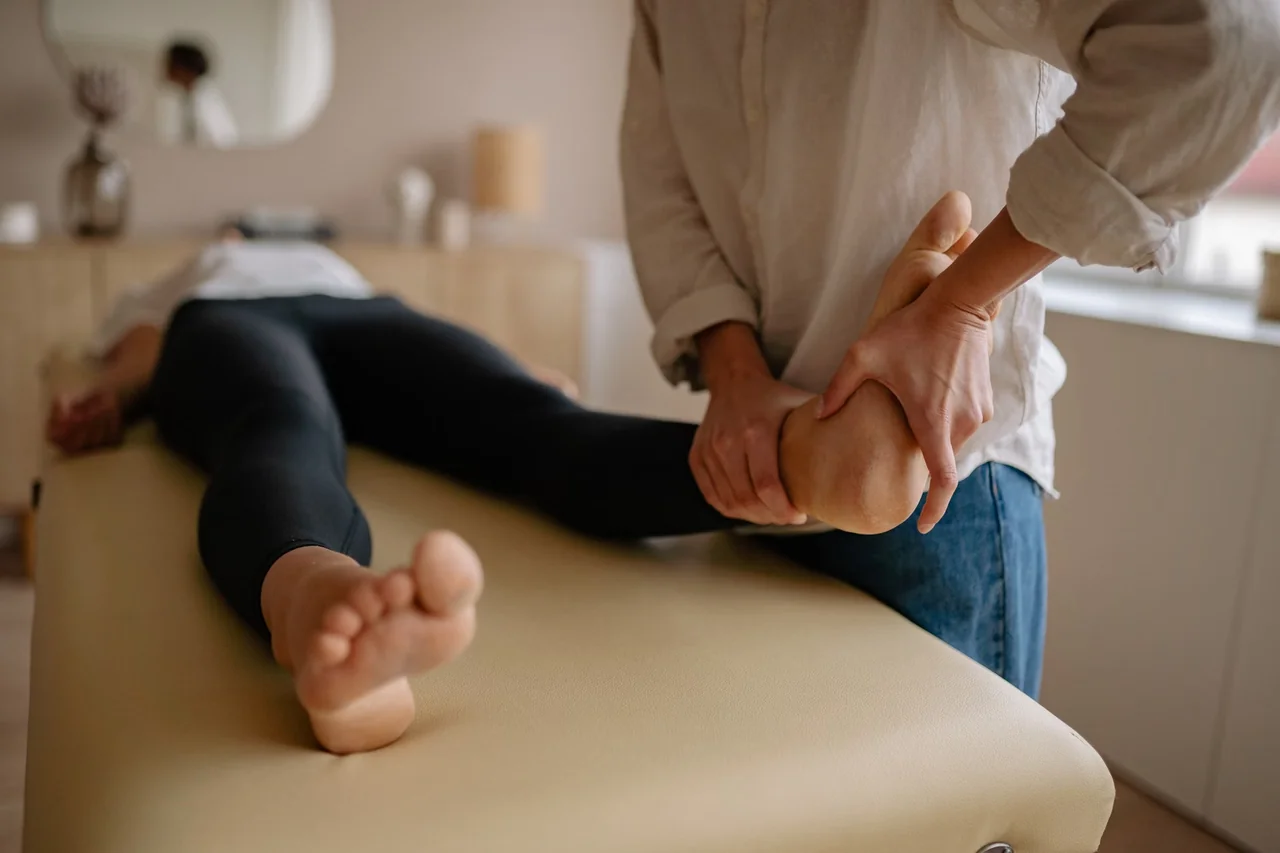
The inner arch of the foot supports each stride like a small living beam: it cushions impact, distributes load, and returns momentum. When it hurts, the problem is usually not at a single point, but in a delicate mechanism that includes the plantar fascia, tendons, intrinsic musculature, and the way you step. In runners, this discomfort often appears after increasing mileage, changing surfaces, or wearing unsuitable new shoes.
The key is that not every pain in the medial area of the foot has the same origin. It may be a mechanical overload, plantar fasciitis, posterior tibial tendinopathy, a flat foot that asks too much of the tissues, or, less often, a nerve problem or a stress injury. Identifying the pain pattern matters more than chasing quick relief that disappears as soon as the load returns.
What structures suffer when the discomfort appears
The arch is not a rigid bridge, but a flexible architecture designed to give a little and recover shape with each step. The plantar fascia acts as a taut band that helps support that arch; the posterior tibial tendon contributes to its stability; the small muscles of the sole coordinate the fine, almost invisible motion that makes walking, running, and braking possible. If one of these elements fails, the others compensate and the pain eventually leaks through the inside of the foot.
For runners, that load distribution becomes more demanding. Fatigue alters technique, the stride lengthens, the ankle collapses inward, or the landing becomes harsher. Then the medial arch receives more tension than it can tolerate and the body responds with inflammation, stiffness, or stabbing pain when starting to walk. Sometimes the symptom is mild and vague; other times, it is a clear ache on the first step in the morning or at the end of a long run.
Anatomy also plays a role. Some feet have very low arches, others have high, rigid arches, and both can suffer for different reasons. A flat foot tends to stress the inner side by demanding more control; a high-arched foot, on the other hand, concentrates load on specific points and can leave the fascia feeling like a guitar string. The shape of the foot is not a sentence, but it does condition how effort is distributed.
Common causes in runners and active people
Plantar fasciitis tops many consultations because it usually presents a very recognizable combination: pain when getting up, stiffness after rest, and a burning or tight sensation in the sole. It is not always felt only in the heel; sometimes it runs along the arch and leaves a sensitive strip to the touch. The repeated act of running on asphalt, jumping, or standing for long periods can irritate the area until overload becomes a persistent injury.
Another common cause is posterior tibial tendinopathy. This tendon works like a support cable for the arch and, when it becomes inflamed or degenerates, pain appears on the inner side of the ankle and along its path toward the arch. In runners with excess pronation, with sudden increases in load, or with little strength in the foot and calf, that tendon pays the bill before the problem becomes visible from the outside. Inner pain does not always start in the sole; sometimes it begins a little higher up and radiates downward.
Shoes matter more than they seem. Overworn trainers, models with too little stability for a foot that needs it, or sudden switches to very minimalist profiles can trigger irritation. The same happens with hard surfaces, hills, speed work, and back-to-back sessions without real recovery. Tissue tolerates one load fairly well; what it does not tolerate as well is the sum of many small loads without enough rest.
In non-athletes, excess weight, long hours standing, and certain metabolic or inflammatory changes can worsen the picture. A standing job on a hard floor, a long sightseeing walk, or a sedentary period followed by intense activity is a combination as common as it is treacherous. The body responds late, but it does respond; and the arch, which seemed discreet, ends up demanding attention through pain.
Signs that point to overload rather than another injury
The way the pain feels gives valuable clues. If it appears with the first steps in the morning and improves once you warm up, the plantar fascia is usually involved. If the pain increases while running, worsens on stairs, or is accompanied by a sense of instability on the inner side of the ankle, posterior tibial tendon issues should be considered. If the foot feels tired, tight, and sensitive after many hours of standing, muscular overload becomes a more likely suspect.
Daily observation also helps. An arch that collapses too much, uneven wear on the sole, discomfort that increases when rising onto the toes, or when trying to hold your weight on one foot are all clues. Observing gait and body posture matters just as much as describing the pain. Often, the visible symptom is only the tip of the biomechanical iceberg.
Some signs do not fit simple mechanical irritation and require other possibilities to be considered. Severe nighttime pain, marked swelling, fever, redness, persistent numbness, or very localized pain after a blow warrant greater caution. A discomfort that prevents normal weight-bearing or lasts for weeks without any tendency to improve also deserves attention. In those cases, waiting usually does not help.
What usually helps and what can worsen the course
The most sensible initial measures focus on reducing load. Temporarily lowering running volume, avoiding very hard surfaces, and spacing out intense sessions usually gives tissues room to calm the irritation. Applying brief cold can relieve acute phases, especially after activity, although it does not replace addressing the source of the problem. Isolated relief is useful; lasting resolution requires more.
Manual therapy, therapeutic exercise, and progressive strengthening are usually more solid tools than absolute rest. Stretching the calves and soleus, mobilizing the ankle, activating the foot musculature, and restoring strength in the posterior chain help distribute the load better. A stronger foot tolerates impact better, but progression has to be gradual, without weekend heroics that reignite the area.
It is also important to review footwear pragmatically. An worn-out shoe loses support where it is most needed; a narrow last compresses; a midsole that is too soft can leave the foot working without guidance. There is no universal model for everyone, but there is a clear rule: if changing shoes increases pain or makes it consistently disappear, the foot is giving useful information. Ignoring it usually becomes expensive.
Intrinsic foot-strength and support-control exercises usually work better than isolated stretching when the problem is mechanical. Picking up a towel with the toes, keeping the arch active without curling the toes, raising the heel with good alignment, or working on single-leg balance are simple movements that retrain the area. For runners, it is also worth monitoring cadence, stride length, and accumulated fatigue, because pain rarely appears out of nowhere: it almost always comes after a sum of small excesses.
When the pain points to a diagnosis that should not be delayed
Discomfort that lasts more than two or three weeks, does not improve when activity is reduced, or returns every time you start running again deserves clinical assessment. Not only because of symptom intensity, but because some conditions become chronic easily if they are left half-resolved. The fascia becomes more sensitive, the tendon loses load capacity, and the runner begins compensating with the knee, hip, or back.
There are cases where inner arch pain appears after a clear increase in training, but also after an apparently minor change: moving from flat routes to hills, changing drop, accumulating consecutive days on your feet, or returning to sport after weeks off. That timing detail matters. Injured tissue rarely breaks all at once; it usually warns first with stiffness that seemed harmless.
If stress fracture, nerve entrapment, or a more severe tendon injury is suspected, medical or physiotherapy evaluation is no longer optional; it becomes prudent. The difference between manageable overload and a problem that needs further testing is not always obvious at first glance, which is why a pain that alters gait or prevents normal training should not be trivialized.
Relationship with running technique and accumulated load
In running, the arch does not work alone. It functions within a chain that starts at the hip and ends at the toes. Poorly controlled technique, a stride that is too long, or landing too far in front of the body increases braking forces and pushes the foot to absorb more than its share. Excessive pronation is not always the problem; sometimes it is the body’s response to absorb shock. The conflict arises when that response becomes excessive or repetitive.
Fatigue changes mechanics even in well-trained runners. As the miles pass, the posterior tibial tendon tires, the arch loses support, and the fascia compensates as best it can. That is why pain often appears at the end of long runs, in races with a lot of elevation change, or when workouts are stacked without real rest. Load is not just about quantity, but also about how it is distributed across the week.
The same principle explains why two runners with the same volume can have different outcomes. One sleeps well, alternates paces, and recovers; another strings together efforts, lands poorly because of fatigue, and arrives at the next workout with tissue still irritated. The foot does not measure heroics, it measures repetition. And that is where the inner arch usually protests first.
What a thorough clinical assessment usually involves
A complete examination does not stop at touching the painful area. It analyzes the type of support, ankle mobility, strength of the foot and leg muscles, the condition of the plantar fascia, and the pain response to specific movements. It also observes how the person walks, what happens when standing on tiptoes, and whether the arch collapses under load. The goal is to identify which piece is failing and which one is compensating in silence.
In a runner, training history is almost as important as the examination. Recent changes in shoes, pace, surfaces, or volume help explain the origin of the problem. The chronology of pain is often more useful than the snapshot of the exact moment it hurts. A symptom that started after a week of intervals and then blew up during a long walk tells a very different story from one that has remained stable for months.
With that information, treatment usually combines symptom relief and functional recovery. In many cases, the priority is not only to stop the pain, but to get the foot tolerating load again without relapse. That difference is decisive. An arch that is quiet because of rest is not necessarily recovered; an arch that can walk, jump lightly, and run progressively is beginning to behave like a healthy structure.
How daily life changes when the arch stops protesting
A small pain in a small area can disrupt entire days. Getting out of bed becomes a negotiation, walking to the kitchen is no longer automatic, and training turns into calculation. When the inner arch of the foot improves, the simplest movement, stepping and moving forward, regains its natural ease. That return to normal is often more valuable than any promise of quick relief.
Recovery is rarely linear. There are good days, less good days, and the occasional warning when you load too much too soon. What matters is that the overall pattern moves toward greater tolerance and less stiffness. Listening to the foot without dramatizing it helps more than ignoring it or forcing it. In running, that balance between caution and consistency makes the difference between solving a problem and carrying it for months.
Ultimately, inner arch pain speaks of load, support, and tissue tolerance. It is neither a minor symptom nor a sentence to endless rest. With a correct reading of the signs, a sensible adjustment of training, and a well-designed recovery plan, the foot usually responds. And when it does, each step stops being a small warning and returns to what it should always have been: a stable, quiet, and efficient movement.
Medical reference: Foot pain, MedlinePlus (U.S. National Library of Medicine).



How to prevent thigh chafing: causes and real solutions

Women’s running windbreakers: seven jackets and how to choose

Do more workouts get rid of soreness? A guide for runners

Jaén Half Marathon 2026: Record 3,800 Runners Registered

Men’s short running tights: how to choose the right pair

World Triathlon confirms data breach involving medical data

Izan Edo targets podium at Miyazaki World Cup

María Pérez ranks ninth in World Athletics’ 2026 top ten

Dos Santos, Duplantis and Sawe: World Athlete of the Year finalists

San Silvestre Vallecana 2026: 42,000 places, prices and start times

 Races4 months ago
Valencia Half Marathon 2027: date and registration

 Races4 months ago
Valencia Marathon 2026: entry, ballot and course

 Reviews and Comparisons4 months ago
Asics Gel-Roadmiles 3 for men: review and current price

 Reviews and Comparisons4 months ago
Asics Gel Sonoma 8 Gore-Tex: complete analysis for trail and rain

 Sneakers4 months ago
Saucony Endorphin Pro 4: full review and verdict

 News5 months ago
Strava API 2026: what changes for clubs, challenges and runner apps?

 Reviews and Comparisons5 months ago
Nike Alphafly 3: opinions, sensations, and real key points

 Reviews and Comparisons4 months ago
Under Armour running shoes review 2025-2026: models and key features

 Sports Equipment4 months ago
Shoe sizes in cm: a clear guide to getting the right fit for your footwear

 Sneakers3 months ago
Skechers GO RUN Consistent 2.0 analysis: comfort and limits

 News5 months ago
Valencia Marathon 2026 route: key tips to train and run better

 Sneakers4 months ago
Adidas Adizero Boston 13 for men: review and verdict