News
Plantar fasciitis in runners: signs you shouldn’t ignore
Heel pain, poorly managed load, and footwear influence this injury more than it seems.

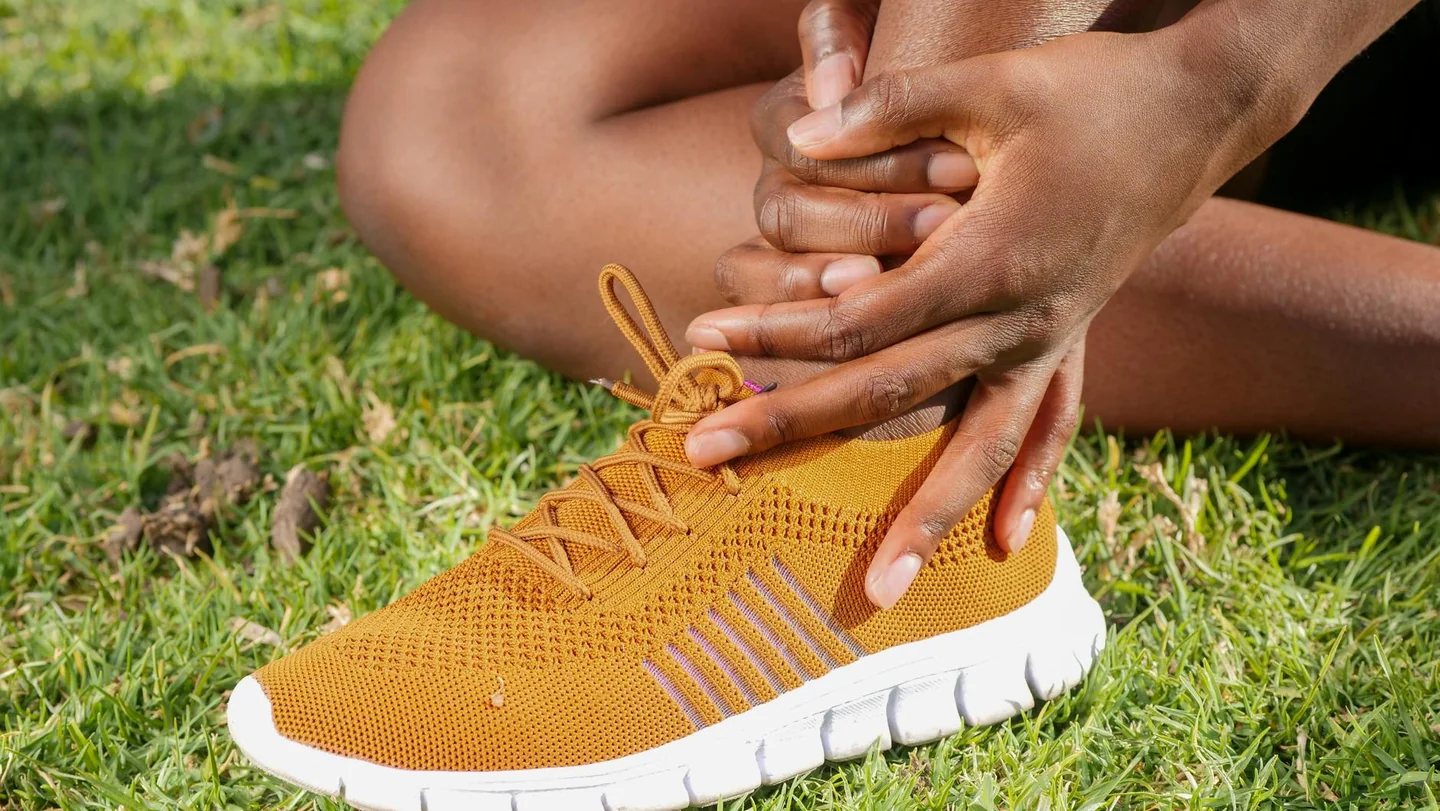
Imagen: Kindel Media / Pexels
Stabbing pain in the sole of the foot or next to the heel usually appears when the tissue that supports the arch gets irritated by repeated load that goes beyond its tolerance. In runners, this discomfort doesn’t come from a single workout, but from the sum of miles, paces, surfaces, and not enough rest. The plantar fascia acts like a strong cable that helps stabilize the foot; when it’s overloaded, every step can feel like a small shock.
The key to understanding this problem in running is simple and, at the same time, uncomfortable: it almost never gets better by ignoring it. Keeping on running through pain, especially when getting up in the morning or after sitting for a while, usually drags the issue out. The most useful thing is to identify what’s feeding it, lower the irritation, and reorganize the load so the foot regains room to work without losing the training stimulus altogether.
What really happens under the arch of the foot
The plantar fascia is a band of fibrous tissue that runs from the heel to the base of the toes. Its job is to help maintain the arch and return energy in the stride. Under normal conditions it handles a lot of tension, because walking, jumping, or running is nothing more than repeating thousands of impacts with limited but useful elasticity. The problem appears when that structure receives more stress than it can absorb over several days or weeks.
In the recreational runner, the pain is usually concentrated near the heel, although it can also be felt more toward the middle of the arch. It’s common to notice the discomfort when taking the first steps of the day, after a long session, or after a prolonged break. That early stiffness is an important clue: it doesn’t always mean a serious injury, but it does clearly signal that the tissue is responding badly to the accumulated volume or intensity.
It’s not just inflammation. For years it was talked about as simple fasciitis, as if everything were an acute inflammation. Today it’s better understood as an overload of the tissue with degenerative changes and a loss of adaptive capacity in some cases. Put plainly: the body keeps trying to repair an area that never quite gets the necessary breathing room. That’s why the discomfort can become stubborn, the kind that comes and goes but never fully disappears.
Why it appears in runners and not at other times
Running demands repetition, stiffness, and efficiency. That’s exactly where the paradox lies. To run well, the foot needs to be stable and the plantar tissue has to withstand a constant sequence of impacts. If someone suddenly increases mileage, switches to a harder surface, starts wearing very different shoes, or adds hills and intervals without a transition, the system takes on more tension than it can distribute.
Individual mechanics also play a role. Some runners have a very stiff foot, limited ankle mobility, or tight calves that absorb impact poorly. Others have a high, rigid arch that doesn’t cushion as much, or marked pronation that alters force distribution. None of these factors alone condemns someone to injury, but they can add up when they coincide with fatigue, poor sleep, or too much hurry to get back to training.
The environment matters more than it seems. Running for many weeks on asphalt, without alternating surfaces, keeps the tissue under a kind of constant hammering. The body doesn’t care whether the mileage was heroic or clumsy; it only measures load, recovery, and repetition. That’s why this injury often appears when building volume for a half marathon, when chaining together training weeks, or after a break followed by a return that’s too fast.
The signs you shouldn’t brush off
The classic symptom is intense pain in the first steps of the day. After that it may ease off, as if the foot warms up and tolerates the load better, but it usually comes back at the end of the day or after running. That apparent improvement is very misleading for athletes, because it allows acceptable sessions to be completed while the problem is still alive underneath.
There’s another useful clue: the area becomes sensitive when pressing the insertion point in the heel or when pulling the toes upward. If stiffness also appears in the calf or a feeling of tightness in the posterior chain, the picture usually makes more biomechanical sense than a purely local one. The foot rarely complains on its own; it almost always speaks on behalf of the whole system.
It’s worth distinguishing it from other pains. Not every pain near the heel is this problem. Sometimes it’s irritation of the Achilles tendon, a bruise in the heel fat pad, or even a stress fracture of the calcaneus. When the pain is very sharp, there’s visible swelling, it appears at night, or it suddenly gets worse when bearing weight, medical evaluation stops being optional.
What usually makes it worse without you noticing
The most common mistake is to keep running exactly the same way, hoping the body will get used to it. With this injury, getting used to it doesn’t always come; often what comes is chronicity. If the stimulus that caused the discomfort is still there, the tissue doesn’t get the chance to settle, and every workout adds another layer of irritation.
The second big factor is footwear. Not because there’s a perfect shoe for everyone, but because sudden changes in model can alter the way forces are distributed. Going from a very cushioned shoe to a firmer one, or to one with less drop, requires adaptation. In an already sensitive foot, that change can be the last straw. Wearing worn-out shoes, with the midsole collapsed and the support thrown off, also plays a role.
The calves and the fascia talk to each other. When the calf is shortened or fatigued, the ankle loses part of its range and the sole of the foot takes on more work. In the same way, spending many hours standing, walking barefoot on hard surfaces, or using sandals without enough support can keep the area irritated even outside training. The injury doesn’t live only on the track or in the park; it slips into daily routine.
How it’s handled without going to extremes
The initial priority is to lower the load that triggers the pain. That doesn’t mean stopping all activity in a dramatic way, but rather adjusting it. In many cases, it’s wise to reduce volume, avoid explosive intervals, and limit hills or sudden pace changes for a few weeks. Running with mild, stable pain may be tolerable for some runners, but if the symptom is increasing or changes the stride, the signal is too clear to keep pushing.
Strength work is often more useful than many people think. We’re not talking about hammering the foot with weird exercises, but about strengthening the calves, soleus, glutes, and the foot’s intrinsic muscles to distribute the load better. When the whole chain supports the movement better, the affected tissue stops carrying all the weight. Recovery, in this context, is more like redistributing city traffic than turning off an alarm.
Mobility matters too. An ankle that doesn’t flex much forces the foot to compensate. A few minutes of gentle work on the calf, soleus, and arch muscles can help, as long as it’s integrated sensibly and not treated like an isolated ritual. What’s useful isn’t doing a lot, but doing what the case calls for and giving the body time to respond.
The role of rest, return, and patience
Real recovery doesn’t always show up the next day. This kind of injury usually improves in layers. First the irritation in the first steps eases, then walking is better tolerated, and later easy running no longer makes the foot complain at the end of the day. Forcing an early return, just when the pain seems to have gone quiet, usually reopens the process.
Getting back to running requires a progression that’s less epic and more intelligent. Easy jogging, short duration, friendly terrain, and no aiming for demanding paces at first. The reference shouldn’t be the runner’s ego or the last healthy training week, but the tissue’s reaction during the 24 hours afterward. If it wakes up worse the next day, the load was too much.
Patience here has a technical function. It’s not resignation or an endless pause, but a way to keep the injury from becoming a permanent tenant. Many runners improve when they understand that the goal isn’t to push harder, but to stop irritating it. That difference, which seems semantic, marks weeks of progress.
Shoes, insoles, and other supports that can help
The right footwear doesn’t cure it on its own, but it can reduce part of the mechanical stress. In sensitive phases, shoes with good cushioning, a stable base, and moderate drop are often better tolerated, especially if the runner was coming from very flat or very minimalist models. The change, though, should be made cautiously. An injured foot doesn’t appreciate sudden experiments.
Insoles can make sense in some cases, especially when there’s a clear biomechanical alteration or when the support needs temporary help to unload the area. Even so, they’re not a universal solution. They serve as support, not as a substitute for strength work, load adaptation, or correcting habits that keep the overload going.
Stretching is often used, but not as a cure-all. Stretching the calves and soleus can ease the associated stiffness, although doing it too much or with intense pain usually doesn’t bring any benefit. The most sensible approach is to think in terms of a combination of unloading, progressive exercise, and gradual reintroduction of impact. The tissue needs stimulus, yes, but a measured stimulus, not a negotiation by force.
When a medical evaluation is needed
Not every plantar ache deserves drama, but some do require professional evaluation. If the pain has lasted several weeks without improving, if it gets worse despite reducing load, or if it prevents normal walking, it’s worth ruling out other injuries and adjusting the approach. It’s also wise to consult if the heel hurts a lot on the first weight-bearing step after getting up, or if the foot has very localized, persistent tenderness.
There are situations that deserve special attention. Night pain, marked swelling, the inability to run without limping, or a history of a sudden increase in training raise suspicion of different problems, such as a stress fracture. In those cases, waiting to see if it goes away on its own can drag the process out longer than necessary.
The goal of an evaluation isn’t to put a label on it just for the sake of it. It’s to prevent a treatable issue from getting complicated by overconfidence. In running, as in so many things, the difference between a passing ache and a stubborn injury often depends on how long it takes to listen to the first alarm.
What this injury teaches about running better
Discomfort in the plantar fascia rarely appears by chance. It’s usually the visible result of an invisible sum: more load than the foot can tolerate, less rest than needed, and a muscle chain that doesn’t distribute the work well. Understanding it this way changes the perspective. It’s not about finding a single culprit, but about organizing variables.
It also reminds us of something runners learn through stumbles: progress doesn’t always mean adding. Sometimes it means cutting mileage, removing intensity, simplifying the movement, and letting the body respond normally again. That adjustment, less flashy than a personal best, is what allows you to keep adding seasons without turning every outing into a fight with the heel.
The foot is small, but it has a lot of say. When it complains, it’s worth taking seriously from the start. Listening in time, reducing the load, and rebuilding tolerance to impact is almost always more effective than running over the problem. In the end, this injury teaches a very athletic lesson: moving forward doesn’t depend only on pushing, but on landing well.
Este artículo contiene enlaces de afiliado: si compras a través de ellos, se genera una pequeña comisión sin coste adicional para ti. Más información.



How to prevent thigh chafing: causes and real solutions

Women’s running windbreakers: seven jackets and how to choose

Do more workouts get rid of soreness? A guide for runners

Jaén Half Marathon 2026: Record 3,800 Runners Registered

Men’s short running tights: how to choose the right pair

World Triathlon confirms data breach involving medical data

Izan Edo targets podium at Miyazaki World Cup

María Pérez ranks ninth in World Athletics’ 2026 top ten

Dos Santos, Duplantis and Sawe: World Athlete of the Year finalists

San Silvestre Vallecana 2026: 42,000 places, prices and start times

 Races4 months ago
Valencia Half Marathon 2027: date and registration

 Races4 months ago
Valencia Marathon 2026: entry, ballot and course

 Reviews and Comparisons4 months ago
Asics Gel-Roadmiles 3 for men: review and current price

 Reviews and Comparisons4 months ago
Asics Gel Sonoma 8 Gore-Tex: complete analysis for trail and rain

 Sneakers4 months ago
Saucony Endorphin Pro 4: full review and verdict

 News5 months ago
Strava API 2026: what changes for clubs, challenges and runner apps?

 Reviews and Comparisons5 months ago
Nike Alphafly 3: opinions, sensations, and real key points

 Reviews and Comparisons4 months ago
Under Armour running shoes review 2025-2026: models and key features

 Sports Equipment4 months ago
Shoe sizes in cm: a clear guide to getting the right fit for your footwear

 Sneakers3 months ago
Skechers GO RUN Consistent 2.0 analysis: comfort and limits

 News5 months ago
Valencia Marathon 2026 route: key tips to train and run better

 Sneakers4 months ago
Adidas Adizero Boston 13 for men: review and verdict