Health and Nutrition
Is it normal to always get muscle soreness when running?
Muscle pain after working out is not always a good sign: duration, real causes, and when it stops being normal.

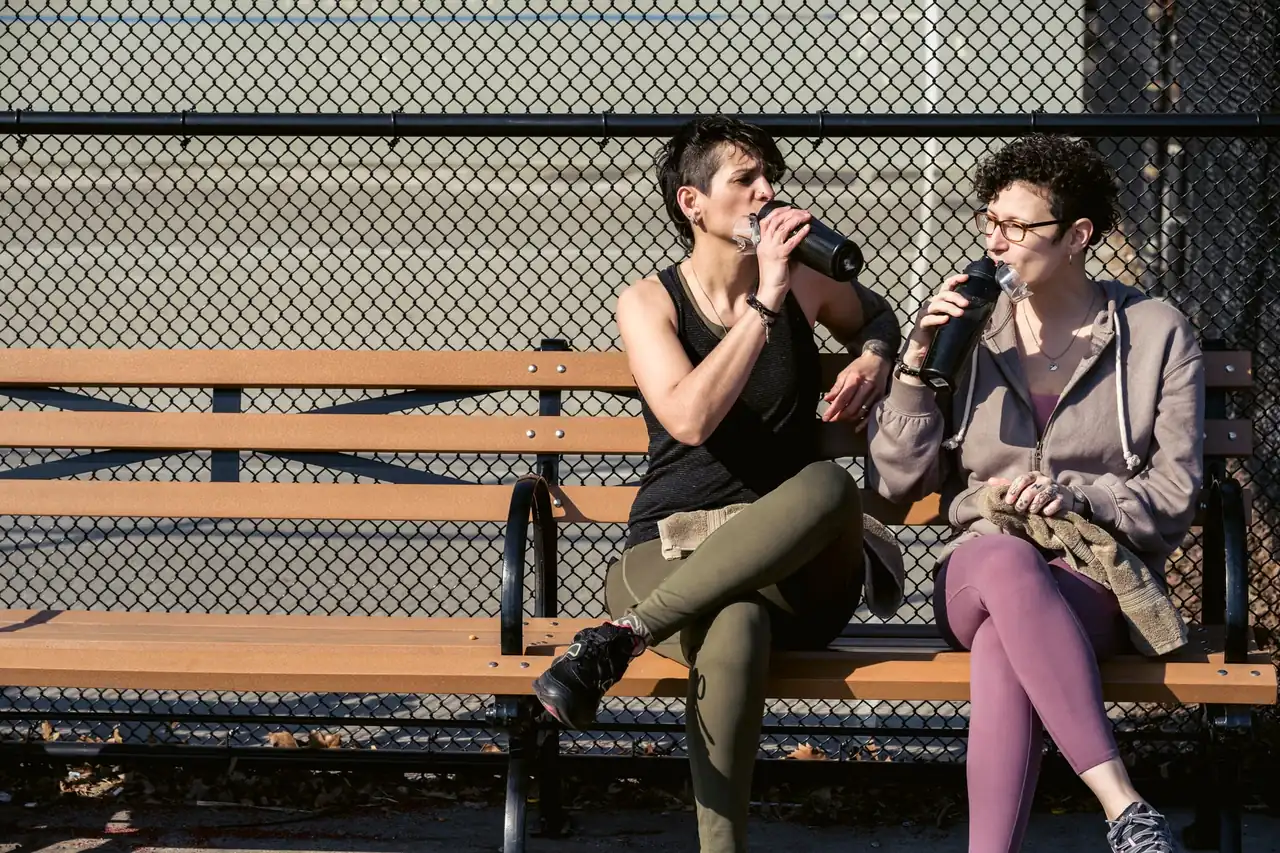
Muscle soreness after a workout is not an automatic sign that you trained well. After a run, a gym session or a change in routine, discomfort that develops hours later is often an expected response to effort rather than a warning sign. The concern is not occasional soreness, but constantly dealing with it: that may mean you are not recovering enough or your training load is poorly balanced.
The key lies in frequency and context. Feeling it after a new session, a hilly run, a longer outing, or returning to training after a break is normal. But if the pain appears after almost every session, lasts for weeks, or limits daily life, it stops being a simple adaptation effect and it is worth looking at what is happening with the load, rest, technique, or even an injury hidden under that very convenient label.
What is really happening in the muscle
The correct name is delayed-onset muscle soreness, a discomfort that usually starts between 12 and 24 hours after exertion and peaks between 24 and 48 hours. It does not come from a whim of the body or from a supposed buildup of lactic acid, an explanation that is now outdated. What happens is simpler and more interesting: the tissue adapts to a demand it was not used to, especially when there is eccentric work, braking, downhill running, pace changes, or new exercises.
During that adaptation, micro-injuries and a mild inflammatory response appear. That does not mean serious damage in itself. In fact, it is part of the process by which the body learns to better tolerate the next load. That is why soreness is more common when activity is resumed after a sedentary period, when intensity increases a lot, or when a different stimulus than usual is introduced. In runners, it is especially noticeable after hills, intervals, trail running, or strength sessions that heavily load the quadriceps, glutes, and calves.
The problem arises when that discomfort is interpreted as a permanent sign of performance. The muscle does not need continuous punishment to improve. It does need stimulus, yes, but also recovery. That balance is what separates adaptation from wear and tear. And when muscle soreness becomes a permanent visitor, the balance is usually tilted toward too much load, too little rest, or a technique that distributes effort poorly.
When it is within what is expected and when it is not
It is not unusual to notice soreness fairly often if you change discipline, return to running after resting, introduce strength exercises, or suddenly go from easy runs to more intense work. Even experienced athletes suffer from it when they change training blocks or surfaces. A runner who goes from flat asphalt to hilly trails, for example, may feel it in areas that barely worked before. There, the pain does not indicate failure: it indicates novelty.
Now, something very different is when it appears every time, in every session, almost like a fixed bill. If the discomfort lasts more than three or four days, if the pain does not ease as the hours pass, or if the body responds with such marked stiffness that technique changes, it is worth being suspicious. Constant repetition usually speaks more of poor dosing than of productive training. A body that lives in a state of alarm does not assimilate better; it simply accumulates fatigue.
The type of activity also matters. Exercises with more eccentric load, such as downhills, deep squats, long lunges, or poorly dosed strength sessions, usually leave more of a mark. In running, paces far above the usual or runs on uneven terrain are harder on the body. Not all post-exercise pain is the same, and not everything is solved with the same recipe. Sometimes lowering the intensity a bit is enough; other times, the whole week needs to be reviewed, not just the session that hurts.
The difference between normal discomfort and an injury
Soreness is usually diffuse, spread out, and predictable. It affects the muscle group that worked, hurts when moving or when pressed, but still allows you to carry on with normal life, albeit uncomfortably. It is common to feel stiffness when going down stairs, getting up from a chair, or starting to walk, and for the discomfort to ease as the body warms up. The sensation is one of load, not of tearing.
An injury usually tells a different story. The pain appears during exertion or right after it, is sharper, more localized, and is often accompanied by swelling, heat, bruising, real weakness, or difficulty bearing weight. If the runner remembers a stab, a pull, a snap, or a clear sensation that something broke or shifted, we are no longer looking at the classic pattern of delayed pain. Precise location matters more than intensity: a general ache may be bearable; a specific point that does not let you run or walk is not.
The way it evolves also offers clues. Normal muscle pain improves clearly within 48 to 72 hours, although after very hard efforts it may last a bit longer. If the condition worsens, stays the same, or easily comes back with the slightest movement, the body is asking for a different reading. In recreational sport, the line between overload and injury is sometimes thin, but ignoring it is costly. The most common mistake is to keep pushing out of habit rather than judgment.
Why it repeats so often in runners
In running there are several scenarios that favor this recurring pain. The first is overenthusiasm after a break. Returning to running with the logic of someone who wants to recover in a week what was lost in a month often ends in heavy legs and calves as hard as stone. The second is a sudden jump in volume or intensity, one of the most common causes of persistent discomfort. The third is a lack of complementary work, especially strength and mobility, which leaves the runner with a useful engine but a fragile chassis.
Technique also matters. Very long strides, overly aggressive foot strikes, excessively braked downhills, or too low a cadence distribute the load more poorly across thighs and hips. The body compensates as best it can, and that compensation is paid for in the form of repeated overload. When the pattern repeats every week, you should not look only at the muscle that hurts, but at the whole movement pattern. Biomechanics matter more than how you feel the next day.
There is another less visible factor: insufficient rest. Sleeping too little, eating poorly, linking hard sessions together, or living with high stress all make recovery worse. The muscle does not repair itself in a vacuum. It needs energy, sleep, and a degree of physiological calm. That is why two people can do the same workout and have very different responses. Not all soreness speaks of the same load; some speaks of the same load on bodies that arrive very differently to that appointment.
What really helps it go down sooner
Real relief usually comes from gentle movement, not absolute immobility. Walking, very easy jogging, cycling with little resistance, or light mobility work can improve circulation and reduce the feeling of stiffness. There is no need to turn a recovery day into another hard session. It is enough to keep the muscle awake without asking it for another battle. That difference, small in appearance, makes a big difference in how the next day feels.
Adjusting the next training load also helps. If the discomfort is moderate, it is usually reasonable to reduce the pace, shorten the distance, or avoid explosive work. If the pain is severe, caution wins. Pushing on already irritated muscles does not speed up adaptation; more often than not, it only prolongs the story. Gentle heat can be comforting, as can a warm shower or a light massage, but none of those resources replaces well-managed rest.
Hydration and nutrition also help, though they do not work miracles. Eating enough, including quality protein, fruit, vegetables, and some carbohydrates around exertion supports overall recovery. It is not about finding a magic food, but about not adding more obstacles than necessary. A runner who goes out to train well fed but sleeps little is not playing with the same cards as another who arrives recovered. The body does not lie; it only accumulates bills.
What is worth stopping doing
Chasing pain as if it were a measure of quality is a very widespread mistake. Finishing completely wrecked does not mean training better. Sometimes it means having crossed an invisible line between stimulus and excess. It also does not help to think that soreness forces you to repeat a hard session so it goes away faster. Relief may come with light activity, yes, but not with another load that tears the tissue again while it is still sensitive.
Equally problematic is ignoring pain out of habit. Anyone who runs every week with the same stiffness ends up normalizing signs that should not be part of the landscape. Normalizing discomfort can hide an overuse injury, very common in distance runners. Tendinopathies, calf overload, shin splints, hamstring issues, or plantar fascia pain often start as a minor discomfort that repeats. The body warns in a low voice before it shouts.
It is also not very useful to always return to the same starting point. If each training phase leaves the legs destroyed, the program is poorly calibrated. Real progress looks more like a staircase with short steps than a leap into the void. Going up too much at once does not improve fitness; it breaks it. In that sense, constant soreness is less a medal than a mirror.
When it is worth taking it seriously
There are signs that force you to look beyond simple delayed muscle pain. Visible swelling, bruising, a feeling of instability, clear loss of strength, pain that appears at rest, or worsens over the days are indicators that do not fit the usual picture. So is very localized pain that prevents normal running or keeps coming back in the same area again and again. When the pattern repeats, the problem is usually in the load, the mechanics, or an underlying injury.
In those cases, continuing to train out of inertia contributes nothing. The goal is no longer to toughen the muscle, but to understand why it does not tolerate the stimulus. There may be insufficient recovery, an asymmetry, a repeated inefficient movement pattern, or an irritated structure that needs time. Sports medicine and physiotherapy assess precisely that boundary, the one that separates normal adaptation from pathology. And that boundary matters much more than the heroics of endurance.
In amateur sport, the best indicator is not always the feeling of effort, but continuity without setbacks. Training well is not about collecting days of pain, but about linking together stimuli the body can assimilate. Soreness, understood this way, is only a small part of the picture. When it becomes routine, it stops being a sign of progress and becomes a warning of imbalance.
Soreness after running: adaptation or too much training?
Runners may feel sore after a session that differs from their usual training: hills, descents, intervals, a longer run, strength work or a return after time off. These sessions place different or greater demands on the muscles. Occasional soreness does not mean you trained better, and you do not need to chase pain to make progress. Adaptation also depends on recovery.
Pay attention to the pattern and to how the discomfort affects your running. General muscle soreness that develops hours after exercise and gradually eases may fit the usual response to a new effort. But if it follows almost every workout, does not improve, interferes with daily activities or changes your stride, do not dismiss it as inevitable. Pain that is very localised or getting worse also deserves attention. If symptoms persist, speak to a healthcare professional.
If soreness keeps accumulating, review your whole training week rather than just the last run. Temporarily ease back on intensity or volume, and avoid stacking demanding sessions while pain is affecting your movement. Then build your training back gradually, alternating harder workouts with easy runs or rest. Introduce changes in hills, pace and strength work progressively instead of adding them all at once.
For recovery, prioritise rest and a sufficient, varied diet. Gentle movement may be an option if it does not aggravate the discomfort. You do not have to finish a run sore to improve: a more useful sign is being able to train with good form and feel ready for your next session.
What matters in the end is not feeling it, but recovering well
The body improves when it can alternate load and repair. That is the basis for why delayed muscle pain appears sometimes and not others, why it is felt more in certain weeks, and why a runner may tolerate it one day but not another. Variability is normal. Constant discomfort, on the other hand, calls for a colder review of habits, intensity, sleep, and recovery.
In practice, always being sore is not a sign of physical superiority. It is a symptom that something is not quite right. A well-done workout leaves work behind, not ruin. It leaves manageable fatigue, not a daily defeat. Soreness is part of the process, but it should not become a permanent landscape. If it appears every time, the body is probably not failing: it is speaking in a way that is worth listening to.
And in running, where every kilometer adds up or takes away depending on how it fits into the week, that listening matters as much as the shoes themselves. Progress comes when effort does not erase recovery. That is the difference between training with purpose and living at the mercy of pain.
Medical reference: Muscle pain, Cleveland Clinic.



How to prevent thigh chafing: causes and real solutions

Women’s running windbreakers: seven jackets and how to choose

Do more workouts get rid of soreness? A guide for runners

Jaén Half Marathon 2026: Record 3,800 Runners Registered

Men’s short running tights: how to choose the right pair

World Triathlon confirms data breach involving medical data

Izan Edo targets podium at Miyazaki World Cup

María Pérez ranks ninth in World Athletics’ 2026 top ten

Dos Santos, Duplantis and Sawe: World Athlete of the Year finalists

San Silvestre Vallecana 2026: 42,000 places, prices and start times

 Races4 months ago
Valencia Half Marathon 2027: date and registration

 Races4 months ago
Valencia Marathon 2026: entry, ballot and course

 Reviews and Comparisons4 months ago
Asics Gel-Roadmiles 3 for men: review and current price

 Reviews and Comparisons4 months ago
Asics Gel Sonoma 8 Gore-Tex: complete analysis for trail and rain

 Sneakers3 months ago
Saucony Endorphin Pro 4: full review and verdict

 News5 months ago
Strava API 2026: what changes for clubs, challenges and runner apps?

 Reviews and Comparisons5 months ago
Nike Alphafly 3: opinions, sensations, and real key points

 Reviews and Comparisons4 months ago
Under Armour running shoes review 2025-2026: models and key features

 Sports Equipment4 months ago
Shoe sizes in cm: a clear guide to getting the right fit for your footwear

 Sneakers3 months ago
Skechers GO RUN Consistent 2.0 analysis: comfort and limits

 News5 months ago
Valencia Marathon 2026 route: key tips to train and run better

 Sneakers4 months ago
Adidas Adizero Boston 13 for men: review and verdict