News
Why do the calves get overloaded when running and how to avoid it
Discomfort in the calves while running can be due to fatigue, technique, excessive load, or lack of recovery.

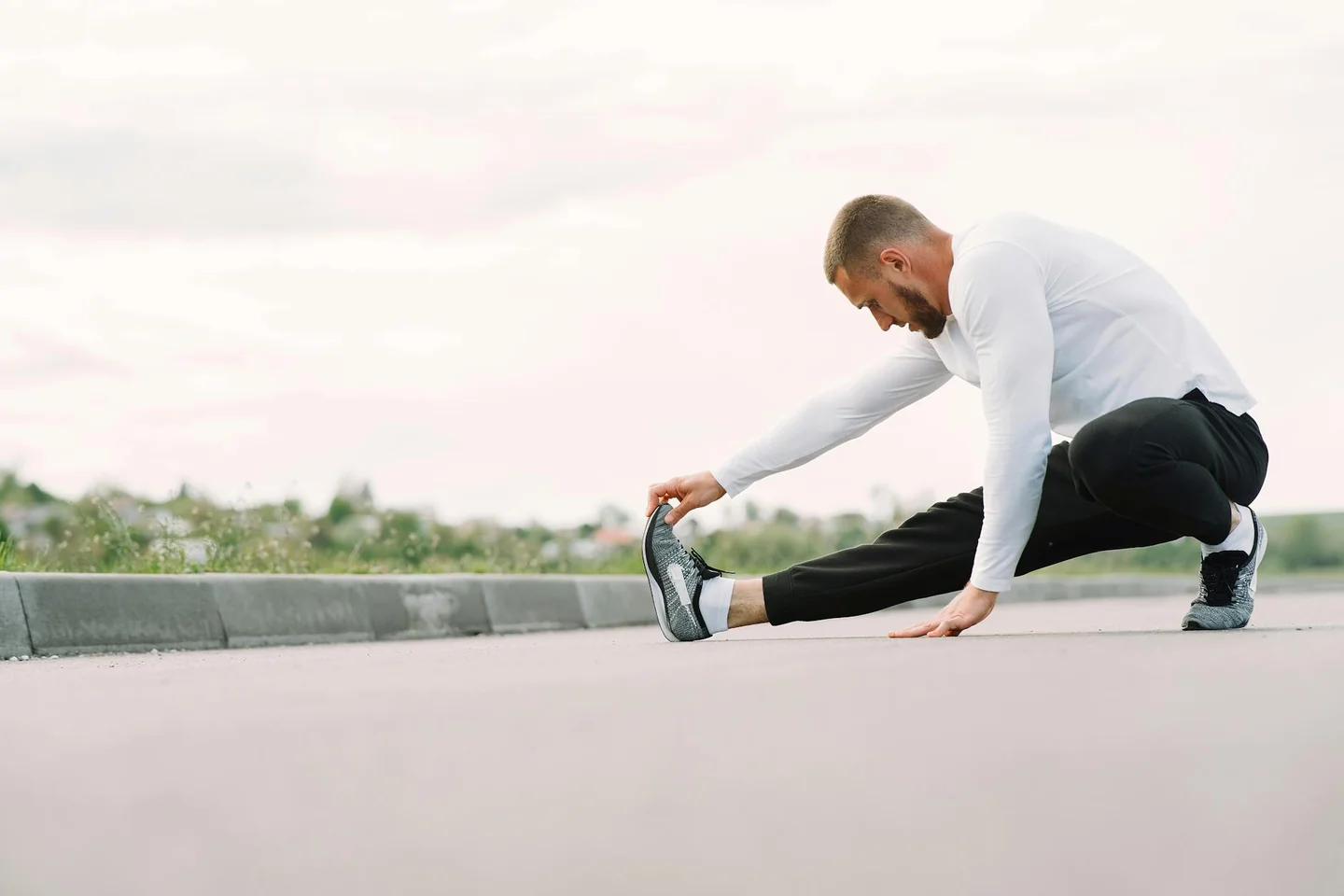
Imagen: Gustavo Fring / Pexels
Calf discomfort while running is one of those signals many runners recognize instantly: a dry tightness, a hardness that pulls when the foot lands, and a heavy-engine feeling with every stride. Sometimes it shows up at the end of a long run; other times, halfway through a session, when the leg starts asking for a break. It doesn’t always mean injury, but it does indicate that something in the load, the technique, or the recovery deserves attention.
Understanding the origin of that stiffness completely changes the way you deal with it. It’s not the same a temporary overload as a warning of a tear, nor normal muscle fatigue as a poorly absorbed running problem. The calves work like springs with every push-off, absorb impact, stabilize the ankle, and take part in propulsion. They may look small, but they bear a huge part of the mechanical punishment.
Why the calves get so loaded when running
The most common cause is the sum of repeated effort and insufficient recovery. Every stride demands a continuous contraction of the calf, especially if the pace picks up, the ground is hard, or the session includes hills. When the muscle doesn’t fully recover, it stiffens, loses elasticity, and starts demanding attention with increasingly clear discomfort.
Running form also plays a role. A runner who lands very much on the forefoot, shortens the support phase too much, or runs with low cadence can shift more load to the calf area. By contrast, a more balanced technique distributes the work better between glutes, hamstrings, quadriceps, and soleus. The problem is usually not one single gesture, but a chain of small demands that build up quietly.
A sudden change in volume or intensity is another classic trigger. Going from easy runs to intervals, from flat ground to hills, or from quiet weeks to competition leaves the calves in a delicate position. The muscle responds, but often with a stiffness that appears hours later, when there’s no adrenaline left in the mix and the body starts to take its toll.
How to tell overload from an injury
Not every calf discomfort has the same clinical weight. Overload usually feels like bilateral or localized hardness, with discomfort while running but without sudden sharp pain. The muscle feels tense to the touch, hurts when climbing stairs or going up on tiptoe, and improves with relative rest, moderate heat, and gentle movement.
An injury, on the other hand, usually has a different signature. It may appear as a clear stab, a sudden pull, or an immediate loss of strength. In cases of muscle fiber tear, the runner remembers a specific moment, often accompanied by a whip-like sensation. If there’s bruising, marked swelling, or an inability to keep bearing weight normally, the picture no longer fits simple muscle load.
The way it evolves also gives useful clues. Overload tends to improve with one or several days of unloading and gets worse again if you push too soon. A true injury doesn’t have that clean back-and-forth. It hurts more, lasts longer, and usually changes the way you walk or run. That difference, simple in theory, is what keeps a manageable discomfort from being confused with a problem that needs medical assessment.
What usually makes the discomfort worse during the week
Hills are a factory of tension for the calves. Going uphill, the ankle works through a greater range and the calf takes part in a more intense effort. Going downhill, the impact can be even trickier, because the muscle acts by braking the movement. That’s why many runners notice that a session that seemed harmless leaves the calf sore for several days.
Fast intervals, pace changes, and hard finishes also punish that area. The closer you run to your limit, the more the stride shortens and the more the gastrocnemius-soleus complex is activated. The result is a feeling of hardness that doesn’t always show up in the moment, but later, when the leg cools down and the tissue stays rigid like an old rubber band.
Footwear matters more than it seems. A sudden transition to shoes with less drop, or using very firm and responsive models without prior adaptation, can increase the load on the calf. The same happens with surface changes: moving from dirt to asphalt, or stacking workouts on a track that’s harder than usual, changes the response of the muscle and the Achilles tendon, which work as a single functional unit.
What to do in the first 48 hours
The initial priority is to reduce the load without immobilizing too much. When the discomfort is overload-type, it usually helps to reduce impact for a day or two, keep up gentle walks, and avoid intense sessions. It’s not a good idea to turn rest into absolute stillness if it isn’t necessary; light mobility usually supports recovery better than staying stiff on the couch.
Cold can help if there’s a feeling of irritation or mild inflammation, although it’s neither a universal nor an essential solution. In many cases, it works better to combine relative rest, some heat later on, and gentle ankle movements. The goal isn’t to switch the muscle off like a light, but to bring it back to normal tone without reopening the discomfort with every step.
It also matters to observe how the body responds while walking. If climbing stairs, walking fast, or going up on tiptoe clearly makes the pain worse, it’s wise to stop running until the area can tolerate basic effort again. If the discomfort is mild and improves when moving slowly, the situation is usually less worrying, though it still calls for caution. Pushing through out of pride usually ends up costing dearly in an area so sensitive to repetition.
Stretching, massage, and compression: what they really do
Gentle stretching can relieve, but it doesn’t fix the problem on its own. When the calf is loaded, an aggressive stretch can make the sensation worse, especially if there’s irritation in the soleus or Achilles tendon. The sensible approach is to look for moderate, brief, pain-free tension, more aimed at restoring mobility than at gaining elasticity right away.
Massage, with a roller or with the hand, usually gives subjective relief because it reduces the feeling of hardness and improves the perception of the area. It doesn’t undo structural damage, but it can be useful to lower muscle tone. It should be used with common sense, without hammering a sensitive spot as if trying to crush a knot. Pleasant pressure works; aggression doesn’t.
Compression socks have a more secondary role. Some runners use them after training or during recovery because they feel better drainage and less heaviness. The evidence doesn’t turn them into a miracle solution, but in certain situations they can provide comfort. Their real value lies in the perceived comfort, not in an instant repair of the fatigued muscle.
The role of the soleus, the calf, and the Achilles tendon
The calf doesn’t work as a single piece. The gastrocnemius, the muscle we usually call the calf, is heavily involved with the knee extended. The soleus, deeper down, handles much of the work in continuous running and prolonged support phases. Both connect to the Achilles tendon, a very powerful structure that transmits force toward the ground with every push-off.
That’s why the discomfort can be felt in different places. Sometimes it pulls in the upper part of the calf, other times in the lower area, and other times it seems to settle near the heel. Knowing where it is helps interpret what has gone wrong. A loaded soleus usually hurts more during long efforts and when running easy for a long time, while the gastrocnemius complains more easily during starts, hills, or fast paces.
Stiffness in the Achilles deserves special respect. If the calf is loaded and there’s also morning tightness in the tendon, it’s wise not to insist on jumps, pace changes, or explosive work. That combination, very common in runners, works like a taut rope: if you force it too soon, the discomfort shifts from the calf to the tendon and the problem drags on.
How to get back to running without dragging the problem out
The return should happen when walking is already normal and the discomfort has clearly decreased. There’s no need to wait until the calf has completely forgotten it worked, but you do need to wait until walking, mobility, and basic movements are well tolerated. If the first easy jog wakes up increasing pain, the body is giving a pretty clear signal.
The ideal comeback usually starts with short runs, on flat ground and at a comfortable pace. The first sessions should feel almost boring, because that boredom is a form of intelligence. The muscle needs to check that the movement repeats without pain, that there are no sudden accelerations, and that the load returns gradually to where it belongs. Skipping that phase is like putting sand into a freshly oiled gear.
The next progression should watch the response over 24 to 48 hours. If the calf wakes up looser and the discomfort doesn’t increase, the load can move forward little by little. If the hardness comes back the next day, there’s still not enough room. The practical rule is simple: useful recovery isn’t measured only when the workout ends, but by how the leg behaves the next day.
What habits help prevent it from happening again
Real prevention starts before the first symptom. A stable aerobic base, a gradual increase in volume, and alternating hard and easy sessions reduce the risk of overload a lot. The most common mistake isn’t training too much on one day, but stacking small excesses over several days without letting the muscles fully recover.
It also helps to strengthen the posterior chain and the ankle with well-chosen complementary work. Calf raises, eccentric exercises, and balance drills can help the calf handle impact better. No need for sophisticated tricks: the muscle just needs enough strength to respond to the daily repetition of running without slipping into chronic fatigue.
Warm-up is not a decorative formality. A few minutes of progressive jogging, joint mobility, and gentle pace changes prepare the calves better than heading out cold as if the body were already ready. In veteran runners, this difference is especially noticeable on humid, cold, or accumulated-fatigue days. The leg that starts out asleep usually complains sooner than the one that warms up properly.
Technique is also trained through consistency. There’s no need to obsess over every footstrike, but you should avoid patterns that always load the same spot. A stride that’s too long, very low cadence, or a rigid posture can multiply the pressure on the calf. Sometimes, small corrections in frequency and in the relaxation of the shoulders and hips relieve more than any external remedy.
When it’s wise to stop and seek medical assessment
There are signs that shouldn’t be normalized. Sudden pain, bruising, marked swelling, a feeling of tearing, inability to run or walk naturally, and discomfort that doesn’t improve after several days of unloading all require professional review. It’s also worth consulting if the pain changes in an unusual way, if it appears in only one leg with striking swelling, or if it’s accompanied by intense local heat.
Among runners, the tendency to downplay discomfort is very common. Everything gets blamed on simple overload and people wait for it to go away on its own. Sometimes it does; other times, the problem becomes chronic because the tissue keeps receiving the same stimulus that irritated it in the first place. The line between caution and stubbornness is usually drawn right there, in that decision not to listen to a leg that has already started complaining clearly.
Identifying the severity early avoids lost weeks. A calf loaded by overwork is resolved quite differently from a tear, tendinopathy, or a soleus-related injury. The sooner the problem is framed, the sooner the load can be adjusted and the better the chances of getting back to running without dragging along a discomfort that shows up every time the pace increases. In running, as in almost everything, the body usually warns you before it breaks.
The importance of listening to the calf before it speaks louder
The calf usually warns you in a subtle language: a stone-like feeling, a clumsy first step, a tightness that eases halfway through the session and returns at the end. That pattern is not trivial. It usually tells a story of poorly balanced load, insufficient rest, or a change in mechanics that the runner still hasn’t noticed.
Dealing with that signal intelligently doesn’t mean stopping every time a mild discomfort appears, but learning to read the difference between normal fatigue and repeated overload. The body speaks in degrees, not headlines. Sometimes it whispers; other times, it’s already raising its voice. In the calf, as in other areas for runners, listening in time is almost always more useful than running a little more out of inertia.
When the calves get loaded, the goal isn’t to punish them less, but to understand why they get tired more than they should. That perspective changes the way you train, recover, and face the next outing. And, in practice, it often makes the difference between a passing rough patch and a discomfort that repeats again and again, as if the whole season depended on a rope that’s too tight.
Este artículo contiene enlaces de afiliado: si compras a través de ellos, se genera una pequeña comisión sin coste adicional para ti. Más información.



How to prevent thigh chafing: causes and real solutions

Women’s running windbreakers: seven jackets and how to choose

Do more workouts get rid of soreness? A guide for runners

Jaén Half Marathon 2026: Record 3,800 Runners Registered

Men’s short running tights: how to choose the right pair

World Triathlon confirms data breach involving medical data

Izan Edo targets podium at Miyazaki World Cup

María Pérez ranks ninth in World Athletics’ 2026 top ten

Dos Santos, Duplantis and Sawe: World Athlete of the Year finalists

San Silvestre Vallecana 2026: 42,000 places, prices and start times

 Races3 months ago
Valencia Half Marathon 2027: date and registration

 Races3 months ago
Valencia Marathon 2026: entry, ballot and course

 Reviews and Comparisons4 months ago
Asics Gel-Roadmiles 3 for men: review and current price

 Reviews and Comparisons4 months ago
Asics Gel Sonoma 8 Gore-Tex: complete analysis for trail and rain

 Sneakers3 months ago
Saucony Endorphin Pro 4: full review and verdict

 News5 months ago
Strava API 2026: what changes for clubs, challenges and runner apps?

 Reviews and Comparisons5 months ago
Nike Alphafly 3: opinions, sensations, and real key points

 Reviews and Comparisons4 months ago
Under Armour running shoes review 2025-2026: models and key features

 Sports Equipment4 months ago
Shoe sizes in cm: a clear guide to getting the right fit for your footwear

 Sneakers3 months ago
Skechers GO RUN Consistent 2.0 analysis: comfort and limits

 News5 months ago
Valencia Marathon 2026 route: key tips to train and run better

 Sneakers4 months ago
Adidas Adizero Boston 13 for men: review and verdict