Health and Nutrition
Stationary bike benefits for runners
A clear analysis of its impact on the heart, the legs, energy expenditure, and joint care.

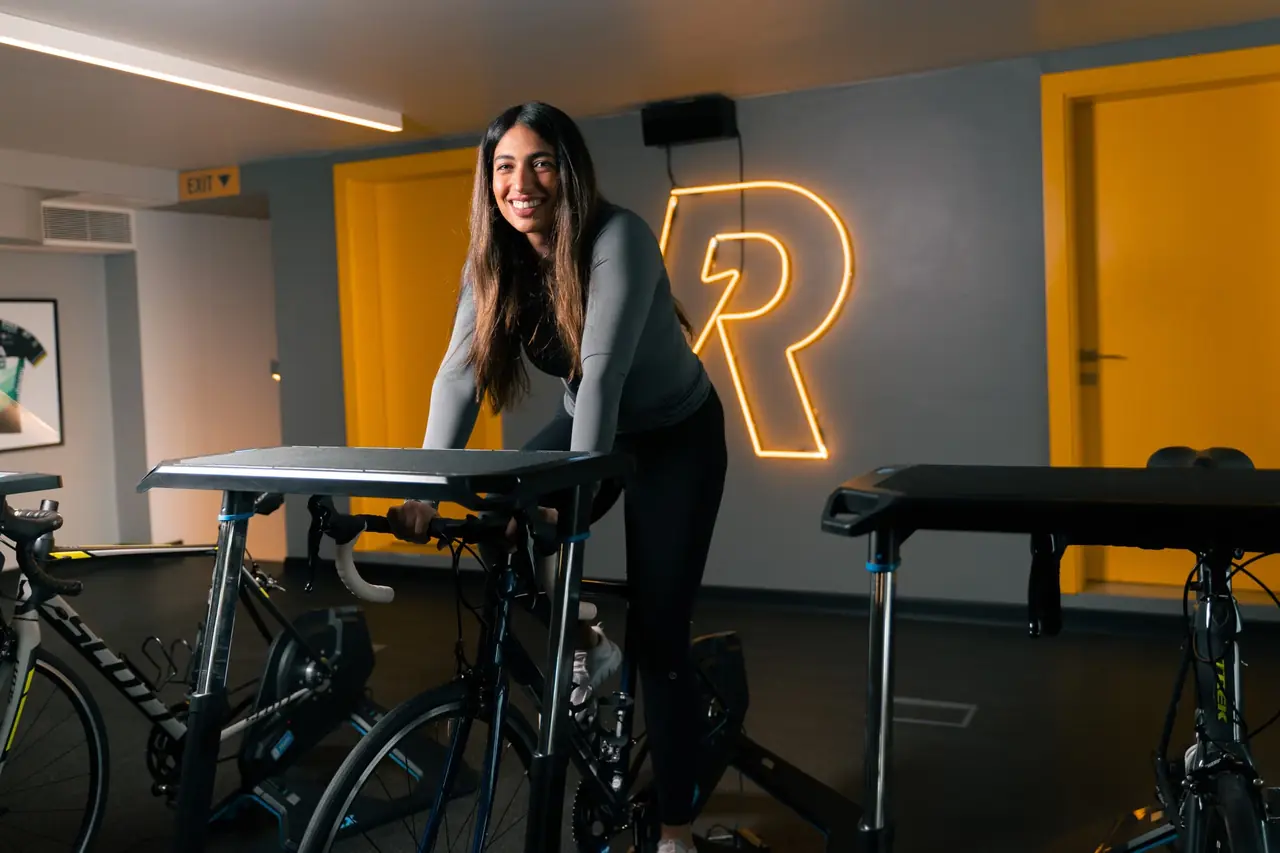
The stationary bike can be a useful option for runners: it provides a cardiovascular workout with little impact on the joints. It is not just a way to stay active; it can also help you keep a routine and gently move tired legs while building an aerobic base that complements your runs and other training.
Its great advantage is versatility. It works for short or long sessions, for calm pedaling or demanding intervals, for those looking to lose fat and for those who simply need to move regularly. In an era in which time rules and the weather does not always cooperate, pedaling indoors offers an almost mechanical continuity, as if exercise no longer depended on the street and depended only on the body and the clock.
An exercise that protects the heart without hitting the body
The first important benefit is cardiovascular. Pedaling regularly raises the heart rate, forces the heart to pump more efficiently, and improves the body’s ability to distribute oxygen. Over the weeks, that adaptation usually translates into a familiar sensation for anyone who keeps a routine: climbing stairs feels easier, walking briskly costs less, and the pulse takes less time to recover after exertion.
That aerobic work has another useful consequence: better blood pressure management and less strain on the cardiovascular system at rest. It’s not magic or a shortcut; it’s basic physiology. A trained heart muscle does not need to beat as fast to move the same amount of blood, and that efficiency ends up being noticeable both during training and outside it. For many people, that change is felt in breathing before it is seen in the mirror.
In addition, the stationary bike makes it very easy to dose the effort. That matters because cardiovascular progress does not always require high intensity. Sometimes a steady cadence and moderate resistance are enough to accumulate quality minutes. Other times, an interval format awakens the cardiorespiratory system like a well-measured spark. The key is that the machine offers control, and that control reduces the margin for error.
Stronger legs, but not necessarily bigger ones
One of the most repeated myths is that indoor pedaling makes your legs bigger. The reality is much more nuanced. The stationary bike strengthens and tones, especially the quadriceps, glutes, hamstrings, and calves, but it does not usually cause notable hypertrophy on its own. For muscle to grow significantly, greater loads, more intense stimuli, and a different nutritional context are needed.
What does usually change is the way the legs feel and look. As body fat percentage drops and muscle tone improves, the shape gains firmness, as if the muscles were waking up from a long nap. That effect depends on time, load, and diet, but also on genetics. Not all legs respond the same, and pretending otherwise is selling too clean a picture.
The stationary bike also has a virtue that other exercises do not offer with the same smoothness: it works the lower body without requiring repeated impacts against the ground. For people with knee, ankle, or hip discomfort, that difference matters a lot. The movement is circular, fluid, almost continuous, and that allows you to add muscular work without the wear and tear that running or jumping can sometimes impose.
Calorie burn and fat loss with simple mechanics
The stationary bike is an effective tool for calorie expenditure. How much is burned depends on body weight, resistance, cadence, and duration, but a moderate 30- to 60-minute session can move a considerable amount of energy. The important fact is not the isolated number, but the accumulation: fat loss comes from the balance between what is consumed and what is spent over time.
That is why its usefulness goes beyond a single session. When integrated into a consistent routine, it helps create a sustainable energy deficit without demanding excessive joint punishment. That makes it a frequent option for those who want to lose weight without resorting to high impact or plans that are impossible to maintain. Consistency matters more than epic effort, and here the machine works in favor of repetition.
Another detail also deserves attention and often goes unnoticed: the more efficient the body is in aerobic effort, the more room there is to sustain long sessions without becoming overly exhausted. That efficiency not only helps burn fat, it also improves training tolerance. In other words, the body learns to save fuel without stopping progress.
Less strain on the joints and more room to recover
Among the benefits of the stationary bike most valued by doctors, physical therapists, and athletes is its low impact. There are no strides, no repeated landings, and no continuous pounding on asphalt. The movement is concentrated in a controlled arc that distributes the load better, something especially useful when there is excess weight, joint discomfort, or a gradual return to exercise after a break.
That gentle nature does not mean it is harmless by definition. A poorly adjusted posture, a saddle that is too low, or absurd resistance can turn a useful exercise into a small factory of aches. But when used properly, the stationary bike allows you to add minutes of work with a lower level of mechanical stress than other aerobic sports. For many people, that is the difference between giving up and continuing.
It is also quite useful in active recovery processes. Gentle pedaling can promote blood flow and mobility without turning every session into a battle. That combination of movement and caution explains why the stationary bike appears again and again in reconditioning plans and in stages when it is wise to move the body without demanding too much roughness from it.
Endurance, stamina, and breathing that learns to economize
Indoor work does not only serve to burn calories. Muscular endurance also improves, especially in the legs, because prolonged pedaling forces you to sustain effort for a long time. That ability to hold on without falling apart is useful in sports and outside them: walking with load, cycling outdoors, climbing hills, or chaining daily activities becomes less demanding.
The feeling of breathlessness also tends to decrease with regular use. The body learns to organize air intake and output better, to use oxygen more efficiently, and to delay fatigue. It is a silent improvement, less flashy than lifting a weight or timing a sprint, but very valuable. In the end, it is about the body learning to stop wasting and start spending wisely.
That effect also benefits runners. An aerobic base developed on the bike can complement running very well, especially during high-load weeks or at times when reducing impact is advisable. It does not completely replace running, but it does help add volume without adding punishment. For the journalistic reading of training, that is discreet gold.
Mental health: routine, release, and a sense of control
Steady pedaling has a very recognizable effect on mood. The release of endorphins and the repetition of the movement can reduce accumulated tension and provide a sense of bodily order that is hard to describe precisely, although easy to notice. The mind clears because the effort has a rhythm, and that rhythm often works like an internal metronome that turns down background noise.
The environment also matters. Exercising indoors removes variables that sometimes discourage people: rain, cold, traffic, darkness, or simply the logistics of going out. That simplicity helps turn the activity into a more stable habit. There is no drama in that; there is continuity. And continuity, in health, is often worth more than fleeting enthusiasm.
In gentle sessions, it can even become a time of almost domestic disconnection. A screen, a window, or silence is enough for the body to enter work mode. It is not a sport for display; it is a useful piece of everyday life, like a well-sharpened tool that does not draw attention but solves a lot.
Which muscles it really works and why posture matters
Pedaling primarily activates quadriceps, glutes, hamstrings, and calves, but it also demands stability from the abdomen and lower back. They are not leading muscles in the same sense as the legs, although they do work as support so the torso does not become unbalanced. This involvement of the core explains why correct posture is not a minor detail, but part of the exercise’s real benefit.
A properly positioned saddle, an appropriate distance to the handlebars, and a height consistent with leg length make a big difference in the experience. When everything fits, pedaling feels smooth; when it does not, tension appears in the knees, hips, or lower back. The machine can be gentle, but it does not correct poor positioning by itself. Mechanics rule there with the cold precision of a well-made closure.
Resistance also changes how the effort is distributed. With little load, the work is more cardiovascular; with more load, the legs tire sooner and the muscular component gains weight. That duality allows the session’s goal to be adjusted without changing equipment. It is one of the reasons the stationary bike is so useful in different contexts and for different ages.
How long it takes to notice real changes
There is no universal number, but there is a reasonable idea: changes begin to show when practice is regular. Thirty minutes several times a week can already produce adaptations if the intensity is chosen well and the routine is maintained over time. Cardiovascular improvement usually comes before aesthetic transformation, although both go hand in hand.
For people starting from zero, the first signs are usually not dramatic, but subtle. Less fatigue, better effort tolerance, and a feeling of more awake legs. Later, a reduction in body circumference, greater firmness, and faster recovery after walking or climbing stairs may appear. Biology responds through accumulation, not through one dramatic effect.
It is also worth assuming that progress depends on other habits. Nutrition, rest, and training frequency form a triangle that cannot be ignored. The stationary bike helps a lot, but it does not by itself compensate for a whole week of sedentary behavior or a disorganized diet. Its strength lies in adding, not replacing everything.
Different uses depending on the goal: losing fat, building endurance, or moving without impact
The same machine can deliver different results depending on how it is used. A continuous, moderate session works well for those looking to improve overall health and burn calories steadily. Intervals, on the other hand, raise the intensity and can push the cardiovascular system more in less time, although they demand better effort tolerance.
For older adults or people with reduced mobility, the stationary bike offers a controlled environment in which the risk of tripping is minimal and the effort can be adjusted to the millimeter. For runners, cyclists, or triathletes, it serves as a maintenance, recovery, or complementary resource during high-load weeks. And for those who simply want to do something useful without leaving home, it offers a simple and effective answer.
That range explains its permanence on the fitness map. It does not dazzle with novelty, but it lasts because it works. Its logic is clean: pedaling, resistance, time, and consistency. From there, the benefits grow like layers on a simple, almost domestic base, but one that is surprisingly solid.
What it truly provides and what should not be exaggerated
The stationary bike does not turn anyone into an athlete by itself, nor does it fix all health problems. It is not the ultimate shortcut for losing weight or defining legs in a few weeks either. Its value lies in something more modest and, in the long run, more useful: it makes the habit easier, protects the joints, improves aerobic capacity, and allows very precise training.
That balance between simplicity and effectiveness is what makes it so appreciated. Some will see it as a silent, unglamorous machine. In reality, that discretion is part of its strength. Where other options promise a lot and sustain little, the stationary bike delivers with almost stubborn regularity. And in health, that stubbornness often makes the difference.
That is why its benefits make so much sense in diverse contexts: cardiovascular health, weight control, leg strengthening, joint relief, and mood improvement. It is not a one-use device, but a tool that fits very different routines without losing usefulness. That breadth, properly understood, explains why it remains a reference in both home training and the gym.
How runners can use a stationary bike alongside their runs
A stationary bike lets you add aerobic work without repeated impact, making it a useful complement to a running week when you want variety or need to stay active with less stress on your legs. Pedalling works the lower-body muscles, and you can easily control the resistance and pace. However, cycling does not fully replace running: your muscles and joints still need to adapt to the impact, and you need to practise the specific demands of your running stride.
Give each ride a clear purpose. An easy spin may fit after a demanding run or on a lighter training day, provided it does not add to your fatigue. If you do intervals on the bike, treat the session as hard training and avoid stacking intense efforts without enough time to recover. Keep a stable posture, adjust the saddle so you can pedal comfortably, and choose a resistance you can maintain without rocking or straining your knees.
Pay attention to how you feel during the ride and the following day. Unusual fatigue, worsening joint discomfort, tingling or persistent pain are reasons to reduce the effort or stop and check your workload and position. If symptoms persist, consult a healthcare professional. The bike can provide variety and aerobic training, but progress as a runner still depends on combining it with suitable runs, rest and a training load you can handle.
A humble machine with very serious performance
The stationary bike works because it brings together what is hardest to find in a single piece of equipment: accessibility, control, and performance. It allows you to pedal without looking at the sky, adjust the load in detail, and sustain an effort that, over time, becomes tangible health. Stronger heart, firmer legs, and less impact sum up its role well, but they do not exhaust everything it offers.
Its best virtue may be that mix of simplicity and depth. It does not need spectacle to be useful. Like a door that always opens into the same room, it gives access to constant, measurable, and adaptable physical work. And in a field full of noisy promises, that kind of reliability still has enormous value.
Medical reference: Health benefits of cycling, Cleveland Clinic.



How to prevent thigh chafing: causes and real solutions

Women’s running windbreakers: seven jackets and how to choose

Do more workouts get rid of soreness? A guide for runners

Jaén Half Marathon 2026: Record 3,800 Runners Registered

Men’s short running tights: how to choose the right pair

World Triathlon confirms data breach involving medical data

Izan Edo targets podium at Miyazaki World Cup

María Pérez ranks ninth in World Athletics’ 2026 top ten

Dos Santos, Duplantis and Sawe: World Athlete of the Year finalists

San Silvestre Vallecana 2026: 42,000 places, prices and start times

 Races4 months ago
Valencia Half Marathon 2027: date and registration

 Races4 months ago
Valencia Marathon 2026: entry, ballot and course

 Reviews and Comparisons4 months ago
Asics Gel-Roadmiles 3 for men: review and current price

 Reviews and Comparisons4 months ago
Asics Gel Sonoma 8 Gore-Tex: complete analysis for trail and rain

 Sneakers3 months ago
Saucony Endorphin Pro 4: full review and verdict

 News5 months ago
Strava API 2026: what changes for clubs, challenges and runner apps?

 Reviews and Comparisons5 months ago
Nike Alphafly 3: opinions, sensations, and real key points

 Reviews and Comparisons4 months ago
Under Armour running shoes review 2025-2026: models and key features

 Sports Equipment4 months ago
Shoe sizes in cm: a clear guide to getting the right fit for your footwear

 Sneakers3 months ago
Skechers GO RUN Consistent 2.0 analysis: comfort and limits

 News5 months ago
Valencia Marathon 2026 route: key tips to train and run better

 Sneakers4 months ago
Adidas Adizero Boston 13 for men: review and verdict