Health and Nutrition
Tendon pain behind the knee: causes, signs, and relief
Discomfort in the back of the knee can come from tendons, the meniscus, or a cyst. Knowing how to interpret its signs changes the management.

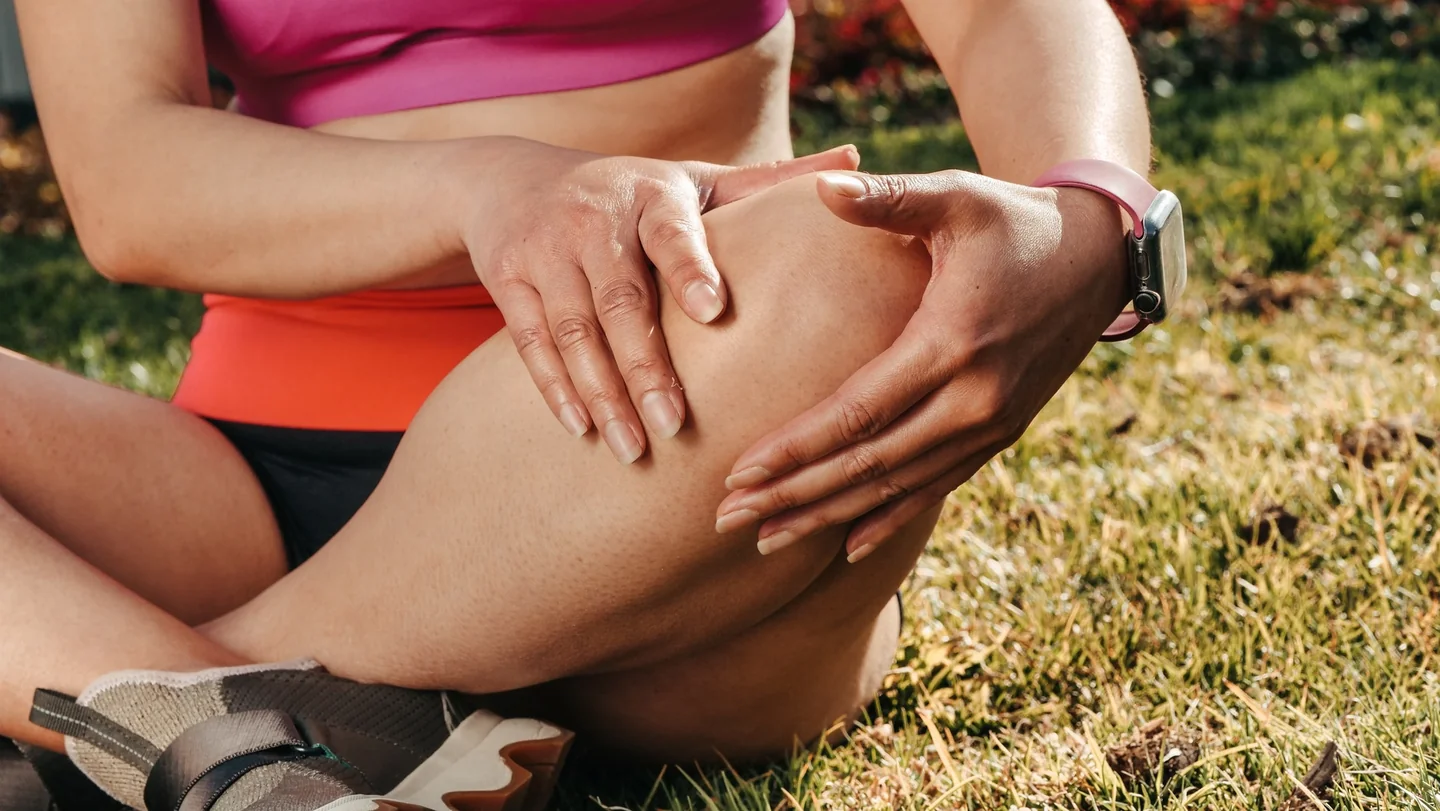
The back of the knee concentrates tendons, muscles, ligaments, joint capsule, and blood vessels in a small space, so pain there should never be dismissed as a simple tightness. In runners, it often appears after increasing training load, running downhill, or stringing together sessions while fatigued; in less active people, it may come on when standing up from a chair, bending down, or after several hours on their feet. The most common origin is usually tendon overload, but the meniscus, a Baker’s cyst, arthritis, or a ligament injury may also be involved.
That pain does not always announce itself dramatically. Sometimes it shows up as a sharp twinge when extending the leg, a dull pressure when bending, or a burning sensation that travels down the back of the thigh or calf. The key lies in the pattern: when it appears, which movement triggers it, whether there is a lump, whether the knee locks, or whether the swelling spreads into the calf. That reading guides better than any isolated impression and helps distinguish a training ache from a problem that deserves medical evaluation.
What usually really hurts at the back of the knee
When discomfort is located behind the knee, attention usually falls on the hamstring tendons, the medial calf muscle, or the popliteus muscle, a small structure that stabilizes the joint during flexion and rotation. In running, these tissues work like taut cables with every stride. If load progression speeds up, if there are hills or pace changes, the tissue protests. The discomfort may be mild at first and turn into clearer pain when going up stairs, accelerating, or running with a long stride.
But not every posterior ache is tendinitis. A torn meniscus can radiate pain backward, especially when the movement that triggers it includes twisting, squatting, or sudden turns. A Baker’s cyst may also appear, a buildup of synovial fluid that forms a bulge in the popliteal area and is often associated with intra-articular problems such as osteoarthritis, synovitis, or meniscal tears. In less common cases, the cause is a ligament sprain, hyperextension, or even a vascular cause that requires urgent attention.
This distinction matters because the body does not use the same alarm for everything. An overloaded tendon usually hurts in a fairly mechanical way, clearly linked to effort and with partial improvement after relative rest. A meniscal injury leaves more joint-related clues, such as locking, clicking, or a catching sensation. And a Baker’s cyst usually causes pressure, tightness, and sometimes a lump that can be felt by hand. The same location can hide very different problems, which is why assessing the context matters as much as the pain location.
The posterior tendinopathy most often seen in runners
In the running world, one of the most common conditions is posterior chain tendinopathy, with the hamstrings, calf, and popliteus taking center stage. The popliteus, although small, has a refined role: it helps unlock the knee during the stride and control tibial rotation. When overloaded, the runner often notices a deep pain behind the knee, sometimes more toward the outside, which worsens on downhill runs, with a long stride, or when running on uneven ground.
Tendinopathy does not appear out of nowhere. It is usually the result of a combination of factors: a sudden increase in mileage, repeated hills, poor technique, accumulated fatigue, insufficient glute and hamstring strength, or worn-out shoes. The knee rarely fails on its own; many times it is compensating for a hip that stabilizes poorly, a stiff ankle, or a stride pattern that forces the posterior tissues to work too hard. In that sense, pain is more of a balancing act than a surprise.
Morning stiffness, discomfort when starting cold, and partial relief after warming up also fit this profile. Even so, continuing to run through persistent pain usually does not solve it. Tendon tissue responds better to dosed loading than to alternating between heroics and complete rest. In plain language: neither hammer it nor wrap it in cotton wool for weeks. The useful middle ground is adjusting the stimulus so it regains tolerance without continuing to get inflamed.
Meniscus, Baker’s cyst, and other causes that change the picture
The posterior meniscus is a frequent suspect when pain appears while bending down, twisting, or changing direction. In the knee, this cartilage structure acts as a shock absorber that distributes loads, and a tear can cause deep pain, a sense of locking, and episodes of swelling after exertion. The runner usually describes it as an internal stab rather than a superficial muscle ache. If the knee does not fully extend or flex, the situation becomes more joint-related and requires examination.
A Baker’s cyst also deserves attention. It is not an isolated injury in itself, but rather a sign that the knee is producing more fluid than normal because of some internal irritation. That fluid collects toward the back and forms a soft swelling, sometimes visible, sometimes only felt as pressure. It may hurt when deeply bending the knee and, if it ruptures, cause sudden pain with calf swelling. That combination requires ruling out other similar conditions, including deep vein thrombosis.
Inflammatory and degenerative conditions, such as osteoarthritis or rheumatoid arthritis, can also send pain to the back of the knee. In these cases, stiffness after rest, creaking, and a slower but steady progression of discomfort are common. In older people or those with a history of joint problems, popliteal pain does not always come from a tendon. The knee, after all, is a hinge exposed to wear: when one part changes, the others notice it and the pain moves like a shadow.
Signs that help distinguish overload from something more serious
Tendon pain is usually fairly consistent with activity. It appears when running, climbing stairs, or going downhill and improves with relative rest. There may be tenderness when touching the area, but usually there is no major deformity or sudden change in the shape of the knee. The knee keeps working, even if it complains. That is a useful clue, though not a definitive one.
By contrast, pain combined with joint locking, inability to bear weight, instability, or a clear click after a twist points more toward a meniscus or ligament injury. If the discomfort is accompanied by a lump behind the knee or a feeling of pressure that changes over time, a Baker’s cyst comes into play. And if the pain is accompanied by marked calf swelling, warmth, redness, or rapid progression, the priority is to rule out a vascular cause. Not all posterior pain is sports-related, and that is where the difference between observing and letting it go lies.
The time of onset also matters. Pain that appears after an intense session and settles within 24 or 48 hours suggests soft-tissue irritation. Pain that persists for several days, wakes you at night, or worsens at rest deserves a different reading. Duration, behavior with movement, and whether swelling is present draw a much more reliable map than location alone.
What to do at first without turning the discomfort into a long injury
During the first 48 to 72 hours, the goal is not to immobilize the knee as if it were broken, but to reduce the load that triggers the pain. That means lowering volume and intensity, avoiding hills, pace changes, and deep squats, and keeping only activities that do not clearly worsen symptoms. Walking on flat ground or easy cycling may be reasonable if it does not make the condition worse. Pushing through does not help; tissue does not get stronger by becoming more irritated.
Cold can help when there is recent inflammation. Applied for 10 to 15 minutes with a cloth barrier, it helps modulate pain and the feeling of congestion. Light compression and elevating the leg may also be useful if the knee feels loaded. The goal is not to stop all movement, but to create a less hostile environment so the area can calm down. In phases of stiffness rather than inflammation, gentle heat is sometimes more pleasant before moving.
With anti-inflammatory drugs, caution is advised. They may relieve symptoms, but they do not fix the cause and are not a universal solution for any pain. Ibuprofen and other NSAIDs are not harmless, especially in people with digestive, kidney, or cardiovascular problems, or if they take other medications. Medication can accompany, not replace, diagnosis. If pain clearly limits walking, if there is visible swelling, or if the movement that causes it does not change after brief rest, professional review is warranted.
How a posterior knee pain is truly evaluated
Clinical examination remains central. The specialist palpates the exact point of pain, assesses stability, mobility, response to meniscal maneuvers, and the presence of effusion or a palpable mass. That first reading often gives a fairly good indication of whether the problem is tendinous, joint-related, or mixed. The story of the pain is almost as valuable as imaging, because the knee tells its biography in every movement.
Imaging tests are used according to the suspected cause. Ultrasound is very useful for tendons, muscles, bursae, and cysts, and it also allows visualization of fluid and dynamic assessment. X-rays help when looking for joint wear or bone abnormalities. And magnetic resonance imaging becomes more important if meniscus, ligaments, or internal lesions are suspected that are not clarified by the exam. Not every discomfort needs the full arsenal; ordering too much does not improve diagnosis if the initial suspicion is not well defined.
In runners, it is also worth reading the picture in terms of load. Has there been a sudden increase in mileage? Hills? Worn-out shoes? Less strength or more fatigue than usual? Those questions, though simple, often separate an overuse tendinitis from a more complex injury. The knee does not get injured in a vacuum; it responds to volume, technique, terrain, and accumulated rest.
The role of movement and strength in recovery
In most tendinous conditions, recovery improves when the tissue is loaded again, but in an orderly way. Prolonged absolute rest usually leaves the leg stiffer and less able to tolerate impact. That is why treatment is usually based on gentle mobility, progressive strengthening, and load management. The posterior chain, glutes, calves, and core form a network; if one part gives way, another compensates.
The most useful exercises are not the ones that promise miracles, but the ones that build tolerance: calf raises, moderate-load hamstring work, hip stability, and balance exercises. Everything should be adapted to pain, not ignored. Muscle learns to load; tendon learns to withstand. In that transition, sudden pace changes, descents, and very long strides are usually the first enemies to control.
When the pain is meniscal in origin or there is intra-articular irritation, the approach changes. Sometimes physiotherapy is needed to restore mobility and strength; other times, an orthopedic evaluation is needed to decide whether there is mechanical locking or an injury that does not respond to conservative management. In a Baker’s cyst, the focus is usually on the cause feeding the fluid, not just the sac that is seen or felt. The point is not to chase the symptom, but to understand what is driving it.
When pain stops being a minor warning
There are situations in which it is wise to speed up the consultation. Pain that prevents weight-bearing, a rapid and obvious swelling, a lump that grows, inability to fully straighten or bend the knee, or an episode after a major trauma should not wait too long. The same applies if the calf swells, gets warm, or becomes red. In those cases, caution is worth more than waiting.
It is also sensible to seek review if the discomfort recurs every time you run, disappears completely but comes back just as easily, or has been affecting normal activity for more than a week. Poorly resolved tendinous pain can become chronic and more stubborn, like a rope slowly fraying. The sooner load is adjusted and the cause identified, the less likely it is that the knee will force you to stop later on.
In runners, the costliest mistake is often returning to training too soon, especially if the pain seems to have settled only because of short rest and nothing else. The tissue may quiet down before it is actually ready. The absence of pain does not always mean recovery; sometimes it only means the load threshold has not been tested again. And that nuance, as unglamorous as it is decisive, separates a passing ache from a relapse.
A knee that warns you usually asks for less drama and more careful reading
Tendon pain behind the knee rarely appears by chance. It usually tells a story of overuse, repetition, or compensation, and sometimes that story coexists with a meniscus problem, Baker’s cyst, or joint wear. The good news is that many of these complaints improve when the pattern is understood, mechanical stress is reduced, and strength is rebuilt wisely. The knee does not need drama, it needs context.
It is also worth remembering that the popliteal area is a crossroads. Structures that support, brake, cushion, and lubricate pass through there, so the same sensation can correspond to very different problems. Pain while running does not automatically mean tendinitis; a lump is not always serious, but it should not be normalized either; a brief ache is not always harmless. The difference lies in the progression, the associated signs, and how the knee responds to movement.
In the end, the best understanding of the problem combines observation, caution, and time. Listening to the signal before it turns into noise is what prevents a small overload from becoming a long injury, and what allows you to keep running with a knee that is more stable, stronger, and less likely to repeat the same warning.
Medical reference: Pain behind the knee, Cleveland Clinic.



How to prevent thigh chafing: causes and real solutions

Women’s running windbreakers: seven jackets and how to choose

Do more workouts get rid of soreness? A guide for runners

Jaén Half Marathon 2026: Record 3,800 Runners Registered

Men’s short running tights: how to choose the right pair

World Triathlon confirms data breach involving medical data

Izan Edo targets podium at Miyazaki World Cup

María Pérez ranks ninth in World Athletics’ 2026 top ten

Dos Santos, Duplantis and Sawe: World Athlete of the Year finalists

San Silvestre Vallecana 2026: 42,000 places, prices and start times

 Races3 months ago
Valencia Half Marathon 2027: date and registration

 Races3 months ago
Valencia Marathon 2026: entry, ballot and course

 Reviews and Comparisons4 months ago
Asics Gel-Roadmiles 3 for men: review and current price

 Reviews and Comparisons4 months ago
Asics Gel Sonoma 8 Gore-Tex: complete analysis for trail and rain

 Sneakers3 months ago
Saucony Endorphin Pro 4: full review and verdict

 News5 months ago
Strava API 2026: what changes for clubs, challenges and runner apps?

 Reviews and Comparisons5 months ago
Nike Alphafly 3: opinions, sensations, and real key points

 Reviews and Comparisons4 months ago
Under Armour running shoes review 2025-2026: models and key features

 Sports Equipment4 months ago
Shoe sizes in cm: a clear guide to getting the right fit for your footwear

 Sneakers3 months ago
Skechers GO RUN Consistent 2.0 analysis: comfort and limits

 News5 months ago
Valencia Marathon 2026 route: key tips to train and run better

 Sneakers4 months ago
Adidas Adizero Boston 13 for men: review and verdict