Health and Nutrition
Types of foot cramps when running: causes and relief
Common forms, causes, immediate relief, and signs to watch for when the foot cramps up without warning.

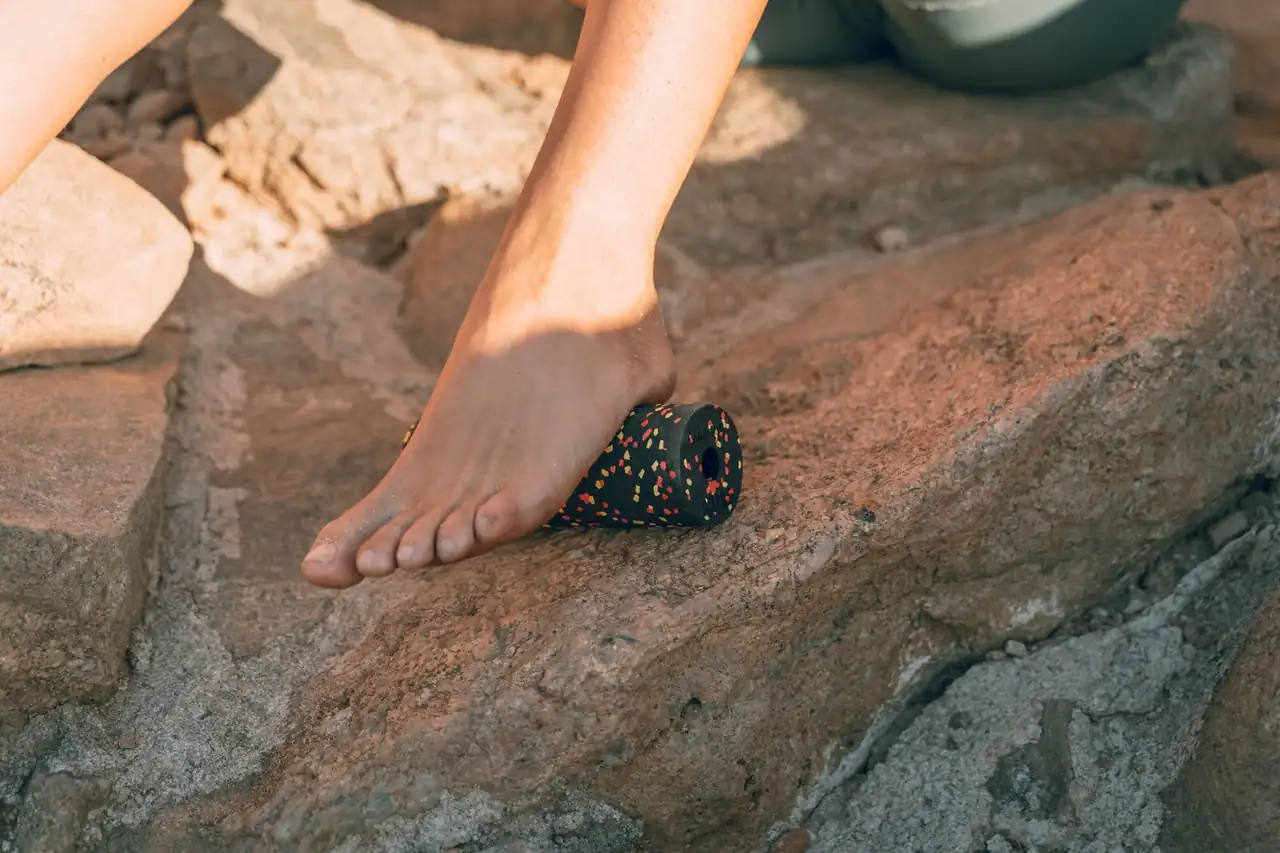
The foot tightens, the toes twist, and the pain strikes like a brief but intense jolt. For runners, this sudden spasm can happen during a training run or race, after a workout, or even at rest. Foot spasms do not have just one cause or always feel the same: it helps to distinguish an exertion-related cramp from one that occurs at night, a cramp in the sole, or a contraction affecting the toes.
The key is to distinguish the pattern. Not all episodes have the same origin, and that difference matters because it changes both prevention and the way to relieve it. In runners, for example, muscle fatigue, dehydration, heat, tight footwear, and overload of the plantar arch are often mixed together. In older adults, by contrast, prolonged rest, loss of elasticity, and certain medical treatments weigh more heavily. The foot, small and complex, works like a network of tense cables; when one of those cables fires, the whole system protests.
How foot spasms manifest
A cramp is not a diffuse pain, but a sudden and sustained contraction. The muscle hardens, loses coordination, and forces the foot to adopt an odd posture, as if it were closing in on itself. It can affect a single toe, the entire sole, the inner arch, or the fine muscles that support the shape of the foot. Sometimes it lasts only a few seconds; other times, it leaves an annoying sensitivity for minutes or even hours.
Location provides useful clues. When the spasm pulls the toes downward or makes them curl, it usually involves the intrinsic muscles of the sole. If the sensation begins under the arch, the picture may be confused with overuse of the fascia or tension in the midfoot. When the episode occurs at night, with the foot relaxed on the bed, the mechanism is usually related to accumulated fatigue, posture, and reduced blood flow during rest. The anatomy of the foot, so compact, makes any alteration noticeable immediately.
Types of foot cramps seen most often
The most common form is the nighttime spasm. It usually appears at rest, especially in the early hours of the morning, and wakes the person with the feeling that the foot has locked up. The arch curves, the toes curl, and relief only comes after a forceful stretch. This type is frequently seen in older adults, pregnant women, and people who have spent many hours standing or doing repetitive activity during the day.
Another common form is the one related to physical exertion. In this case, the foot does not complain quietly: it warns during or after exercise, especially if there is heat, heavy sweating, or inadequate hydration. It is common in runners, hikers, and athletes who suddenly increase their training volume. The sole and toes bear a fine, almost millimetric load, and any imbalance in salts, rest, or technique can translate into a violent contraction.
There is also toe spasm. Here the sign is very clear: one or more toes curl, overlap, or become rigid as if obeying the wrong command. It is usually associated with narrow toe boxes, stiff shoes, fatigue of the small foot muscles, or a gait that distributes the load poorly. It does not always hurt the same way, but it does leave a feeling of stiffness that alters the way you walk.
Even more uncomfortable is a spasm in the sole. In this case, the sensation is concentrated in the underside of the foot, often with a pull that runs through the arch or the base of the toes. It usually appears in people who spend many hours on hard surfaces, in long-distance runners, or in those who wear shoes that force the foot to compensate. The sole is a support surface; when it gets tired, it responds with stiffness and discomfort.
There are also episodes linked to neurological or systemic problems. In those cases, the cramp is not an isolated annoyance, but one more piece of a picture that may include tingling, weakness, changes in sensation, or unusual fatigue. Diabetes, certain neuropathies, hypothyroidism, kidney failure, some medications, and circulatory problems can increase the frequency of these episodes. Here the foot acts as a loudspeaker for something happening further up in the body.
What triggers them and why they keep recurring
Dehydration remains one of the most recurring factors. When the body loses water and salts through sweat, diarrhea, heat, or prolonged exercise, muscle contraction becomes less stable. Sodium, potassium, magnesium, and calcium all participate in the muscle’s electrical balance; if that environment is altered, the tissue becomes more prone to firing. In a runner who sweats heavily in July, the foot is not just working: it is also fighting to keep its internal chemistry in order.
Muscle fatigue also carries a lot of weight. A foot subjected to continuous load, without breaks or sufficient recovery, enters a kind of alarm state. The problem is not always in the foot itself, but in the whole chain: tight calves, stiff ankles, overloaded arches, or demanding running technique. When the small muscles are forced to compensate for what other structures are not doing, the spasm appears as an emergency brake.
Footwear deserves its own section. Narrow toe boxes compress the toes, excessively stiff soles reduce natural mobility, and some very flat models force the foot to grip the ground with the sole. In people with wide feet, bunions, high arches, or toe deformities, that narrow margin between comfort and pressure breaks down easily. A shoe that seems harmless for half an hour can become a trigger after several hours of use.
Posture and circulation complete the picture. Sleeping with the foot in plantar flexion, sitting for long periods, or crossing the legs for hours reduces mechanical comfort and can favor the episode. At the same time, if venous return is poor or there is a vascular disorder, the muscle receives the fuel it needs less efficiently. It is not a single switch; there are usually several small factors pushing at once.
What distinguishes a benign episode from a warning sign
Most foot spasms are annoying, but not serious. They happen, they hurt, they force you to stop, and then they go away. However, frequent repetition, unusual intensity, or association with other symptoms changes the picture. If the foot becomes weak, loses sensation, changes color, feels cold, or develops persistent swelling, the situation should no longer be treated as a simple passing discomfort.
The patient’s context matters a lot. It is not interpreted the same in a healthy person running a marathon as in someone with diabetes, kidney disease, thyroid disorders, or diuretic medication. In those profiles, a repeated episode may be the visible tip of a broader imbalance. It is also worth paying attention if the spasms began after a medication change, a more restrictive diet, or a sudden increase in training.
The difference between an isolated cramp and a sustained problem shows up in repetition. One episode is a one-off; several per week already establish a pattern. If they also occur at night, wake you frequently, or force you to change the way you walk the next day, the foot is asking for a closer look. The body rarely warns without reason.
What to do the moment it appears
The useful response is simple: stretch, unload, and rehydrate. In a spasm of the toes or arch, gently pulling the foot upward helps deactivate the contraction. Massaging the affected area with gradual pressure, without abrupt movements, also works. If the episode started after exercise or heat, drinking water and replacing salts can prevent it from repeating in a chain.
Heat usually helps at first, and cold can be useful afterward. A warm compress relaxes the muscles when the spasm is active, while cold makes more sense if there is residual pain or some local irritation. Walking a few steps calmly, without forcing it, also helps the foot recover its normal pattern. The most useful gesture is the least spectacular one: stop asking the muscle to contract.
In nighttime episodes, the maneuver changes little. Stretching the toes toward the shin, resting on the heel, and keeping breathing steady usually eases the stiffness. Sometimes relief comes within half a minute; other times, it takes several repetitions. The important thing is not to respond with abrupt movements that increase the pain. The muscle is already too tense to argue with it.
Why they occur more often in runners and other athletes
Running brings together several of the most frequent causes in one activity. There is repeated impact, heat, sweating, pace changes, calf fatigue, and continuous pressure on the forefoot and toes. A runner who pushes their stride on a long run or trains in shoes that are too tight can trigger an episode in the sole or between the toes without there being an underlying structural injury.
Terrain and training type also matter. Hills, hard pavement, pace changes, and long sessions with little recovery increase the load on the foot’s fine musculature. In trail running, uneven terrain also requires constant stabilization, turning the foot into an organ of balance rather than simple support. The more it works to stabilize, the more likely it is to tire sooner.
Hydration alone does not explain everything, but it helps a lot. Replacing water and electrolytes does not guarantee the problem will disappear, although it does reduce the risk when sweating is heavy. In endurance sports, especially in hot environments, the imbalance between effort and recovery becomes visible precisely in the small muscles, the ones that do not tolerate accumulated fatigue well. In that sense, the foot is an early detector.
How to prevent them from coming back again and again
Effective prevention combines rest, mobility, and proper footwear. Stretching the calf and sole after running or after spending many hours standing helps keep the muscles from staying shortened. The goal is not to force impossible flexibility, but to restore length to tissue that has spent the day supporting weight and repeating impulses. A few well-done minutes are worth more than a long, occasional session.
Choosing the right footwear can change the outlook. A wide last in the toe area, a sole that does not force the foot to grip the ground, and the correct size reduce pressure on the intrinsic muscles. In some cases, a gait assessment provides context: not to look for a miracle solution, but to understand how the foot distributes load. When mechanics improve, the muscle stops protesting so much.
Diet and overall health also play a role. Diets very poor in minerals, severe restrictions, or digestive losses can favor spasms. In people with recurring episodes, reviewing magnesium, calcium, and potassium intake is more sensible than relying on isolated remedies. Daily hydration, not just hydration during training, completes a base that seems simple but supports a lot.
It is worth observing patterns. Some episodes always appear after running at night, others after hot sessions, and some when wearing a specific type of shoe. Detecting that repetition is more valuable than piling up abstract explanations. The body is usually very literal: it protests where it is asked the most, at the moment it is pushed the hardest.
When the origin may be outside the foot
Not all problems felt in the foot begin there. An irritated nerve in the back, peripheral neuropathy, or a circulatory disorder can show up as cramps in the feet, even if the real trigger is elsewhere. That is why, when the discomfort is accompanied by tingling, electric pain, weakness, or altered sensation, the picture needs a broader view.
Metabolic and hormonal diseases also enter the equation. Diabetes can alter nerve conduction; hypothyroidism can modify muscle tone; kidney failure can change mineral balance. In those cases, the spasm is not an isolated oddity, but one more piece of a system that has become imbalanced. The foot, once again, acts like a fairly honest barometer.
Medications deserve attention because they are sometimes overlooked. Some diuretics, bronchodilators, and other drugs can favor cramps by altering fluids or salts. Certain habits, such as excessive alcohol consumption, also play a role. When the episode appears after a treatment change, the timeline offers a clue as valuable as any symptom.
Types of foot cramps: what runners should know
When running, a cramp may affect the toes, arch or sole, and can start during exercise or afterwards. If your foot tightens and changes your stride, do not force yourself to hold the pace. Stop somewhere safe, put your foot down and gently stretch the area that feels cramped. Once it eases, walk for a short while and see how the foot responds before deciding whether to continue. If you cannot bear weight comfortably, end the session.
Pay attention to when the cramp occurs and what came before it. Note whether it happens on long runs, in hot weather, when you increase your pace, or after a change in surface, footwear or training volume. Also notice whether it keeps affecting the same spot or leaves soreness after the spasm has passed. These patterns can help you review your training and describe the issue to a health professional, but they cannot identify the cause on their own.
To address factors you can control, build training gradually and allow recovery between demanding sessions. Check that your running shoes do not squeeze your toes and feel comfortable on a run. For long runs or hot conditions, plan hydration to suit your needs and circumstances; do not assume every cramp is caused by dehydration. After a run, ease down gradually and pay attention to fatigue in the muscles of your feet. If cramps happen often, get worse, persist, or come with other symptoms, seek advice from a healthcare professional rather than continuing to train through pain.
What to remember when the foot closes up again
Foot spasms are not one thing, but several forms of the same muscular alarm. They can be nighttime, linked to exertion, centered in the toes or sole, or associated with an underlying medical condition. Understanding that difference avoids generic treatments and helps you read more clearly what the foot is saying. In many cases, the message is simple: too much load, too little hydration, or an unfavorable mechanical environment.
The useful perspective is neither dramatic nor trivial. An isolated episode usually resolves with stretching, massage, and fluid replacement. Repetition, on the other hand, calls for observing the whole picture: rest, footwear, training, temperature, medication, and possible associated diseases. The foot does not usually fail by caprice; it is almost always responding to something recognizable if you look at it calmly.
In practice, the best approach combines prudence and context. Treating the pain when it appears helps you get by, but preventing it requires understanding why the muscle fires. That is the difference between putting out a spark and checking the cable that caused it. And in the feet, where every step multiplies the impact of the problem, that difference is noticed immediately.
Medical reference: Foot cramps, Cleveland Clinic.



How to prevent thigh chafing: causes and real solutions

Women’s running windbreakers: seven jackets and how to choose

Do more workouts get rid of soreness? A guide for runners

Jaén Half Marathon 2026: Record 3,800 Runners Registered

Men’s short running tights: how to choose the right pair

World Triathlon confirms data breach involving medical data

Izan Edo targets podium at Miyazaki World Cup

María Pérez ranks ninth in World Athletics’ 2026 top ten

Dos Santos, Duplantis and Sawe: World Athlete of the Year finalists

San Silvestre Vallecana 2026: 42,000 places, prices and start times

 Races4 months ago
Valencia Half Marathon 2027: date and registration

 Races4 months ago
Valencia Marathon 2026: entry, ballot and course

 Reviews and Comparisons4 months ago
Asics Gel-Roadmiles 3 for men: review and current price

 Reviews and Comparisons4 months ago
Asics Gel Sonoma 8 Gore-Tex: complete analysis for trail and rain

 Sneakers3 months ago
Saucony Endorphin Pro 4: full review and verdict

 News5 months ago
Strava API 2026: what changes for clubs, challenges and runner apps?

 Reviews and Comparisons5 months ago
Nike Alphafly 3: opinions, sensations, and real key points

 Reviews and Comparisons4 months ago
Under Armour running shoes review 2025-2026: models and key features

 Sports Equipment4 months ago
Shoe sizes in cm: a clear guide to getting the right fit for your footwear

 Sneakers3 months ago
Skechers GO RUN Consistent 2.0 analysis: comfort and limits

 News5 months ago
Valencia Marathon 2026 route: key tips to train and run better

 Sneakers4 months ago
Adidas Adizero Boston 13 for men: review and verdict