Sports Equipment
Baby jogging strollers: buying guide and key models
Keys to choose a safe and stable sports stroller, with age of use, recommended routes, and featured models.

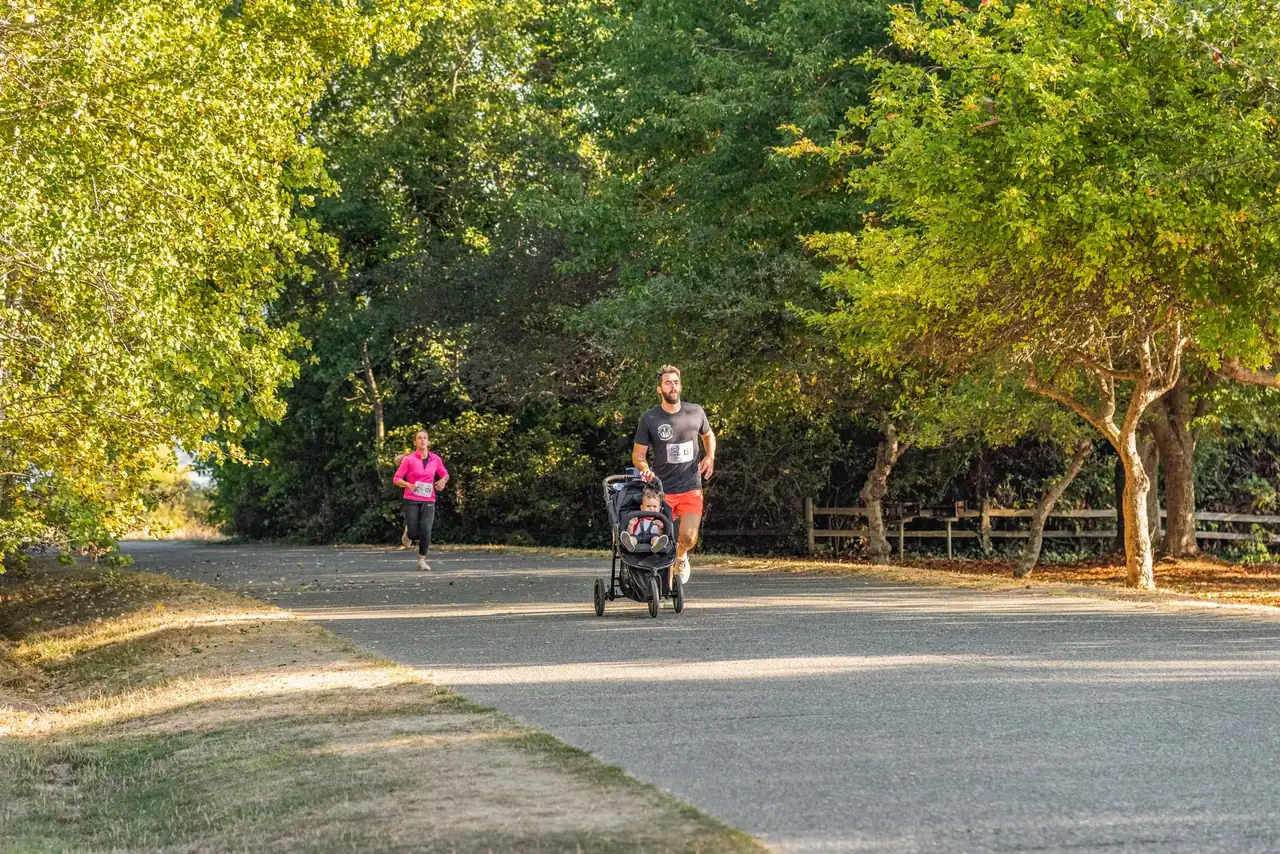
A sports stroller for going running with a baby is not chosen on impulse or for aesthetics. The difference between a worthwhile model and a mediocre one shows up in every stride: stability, braking, suspension, weight, turning radius, and chassis quality completely change the experience. On a short outing it may seem like a minor detail; on a long run, any flaw becomes a visible obstacle, almost like carrying a small trailer that corrects every design mistake.
The right purchase rests on a simple idea: a conventional stroller that is only half-adapted is not enough. To run safely, you need large wheels, a secure harness, a front lock, durable materials, and a structure designed to absorb vibrations. The child’s age, the type of terrain, and the actual intended use also matter, because jogging through a smooth park is not the same as tackling dirt paths, curbs, or long descents.
What distinguishes a good running stroller
The first sign of quality is the three-wheel geometry. The tricycle format improves maneuverability and provides a more stable base while running, especially when the stroller picks up speed or goes over small bumps. The front wheel is usually fixed or lockable, which is essential so the stroller does not snake with every step and keeps a more predictable straight line. That rigidity, far from being a drawback, is what gives control when your stride lengthens.
Next comes how it handles the terrain. Large, air-filled wheels absorb vibrations better and transmit fewer impacts to the child’s body, while a well-designed suspension softens irregularities. Here the nuance matters: a good system is not trying to turn the stroller into a sofa on wheels, but rather to filter the harshness of broken asphalt, gravel, or a compacted trail. The rougher the route, the more that extra cushioning is appreciated.
The whole unit should feel solid without being cumbersome. A light aluminum frame helps you push with less effort, but lightness should not come at the expense of rigidity. If the fold is flimsy, if the handle flexes, or if the joints seem fragile, the feel while running will be imprecise and tiring. The best sign is usually a clean build, with few unnecessary parts and a consistent mechanical feel when opening, closing, and locking it.
Real safety, not just appearance
In this kind of product, safety is not limited to a harness. The five-point harness is the minimum sensible option because it secures the shoulders, hips, and crotch, and prevents sudden movement of the child inside the seat. It should adjust easily, fit firmly without squeezing, and keep the child centered even when the terrain vibrates. It is also worth checking that the front bar, if there is one, never replaces the main restraint system.
Braking deserves its own section. A hand brake or deceleration brake provides control on inclines and downhills, which is especially useful when the stroller gains weight and gravity speeds things up more than expected. On top of that comes the parking brake, essential for keeping it still during a stop. The combination of both offers a far greater sense of control than an ordinary stroller, where control often depends only on hand strength and the terrain.
Visibility also matters, a lot. Reflective elements, a large canopy, and rain or wind accessories raise the stroller’s usability in changing conditions. Running at dawn or late in the afternoon is common for active families, and there a reflective detail can make a practical difference. It is not decoration; it is another layer of caution in an activity where attention must be shared between the path, the pace, and the little passenger.
Age, posture, and room for caution
The most repeated guideline from manufacturers and specialists is clear: it is not advisable to start before 6 months, when the baby has better head and neck control. Before that point, the vibrations and jolts of running can be too much for muscles that are still immature. Some models accept a bassinet or a compatible seat for gentle walks earlier than that, but that is not the same as running; the impact changes the scenario completely.
The other reasonable limit appears later. As a general reference, around 3 years old many children no longer fit this kind of use well because of weight, height, and motor development. It is not just a matter of load capacity; the child is also already walking, running, and exploring on their own. From then on, pushing a stroller becomes less natural and more tiring, both for the person running and for the child.
Between those two points there is room, but also common sense. The child should be comfortable, with the backrest properly adjusted if the model allows it, and without a forced posture that keeps them slumped or leaning forward. A reclining seat, a generous canopy, and an adjustable footrest help maintain comfort, especially on somewhat longer outings or on sunny days. The baby’s comfort is not an extra; it is a condition of use.
Models that usually stand out in practice
Among the options most often mentioned for their balance between sporty use and comfort are names like Thule Urban Glide, Baby Jogger Summit X3, BOB Revolution Flex 3.0, Hauck Runner, and Mountain Buggy Terrain. Not all of them play in the same league or respond the same way on the same terrain, but they share a base: large wheels, good stability, and a build oriented toward brisk walking or real running. These are strollers designed to move smoothly, not just accompany an occasional stroll.
The Thule Urban Glide often stands out for its overall balance, with a very polished feel in the city and in parks, as well as practical folding and pleasant steering. The Baby Jogger Summit X3, on the other hand, is aimed at those who want a firmer response, with a manual deceleration brake and suspension that is noticeable on changing surfaces. They are two close but not identical philosophies: one more refined, the other more athletic.
The BOB Revolution Flex 3.0 and the Mountain Buggy Terrain are often favorites for those who move over less predictable terrain. There, wheel width, downhill control, and a sense of sturdiness matter. The Hauck Runner, meanwhile, is a more straightforward and simpler solution, with a reasonable relationship between performance and price, especially for those who prioritize functionality over extras. The key is to choose not the most famous model, but the one that best fits the type of real use.
What to check before paying
The product’s total weight matters more than it seems. A heavier stroller requires more energy on every outing, especially on hills or when changing pace. That said, a light model that is not rigid also does not compensate. The sweet spot is a structure that is easy to push without feeling fragile, something you notice right away on a long straight stretch or when going over a curb.
The handlebar height is another underrated factor. If it is too low, it forces you to hunch your back and loads the shoulders and lower back; if it is too high, it reduces control. An adjustable handlebar lets you adapt posture to different heights and improves pushing ergonomics. In an activity where the arms repeat thousands of small movements, that comfort is appreciated just like shoes that do not pinch at mile 8.
It is also worth looking at storage and ease of cleaning. A large basket, removable fabrics, and materials that can handle mud or dust make daily use less cumbersome. Running with a baby often means carrying water, diapers, wipes, or a light blanket, so useful storage is not a minor add-on. A good model does more than just run well; it also solves everyday logistics.
Routes and terrain that work best
The ideal environment is flat, wide, and low-traffic. A park with even pavement, a seaside promenade, a greenway, or a compacted trail allow you to keep a steady pace without unnecessary surprises. The fewer sharp turns, steps, roots, or slopes there are, the better the stroller responds and the calmer the experience is for the baby. The goal is not adventure, but smoothness.
Uphills and downhills demand more than you might think, and not just physically. On a slope, the extra weight changes the feeling of control and requires more precise braking. That is why many sports strollers include a hand brake or front lock: it is not a catalog gimmick, but a practical response to a use that puts the whole setup under constant strain. The route, in reality, is part of the product.
Broken asphalt, loose sand, and very narrow paths are the classic enemies. By contrast, a compact, predictable surface lets both runner and child breathe easier. That combination of simplicity and control is what turns an outing into a repeatable routine, without the feeling of fighting the stroller at every step. The experience becomes more like gliding than dragging.
Advantages you can actually feel and limits you should not ignore
The main advantage is obvious: staying physically active without separating family time. For many parents, that means getting back to running with less organizational friction. In addition, the baby is usually exposed to gentle stimuli, movement, fresh air, and changing scenery that make the outing a richer experience than a fixed route. The body moves and, at the same time, the home routine gets a breather.
But there are limits too. Pushing a stroller adds resistance, alters your stride, and requires constant attention. It is not a way to train in the same way as running alone; posture changes, the pace becomes less free, and distances are usually shorter. It helps to accept that to avoid frustration: the goal is not the same performance, but a shared outing with a higher level of demand than a standard run.
Maintenance also cannot be neglected. Wheels should be checked, brakes tested, and the frame cleaned regularly, especially if the stroller is used on dirt or dusty areas. A small amount of play, incorrect pressure, or a dirty joint can turn a solid product into an uncomfortable one. As with a bicycle, proper working condition is noticed in silence: when everything rolls well, you barely think about it.
A purchase decided by the details
Choosing well requires looking beyond the brand name and the shine of the spec sheet. What matters is the usual type of terrain, the child’s age, how often it will be used, and the available space at home or in the trunk. The feel when pushing also matters, and that is hard to measure in numbers yet sums up almost everything. If the stroller feels solid, stable, and predictable, it is probably better resolved than another one with many features but erratic handling.
The market offers solutions for very different profiles: families who want an urban, foldable model, others who prefer a more serious all-terrain option, and those looking for a contained price without giving up the essentials. The good news is that the category has matured a lot and no longer depends on improvisation. The bad news, if you want to call it that, is that precisely for that reason the choice deserves calm. A good sports stroller does more than accompany outings; it changes the way you experience them.
In that mix of technique, caution, and routine, the final criterion appears. Safety, comfort, and control are the three pillars supporting a sensible purchase. If those three fit together, the rest usually falls into place on its own: the baby is better protected, the runner moves with less strain, and the outing stops being a test of endurance and becomes a cleaner, more stable scene, and above all, one that is easier to repeat.



How to prevent thigh chafing: causes and real solutions

Women’s running windbreakers: seven jackets and how to choose

Do more workouts get rid of soreness? A guide for runners

Jaén Half Marathon 2026: Record 3,800 Runners Registered

Men’s short running tights: how to choose the right pair

World Triathlon confirms data breach involving medical data

Izan Edo targets podium at Miyazaki World Cup

María Pérez ranks ninth in World Athletics’ 2026 top ten

Dos Santos, Duplantis and Sawe: World Athlete of the Year finalists

San Silvestre Vallecana 2026: 42,000 places, prices and start times

 Races4 months ago
Valencia Half Marathon 2027: date and registration

 Races4 months ago
Valencia Marathon 2026: entry, ballot and course

 Reviews and Comparisons4 months ago
Asics Gel-Roadmiles 3 for men: review and current price

 Reviews and Comparisons4 months ago
Asics Gel Sonoma 8 Gore-Tex: complete analysis for trail and rain

 Sneakers3 months ago
Saucony Endorphin Pro 4: full review and verdict

 News5 months ago
Strava API 2026: what changes for clubs, challenges and runner apps?

 Reviews and Comparisons5 months ago
Nike Alphafly 3: opinions, sensations, and real key points

 Reviews and Comparisons4 months ago
Under Armour running shoes review 2025-2026: models and key features

 Sports Equipment4 months ago
Shoe sizes in cm: a clear guide to getting the right fit for your footwear

 Sneakers3 months ago
Skechers GO RUN Consistent 2.0 analysis: comfort and limits

 News5 months ago
Valencia Marathon 2026 route: key tips to train and run better

 Sneakers4 months ago
Adidas Adizero Boston 13 for men: review and verdict