News
Asphalt or dirt in summer: heat, impact, and rhythm face to face
The surface alters impact, heat, stability, and pace: this is how running changes between asphalt and dirt in summer.

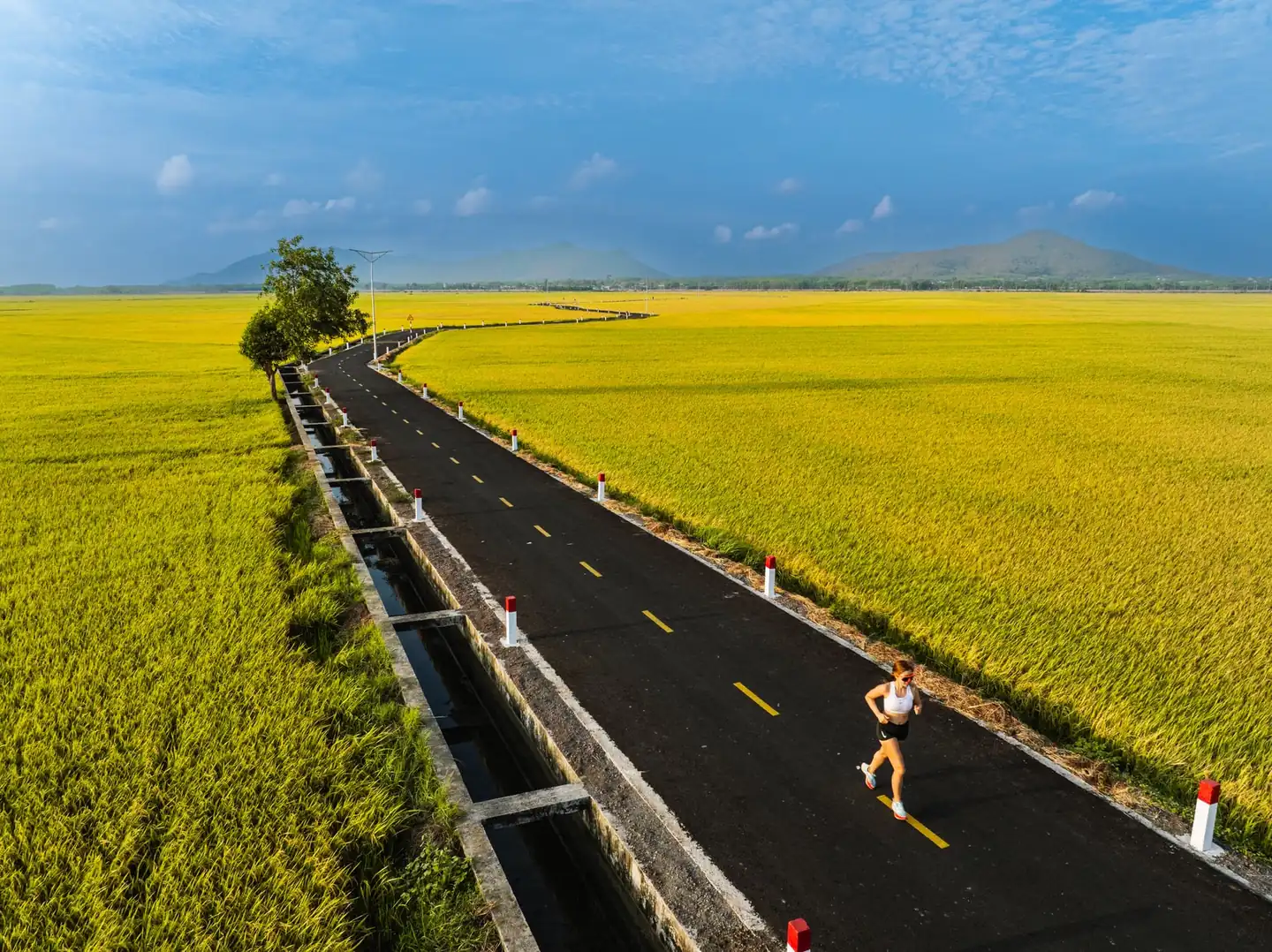
In summer, the surface weighs almost as much as the clock. Asphalt gives back a drier, more demanding stride, while dirt, if it’s compact and in good condition, usually offers a somewhat kinder footfall. The difference is not theoretical: it affects impact, ankle stability, fatigue, and also the temperature the runner has to تحمل during training.
There is no universal winner. On days of intense heat, the ground stops being a secondary detail and starts to shape the session. Hard pavement punishes the joints more, but uneven dirt demands more attention and can raise the risk of twisting an ankle if the path is dry, broken, or poorly maintained. The key is understanding what each one brings and how the effort changes when the thermometer climbs.
Summer does not treat all surfaces the same
The most visible difference between asphalt and dirt in summer is underfoot. Asphalt concentrates and reflects heat, warms up quickly, and usually stays abrasive for hours. On a street exposed to the sun, the thermal sensation can multiply because of the radiation rising from the ground, something the runner notices as stuffiness, heavier breathing, and a higher pulse than usual.
Dirt, on the other hand, usually dissipates part of that thermal punishment better when the route passes through shaded areas, trees, or a bit of moisture. That does not mean it is cool by definition, because a dry, open path under the sun can also turn into a frying pan. Even so, the natural environment usually offers more variation, something that is appreciated in summer: changes in light, more moving air, and less of that feeling of a surface boiling beneath you.
The choice matters even before you start running. An urban route forces you to share space with cars, traffic lights, facades that store heat, and stretches where the air seems motionless. On a dirt trail, the landscape helps regulate the pace in a different way, although that same freedom can work against you if the ground is cracked, loose with stones, or has deceptive slopes that are harder to see in harsh light.
Impact, fatigue, and what the body feels
Asphalt is homogeneous, and that is why it transmits more repeated impact. Every footstrike finds almost the same response, with hardly any concessions. That does not automatically make it a bad option, but it does make it a surface that asks more of the ankles, knees, hips, and the sole of the foot when outings are frequent or when the runner piles up kilometers without enough rest.
Compact dirt distributes certain loads better, especially when the ground has a little elasticity and is not broken up. That small softness usually feels more pleasant on long runs and easy jogs. The body appreciates that variation, as if the stride found a discreet cushion that does not remove muscular work, but does soften part of the blow.
The important nuance is that dirt does not always protect more. An uneven path forces the body to stabilize the step continuously, and that tires the deep muscles of the foot and leg sooner. In summer, fatigue also arrives earlier because of dehydration, poorer sleep, or accumulated heat, so a surface that seems kinder at first can end up being more demanding if the runner lets their guard down.
Perception can be misleading too. After a few minutes on a compact track or a well-kept park path, the effort feels lower than on a straight avenue. However, that feeling does not always mean less real load. The body works differently: on asphalt, it repeats; on dirt, it corrects. And that difference matters a lot once weekly volume reaches a certain point.
When asphalt has the advantage
Asphalt wins on consistency. For workouts with controlled pace, short intervals, or sessions where it matters to measure the pace accurately, the smooth surface offers a more stable reference. The watch and the body’s sensations understand each other better when the ground does not change every meter. That is why many runners choose asphalt when they want precision or when they want to know exactly what pace they are running.
It is also useful on well-lit, familiar urban routes. In summer, going out early or at dusk is common, and a familiar street can feel safer than a barely visible trail. Sometimes the choice does not depend on impact, but on logistics: access from home, nearby water points, the possibility of shortening the route if the temperature rises too much, or the ease of training regularly without having to travel.
That said, asphalt has a cost that builds up with quiet persistence. On very hot days, the body is already under more strain from thermoregulation, and that added stress from the surface can be felt as heavy legs, stiffness at the end, and slower recovery. Anyone who runs often on hard pavement usually needs more attention to rest, weekly volume, and the condition of their shoes, because a worn midsole lets even more punishment through.
The hardest hours of summer make that effect even more visible. Between two and six in the afternoon, pavement can turn into a hot plate. Even though most runners avoid that window, one poorly chosen outing is enough to make the workout feel rough from start to finish. The ground does not forgive, and the stride starts to cost more than expected.
When dirt offers a better response
Compact dirt is usually the most rewarding option for easy runs and long efforts. If the path is in good condition, with stable footing and few broken sections, the feeling of extra cushioning is noticeable from the first few meters. In summer, that quality becomes valuable because it helps soften the load when the body is already overheated by the environment.
Parks, rural paths, and tree-lined trails add another less visible advantage: they protect better from direct sun. Running in the shade reduces thermal stress and, in some cases, allows the effort to be sustained more comfortably than on an open avenue. That difference is especially noticeable in long sessions, where every extra degree and every meter exposed to the sun end up affecting the quality of the workout.
Dirt also brings a different mental feeling. The body is not just working; it is in conversation with the surroundings. There is less urban noise, fewer sudden stops, fewer traffic lights, less of that feeling of being trapped between walls that throw heat back at you. The runner slips into a more organic kind of cadence, almost as if the stride were breathing with the landscape. That experience helps many athletes keep the habit going in months when the heat makes them want to cut outings short.
But it is worth separating good dirt from treacherous dirt. A clean, compact park path has nothing to do with an eroded track full of loose stones or sandy patches that make the foot sink. In summer, when vegetation dries out and the ground loses consistency, the chance of tripping increases. The choice is not just between dirt and asphalt; it is between predictable surfaces and surfaces that change too much.
Heat shifts the balance more than it seems
Air temperature changes the way each surface feels. In winter, hard asphalt may seem merely uncomfortable; in summer, that same hardness adds to the ambient heat and the body’s cooling effort. The result is a sum of small loads that, together, weigh much more than in another season.
On a hot surface, running economy suffers. The runner usually shortens the stride, raises cadence earlier, and tightens the muscles more to protect against the impact. That adaptation can be useful in the moment, but it also increases the perception of effort. On dirt, with a bit more absorption and less thermal reverberation, the session can be sustained with less feeling of being overwhelmed.
There is another little-discussed factor: the heat of the surface affects immediate recovery. A gentle workout on very hot ground leaves the body closer to the limit than the same run in a shaded, ventilated environment. That is why, in July or August, two sessions that look identical on paper can leave completely different sensations when they are over.
The body does not separate heat, impact, and fatigue into isolated boxes. It feels everything as one single bill that gets paid at the end of the workout. If the route combines asphalt, direct sun, and little water, the load goes up. If the route alternates compact dirt, shade, and a more reasonable temperature, the margin improves. That sum is what truly defines the quality of a summer run.
Most common injuries and where they show up more
Asphalt is associated with more repetitive load in the lower body. Knees, hips, calves, and the plantar fascia usually take the worst of it when volume spikes or when running in worn-out shoes. It is not a sentence, but it is a logical tendency: the impact returns from the surface to the body again and again, like a ball bouncing without getting tired.
Dirt, on the other hand, raises the risk of sprains and overload from irregularity. Ankles that keep correcting continuously, smaller muscles that work harder, and constant attention that is tiring too. In summer, when technical fatigue appears earlier, the danger grows on paths with roots, hidden stones, or holes marked by drought or the last rains.
The key to understanding the risk is not to demonize one surface, but to recognize the type of injury each one encourages. Asphalt punishes through repetition. Dirt, through the unexpected. And both scenarios get worse if the runner goes out in extreme heat, with little hydration, or with insufficient rest. Summer does not create injuries, but it does sharpen the edges of many of them.
Fitness level also matters. Someone returning after a break or carrying recent discomfort usually tolerates sudden changes in surface less well. In those cases, alternating routes may be more sensible than obsessing over a single option. The body appreciates variety because it prevents the same structure from absorbing the same kind of stress all the time.
What role shoes and technique play
Footwear does not fully correct a poor terrain choice, but it can soften it. A shoe with adequate cushioning helps more on asphalt, while a sole with better grip and some stability can be useful on compact dirt paths. In summer, ventilation matters too: the foot swells in the heat and appreciates materials that do not trap too much temperature.
Running technique matters too, although it is often left in the background. A less noisy stride, more relaxed and without overextending the landing, reduces part of the punishment on hard surfaces. It does not work miracles, but it does change the way the body receives impact. On dirt, by contrast, it is best to avoid abrupt footfalls that destabilize the ankle at the first silly bump in the path.
The best shoe does not turn a broken trail into a safe one, nor does it erase the wear of hot pavement. Nor does correct technique eliminate heat stress. But both elements add up. In summer, when everything asks for more, small adjustments like these mark the line between a reasonable run and an outing that ends with odd aches the next day.
The foot’s memory is short, but the body’s memory is long. If a surface hurts too much, the signal appears later: loaded sole, stiff calf, knee that feels sensitive going downstairs. Listening to that response is just as important as choosing the right ground in the first place. Summer does not forgive mechanical decisions made out of habit.
What usually suits each type of workout
For easy runs, compact dirt is usually kinder. It lets you run with less of that hammering feeling on the joints and helps you tolerate heat better when there is shade. It is a very logical option for days when the goal is to accumulate minutes without fighting the pace.
For more controlled sessions, asphalt offers a clearer reference. If the goal is to hold an exact pace or work short intervals, the regularity of the surface helps. In summer, though, it is wise to choose cooler hours and less exposed streets. The surface matters, but the context can make it worse or soften it in a decisive way.
There is also a middle ground that many runners use without thinking too much about it: alternating. Part asphalt and part dirt reduces mechanical repetition and spreads the stress around. It is not a spectacular formula, but it is practical. And in summer, practical usually saves more workouts than the obsession with finding an ideal surface that, in reality, almost never exists.
The sensible thing is to think in terms of compatibility, not purity. A runner can benefit from asphalt some days and dirt on others, depending on the heat, the type of session, and the state of their legs. That flexibility matters more than a rigid preference. The right surface is, many times, the one that fits what the body can tolerate that day.
Summer tests the choice, not just endurance
Asphalt or dirt in summer is not a winner-versus-loser dispute. It is a matter of load, temperature, safety, and context. Asphalt offers stability and precision, but it punishes more through repetition and heats up easily. Compact dirt is usually more comfortable and less aggressive, although it demands more attention and can hide risks if it is dry, broken, or poorly laid out.
The most sensible decision usually comes from balance. On very hot days, a shaded compact dirt path may be the best answer. For measured workouts or controlled urban routes, asphalt still makes sense. What fails is not a surface in itself, but the habit of using it as if summer changed nothing. And it does change things: a lot, and fast.
The difference is felt in the body when you finish and also the next day. Looser legs, more loaded knees, more alert ankles, heavier breathing, or a cleaner recovery. The ground leaves its mark. In the middle of summer, choosing it well is almost a way of managing effort, a way of not asking the body for more than it is already giving just to stay cool.
In the end, the best surface is the one that lets you keep adding without breaking the summer rhythm. Asphalt does not deserve to be condemned every time, nor does dirt deserve automatic applause. What matters is how heat, surface quality, workout type, and the real response of the legs come together. There, and not in the cliché, is the useful answer for running smart when the sun is beating down.



How to prevent thigh chafing: causes and real solutions

Women’s running windbreakers: seven jackets and how to choose

Do more workouts get rid of soreness? A guide for runners

Jaén Half Marathon 2026: Record 3,800 Runners Registered

Men’s short running tights: how to choose the right pair

World Triathlon confirms data breach involving medical data

Izan Edo targets podium at Miyazaki World Cup

María Pérez ranks ninth in World Athletics’ 2026 top ten

Dos Santos, Duplantis and Sawe: World Athlete of the Year finalists

San Silvestre Vallecana 2026: 42,000 places, prices and start times

 Races3 months ago
Valencia Half Marathon 2027: date and registration

 Races3 months ago
Valencia Marathon 2026: entry, ballot and course

 Reviews and Comparisons4 months ago
Asics Gel-Roadmiles 3 for men: review and current price

 Reviews and Comparisons4 months ago
Asics Gel Sonoma 8 Gore-Tex: complete analysis for trail and rain

 Sneakers3 months ago
Saucony Endorphin Pro 4: full review and verdict

 News5 months ago
Strava API 2026: what changes for clubs, challenges and runner apps?

 Reviews and Comparisons5 months ago
Nike Alphafly 3: opinions, sensations, and real key points

 Reviews and Comparisons4 months ago
Under Armour running shoes review 2025-2026: models and key features

 Sports Equipment4 months ago
Shoe sizes in cm: a clear guide to getting the right fit for your footwear

 Sneakers3 months ago
Skechers GO RUN Consistent 2.0 analysis: comfort and limits

 News5 months ago
Valencia Marathon 2026 route: key tips to train and run better

 Sneakers4 months ago
Adidas Adizero Boston 13 for men: review and verdict