Sports Equipment
Shoe size converter: charts and key measurements
Charts, measurements, and criteria for getting the right footwear and reducing returns when shopping.

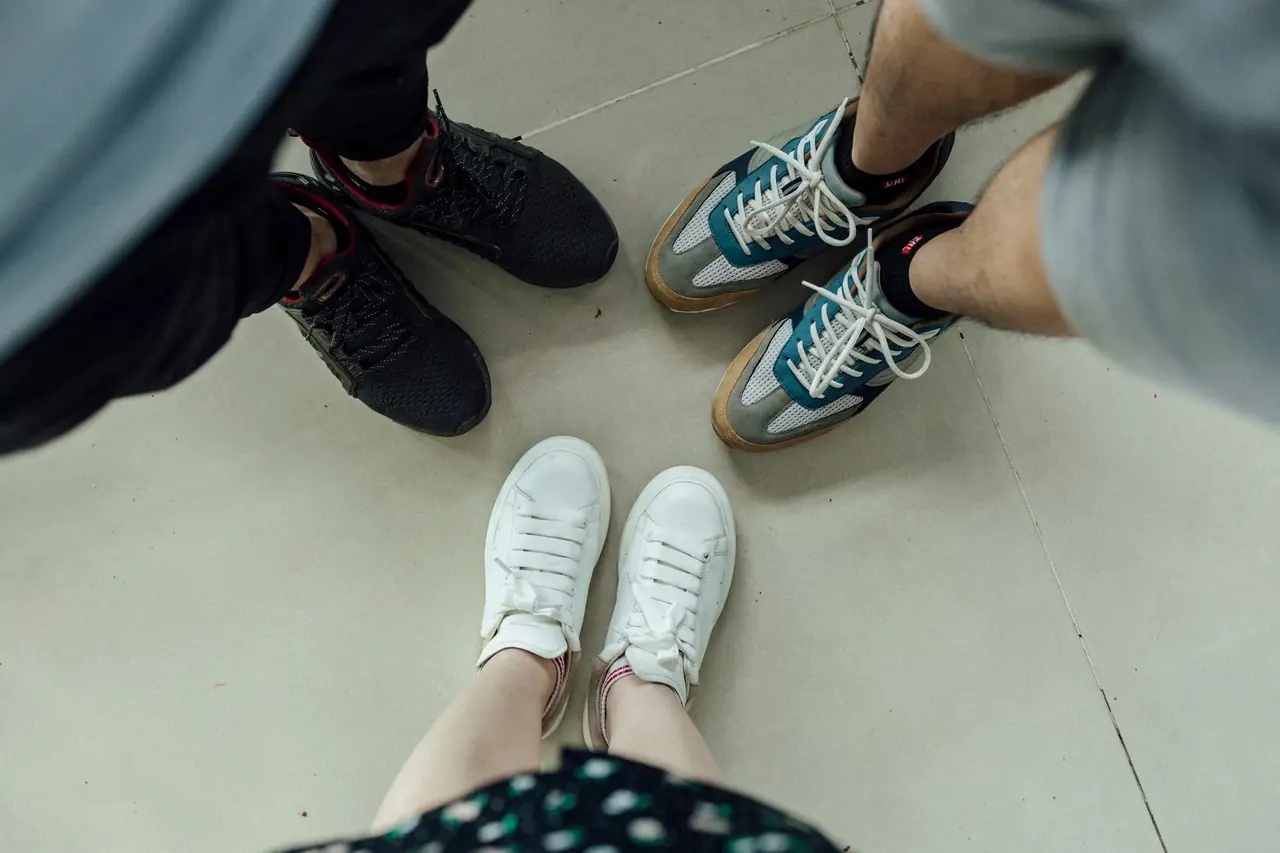
A good shoe fit starts with understanding that a size does not mean the same thing in every country, not even within the same brand. The same number can vary depending on the system used, the last, and the type of shoe, so buying blindly often ends in returns, discomfort, or that feeling of walking on an edge all day long.
In practice, a reliable converter translates EU, UK, US, and centimeters into a common language: the actual length of the foot. That is the reference that helps most when buying online or when comparing a sports model with a dress one. Measuring well and reading the right chart is worth more than memorizing a fixed number.
Why shoe size varies so much between countries and brands
Footwear carries a well-known paradox: it seems like an exact measurement, but rarely is. European sizing is based on the Paris point, while the UK and US systems use different scales and, in many cases, a logic tied to inches. Japan and Korea, on the other hand, tend to come much closer to the length of the foot in centimeters or millimeters. The result is a confusing map for anyone buying outside their usual market.
On top of that base difference comes the last, which is the internal mold used to make the shoe. Two pairs with the same size can feel different if one has a narrower toe box, a lower instep, or greater width in the metatarsal area. That is why, even when a conversion seems correct on paper, the real feel can change significantly between brands or between models from the same brand.
Variety also affects use. A sports model usually leaves a bit more room for the foot to expand naturally during stride, while a dress shoe may fit more snugly. In running, that extra margin is not a whim: the foot expands with effort and heat, and a fit that is too tight ends up taking its toll on nails, toes, and the sole. That is why measuring well matters as much as interpreting the chart correctly.
What data a useful size chart really converts
The best charts do not just say that a size 42 equals another numbering system. They go one step further and provide the foot length in centimeters, because that is the unit that truly allows comparison. A 27 cm foot, for example, does not need to guess its size: it can be matched with the manufacturer’s scale or with the standard chart to approximate the number that fits best.
For men, a foot length close to 27 cm is usually around an EU 42.5 or 43, with equivalents close to a UK 9 or 9.5 and a US 10 or 9.5 depending on the brand and the exact system. For women, those same 27 cm are usually near an EU 42 or 43, depending on the chart. These differences may seem small, but they are enough for a shoe to pinch at the toe or slip at the heel.
In children’s footwear, the margin for error matters even more. Feet grow quickly, and a size that worked three months ago may suddenly be too small with little warning. That is why it is best to look not only at age, but at the foot length in centimeters, which is the data that truly guides the purchase. Children’s sizing changes more abruptly between scales and, if matched incorrectly, the result is usually footwear that is too short or too wide.
How to measure the foot without fooling yourself
Measuring the foot at home seems simple, but precision depends on small details. The foot should rest on a sheet of paper, with the heel firmly placed and a pencil held vertically to trace the outline. Then measure the distance from the heel to the longest toe. That reference, and not the size one thinks they have worn for years, is what should feed any converter.
There is one detail that makes a difference: measuring works better in the afternoon or at the end of the day. Feet tend to be somewhat more swollen due to use, heat, and accumulated load. Measuring in the morning can give an overly optimistic figure and lead to choosing a shoe that is smaller than it should be. In footwear, half a centimeter can sometimes change the entire experience.
It is also worth measuring both feet. It is not unusual for one to be slightly longer or wider than the other. In that case, the practical rule is to choose the measurement of the larger foot. What matters is not perfect geometry, but avoiding pressure on the more demanding side. That small gesture prevents chafing, black toenails, and the feeling of constantly correcting your step.
How to read an equivalence without getting lost
The key to a sensible conversion is to choose a known column and follow the row to the system that interests you. If you know someone wears a US 8, simply look up that size and move to the European, British, or centimeter value. The most common mistake is to look at an isolated figure and assume it is repeated universally. That is not how it works.
There is a very useful golden rule: when the chart offers an intermediate figure, the foot matters more than the label. If the measurement falls between two numbers and the model is for running, it is better to leave a small margin. If it is a dress shoe or a structured boot, a precise fit may be more important, but never at the expense of comfort in the toe box. The shoe should accompany movement, not chase it.
In practice, many conversions between systems move in steps that seem minimal: half a size up, half a size down, one number more, one number less. That appearance of a minor detail is precisely what produces the highest number of returns. The chart does not guess the behavior of the last, but it does reduce noise and provides an objective basis where there was once only intuition.
Differences between men, women, and children
The division by category exists because the scales are not identical and because shoe shape also changes. In the United States, for example, women’s sizing is usually approximately one number above men’s for a similar length, while in sports footwear the equivalence can shift a bit more. It is not a universal rule, but it is a reference that prevents many mistakes when comparing.
In children’s shoes, conversion requires even more care. Manufacturers often separate growth stages with letters or ranges that do not always resemble adult sizing. A child does not need a pretty size on a label; they need enough room to grow without the shoe restricting movement. If the purchase is too tight, the problem appears quickly, often before the pair has even been fully broken in.
In addition, there are youth models that come quite close to adult sizes. That makes visual comparison harder and makes a converter especially useful. The number may seem small, but the structure already behaves like that of an almost adult shoe. Here the important data is not the appearance of the sizing, but the measurement in centimeters and the type of last.
Why width matters as much as length
A useful conversion does not stop at length. Foot width changes significantly from person to person and also from one moment of the day to another. There are narrow, medium, wide, and extra-wide feet, and that detail explains why a shoe may be correct in length but unbearable at the sides. The foot is not a line; it is a volume.
Some brands indicate widths with letters such as B, D, E, or EE, while others use terms like narrow, medium, or wide. There is no universal standardization as clear as there is for length, so this part requires checking each manufacturer. Even so, knowing that a wide foot needs a more generous last avoids the classic mistake of going down a size to compensate for lateral pressure. That does not solve the problem; it only shifts it.
In running, width is especially noticeable in the forefoot. The foot expands with repeated impact, like a bellows breathing with every stride. If the toe box is too narrow, the result usually appears as black toenails, rubbing on the fifth toe, or uncomfortable pressure on the forefoot. That is why many guides recommend leaving between 0.5 and 1 cm of space in front of the longest toe.
What it really means to get the size right
Getting it right is not about buying the number you have always worn. It is about making sure the foot fits without force, the heel stays secure, and the toes have enough freedom to move. A correct shoe is felt in silence: it does not force you to adjust your stride or remind you of its presence at every step. Its best virtue is disappearing.
The consequences of an incorrect fit can go far beyond immediate discomfort. Tight or short footwear encourages chafing, hammertoes, plantar pain, and deformities over time. If the problem repeats, the body ends up adapting poorly to the restriction, and the foot starts working in an artificial position. That is the kind of small detail that later becomes chronic.
When buying online, the temptation is to rely on the usual size and trust that everything will work out. But differences between brands, materials, and models turn that into a gamble. A serious converter reduces that uncertainty, especially when combined with the manufacturer’s size guide and the foot’s actual measurement.
The special case of sports footwear
Sneakers and training models deserve a separate look because they are subjected to more movement than urban shoes. The foot does not just support weight; it also moves forward, brakes, rotates, and expands. That is why the fit margin is usually somewhat more generous and the choice becomes more sensitive to arch shape, sock thickness, and intended use.
In this area, the correct size can vary between a light session and a long run. When the foot spends more time inside the shoe, heat and effort make it increase slightly in size. That is why many running guides recommend trying shoes with the same type of socks that will be worn while running and checking that there is enough space at the front of the toe box. That simple detail prevents many invisible discomforts after the first minute.
Discipline also matters. A road-running shoe, a trail shoe, or a mixed-use shoe do not behave the same way. The first may seek more continuity and stability; the second, more support and extra protection. The converter provides the base, but the specific use ultimately decides. In other words, the correct size does not exist alone; it interacts with the activity to be performed.
Common mistakes that make conversion fail
The first mistake is confusing size with last length. They do not always match directly and, depending on the system, sizing can refer to different criteria. The second mistake is copying someone else’s size without checking foot shape. Two runners with the same number may need different shoes if one has more width or more volume on the instep.
Another common misstep is ignoring the time of day. A foot measured at dawn and one measured at the end of the day do not give the same result. The third is trusting that all brands follow the same logic. Some run a bit large, others a bit small, and in certain models the difference can be noticeable. The general chart provides guidance, but the manufacturer usually has the final word.
It is also wise to distrust the idea that a universal size will solve everything. Bodies change, feet change, and use alters the perception of fit. A number that worked years ago may have become too small after changes in weight, physical activity, or simple natural evolution. Size is not a fixed identity; it is a snapshot at a specific moment.
How to make the most of a chart without turning it into a trap
The usefulness of a converter increases when it is used as a starting point rather than a verdict. The resulting number provides guidance, but the eye still has to read the toe box, heel, and width. If the foot measures 24.5 cm, for example, the chart helps place it around a certain size, but the actual fitting must confirm that the shoe is neither too tight nor excessively roomy. Conversion saves time; it does not replace common sense.
In international shopping, the most sensible process is simple: measure the foot, find the length in centimeters, translate it into the country’s system, and then compare it with the brand’s guide. That two-step filter reduces the margin of error a lot. If the intended use is also taken into account, the chance of getting it right rises clearly. It is a simple method, but far more reliable than relying only on a familiar number.
At bottom, what a well-designed converter offers is not a closed answer, but a more precise way to choose. And that precision avoids the classic almost-right shoe, which is the worst of all: it seems acceptable when tried on, but becomes painful after an hour of wear. The true measure of size is not the label, but how the foot behaves as the day goes on.
What really separates a good purchase from a bad choice
The difference is usually not in price or brand, but in the attention paid to detail. Measuring the foot, checking the width, thinking about the time of day, and not assuming a local size is universal changes much more than a design update. A serious shoe size converter does not aim to beautify the purchase; it aims to make it readable.
That is why the best decisions are born not from habit, but from observation. A foot that fits just right today may not be the same six months from now. A model that runs large in one manufacturer may run small in another. And footwear that seems fine at home can become rough after walking a few streets. Faced with that variability, the chart and the measurement in centimeters act as a compass.
In an increasingly international market, where a pair made thousands of kilometers away can be bought with a click, understanding equivalences has ceased to be a curiosity and become a small everyday health tool. The right size is not something you notice; what you notice is the absence of mistakes. And in footwear, that absence is worth almost as much as the shoe itself.



How to prevent thigh chafing: causes and real solutions

Women’s running windbreakers: seven jackets and how to choose

Do more workouts get rid of soreness? A guide for runners

Jaén Half Marathon 2026: Record 3,800 Runners Registered

Men’s short running tights: how to choose the right pair

World Triathlon confirms data breach involving medical data

Izan Edo targets podium at Miyazaki World Cup

María Pérez ranks ninth in World Athletics’ 2026 top ten

Dos Santos, Duplantis and Sawe: World Athlete of the Year finalists

San Silvestre Vallecana 2026: 42,000 places, prices and start times

 Races3 months ago
Valencia Half Marathon 2027: date and registration

 Races3 months ago
Valencia Marathon 2026: entry, ballot and course

 Reviews and Comparisons4 months ago
Asics Gel-Roadmiles 3 for men: review and current price

 Reviews and Comparisons4 months ago
Asics Gel Sonoma 8 Gore-Tex: complete analysis for trail and rain

 Sneakers3 months ago
Saucony Endorphin Pro 4: full review and verdict

 News5 months ago
Strava API 2026: what changes for clubs, challenges and runner apps?

 Reviews and Comparisons5 months ago
Nike Alphafly 3: opinions, sensations, and real key points

 Reviews and Comparisons4 months ago
Under Armour running shoes review 2025-2026: models and key features

 Sports Equipment4 months ago
Shoe sizes in cm: a clear guide to getting the right fit for your footwear

 Sneakers3 months ago
Skechers GO RUN Consistent 2.0 analysis: comfort and limits

 News5 months ago
Valencia Marathon 2026 route: key tips to train and run better

 Sneakers4 months ago
Adidas Adizero Boston 13 for men: review and verdict