Sports Equipment
The best shoes for doing intervals on the track and flying on the tartan
Fast, light, and stable models for working the court without losing control or responsiveness.

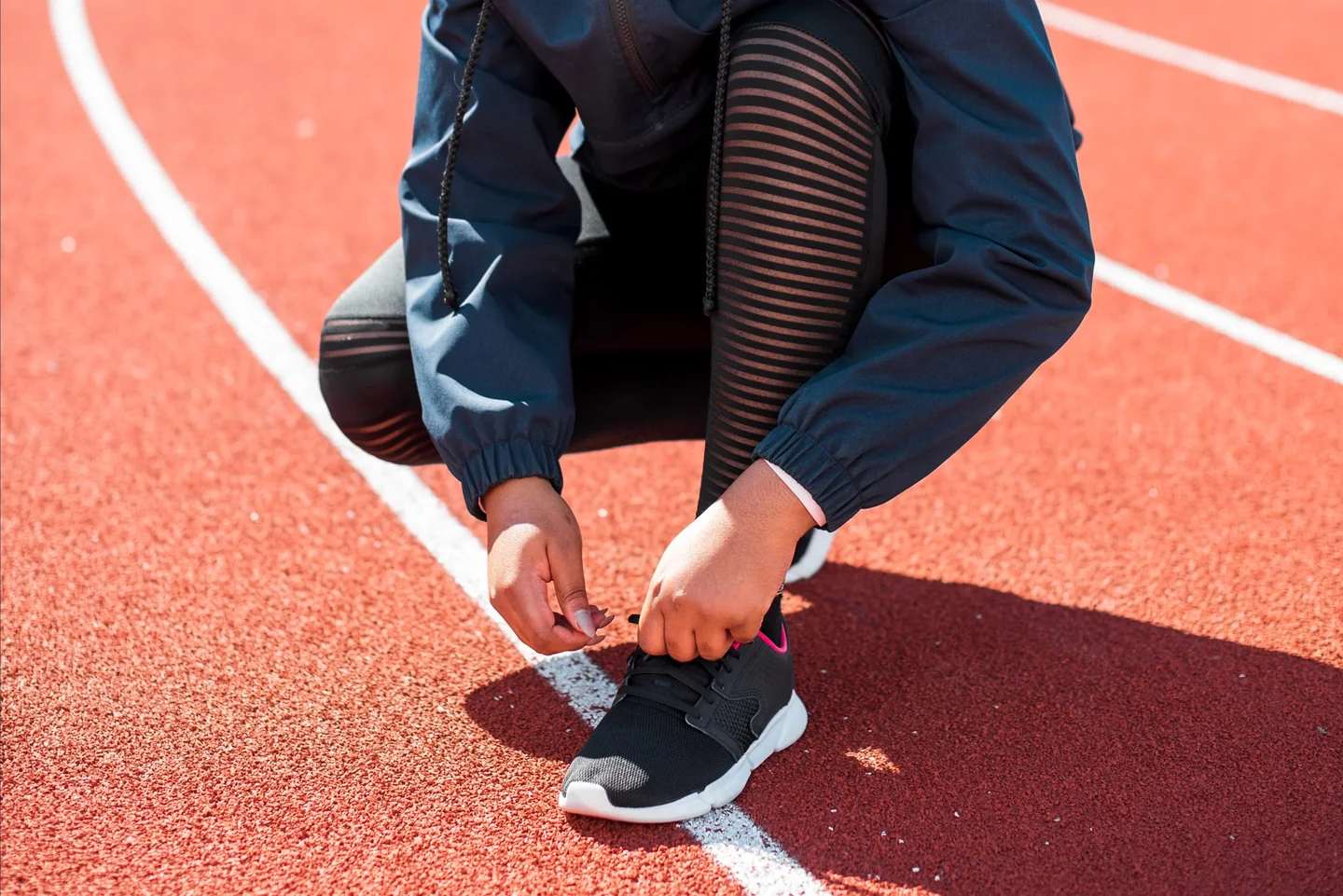
The track does not forgive pretense. On a 400-meter straight, every gram counts, but so do stability, grip, and the way the shoe returns energy when the pace really picks up. In interval sessions, a model that is too soft sinks; one that is too rigid punishes; one that is too unstable forces the runner to fight the landing instead of the clock. That is why shoes for this use are not chosen for aesthetics or fashion, but for a very specific blend of responsiveness, fit, and control.
In this field, the best options are usually halfway between a pure racing shoe and a daily trainer. Brands have refined that middle ground a lot: livelier foams, nylon or carbon plates, thinner uppers, and outsoles with enough feel to grip well on the bend. The result is an increasingly broad category, designed for those who want to squeeze the most out of short intervals, pace changes, long repetitions, or threshold work without running on a board under their feet or a brick on their heels.
What a good track shoe should offer
On the track, the stopwatch and running mechanics force you to look beyond the weight listed on the box. A good choice needs real lightness, yes, but also a base that does not fall apart when entering the curve, a midsole that responds quickly to impact, and an outsole that does not slip when the tartan is wet or covered in dust. The track magnifies flaws: an uneven shoe is noticed sooner than on asphalt, because the motion is more repeated, cleaner, and more demanding.
The workout distance also matters. A 12 x 400 session is not the same as a 5 x 2,000 block. In the first, agility matters most; in the second, the ability to hold effort without the foot getting too tired. That is where many hybrid shoes have become the most sensible option: they are not as radical as a pure racing shoe, but they are much more efficient than a daily trainer. That middle ground is what best solves most track sessions for recreational and competitive runners.
Running technique also has a big influence on the purchase. A runner who lands on the midfoot usually takes better advantage of aggressive geometry and premium foams, while a heel striker needs a friendlier base and a less narrow heel. On the track, too, bends penalize very tall or very narrow models more. That is why a fast shoe does not necessarily have to be the most extreme; in many cases, the most useful one is the one that runs best.
The model families that work best
In today’s lineup, there are three main paths. The first is very light, almost competition-level shoes, designed for short intervals and 5K or 10K races. The second is hybrid models with a nylon or fiber plate, suitable for fast work and also for racing with a bit more forgiveness. The third is fast-training shoes, somewhat more generous in cushioning, that let you combine track, fartlek, and lively runs without asking as much from the muscles.
Among the most interesting options from recent seasons are Adidas Adizero EVO SL, ASICS Magic Speed 4, Saucony Endorphin Speed 5, Puma Deviate Nitro 3, Brooks Hyperion Max 3, Hoka Mach X3, New Balance Rebel v5, Mizuno NeoZen, On Running Cloudmonster 2, and Joma R2000. Not all of them play exactly the same game, but they all share a core idea: running fast without completely sacrificing comfort.
The real difference lies in character. Some feel like a bullet, others like a more civilized spring. Some demand light, technically skilled runners, and others forgive a bit more body weight or a less polished stride. On the track, that personality matters almost as much as the technical sheet, because the feeling when changing pace ends up weighing as much as the foam or the plate.
Fast models for short, demanding sessions
Among the most explosive, the Adidas Adizero EVO SL has earned a lot of attention for one very simple reason: it feels fast from the very first step. Its Lightstrike Pro midsole across the entire shoe delivers a very lively rebound, without the weight or extreme stiffness of a plated racer. That makes it a very interesting option for track intervals where the runner wants snap, but also a ride that does not become harsh as the repetitions go on.
The ASICS Magic Speed 4 takes a different route. Its combination of FlyteFoam Turbo with a carbon plate seeks both propulsion and control in equal measure. On the track, that translates into a very clear response when accelerating and reasonable stability when entering the bend at a high pace. It is a shoe that usually suits runners with clean technique who want a more pronounced propulsion feel without going to an extreme competition model.
The Puma Deviate Nitro 3 adds another interesting nuance: a carbon plate that is less aggressive than it first appears and a NITROFOAM midsole that cushions with good balance. Its profile is useful in fast sessions that do not last just four straights. Those who do long blocks or alternate track with road usually appreciate that mix of drive and protection, because the foot stays fresher when there are still repetitions ahead.
Versatile hybrids for training and racing
The most practical category, at least for a huge share of runners, is the hybrid shoe. That is where models like the Saucony Endorphin Speed 5, the Brooks Hyperion Max 3, and the Hoka Mach X3 stand out. These are shoes that do not force you to choose between speed and comfort, because they work across a wide pace range and let you move from one interval to the next without much change in feel underfoot.
The Endorphin Speed 5 remains a benchmark for its balance. Its PWRRUN PB foam and nylon plate with SPEEDROLL geometry create a smooth transition, quite natural for a plated shoe, and enough response for long intervals and pace changes. On the track, that fluidity is especially useful because it prevents each footstrike from feeling like a mechanical chore. Not everything has to be aggressive; sometimes the secret is for the shoe to disappear and let the runner do the work.
The Hyperion Max 3, on the other hand, is aimed at those who want to add speed without punishing the legs too much. Its maximalist approach and DNA Gold foam make it more forgiving in long sessions and hard progression runs, something that can also make sense on the track when the work is not pure sprinting but controlled repetition. The Hoka Mach X3, meanwhile, combines a rocking sensation with a Pebax plate that helps accelerate the stride. It is a very recognizable shoe underfoot, with a character that favors sessions where the runner wants high pace without losing comfort.
In that same versatile line appears the New Balance Rebel v5, light and with a midsole that is more elastic than rigid, designed for those who prefer a freer feel. It does not have the blunt force of a pure carbon plate, but it is very easy to run fast in. And that, on the track, sometimes matters more than excessive propulsion that ends up tiring the calf too soon.
What changes depending on the runner profile
Body weight is still a relevant factor, although it should not be treated as a rigid boundary. A 60-kilo runner with good technique can use a very minimal shoe without drama. A 78-kilo runner with a clean strike may get more out of a hybrid with a bit more foam. And someone heavier, especially if they heel strike, may need a wider base and slightly more cushioning so the track does not turn every session into too much muscular strain.
Accumulated experience also changes the equation. Someone who has already trained in fast models knows how to read the sensations better and tolerates a certain firmness more easily. By contrast, for someone coming from a very conventional shoe, jumping straight to a carbon plate can feel excessive. That is why the best purchase is often not the most spectacular one, but the one that allows adaptation without punishing the soleus, Achilles, or plantar fascia.
Durability matters less than in a daily trainer, but it does not disappear. On the track, you turn a lot, brake, accelerate, and enter bends with lateral load. That wears down the outer rubber and also the upper in the forefoot area. A model with more durable rubber up front can last longer, even if it weighs a bit more. And there each runner has to decide what they prioritize: maximum speed or longer lifespan.
The track does not demand the same as asphalt
Although many of these shoes were born for asphalt, the track has its own quirks. Tartan offers a more uniform surface, so traction is usually good, but it also forces the same movement to be repeated dozens of times. That makes a base that is too narrow or a foam that is too soft feel unstable. In fast bends, that instability shows up as a small sway that steals confidence.
That is why some models work better on the track than others. Shoes with a good-gripping outsole, such as those using durable rubber compounds or patterns designed for dry and wet traction, provide a lot of security when the session gets hard. The ASICS Noosa Tri 16, for example, stands out for very notable traction and very solid behavior on varied surfaces, which makes it a useful alternative for those seeking grip before a radical racing feel.
The upper fit is also worth watching. An upper that is too flexible can be pleasant on easy runs, but on the track it sometimes allows too much lateral movement. A more snug upper, with clear midfoot support and a slightly contained toe box, helps keep the stride clean on every lap. It does not need to squeeze; it just needs to hold without fighting. That difference is very noticeable when repetitions pile up and the foot starts to swell.
Distances, paces, and sensations that guide the purchase
Short intervals of 200, 300, or 400 meters usually reward a lighter, more direct shoe. That is where models that let you exit the bend quickly and recover fast on the straight shine, like the EVO SL or Nike’s Streakfly 2, which even on the track feel almost like an extension of the foot. When the work moves to 800, 1,000, or 2,000 meters, the equation changes and a midsole with a bit more protection becomes more valuable. The body is no longer looking only for snap; it also needs the repetition not to leave the ankle overly battered.
For threshold paces or long blocks, hybrid shoes make even more sense. The Saucony Endorphin Speed 5 or the Hoka Mach X3 fit well because they promote a stable and agile stride at the same time. They are useful both on the track and for fartlek and progression runs on the road. In fact, many runners end up using them as their all-purpose fast training pair, which avoids having three or four different pairs for functions that overlap quite a bit.
If the goal is to race after training in the same shoe, it is worth thinking about leg tolerance and not just the stopwatch. A runner who does track by feel and finishes well can benefit from a more aggressive option. Someone who ends up with loaded calves or beaten-up feet should lean toward a shoe with a bit more cushioning and platform. The best interval shoe is the one that lets you do it again tomorrow.
The options that make the most sense depending on real use
In practice, the most logical purchase for many runners falls into four profiles. The first is for those who want a lively, light shoe for short sessions; there the Adizero EVO SL and Magic Speed 4 stand out. The second is for those who need a model for both training and racing, without going to a technical extreme; there Endorphin Speed 5 and Rebel v5 fit well. The third is for those who prioritize cushioning and endurance capacity; there you find Hyperion Max 3, Mach X3, and Cloudmonster 2. The fourth is for those who want a balanced price-to-performance ratio, where the Joma R2000 and some Brooks or ASICS options can be very useful.
The Joma R2000 deserves special mention because it combines a very interesting approach for those who want a fast shoe without going to the highest prices on the market. Its Full Dual Pulsor foam and Fly Reactive technology help maintain an agile feel, while its ventilated upper and solid overall build make it a very valid alternative for intense training. You do not always need to look only at the loudest brands; sometimes the answer is in the model that boasts the least and delivers the most.
At the fast-comfort end, the Cloudmonster 2 and Mizuno’s NeoZen also stand out. They are not the sharpest, but they do best at sustaining lively efforts without the session becoming a fight against impact. For medium- or heavy-weight runners, or for those who prefer to arrive fresh the next day, that protective feel can be more valuable than a couple of grams less on the scale.
How the choice changes when the track becomes routine
Those who do track once or twice a week do not need an ultra-radical shoe. They are better served by a model that adapts to different kinds of sessions, because track is rarely just track: it includes warm-up, drills, blocks, rests, and often the trip home on asphalt. In that context, a modern hybrid offers the best balance between efficiency, comfort, and lifespan. It is the kind of shoe that does not come up short when the session gets demanding, but also does not require too high a price to pay.
When the track becomes routine, other variables come into play. Cushioning should protect without deadening, the midsole cannot be excessively high, and the forefoot must withstand torsion. The runner who repeats that same motion week after week ends up valuing consistency much more than spectacle. A sensible shoe prevents a good workout from turning into a silent overload. And that, over the medium and long term, is worth gold.
That is why the market has filled up with models that combine the best of two worlds. They are not purists, but they are effective. They are not as radical as track spikes, but they offer very serious performance for track intervals and quality work. And they are not as soft as a daily trainer, so they do not fall apart when the athlete pushes. That is the key: being useful in more than one situation without losing edge.
What you really should check before deciding
Beyond the catalog, there are four signs that usually organize the purchase well. The first is the fit feel: if the foot moves inside, the shoe fails. The second is stability in the bend: if it forces you to correct constantly, it will tire you out sooner. The third is the midsole feel: if it sinks too much, it reduces response; if it is too hard, it takes its toll. The fourth is the intended real use: you do not buy the same shoe for 8 x 400 as for 5 x 2,000 or for a 10K on the track.
Numbers help, but they do not decide on their own. Weight, drop, midsole height, or the presence of a plate are all useful guides, although the runner ultimately decides by what they feel when linking strides. On the track, where paces are cleaner and the perception of footstrike is sharper, experience matters more than theory. A well-designed model is obvious right away because it disappears from one interval to the next and keeps the mind focused on the stopwatch.
That is why the best shoes for track intervals are not necessarily the most expensive or the most technical. They are the ones that balance speed, grip, cushioning, and stability well. Some shine in short sessions, others in long work, and others serve as a bridge between training and racing. In every case, the track ends up revealing a simple truth: when a shoe fits, the body runs freer, and training becomes less harsh, more precise, and a lot more efficient.
Este artículo contiene enlaces de afiliado: si compras a través de ellos, se genera una pequeña comisión sin coste adicional para ti. Más información.



How to prevent thigh chafing: causes and real solutions

Women’s running windbreakers: seven jackets and how to choose

Do more workouts get rid of soreness? A guide for runners

Jaén Half Marathon 2026: Record 3,800 Runners Registered

Men’s short running tights: how to choose the right pair

World Triathlon confirms data breach involving medical data

Izan Edo targets podium at Miyazaki World Cup

María Pérez ranks ninth in World Athletics’ 2026 top ten

Dos Santos, Duplantis and Sawe: World Athlete of the Year finalists

San Silvestre Vallecana 2026: 42,000 places, prices and start times

 Races3 months ago
Valencia Half Marathon 2027: date and registration

 Races3 months ago
Valencia Marathon 2026: entry, ballot and course

 Reviews and Comparisons4 months ago
Asics Gel-Roadmiles 3 for men: review and current price

 Reviews and Comparisons4 months ago
Asics Gel Sonoma 8 Gore-Tex: complete analysis for trail and rain

 Sneakers3 months ago
Saucony Endorphin Pro 4: full review and verdict

 News5 months ago
Strava API 2026: what changes for clubs, challenges and runner apps?

 Reviews and Comparisons5 months ago
Nike Alphafly 3: opinions, sensations, and real key points

 Reviews and Comparisons4 months ago
Under Armour running shoes review 2025-2026: models and key features

 Sports Equipment4 months ago
Shoe sizes in cm: a clear guide to getting the right fit for your footwear

 Sneakers3 months ago
Skechers GO RUN Consistent 2.0 analysis: comfort and limits

 News5 months ago
Valencia Marathon 2026 route: key tips to train and run better

 Sneakers4 months ago
Adidas Adizero Boston 13 for men: review and verdict