Sports Equipment
20,000 mm waterproof trail jacket: keys to choosing well
What does a 20,000 mm membrane mean, how does it perform in heavy rain, and what details make the difference in trail running.

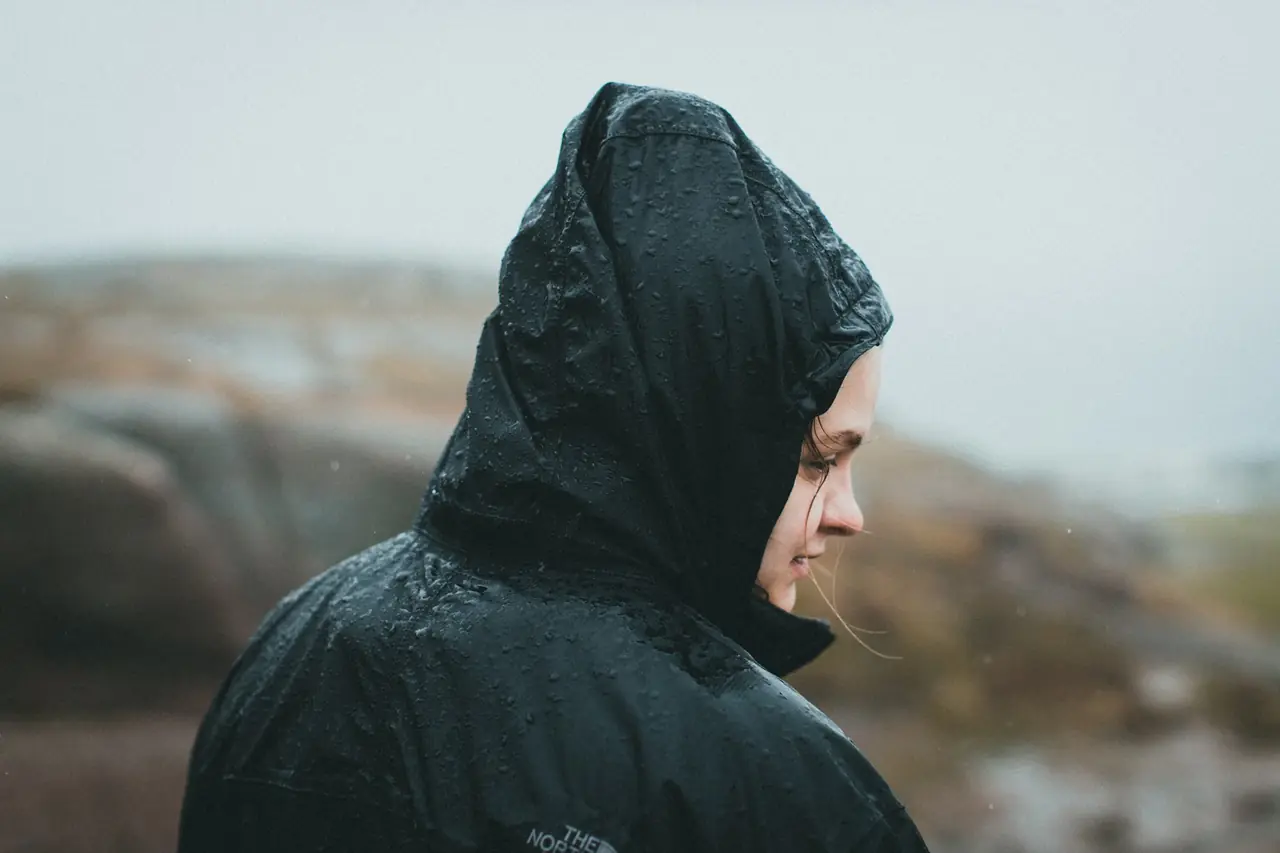
On a mountain outing, a 20,000 mm membrane stops being a technical spec and becomes a real barrier between rain and skin. In trail running, where the wind shifts direction, moisture rises from the ground, and exertion opens the fabric’s pores, that figure marks the level of protection a jacket can offer when the sky suddenly closes in.
The reference to 20,000 mm refers to water column resistance, a measure that places the garment in a high range of waterproofing. It does not mean absolute invulnerability, but it does indicate a very serious ability to withstand heavy downpours, mud, dense fog, and that kind of fine rain that, over the miles, ends up soaking even apparently solid garments.
What a 20,000 mm water column really means
The figure is measured with a laboratory test that forces water onto the fabric until it starts to seep through. In practice, a jacket with 20,000 mm waterproofing is designed to handle demanding conditions, which is why it is usually placed above urban or occasional-use models. In the mountains, that difference matters because the weather rarely leaves much room for error.
This data should be understood with caution: a garment does not protect only through its membrane. Seam sealing, the condition of the outer finish, the front closure, the shape of the hood, and above all how the whole piece breathes when the runner picks up speed also play a role. A jacket can withstand a storm and at the same time turn into a sauna if the manufacturer has not balanced waterproofing and breathability well.
That is why the value of 20,000 mm should not be read as an isolated figure, but as part of a system. In trail running, rain often arrives with elevation gain, mud, and sweat; the garment that truly works is the one that manages that triangle without letting the body get chilled or soaked from within. That is where differences in construction become visible, even before you look at the label.
Why trail running demands more than a simple rain jacket
Going out to run on trails is not the same as walking through the city under a gray cloud. The stride forces the shoulders, arms, and torso to move continuously, and a backpack, if there is one, adds friction on the back and sides. A waterproof jacket for trail running must tolerate that work without becoming stiff or causing annoying seam rub with every arm swing.
In addition, the terrain changes the equation. A fast descent cools the body in seconds; a long climb raises temperature and spikes internal humidity; a windy ridge can make water hit the garment from the side, as if it were raining horizontally. In that context, a 20,000 mm trail waterproof jacket is not judged only by its ability to keep water out, but by how it accompanies the runner without limiting mobility or ventilation.
Brands that do this segment well usually seek a fine balance between lightness, durability, and feel. The NNormal Trail Rain jacket, for example, uses a PERTEX Shield Revolve fabric, 100% recycled polyester, PFC-free, and with a DWR finish, a combination that reflects a trend increasingly common in the outdoor world: protection without unnecessary weight and without completely giving up sustainability criteria.
Breathability: the factor that separates comfortable protection from the sauna effect
In high-end garments, breathability matters almost as much as waterproofing. A fabric can resist a lot of water and still build up vapor uncomfortably if the runner sweats on a long climb. In that scenario, the inside gets damp, the thermal sensation drops, and the garment loses much of its practical value.
That is why many technical trail jackets in this range include a 20,000 g breathability rating. That figure indicates the fabric’s ability to evacuate water vapor over a given period and, although it does not solve everything on its own, it does help maintain a more stable feel during effort. The data is especially useful in long races, workouts with elevation gain, or mountain days where effort and rest alternate.
The correct reading is simple: the better the jacket breathes, the less the runner has to fight against their own sweat. There are no miracles, of course; a waterproof garment is still, by nature, a mostly closed layer. But when the membrane, patterning, and outer fabric work well, the result feels less like wearing a bag and more like a second technical skin, rough to the touch but surprisingly functional in motion.
The role of DWR and PFC-free construction
The DWR finish, or durable water repellency, acts on the outer layer of the fabric and prevents it from saturating easily. It does not replace the membrane, but it does help droplets roll off and keeps the fabric from soaking through on the outside, which is essential for the jacket to keep functioning normally. When the outer surface becomes overly wet, the garment breathes worse and the feeling of cold increases.
In current trail models, the absence of PFCs appears more and more often; these are compounds that for years were used in repellent treatments and are now being replaced by formulas that are less problematic for the environment. This is no small detail in mountain garments, where durability and environmental impact are already part of the regular conversation among runners, manufacturers, and specialty stores.
In a jacket of this level, the combination of membrane, DWR, and outer design determines much of the real-world performance. A runner can tell the difference between rain that beads and slides off for miles and rain that, after a short time, turns the surface into a dark, heavy film. That change, almost invisible at first, usually predicts how the garment will behave when the storm truly intensifies.
Weight, packability, and mobility: the three factors most felt on the run
The NNormal Trail Rain jacket weighs 205 grams, a modest figure for a garment with a high level of protection. In trail running, every gram matters less than ultralight marketing sometimes suggests, but it still matters. Weight affects how much space it takes in the pack, how easy it is to pull out mid-race, and the overall sense of comfort when the garment is worn for a long time.
A lightweight jacket not only takes up less space, it also tends to pack better and bother you less while the body is working. Mountain runners value that behavior because a stiff or bulky garment ends up at the bottom of the vest, more like an object than a tool. When the cut moves with you and the material stows neatly without fighting your movement, the jacket stops feeling like a burden.
Mobility is the other major filter. In trail running, it is not enough to run in a straight line; you have to crouch, place your hands, scramble over rocks, take out a gel, adjust a pack, or descend with your shoulders somewhat tense. A good technical pattern avoids tightness in the back and underarms, and that is especially noticeable in garments designed for men and women with specific cuts. The difference between a jacket that moves with you and one that gets in the way is often measured by the simple act of raising your arms.
Which technical details usually make the difference in a good trail jacket
Beyond the waterproofing headline, there are a number of signs that usually reveal whether a jacket is genuinely designed for running in the mountains. Sealed seams prevent leaks at the most vulnerable points, the stable hood protects without blocking vision, and well-finished cuffs reduce the entry of water and wind at the wrists. They are discreet details, but they support the whole system.
The quality of the front zipper also matters. A zipper that snags, a poorly placed pull, or a badly designed collar can ruin the experience in seconds. On a cold, wet outing, these problems multiply. The ideal jacket does not try to dazzle with gimmicks, but to solve the basics precisely: close properly, vent enough, and maintain its shape when use becomes intense.
Likewise, the feel of the fabric and the amount of noise it makes while moving say a lot. Some membranes are noisy and stiff, as if every gesture were a small crackle. Others work more quietly and flexibly. That difference may seem secondary, but on long outings acoustic and tactile comfort also matter. The runner spends hours inside the garment, not just minutes in front of a shop window.
When 20,000 mm makes sense and when it is not necessary
A 20,000 mm jacket fits very well in mountain trail running, winter training, ultras with changeable weather, and races where mandatory gear requires genuine protection from rain and wind. It is also a logical choice if you run in areas where weather changes quickly, such as exposed ridgelines, humid mountain ranges, or days of persistent fog.
However, it is not always the most sensible purchase for everyone. In dry climates or for occasional use, such a high-spec membrane may be more than needed. In those cases, a simpler, cheaper, and better-ventilated jacket may better suit actual use. Too much protection, if you are not going to take advantage of it, is paid for in price, stiffness, and sometimes reduced versatility.
The choice depends more on the scenario than on the number itself. A runner who competes in the mountains and needs a reliable layer for long storms will value those 20,000 mm greatly; another who only goes out for easy runs in stable conditions may prefer a lighter, less technical garment. The key is not to confuse a high spec with the best universal answer. In mountain clothing, as in almost everything, badly chosen excess also weighs you down.
How a garment like this fits into a mountain runner’s wardrobe
A waterproof jacket of this profile usually lives alongside other layers: a windbreaker for cold, dry days, a thermal layer for winter, and a warmer midlayer for before and after activity. This layering logic is not meant to complicate clothing, but to adapt protection to each situation without turning the body into an immobile block.
In a well-thought-out trail wardrobe, the waterproof jacket takes the place of the trusted piece for the difficult day. It is not the most pleasant when the sun is out, nor the most breathable when everything heats up quickly, but it is the one that rescues a session when the weather turns. Its value lies not in wearing it all the time, but in it responding when it truly matters.
That is why it is worth considering the purchase calmly, without being swayed only by the technical sheet or by aesthetics. The 220 euro price point seen in models like NNormal’s places this category in the high end, but it also reflects more careful construction, advanced technical fabric, and a specific approach to mountain running. The investment only makes sense if that level of demand is part of real use.
The most useful takeaway for anyone running in the mountains with rain on the horizon
A 20,000 mm waterproof jacket does not make rain irrelevant, but it does change how you deal with it. It lets you keep moving with more confidence, reduces the feeling of exposure, and gives room for running technique and effort management not to be undone by bad weather. In the mountains, that practical security is worth more than any slogan.
The best-fitting model is not always the most famous or the most expensive, but the one that combines real protection, credible breathability, contained weight, and a cut that does not fight the body. When those pieces fit together, the garment stops being an emergency item and becomes a reliable tool, as invisible as it is necessary. And in trail running, where the weather changes like a door opening and closing, that reliability is often the real luxury.
Este artículo contiene enlaces de afiliado: si compras a través de ellos, se genera una pequeña comisión sin coste adicional para ti. Más información.



How to prevent thigh chafing: causes and real solutions

Women’s running windbreakers: seven jackets and how to choose

Do more workouts get rid of soreness? A guide for runners

Jaén Half Marathon 2026: Record 3,800 Runners Registered

Men’s short running tights: how to choose the right pair

World Triathlon confirms data breach involving medical data

Izan Edo targets podium at Miyazaki World Cup

María Pérez ranks ninth in World Athletics’ 2026 top ten

Dos Santos, Duplantis and Sawe: World Athlete of the Year finalists

San Silvestre Vallecana 2026: 42,000 places, prices and start times

 Races3 months ago
Valencia Half Marathon 2027: date and registration

 Races3 months ago
Valencia Marathon 2026: entry, ballot and course

 Reviews and Comparisons4 months ago
Asics Gel-Roadmiles 3 for men: review and current price

 Reviews and Comparisons4 months ago
Asics Gel Sonoma 8 Gore-Tex: complete analysis for trail and rain

 Sneakers3 months ago
Saucony Endorphin Pro 4: full review and verdict

 News5 months ago
Strava API 2026: what changes for clubs, challenges and runner apps?

 Reviews and Comparisons5 months ago
Nike Alphafly 3: opinions, sensations, and real key points

 Reviews and Comparisons4 months ago
Under Armour running shoes review 2025-2026: models and key features

 Sports Equipment4 months ago
Shoe sizes in cm: a clear guide to getting the right fit for your footwear

 Sneakers3 months ago
Skechers GO RUN Consistent 2.0 analysis: comfort and limits

 News5 months ago
Valencia Marathon 2026 route: key tips to train and run better

 Sneakers4 months ago
Adidas Adizero Boston 13 for men: review and verdict