News
26 cm from heel to toe, what size is it and how do I get the right footwear?
Reliable equivalents for a 26 cm foot, with a table and nuances by system, brand, and shoe type.

A 26 cm foot usually corresponds, in the most widely used ISO conversion, to a European size 41 for adults, with approximate equivalents of UK 7.5 and US 8.5 for men or US 9.5 for women. It is the most useful reference for orientation, although in practice the final number can move half a size up or down depending on the brand, the last, and the type of shoe.
The key is not to confuse a neat figure with an absolute truth. 26 cm is not a universal size, but rather a foot length that each system translates differently. In athletic footwear, where fit matters as much as the number, that difference of half a size can feel like a highway or like a narrow corridor.
The most reliable equivalent for 26 cm
In the technical table based on the ISO/TS 19407:2015 standard, 26.0 cm of foot length is around EUR 41, Mondopoint 260, UK 7.5, US men 8.5 and US women 9.5. That is the reference conversion that best summarizes the desired data and the one that usually offers a more solid basis for comparing sizes across systems.
Even so, it is worth reading that number as a starting point rather than a verdict. Some manufacturers fit shorter, others longer, and some running models aim for a snug fit while others leave more room in the toe box. Foot length is the deciding factor, but the real result depends on how each brand constructs its footwear.
In Spain, when someone says their foot measures 26 cm, the most common match is very close to a European 41. In certain models, a 40.5 or 41.5 may fit better, especially if the foot is wide, the instep is high, or the intended use requires a little more space. In running shoes, that extra margin is usually more prudent than in a dress shoe.
How 26 cm translates into EU, UK and US
The conversion is not arbitrary: each system was born from a different tradition and with a different unit of measure. The European system works with a scale in which one point equals approximately two-thirds of a centimeter. The British system uses a logic based on inches, and the American system also adds a separation between men’s and women’s sizing.
That is why the same 26 cm foot does not give the same number for everyone. The most stable reference is this: EUR 41, UK 7.5, US 8.5 men and US 9.5 women. In Mondopoint, the system that expresses size in millimeters, the reading would be 260, which is especially clear for technical and sports footwear.
That breakdown helps avoid very common mistakes when shopping online. A European 41 may look identical in any digital storefront, but two pairs with the same label can feel different on the foot. The printed size does not always mean the same internal volume, and that is where surprises begin.
The useful table for not getting lost between systems
The most practical way to use a 26 cm measurement is to convert it into a quick reference, especially when buying across international brands. The safest guide reads as follows: 26.0 cm = EUR 41 = UK 7.5 = US 8.5 men = US 9.5 women = Mondopoint 260. It is a simple map for moving between storefronts without relying on guesswork.
In the comparison between men and women, the American system is the most confusing for the average buyer. Not only does the number change, the width and last pattern can change too. A foot of the same length may require different sizes if the model is designed on a male or female base. It is not enough to translate centimeters into a number; the shoe’s architecture also matters.
In running footwear, that difference is more noticeable than in other uses. A training shoe usually allows a bit more room in the toe box, while a racing shoe may come more fitted to gain precision. A 26 cm foot, in a road running shoe, will usually do well in a European 41, although some runners prefer half a size more to avoid rubbing on long runs or when the foot swells a bit.
Why foot length alone is not enough
Length is the main data point, but not the only one. Foot width, arch shape, instep height and toe mobility influence those 26 cm just as much. Two people with the same measurement may need different sizes, and not by whim, but because of the foot’s pure geometry.
In addition, the foot changes throughout the day. In the afternoon it is usually wider and slightly longer than in the morning. If the measurement is taken right after getting up, the result can be misleading by a few millimeters that, in the right footwear, make the difference between comfort and pressure. Those millimeters matter, especially in shoes worn for long periods.
The type of sock also matters. A thin summer sock does not require the same space as a thicker technical one. In running, that variation can translate into a different sensation in the forefoot, especially on descents or during long sessions, when the support repeats thousands of times like a metronome.
How to measure a 26 cm foot properly
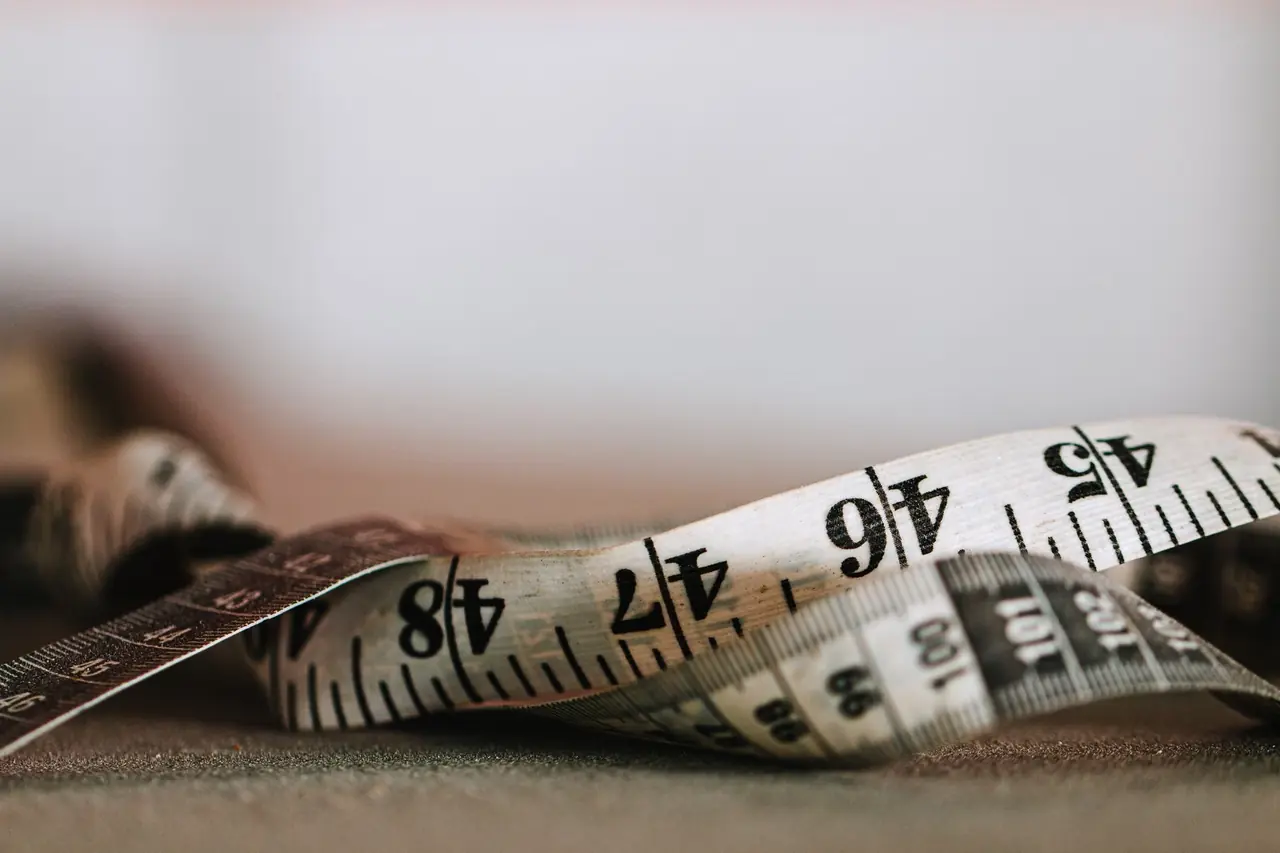
The most useful measurement is still the simplest. You need a sheet of paper placed against a wall, the heel firmly supported, and weight distributed naturally. The outline should follow the foot’s contour with the pencil held vertically, at 90 degrees, so the silhouette is not distorted. Then measure the distance between the heel and the longest toe.
It is advisable to repeat the process with both feet. It is not uncommon for one to be slightly longer, even if the difference is barely visible to the eye. In that case, always go by the larger foot. Buying according to the smaller foot can leave the other compressed, and that pressure eventually shows up as blisters, black toenails or an uncomfortable stride.
Late afternoon is usually the most reliable time to measure. That is when the foot is closest to its real everyday size, after hours of load and movement. That small routine avoids the classic mistake of thinking a 41 works for everything when, in reality, the foot needs a few millimeters of room to breathe.
What changes between adults and children
The conversion of 26 cm on an adult foot is fairly direct, but in children the logic changes. In children’s sizing, the margin for the toes is calculated differently and the ISO standard applies an additional space equivalent to 8% of foot length. In addition, in UK and US sizing, children’s numbers do not follow exactly the same sequence as adult sizes.
That explains why a 26 cm figure usually raises no doubts for adults, whereas in children’s sizes it requires a closer look at the system used. In practice, children’s footwear needs a more cautious approach, because the foot is growing and the size must leave enough room without turning into an overly large boot.
The temptation to choose the size that matches the measurement exactly can backfire. A 26 cm foot in an adult is already within a fairly stable range, but in a child you also have to think about growth, everyday use and comfort. The correct children’s size is more of a window than an exact point.
Why two shoes with the same size can fit differently
The label does not always tell the whole story. The difference between two pairs with the same size can come from the last, the outer material, the thickness of the lining or the stiffness of the sole. A 41 in one brand may feel snug and, in another, roomy as an empty room.
In sports footwear that variation is even more visible. Running shoes aim to adapt fit to movement, and each manufacturer resolves that balance in its own way. Some models are very precise through the midfoot, while others leave more freedom in the forefoot. The number matters, yes, but the shape takes over as soon as the foot starts to run.
There are also differences between lines within the same brand. A road model does not fit like a trail shoe, and a version with more cushioning can feel different inside than a lighter one. The number 41 can be a starting point, not the destination.
The margin running shoes usually need
In races and training, the foot does not stay still. It expands with effort, absorbs impact and moves slightly forward on downhills. That is why, for a length of 26 cm, many people find it more comfortable to leave between 8 and 12 millimeters of room in front of the toes, especially in training shoes and on long runs.
That space does not mean the shoe is too big. It means the foot needs to work without hitting the toe box on every stride. Over long distances, excessive tightness is costly: damaged toenails, pressure on the toes and a cramped feeling that ends up being more distracting than it should.
By contrast, for urban or dress use, the margin is usually a little smaller and the fit more contained. There the priority is different: visual stability, support and a clean feeling when walking. The same foot does not need the same functional size in every context.
What happens if you are between two sizes
The boundary between a 40.5 and a 41, or between a 41 and a 41.5, is one of the most common situations when the foot is around 26 cm. In that range, the behavior of the brand and the specific model matters a lot. If the shoe runs short or narrow, going up half a size can save the purchase; if it already runs roomy, that same jump may be unnecessary.
In running, functional comfort tends to come first. A 26 cm foot that is on the limit in a 41 may appreciate half a size more if the shoe will be used for easy runs, hot weather or long races. But in very roomy models or with a generous last, that extra space can leave the foot floating. There is no universal rule, only a sensible combination of measurement, fit and intended use.
That is why size charts are as useful as feel. They are a map, not the territory. The exact measurement tells you where to start, but the real behavior of the shoe appears when walking, flexing and, in the case of running, after accumulating miles.
A practical reading for buying with fewer mistakes
The short answer is simple: 26 cm of foot length usually equals a European 41. If you look at the British system, the reference is around UK 7.5. In the United States, the equivalent is around US 8.5 for men and US 9.5 for women. These are close enough values to buy with judgment and prudent enough not to promise false precision.
The longer answer adds the nuance that really prevents returns and discomfort. The correct size depends on the brand, the type of shoe, the width of the foot and the intended use. A 26 cm measurement is an excellent compass, but it does not replace trying the shoe on or reading each manufacturer’s official size chart. In footwear, as in a good stride, precision comes from the balance between technique and feel.
That is why, with a 26 cm foot, the important data is not only the number on the box. What matters is that the foot is held without pressure, that the toes have enough freedom and that the whole shoe follows movement naturally. When that happens, size stops being an abstract figure and becomes one more part of everyday comfort.



How to prevent thigh chafing: causes and real solutions

Women’s running windbreakers: seven jackets and how to choose

Do more workouts get rid of soreness? A guide for runners

Jaén Half Marathon 2026: Record 3,800 Runners Registered

Men’s short running tights: how to choose the right pair

World Triathlon confirms data breach involving medical data

Izan Edo targets podium at Miyazaki World Cup

María Pérez ranks ninth in World Athletics’ 2026 top ten

Dos Santos, Duplantis and Sawe: World Athlete of the Year finalists

San Silvestre Vallecana 2026: 42,000 places, prices and start times

 Races3 months ago
Valencia Half Marathon 2027: date and registration

 Reviews and Comparisons4 months ago
Asics Gel-Roadmiles 3 for men: review and current price

 Races3 months ago
Valencia Marathon 2026: entry, ballot and course

 Reviews and Comparisons4 months ago
Asics Gel Sonoma 8 Gore-Tex: complete analysis for trail and rain

 Sneakers3 months ago
Saucony Endorphin Pro 4: full review and verdict

 News5 months ago
Strava API 2026: what changes for clubs, challenges and runner apps?

 Reviews and Comparisons5 months ago
Nike Alphafly 3: opinions, sensations, and real key points

 Reviews and Comparisons4 months ago
Under Armour running shoes review 2025-2026: models and key features

 Sports Equipment4 months ago
Shoe sizes in cm: a clear guide to getting the right fit for your footwear

 Sneakers3 months ago
Skechers GO RUN Consistent 2.0 analysis: comfort and limits

 News5 months ago
Valencia Marathon 2026 route: key tips to train and run better

 Sneakers4 months ago
Adidas Adizero Boston 13 for men: review and verdict