News
Benefits of Running on a Treadmill: Key Points, Common Mistakes, and Tips
Cardio, lower impact, and total control of pace: this is how training on a treadmill changes things and what it really brings to the runner.

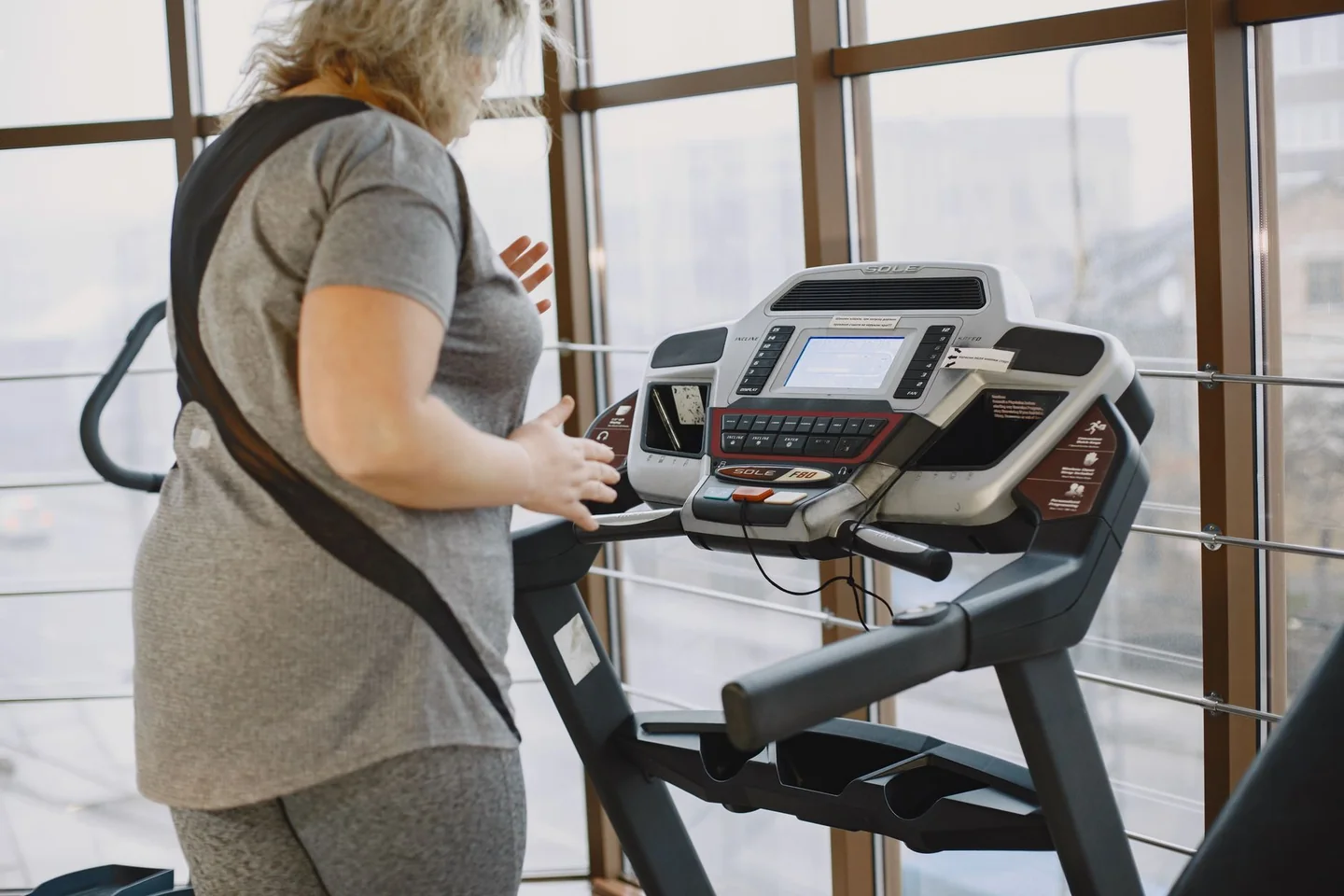
Imagen: Gustavo Fring / Pexels
The treadmill has earned a permanent place in gyms and homes because it turns any ordinary session into precise, measurable work that is less exposed to the wear and tear of asphalt. Its main appeal is not just burning calories, but the combination of control, continuity, and safety it offers when weather, traffic, or limited time make it hard to get out on the street. For anyone looking for consistency, that stability is worth its weight in gold.
There is also a quieter and very powerful reason: the possibility of running with less joint impact. The moving surface, together with a certain amount of cushioning in the deck on many models, softens the repeated pounding. It does not eliminate the effort, far from it, but it can make the load on ankles, knees, and hips more bearable, something especially useful in return-to-exercise phases or during weeks of heavy accumulated fatigue.
Less impact, more consistency
One of the most valued benefits of running on a treadmill is the relative reduction in impact compared with hard surfaces. This is not a walk in the park: the cardiovascular work is still demanding and the muscles respond as they would in a serious session. But the mechanics change enough for many people to notice less punishment with each stride, especially when compared with asphalt or long stretches on uneven ground.
That detail makes a difference for runners who rack up many weekly kilometers, for those who alternate running and the gym, or for people dealing with minor aches who do not want to give up cardio. The treadmill makes it possible to keep the habit when the body asks for something gentler. And habit, in running, is half the training: it preserves the routine, lowers the excuse, and keeps a bad week from turning into a lost month.
Less impact does not mean no muscular work. In fact, the running motion still involves the calves, quadriceps, hamstrings, glutes, and core muscles. The difference lies in how the load is distributed, with a more even feeling and less punishment from terrain irregularities. That regularity helps sustain quality sessions without the body having to negotiate with every curb, turn, or pothole.
Control of pace, incline, and real effort
The great technical advantage of the treadmill is the exact control of variables. Speed, incline, and duration are adjusted to the second, turning a session into a very finely tuned piece of work. For the runner, that means being able to repeat efforts with a precision that is hard to match outdoors, where wind, hills, crossings, and traffic alter the rhythm of the session.
That level of control is especially useful for intervals, block work, or easy runs where it is important to stay within a specific intensity range. The treadmill acts like a measuring tape for effort: it does not guess, it records. And when training demands discipline, that clarity avoids common mistakes like starting out faster than planned and paying a high price later in the form of fatigue.
Incline adds another layer of value because it reproduces the stimulus of hills without leaving home. Raising the incline a little changes the way you step, activates the posterior chain more intensely, and increases the energy cost of the work. Setting it between 1% and 2% is often used as a practical reference in many workouts to bring the feel closer to outdoor running, although the ideal setting depends on the goal and the runner’s experience.
Calories, body composition, and energy expenditure
Running on a treadmill is an effective tool for burning energy and supporting fat loss when combined with a sensible diet. Calorie burn depends on body weight, speed, incline, and duration, but the general pattern is clear: the longer and more intense the session, the greater the expenditure. In moderate sessions, a person weighing around 70 kilos can move in approximate ranges of 400 to 600 calories per hour, although the figure changes significantly depending on pace and incline.
The value of the treadmill in this area is not just in the final number, but in the ease of sustaining continuous effort. When the environment is stable and does not force you to stop for traffic lights or dodge pedestrians, it is easier to maintain a useful intensity for more minutes. That kind of regularity, repeated week after week, matters more than a single very intense session.
In addition, cardiovascular work helps preserve lean mass if it is paired with strength training and adequate protein intake. The treadmill does not work miracles, but it can be a serious ally in weight-control phases because it allows energy expenditure to be organized with quite a bit of precision. The difference between a chaotic session and a well-measured one is the same as between cooking by eye and following a recipe: both produce something edible, but only one guarantees reliable repetition.
Heart, lungs, and cardiovascular adaptation
The heart benefits because the treadmill makes sustained aerobic efforts easier, the most favorable terrain for improving cardiovascular base. Over the weeks, the pulse becomes more efficient, oxygen transport improves, and the body learns to do more with less effort. That adaptation shows up in long runs, in pace increases, and in the general feeling of less breathlessness for the same workload.
The lungs are also challenged progressively. Not because they train like a muscle, but because the respiratory system has to respond to sustained demand. The practical result is better tolerance to effort and faster recovery between intervals or pace changes. For runners of any level, that improvement translates into more room to hold a lively pace without entering red territory too early.
Consistency is the key to that improvement, not occasional heroics. Three moderate sessions a week usually contribute more than one day of extreme effort followed by a long break. In that sense, the treadmill is very forgiving: it makes it possible to complete short but useful sessions even when the schedule is tight. That is one of the reasons it fits so well into periods of work, study, or bad weather.
Muscles, posture, and running technique
The treadmill does not just work the legs; it also forces you to pay attention to posture, and that is where one of its most interesting advantages appears. Running in a more controlled environment makes it easier to notice if the torso collapses, if the shoulders rise, or if the stride becomes too long. That immediate feedback helps correct habits that go unnoticed outdoors because the scenery distracts and the terrain takes over.
The muscles involved change slightly compared with running on the street. On a treadmill, the movement is usually perceived as a bit more uniform, with less lateral stability demand than on uneven surfaces. That does not reduce its value; it simply directs the work toward a cleaner, more repeatable pattern. For the runner, that repetition can serve as a technical laboratory in which to fine-tune cadence, arm swing, and foot strike.
Cadence often improves when the runner focuses on shorter, more consistent steps. That adjustment, which does not require obsession or screens full of numbers, can reduce overstriding and distribute the load better. In simple terms, it helps you land less far from the body and avoid stabbing the leg down like a pole. The result is a more compact, efficient, and often more comfortable run.
Safety, weather, and weekly consistency
One of the most practical benefits of running on a treadmill is the safety of the environment. There are no cars, crossings, badly placed streetlights, or stretches with poor visibility. Rain, extreme heat, or the quality of the surface also matter less. On days of strong wind or very high temperatures, that indoor refuge makes it possible to keep training without exposing yourself to conditions that could ruin the session or increase the risk of injury.
Safety also matters for those returning to exercise after a break. The treadmill offers a predictable setting, with a steady pace and no surprises. That reduces the margin for error and helps build confidence. In running, confidence is not just a psychological extra; it is an important part of the mechanics, because a tense body runs worse and gets tired sooner.
In addition, the ease of training at any time reinforces adherence. Being able to do a 30-minute session without depending on daylight or a specific route makes the treadmill a very realistic ally for maintaining regularity. Consistency is born from small repeated actions, and few tools make that daily commitment as easy as a machine ready to go in the living room, garage, or gym.
Mental benefits: focus, stress relief, and a sense of control
Regular aerobic work improves mood and helps reduce accumulated tension. The body responds by releasing endorphins and other substances associated with well-being, but the effect is not only chemical. There is also a very clear mental component: running on a treadmill organizes the mind around a simple, almost hypnotic task, where the step repeats and the head finds its own rhythm.
That pattern can work like a clear corridor in the middle of noise. During the session, worries lose volume and effort takes center stage. For many people, that dose of order is as valuable as the physical improvement. It does not solve the underlying stress, of course, but it does offer a clean, stable, and fairly predictable release valve.
Concentration also benefits because the environment reduces distractions. With no traffic lights or external obstacles, attention can focus on breathing, posture, or pace. That sustained concentration, repeated often, contributes to a more conscious relationship with one’s own training. And that shows later outside the treadmill, when the runner learns to recognize fatigue signals more clearly.
What the treadmill improves and what it cannot replace
Not everything is an advantage, and it is worth saying clearly: the treadmill does not fully reproduce the richness of running outside. On the street, surfaces, light, wind, and terrain reading all change. The body receives varied stimuli that activate stability more and force adaptation to small irregularities. That sensory component, almost like navigation, does not appear with the same intensity on a continuous, predictable belt.
You may also miss the real perception of the environment, the work of orientation, and the spontaneous adjustment of pace on every turn or climb. On a treadmill, the experience is more technical and less organic. Precisely for that reason, many runners use it as a complement rather than an absolute substitute. The combination is usually smarter than blind loyalty to a single surface.
Another common limitation is boredom, a real though unglamorous barrier. Monotony can make long sessions feel heavier than they really are. Even so, the problem is not physiological, but one of time perception. That is why the treadmill works best when used with a specific purpose: aerobic base, recovery runs, controlled intervals, or easy runs on difficult days.
When it fits best into a runner’s training
The treadmill fits especially well in heavy training weeks, quality blocks, and periods of limited time. It makes it possible to follow a plan without depending on daylight or specific routes. It is also useful during periods of intense heat, when going out for a run can turn a reasonable workout into a rather senseless survival test. Indoors protects and organizes.
In return-to-activity phases, the machine can serve as a bridge. Speed is controlled precisely, duration is adjusted without surprises, and the body’s response is measured more clearly. That combination helps progress with fewer setbacks. For someone getting back into it after irregular days or weeks, that makes a noticeable difference.
It is also a valuable tool for fine-tuning specific paces. Anyone preparing for a race can use it to work on thresholds, pace changes, or progressive runs without the terrain altering the plan. The treadmill does not replace the road, but it does allow you to fine-tune the engine on a very reliable test bench. And that precision, on key days, matters as much as a good pair of shoes or a well-configured watch.
Common risks and how to understand them without drama
The main risk of the treadmill is usually not physical, but technical: always running the same way can weaken adaptation. If every session is done on the same surface and with the same incline, the body receives a stimulus that is too uniform. The result may be comfortable in the short term, but somewhat limited if the goal is complete progress. Variety remains a necessity, not a whim.
It is also worth watching the tendency to hold onto the handrails, something very common when fatigue bites or speed feels intimidating. That gesture alters posture and reduces the real workload. The stride loses naturalness and the session stops resembling a run. Using the treadmill with good technique requires keeping the torso stable, looking ahead, and letting the arms move without tension.
Finally, there is the issue of mechanical safety. A poorly maintained treadmill, with a misaligned belt or worn surface, can become an uncomfortable and less reliable machine. The machine does not run by itself; it needs inspection, cleaning, and a minimum of care. Like any sports tool, it performs better when kept in good condition and used with judgment.
A simple tool that can change a runner’s routine
The treadmill works because it solves very specific problems: time, weather, effort control, and lower relative impact. That mix makes it a useful piece for almost any runner, from beginners to those chasing times with some ambition. It does not have the romance of an early-morning run along the seafront, but it does have an effectiveness that is hard to argue with.
In a sport where consistency is everything, having a way to run without friction is much more than a convenience. It is a way to sustain continuity when life gets complicated. And that continuity, in the long run, matters more than any spectacular session. The benefits of running on a treadmill are not reduced to a list of isolated advantages; they form a support system for training that can make running more stable, more measurable, and, in many cases, more forgiving.
The key is to understand it for what it is: a precise, very useful tool with clear limits. Used well, it adds value. Misunderstood, it becomes monotonous. Between those two extremes lies a balance point that explains why it still takes up so many square meters in gyms, homes, and the routines of runners who, even without making noise, know that consistency is also trained on a moving belt.
Este artículo contiene enlaces de afiliado: si compras a través de ellos, se genera una pequeña comisión sin coste adicional para ti. Más información.



How to prevent thigh chafing: causes and real solutions

Women’s running windbreakers: seven jackets and how to choose

Do more workouts get rid of soreness? A guide for runners

Jaén Half Marathon 2026: Record 3,800 Runners Registered

Men’s short running tights: how to choose the right pair

World Triathlon confirms data breach involving medical data

Izan Edo targets podium at Miyazaki World Cup

María Pérez ranks ninth in World Athletics’ 2026 top ten

Dos Santos, Duplantis and Sawe: World Athlete of the Year finalists

San Silvestre Vallecana 2026: 42,000 places, prices and start times

 Races4 months ago
Valencia Half Marathon 2027: date and registration

 Races4 months ago
Valencia Marathon 2026: entry, ballot and course

 Reviews and Comparisons4 months ago
Asics Gel-Roadmiles 3 for men: review and current price

 Reviews and Comparisons4 months ago
Asics Gel Sonoma 8 Gore-Tex: complete analysis for trail and rain

 Sneakers3 months ago
Saucony Endorphin Pro 4: full review and verdict

 News5 months ago
Strava API 2026: what changes for clubs, challenges and runner apps?

 Reviews and Comparisons5 months ago
Nike Alphafly 3: opinions, sensations, and real key points

 Reviews and Comparisons4 months ago
Under Armour running shoes review 2025-2026: models and key features

 Sports Equipment4 months ago
Shoe sizes in cm: a clear guide to getting the right fit for your footwear

 Sneakers3 months ago
Skechers GO RUN Consistent 2.0 analysis: comfort and limits

 News5 months ago
Valencia Marathon 2026 route: key tips to train and run better

 Sneakers4 months ago
Adidas Adizero Boston 13 for men: review and verdict