Training
Hills for runners: the free gym nobody uses properly
Going up and down with method improves strength, technique, and endurance without driving up wear and tear or losing efficiency.

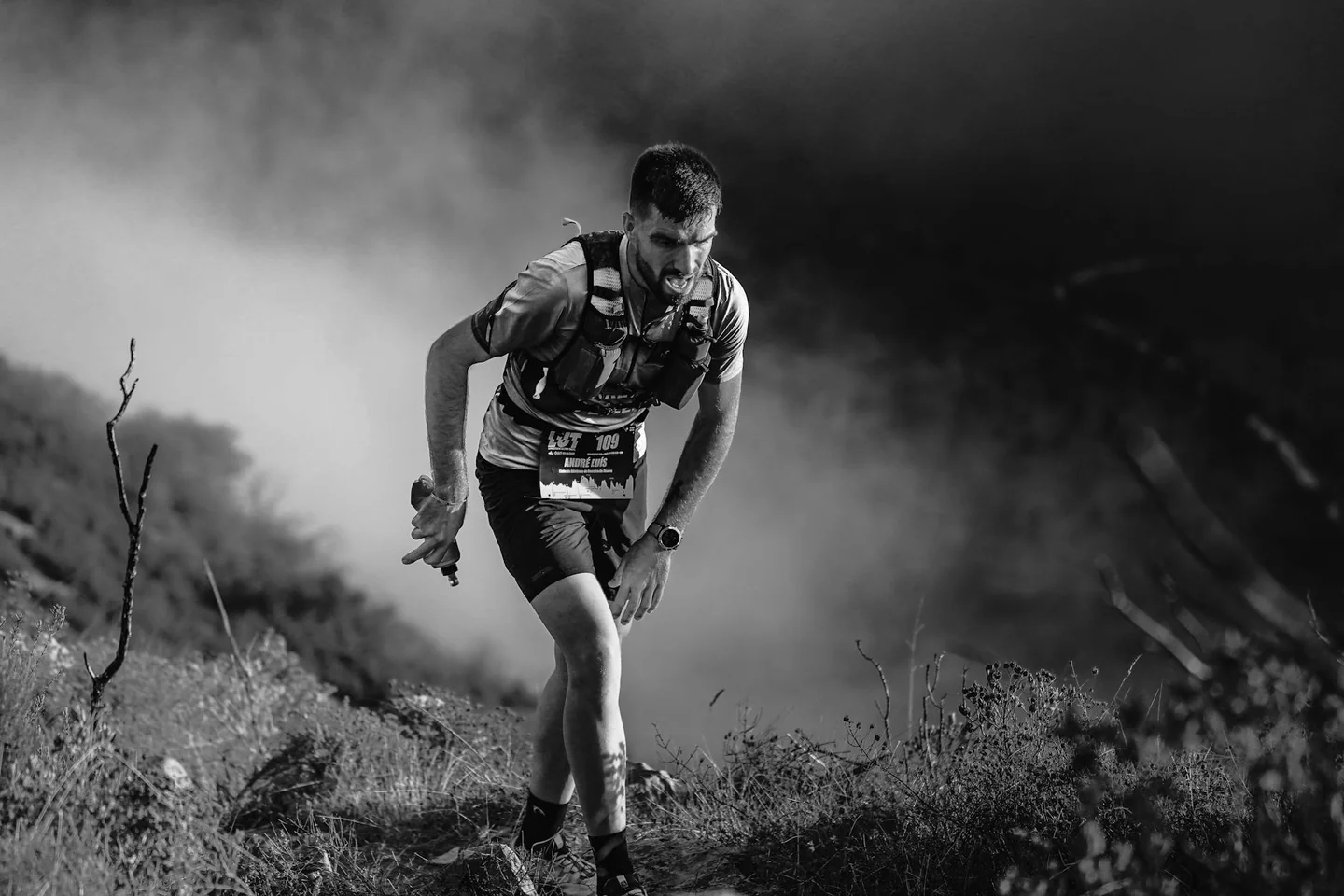
Imagen: RUN 4 FFWPU / Pexels
Uphills change the way you run. They force you to shorten your stride, lift your knee better, and push off the ground with more intent. That’s why working them with purpose not only helps you perform better on rolling routes; it also sharpens mechanics, strengthens the legs, and improves the ability to sustain demanding efforts without losing so much running economy.
The key is in dosing it properly. Not every incline calls for the same response, and not every runner needs the same stimulus. A gentle hill can teach you to hold effort, while a short, explosive ramp acts almost like a strength session. Between the two there’s a wide range of stimuli worth knowing so you don’t turn a useful session into unnecessary punishment.
Why hills improve running so much
Going uphill demands more from every stride. The body has to produce more power to move against gravity, and that demand intensely activates the calves, glutes, hamstrings, and core. The result is not just more useful strength; it also means a more compact footstrike, a more stable posture, and a cadence that usually becomes livelier, something you can later feel even on flat ground.
In addition, hill work usually raises the heart rate without needing to run at high speeds. That makes it a valuable tool for improving aerobic capacity, because the cardiovascular effort is concentrated in a movement that has less impact than other pure speed work. In practical terms, many uphill sessions let you push harder with less joint aggression than a fast track workout, even though they’re still demanding.
Downhills matter too. People often think only about the climb, but the descent forces the quads to brake repeatedly and absorb impact with technique. That eccentric load, the one produced when the muscle lengthens while under tension, creates useful adaptations, although it also explains why poorly planned hills leave you with intense soreness or a feeling of heavy legs the next day.
What a well-planned session should aim for
Not every hill serves the same purpose. A useful session starts by choosing incline, duration, and recovery with logic. If the terrain is too gentle, the stimulus fades; if it’s excessively steep, technique breaks down quickly and the movement stops looking like running and becomes a clumsy climb powered by brute force. The best incline depends on the goal, but it usually sits between 4% and 8% for medium efforts, with steeper slopes reserved for short, explosive repeats.
The duration of the effort matters too. Repeats of 8 to 12 seconds train power and coordination; those of 30 to 90 seconds develop strength endurance and rhythm; those lasting several minutes push threshold and tolerance to sustained effort. Changing the work time changes the physiological message of the session, like adjusting the focus on a camera: you don’t always need more intensity, sometimes it’s enough to look at the same landscape from a different distance.
Recovery matters more than it seems. In quality work, rest is not a reward or a decorative pause. It’s there so you can repeat the mechanics with good form and so each rep has real value. Jogging down or walking, depending on the type of workout, helps the body absorb the effort better and avoids chaining together increasingly messy repetitions.
Uphill technique: less stride, more efficiency
On an incline, efficiency matters more than length. It’s best to lean slightly from the ankles, not bend at the waist, and keep your gaze a few meters ahead. The stride should be shorter and quicker, with brief contacts and a feeling of pushing backward and upward, not of exaggerated jumping. If the runner tries to keep the same flat-ground form, they usually spend more and move worse.
The arms help much more than it seems. A compact, firm, coordinated swing stabilizes the torso and sets the rhythm. It’s also useful to relax the upper body, because stiffness in the shoulders and neck steals fluidity. The incline already adds enough tension without loading the movement with unnecessary force as well.
Breathing gives a clear signal. If it falls apart too soon, the session is asking for too much speed or too steep a hill. On longer climbs, the recommendation is to hold a steady effort, even if the pace is visibly slower than on flat ground. That difference doesn’t mean a lack of fitness; on the contrary, it usually shows the work is well matched to the reality of the terrain.
How to use downhills without losing control
Running downhill fast doesn’t mean running downhill recklessly. A well-executed descent requires light contact, quick steps, and an active posture. It’s best to avoid sitting back or braking sharply, because that multiplies the load on the quads and knees. Gravity is already doing part of the work; the runner just has to go with it using balance and control.
Gentle downhills are a good place to start. They let you practice cadence and stability without subjecting the body to overly aggressive impact. Over time, you can move on to slightly steeper slopes or slightly longer repeats, always paying attention to technique. The goal is not to be afraid of the descent, but to learn how to manage that speed that comes on its own and, when used well, builds a lot of strength.
In marathon and trail running, this learning is decisive. Many runners climb reasonably well, but fall apart on the way down because they lack practice. The body loses confidence, the stride brakes, and muscular cost shoots up. Working the descent methodically improves that specific endurance and reduces the shock of linking uphill and downhill in the same effort.
Useful sessions depending on the goal
For beginners, less is more. Anyone who has never worked on inclines can start with very short repeats, of 5 to 10 seconds, on a gentle hill. After a thorough warm-up, just a few reps with full recovery are enough to learn the mechanics. At this stage, feeling the movement matters more than piling up fatigue.
Once the body recognizes the pattern, continuous uphill work comes into play. A hill lasting several minutes, run at a steady effort, helps improve tolerance to sustained pace under demanding conditions. It’s the kind of session that teaches you not to burn out from checking the watch too often, because the goal isn’t to nail a road pace, but to maintain a stable intensity on terrain that resists.
Short repeats are another very valuable tool. Those of 8 to 12 seconds, on a marked incline, help develop strength, muscle recruitment, and coordination. Because the effort is brief, technique usually stays clean. If they’re stretched too long or done on too aggressive an incline, compensations appear and the workout loses precision.
In an intermediate step, there are sets of 30 to 90 seconds, very useful for runners who want to improve their ability to sustain pace changes. They’re intense sessions, but not necessarily destructive, because they force you to work hard without fully entering pure speed. For anyone preparing 5K, 10K, or hilly half-marathon races, this block is often especially worthwhile.
How to fit them into a weekly plan without overdoing it
A well-done hill session leaves its mark. That’s why it shouldn’t be stacked too often or placed on consecutive days with other hard workouts. In most cases, one session every one or two weeks is enough to get the most out of this stimulus, especially if the rest of the training already includes easy runs, general strength work, or quality on flat ground.
Where it sits in the calendar also matters. In base phases, hills can add spark without forcing you to run too fast. Later on, when specific work arrives, they help maintain strength and efficiency without completely losing the ability to accelerate. Their role changes with the time of season, just as the type of terrain that suits each race changes.
Recovery afterward deserves attention. After a demanding hill session, the sensible thing is to leave room for easy runs or relative rest. If the legs are very loaded, there’s no need to push the next day to prove anything. Adaptation is built with good stimuli and enough room to absorb them, not with chaotic accumulation of fatigue.
Common mistakes that reduce the value of hill work
The most common mistake is running the hill as if it were flat. Trying to hold the same pace usually leads to a messy stride, out-of-control breathing, and technique that breaks down halfway through the reps. On hills, the useful marker is not always pace per kilometer; what matters is effort and the quality of the movement.
It’s also common to choose an incline that’s too aggressive for the runner’s actual level. When the slope is exaggerated, the stride shortens so much that it stops being fluid running. That can work as a one-off strength session, but not as a recurring exercise if the goal is to run better. Another frequent confusion is cutting recovery too much, which is the exact opposite of what a session designed to improve technique and power calls for.
Impatience takes its toll. Wanting to multiply reps, intensity, and elevation gain from the first week usually ends with loaded calves, soleus discomfort, or a feeling of fatigue that lingers for several days. It’s better to progress carefully, watch how the body responds, and raise the level little by little. In this area, patience pays more than heroics.
What it brings to different distances and surfaces
In short races, hills build power. Explosive work improves the ability to accelerate and to keep a lively stride when the pace gets hard. For 5K and 10K races, short hills and medium repeats offer a lot of transfer, because they sharpen the legs and the heart at the same time.
In the half marathon and marathon, the usefulness shifts in nuance. Here, running economy, tolerance to steady effort, and the ability not to collapse when the course gains elevation matter more. A well-worked hill teaches you to manage effort without dramatizing every meter, and that translates into a more stable pace on long stretches and on false flats that become a grind late in many races.
In trail running, the value is even greater. Climbing efficiently saves energy; descending with control avoids wrecking the muscles. In the mountains, the runner is not only racing the clock, but also the terrain profile. Anyone who has trained both directions arrives with more tools to read the race, distribute effort, and avoid paying too high a price on technical sections.
The signs that this work is paying off
Getting better on hills doesn’t always show up in a single day. Sometimes it appears quietly: breathing that’s a bit more stable, a more natural cadence, less of a blocked feeling when topping out a climb, or a less punishing downhill the next day. They’re small signs, but very reliable, because they speak of real adaptation and not just one good session.
You can also feel it on flat ground. When the legs have learned to push with more intent, the stride usually feels more stable and race pace takes less relative effort. The runner doesn’t fight the ground as much anymore. They simply move better, as if the mechanics had gained another gear without any need for drama.
Consistency matters more than spectacle. A moderate block, well executed, produces more than a heroic session every now and then. Hills are a simple and very honest laboratory: they expose technical shortcomings, but they also return very clear improvements when their rules are respected. Used well, they sharpen the body without turning training into a pointless battle.
When the terrain leads, it’s worth listening
Inclines are not just decoration in a route. They’re part of the language of running, and understanding them changes the way you train. Going uphill teaches you to produce force efficiently; going downhill teaches you to absorb impact without switching off; alternating both planes improves your reading of effort and your confidence on any profile. Few stimuli offer such a complete mix of technique, endurance, and power.
That’s why hill work deserves a fixed place in the preparation of many runners, even if it doesn’t always show up as the flashiest session in the plan. Its effects are felt in silence, like a solid base that holds everything else up. And that’s exactly where its value lies: it doesn’t aim to impress, but to build a runner who is more capable, more stable, and better adapted to whatever the road or the mountain puts in front of them.
You may also like: Climbing stairs as strength exercise: what it really provides.



How to prevent thigh chafing: causes and real solutions

Women’s running windbreakers: seven jackets and how to choose

Do more workouts get rid of soreness? A guide for runners

Jaén Half Marathon 2026: Record 3,800 Runners Registered

Men’s short running tights: how to choose the right pair

World Triathlon confirms data breach involving medical data

Izan Edo targets podium at Miyazaki World Cup

María Pérez ranks ninth in World Athletics’ 2026 top ten

Dos Santos, Duplantis and Sawe: World Athlete of the Year finalists

San Silvestre Vallecana 2026: 42,000 places, prices and start times

 Races3 months ago
Valencia Half Marathon 2027: date and registration

 Races3 months ago
Valencia Marathon 2026: entry, ballot and course

 Reviews and Comparisons4 months ago
Asics Gel-Roadmiles 3 for men: review and current price

 Reviews and Comparisons4 months ago
Asics Gel Sonoma 8 Gore-Tex: complete analysis for trail and rain

 Sneakers3 months ago
Saucony Endorphin Pro 4: full review and verdict

 News5 months ago
Strava API 2026: what changes for clubs, challenges and runner apps?

 Reviews and Comparisons5 months ago
Nike Alphafly 3: opinions, sensations, and real key points

 Reviews and Comparisons4 months ago
Under Armour running shoes review 2025-2026: models and key features

 Sports Equipment4 months ago
Shoe sizes in cm: a clear guide to getting the right fit for your footwear

 Sneakers3 months ago
Skechers GO RUN Consistent 2.0 analysis: comfort and limits

 News5 months ago
Valencia Marathon 2026 route: key tips to train and run better

 Sneakers4 months ago
Adidas Adizero Boston 13 for men: review and verdict