News
Bib pickup for Ponle Freno Madrid 2025: schedule and location
Bib pickup and race pack collection will take place in Madrid from November 13 to 15, during continuous hours and at a central location.

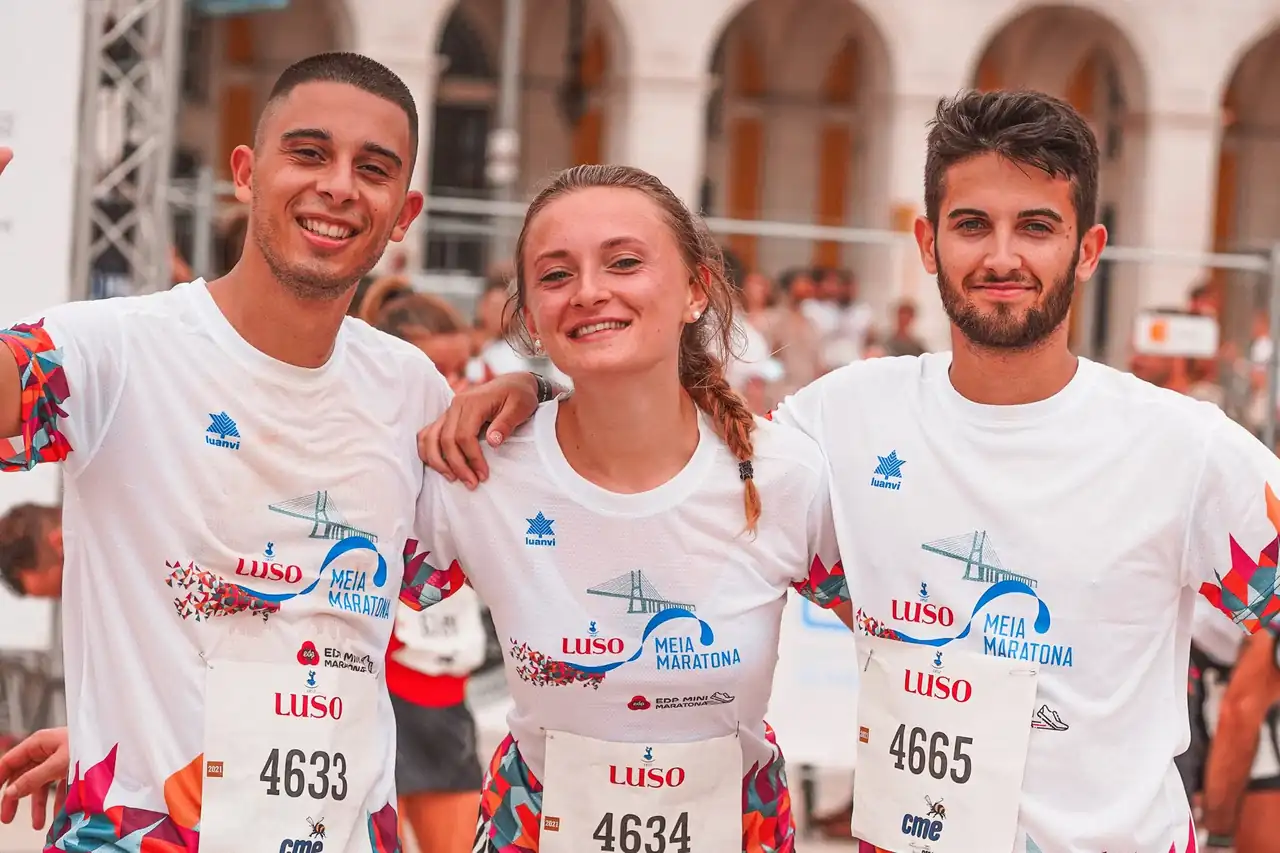
Bib pickup for the Carrera Ponle Freno Madrid 2025 will take place in the days leading up to the race, from Thursday, November 13 to Saturday, November 15, from 11:00 a.m. to 8:00 p.m. The chosen venue is the Novotel Madrid Center Hotel, on O’Donnell Street, 53, a convenient spot to reach by public transport and large enough to handle the volume of runners for an event that usually attracts thousands of participants.
That process, which in many races is handled in a rush and with long lines, here is part of the pre-race experience for an event with a strong symbolic charge. The bib and race pack pickup is not just a logistical step: it also marks the real start of the race atmosphere, with runners collecting their kit, checking sizes, reviewing the chip, and beginning to count down to Sunday morning, when Madrid turns into a solidarity urban circuit.
Times, venue and what is handed out at pickup
The organizers have concentrated pickup over three full days, something that helps the flow of participants and reduces last-minute pressure. The hours, from 11:00 a.m. to 8:00 p.m., make it possible to come at lunchtime or late in the afternoon, a wide window designed for runners with different work schedules and for those who prefer to avoid the busiest central periods.
The handout point, the Novotel Madrid Center, on O’Donnell 53, places the operation in a well-connected and easily recognizable area in the east of central Madrid. In this kind of event, location matters as much as the schedule: arriving, picking up, and leaving without unnecessary detours saves time and reduces fatigue before a race that, in the city’s calendar, carries the weight of a major popular event.
Along with the bib, the runner’s bag is usually also handed out, a package that brings together practical information and, in this edition, the official T-shirt. For many participants, that moment has something ritualistic about it: the number identifies, the T-shirt creates a sense of unity, and the bag confirms that the race is already underway even before the starting gun. In Ponle Freno, moreover, that gesture is tied to a charitable cause that gives meaning to the registration beyond the clock.
What you should bring to avoid problems
Pickup is usually straightforward, but it is advisable to bring valid identification and have your registration confirmation ready, either on your phone or printed, because access is often organized by surname or by internal verification systems specific to each event. When attendance is high, any missing details can turn a five-minute process into an unnecessary wait.
It is also useful to check the assigned T-shirt size in advance if the organizers have already closed distribution. In many races, the margin for changes is very limited or nonexistent during pickup, so participants end up accepting the available size. That seemingly minor detail often shows up later in comfort on the asphalt or in the starting photo, where a T-shirt that is too loose or too tight breaks the sense of cohesion.
The bib, on the other hand, deserves a quick check before leaving the desk. The name, number, and any associated information should all be correct. An error spotted on the spot is easier to fix than on Sunday morning, when time pressure, the starting music, and the flow of runners leave little room for improvisation.
Why pickup matters so much in a city race
In an urban event like this one, the pickup process is not just an administrative formality. It is the moment when the runner truly enters the race and adapts to its logic: schedules, access points, meeting spots, and organization. Madrid changes pace during those hours, and so does the participant, who stops thinking about training and starts thinking about the real race, with its bib, start time, and course.
In addition, the staggered distribution helps avoid crowds and improves the experience for those coming from outside the city. Madrid concentrates traffic, events, and travel, so a broad pickup window over several days reduces tension. In an event that combines sport, solidarity, and urban mobilization, that logistical flow is almost as important as the 5K or 10K route itself.
Bib pickup also has visual value: it is where you see the mix of profiles that make this type of race so special, from first-timers to veteran runners, as well as families, groups of friends, and participants who return year after year out of commitment to the cause. That human mosaic explains why the Madrid Ponle Freno race has grown into a fixed date on the popular autumn calendar.
The solidarity race that brings the capital together
The event is promoted by Atresmedia and Fundación AXA and has a clearly defined charitable component: the proceeds are used to support victims of traffic accidents. That goal gives bib pickup a different meaning from that of other competitions. It is not just a registration, but a contribution to a cause that connects sport, prevention, and collective memory.
The 2025 edition once again places Madrid as the setting for an event with two official distances, 5 kilometers and 10 kilometers, with the start scheduled for 9:00 a.m. on Sunday, November 16. The longer course passes through some of the most recognizable streets in the center, with start and finish in the Armada Española area according to information released by the Madrid City Council, and a route that crosses very well-known parts of the capital.
The appeal of this race lies not only in its route, but in its ability to transform the city center into a kind of civic corridor. Streets normally used for traffic, strolling, or the daily rush become, for a few hours, a track open to popular participation. That transformation, as simple as it may seem, is one of the reasons why the pre-race pickup of materials matters so much: it prepares the runner for an experience that goes beyond the bib.
Dates, participant flow and the context of this edition
The 2025 edition arrives with high participation figures and a well-established image as a large-scale event. According to information published by various media outlets, the organizers were aiming to surpass previous years’ numbers in a race that has already reached very high registration counts. Such scale requires finely tuned logistics, from access points to material distribution, as well as clear advance information for runners.
The pickup period from Thursday to Saturday responds precisely to that need for order. A runner who visits the venue with time to spare usually faces fewer lines, less uncertainty, and less room for mistakes. For the organizers, meanwhile, the flow of attendees is better distributed and the work is not concentrated into a single morning. In high-attendance races, that decision is noticeable both in the atmosphere and in the speed of service.
There is also an emotional component that should not be underestimated. For many participants, picking up the bib is the first physical contact with the race, the moment when the event stops being just a date on the calendar and becomes tangible. The paper, the chip, the T-shirt, the bag: all of that forms a small stage set that anticipates Sunday morning with the precision of a well-calibrated clock.
Recommended access and mobility around the hotel
The O’Donnell area has convenient metro and bus connections, something especially useful in the days before a race held on a weekend with heavy pressure on central Madrid. Using public transport is the most sensible option to avoid traffic, detours, and parking searches in an area where mobility can be difficult even on normal days.
The event’s own structure and the size of the race make it advisable to plan the visit with some margin. There is no need to turn pickup into an expedition, but it is worth calculating travel time and not arriving right at the end of the afternoon. Runner arrivals tend to cluster in certain time slots, and a small difference in arrival time can mean a longer wait or faster service.
In a city like Madrid, where even a short trip can depend on construction, traffic, or simultaneous events, pickup at a central and well-connected venue works almost like a piece of urban engineering. The runner arrives, validates their details, collects their kit, and leaves with the feeling that everything is in place. That feeling, though invisible, reduces friction on the day before and helps you face the start with more calm.
What it means to arrive fully prepared for Sunday
Race morning is usually smoother when the administrative side has already been handled. Having the bib picked up, the T-shirt stored away, and the start information clear avoids the small surprises that disrupt any runner’s routine. On Sunday, November 16, with a 9:00 a.m. start, that margin of calm will be especially valuable for those traveling into the center and dealing with road closures and transport diversions.
In Ponle Freno, the context matters too. It is not simply about completing a distance, but about taking part in a collective act that combines sport and social commitment. That is why the pre-race pickup is not an incidental formality but part of the event’s narrative. It is the moment when each registered participant receives their identification within a race that speaks about road safety, solidarity, and civic presence in the streets.
The final image is clear: runners coming in and out of the hotel with the bag under their arm, bib already ready, T-shirt folded, and their mental pulse starting to rise. Meanwhile, Madrid prepares to close traffic on several of its main arteries and open the center to a wave of runners who will turn the asphalt into a statement of support for traffic accident victims. Bib pickup is, in that context, the exact prelude to a morning experienced with both the body and memory.



How to prevent thigh chafing: causes and real solutions

Women’s running windbreakers: seven jackets and how to choose

Do more workouts get rid of soreness? A guide for runners

Jaén Half Marathon 2026: Record 3,800 Runners Registered

Men’s short running tights: how to choose the right pair

World Triathlon confirms data breach involving medical data

Izan Edo targets podium at Miyazaki World Cup

María Pérez ranks ninth in World Athletics’ 2026 top ten

Dos Santos, Duplantis and Sawe: World Athlete of the Year finalists

San Silvestre Vallecana 2026: 42,000 places, prices and start times

 Races4 months ago
Valencia Half Marathon 2027: date and registration

 Races4 months ago
Valencia Marathon 2026: entry, ballot and course

 Reviews and Comparisons4 months ago
Asics Gel-Roadmiles 3 for men: review and current price

 Reviews and Comparisons4 months ago
Asics Gel Sonoma 8 Gore-Tex: complete analysis for trail and rain

 Sneakers4 months ago
Saucony Endorphin Pro 4: full review and verdict

 News5 months ago
Strava API 2026: what changes for clubs, challenges and runner apps?

 Reviews and Comparisons5 months ago
Nike Alphafly 3: opinions, sensations, and real key points

 Reviews and Comparisons4 months ago
Under Armour running shoes review 2025-2026: models and key features

 Sports Equipment4 months ago
Shoe sizes in cm: a clear guide to getting the right fit for your footwear

 Sneakers3 months ago
Skechers GO RUN Consistent 2.0 analysis: comfort and limits

 News5 months ago
Valencia Marathon 2026 route: key tips to train and run better

 Sneakers4 months ago
Adidas Adizero Boston 13 for men: review and verdict