News
Ponle Freno Madrid 2025 Race Route: map and key details
The charity race returns with two distances and a route that crosses the heart of Madrid.

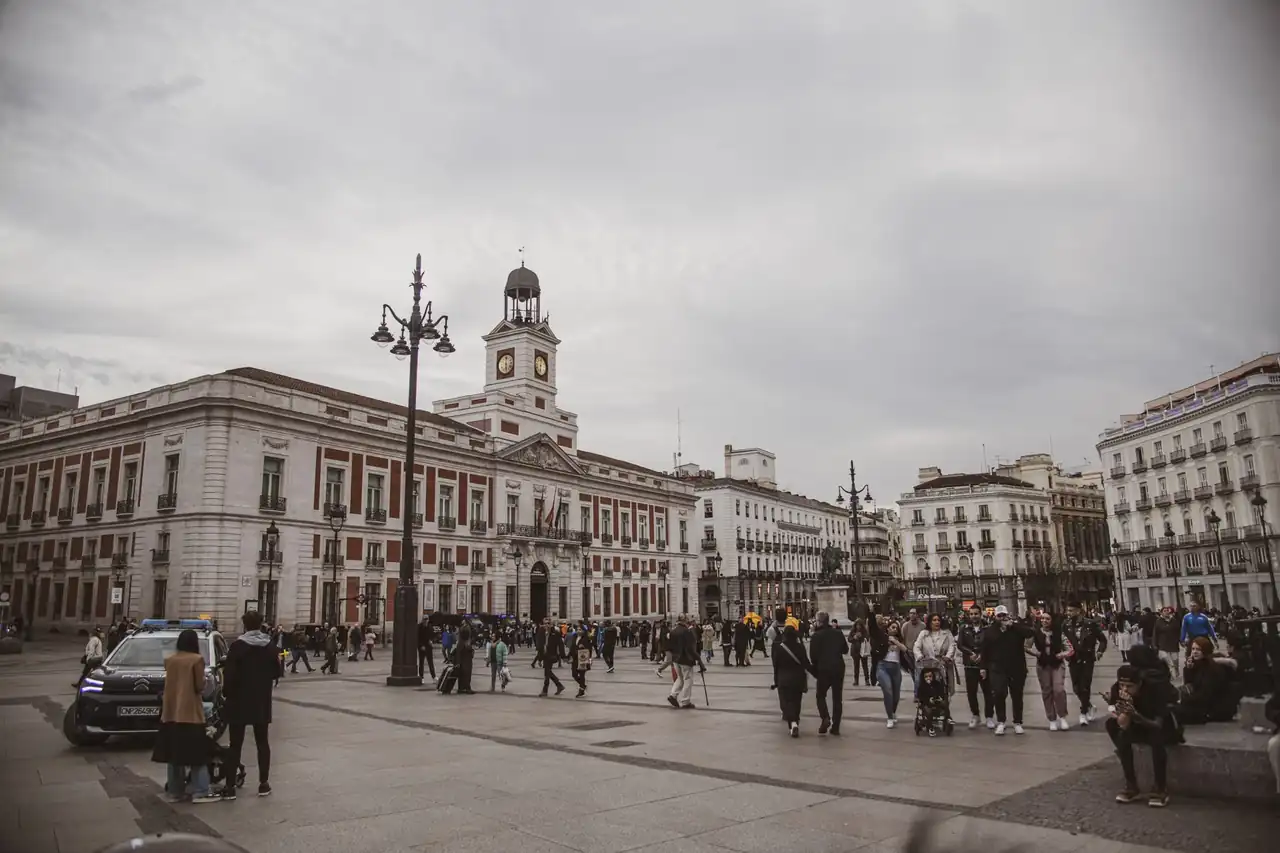
The Ponle Freno Madrid 2025 Race moves through the heart of the capital with a route designed to combine visibility, symbolism, and a fast itinerary on urban asphalt. The start and finish are set at Colón Square, a wide and recognizable point that acts as a hinge between major avenues and streets in the city center.
The race offers two distances, 5 and 10 kilometers, and the big difference between them lies not only in the effort, but in the way Madrid is experienced: the 10K passes through one of the country’s most iconic landmarks, the Puerta del Sol, while the 5K is concentrated on a more compact but equally urban and central circuit. That combination explains why the course attracts both regular runners and those looking for a popular race with a clear social component.
A route that crosses the most recognizable city in Madrid running
The structure of the course follows a very Madrid-like logic: long avenues to stretch the pack, tighter turns in the city center, and a return to a wide open space where the race opens up again. Colón Square provides a start and finish with great logistical capacity, but also a visual setting that has made this event one of the most identifiable on the capital’s popular race calendar.
In the case of the 10K, the route gains scenic weight as it enters streets such as Paseo de Recoletos, Gran Vía, Puerta del Sol, and the surroundings of Paseo del Prado, a sequence that blends the commercial pulse of the center with stretches of strong historical significance. This is not a mountain course or a race with major elevation changes; it is a city race, with asphalt as the main feature and traffic cut off to make way for a sea of runners.
That urban character has an immediate consequence: the route favors relatively steady paces, although turns, narrow passages, and participant density can break the rhythm. In races like this, starting position matters almost as much as legs. Runners chasing a fast time tend to fight for ground from the first kilometer, while those taking a more recreational approach find a comfortable circuit to enjoy the atmosphere and the urban landscape.
The two distances and what changes between them
The 5-kilometer race works as the natural entry point to the event. It is a more accessible, shorter, and less demanding course, ideal for anyone who wants to take part without facing a long distance. On a route like this, pace becomes more important than fueling strategy or fatigue management, because the total duration of effort is shorter and the margin for error is smaller too.
The 10K, by contrast, requires a fuller reading of the circuit. Passing through central Madrid adds stretches where the runner feels the weight of the city in every turn, with wide avenues that allow progress and more congested areas where the race tightens up. That alternation turns the event into a small portrait of the capital: broad, historic, noisy, and strongly marked by the presence of participants.
The organizers have also set a time limit of 45 minutes for the 5K and 1 hour and 15 minutes for the 10K, a useful reference for gauging the type of effort expected at each distance. These are not barriers meant to punish runners, but rather to organize the race, ensure safety, and allow setup and breakdown in the city center to proceed normally.
Streets, squares, and a passage through Sol that makes the difference
The big attraction of the long course is clear: Puerta del Sol. Few popular races in Madrid can boast of crossing that space, especially when the runner does so wearing a bib, on a Sunday morning, and with the city fully committed to the race. That passage adds symbolic value beyond the clock; it turns the effort into an image easily recognizable to anyone who knows the capital.
Alongside that landmark, the route runs through a string of streets and squares that help draw a very complete postcard of the center. On the mobility map and in the information released by the City Council, there are stretches linked to Paseo de la Castellana, Emilio Castelar Square, Gregorio Marañón Square, San Juan de la Cruz Square, Ríos Rosas, Bravo Murillo, Quevedo Roundabout, San Bernardo, Ruiz Jiménez Roundabout, Génova, Paseo de Recoletos, Cibeles Square, Gran Vía, Callao Square, Preciados, Puerta del Sol, Carrera de San Jerónimo, Plaza de Cánovas del Castillo, and Paseo del Prado.
The presence of so many familiar names explains why this race interests even those who will not run it. The route becomes an urban reference for several hours and forces traffic redistribution, bus route changes, and parking access reorganization. In other words, the course does not just outline a race; it also outlines a city in event mode.
Start, times, and cutoff limits that shape the experience
The start is scheduled for 9:00 a.m. from the Armada Española area, according to information released by the Madrid City Council. That relatively early time follows a common logic in high-attendance urban races: it reduces exposure to heat, minimizes part of the impact on commercial activity, and leaves room for the city center to return to normal later in the morning.
The race unfolds within a short time window. The main traffic closures are scheduled approximately between 8:30 a.m. and 10:30 a.m., although setup and breakdown work may extend the impact from around 2:30 a.m. to 2:30 p.m. For the runner, this means the event does not end at the finish line; for the city, it means the route is integrated into a much broader mobility operation.
That coordination also explains the presence of cutoff times. In an urban race with hundreds or thousands of participants, schedules are no small detail. They set the continuity of the event, organize movement through the streets, and allow the organizing teams to clear the space as the morning progresses. At heart, the route is designed like a precise choreography: runners, closures, partial openings, and a gradual return to normality.
The logistics around the course: bibs, access, and mobility
Race bib and bag collection takes place between Thursday, November 13, and Saturday, November 15, from 11:00 a.m. to 8:00 p.m., at the Novotel Madrid Center Hotel, on O’Donnell Street 53. This pre-race point usually captures part of the event atmosphere: short lines, moderate nerves, and a mix of runners arriving with very different goals, from simply finishing the course to chasing a specific time.
The mobility plan recommends public transport, and that is no accident. In an event with such a central route, private cars quickly lose their usefulness. Among the most useful metro stations are Colón, Serrano, and Alonso Martínez, while the nearest commuter rail reference is Recoletos. That network makes it possible to reach the area without depending on traffic closures or detours that affect much of the center.
Numerous city bus lines and some taxi and BiciMAD stops will also be affected. This is not an incidental side effect, but a direct consequence of the type of route chosen. When a race crosses dense areas such as Chamberí, Salamanca, Centro, and Chamartín, mobility becomes part of the story and a factor that shapes both the runner’s experience and that of the rest of the city.
A solidarity race with a route full of meaning
Beyond the map, Ponle Freno Madrid 2025 retains the weight of its origin: a race created to support road traffic accident victims and to keep road safety visible. All funds raised through registrations are donated to that cause, a circumstance that turns the bib into something more than just an entry to the race. It is also a contribution to a project with continuity and real impact.
Since 2008, the circuit has raised more than 3 million euros and brought together more than 350,000 runners. These are figures that help explain why the route is viewed not only through a sporting lens. The race has established itself as one of Madrid’s major popular events because it combines mass participation, recognizable symbols, and a solidarity narrative that does not rely on easy marketing, but on a story repeated year after year.
The black long-sleeve technical shirt with reflective elements, designed by Joma, reinforces that idea of visibility and safety. Even the race gear speaks to its central message. This is not just about running down a nice avenue; it is about placing a collective reflection on traffic, prevention, and support for those who have suffered accidents at the center.
What the race map reveals about the city and its runners
The route for this edition offers a very precise image of Madrid: a city that opens itself to competition, gives up its main arteries, and turns an ordinary Sunday into a sporting stage with a strong civic component. The route does not seek to surprise with elevation or nature; its strength lies elsewhere, in the proximity of the monuments, the breadth of the avenues, and the ease with which runners recognize each section.
For the popular runner, that means an experience different from other races. Pace depends not only on the legs, but also on how the surroundings are perceived. Running through Gran Vía or around Cibeles does not carry the same emotional temperature as doing so on a peripheral road. The noise changes, the visual reference changes, and the way effort is understood changes too.
That is, in the end, the route’s main value: it turns individual effort into a shared scene. The city looks at its runners, and the runners return to the city a recognizable, almost ceremonial image. Between the asphalt, traffic closures, and street names, Ponle Freno Madrid 2025 reads as both a race and a collective gesture at the same time.



How to prevent thigh chafing: causes and real solutions

Women’s running windbreakers: seven jackets and how to choose

Do more workouts get rid of soreness? A guide for runners

Jaén Half Marathon 2026: Record 3,800 Runners Registered

Men’s short running tights: how to choose the right pair

World Triathlon confirms data breach involving medical data

Izan Edo targets podium at Miyazaki World Cup

María Pérez ranks ninth in World Athletics’ 2026 top ten

Dos Santos, Duplantis and Sawe: World Athlete of the Year finalists

San Silvestre Vallecana 2026: 42,000 places, prices and start times

 Races3 months ago
Valencia Half Marathon 2027: date and registration

 Races4 months ago
Valencia Marathon 2026: entry, ballot and course

 Reviews and Comparisons4 months ago
Asics Gel-Roadmiles 3 for men: review and current price

 Reviews and Comparisons4 months ago
Asics Gel Sonoma 8 Gore-Tex: complete analysis for trail and rain

 Sneakers3 months ago
Saucony Endorphin Pro 4: full review and verdict

 News5 months ago
Strava API 2026: what changes for clubs, challenges and runner apps?

 Reviews and Comparisons5 months ago
Nike Alphafly 3: opinions, sensations, and real key points

 Reviews and Comparisons4 months ago
Under Armour running shoes review 2025-2026: models and key features

 Sports Equipment4 months ago
Shoe sizes in cm: a clear guide to getting the right fit for your footwear

 Sneakers3 months ago
Skechers GO RUN Consistent 2.0 analysis: comfort and limits

 News5 months ago
Valencia Marathon 2026 route: key tips to train and run better

 Sneakers4 months ago
Adidas Adizero Boston 13 for men: review and verdict