News
Race Across Spain: map, trials and keys to cross-country running
A tour through Spanish cross country, its most influential races, and why Itálica sets the pace for the discipline.

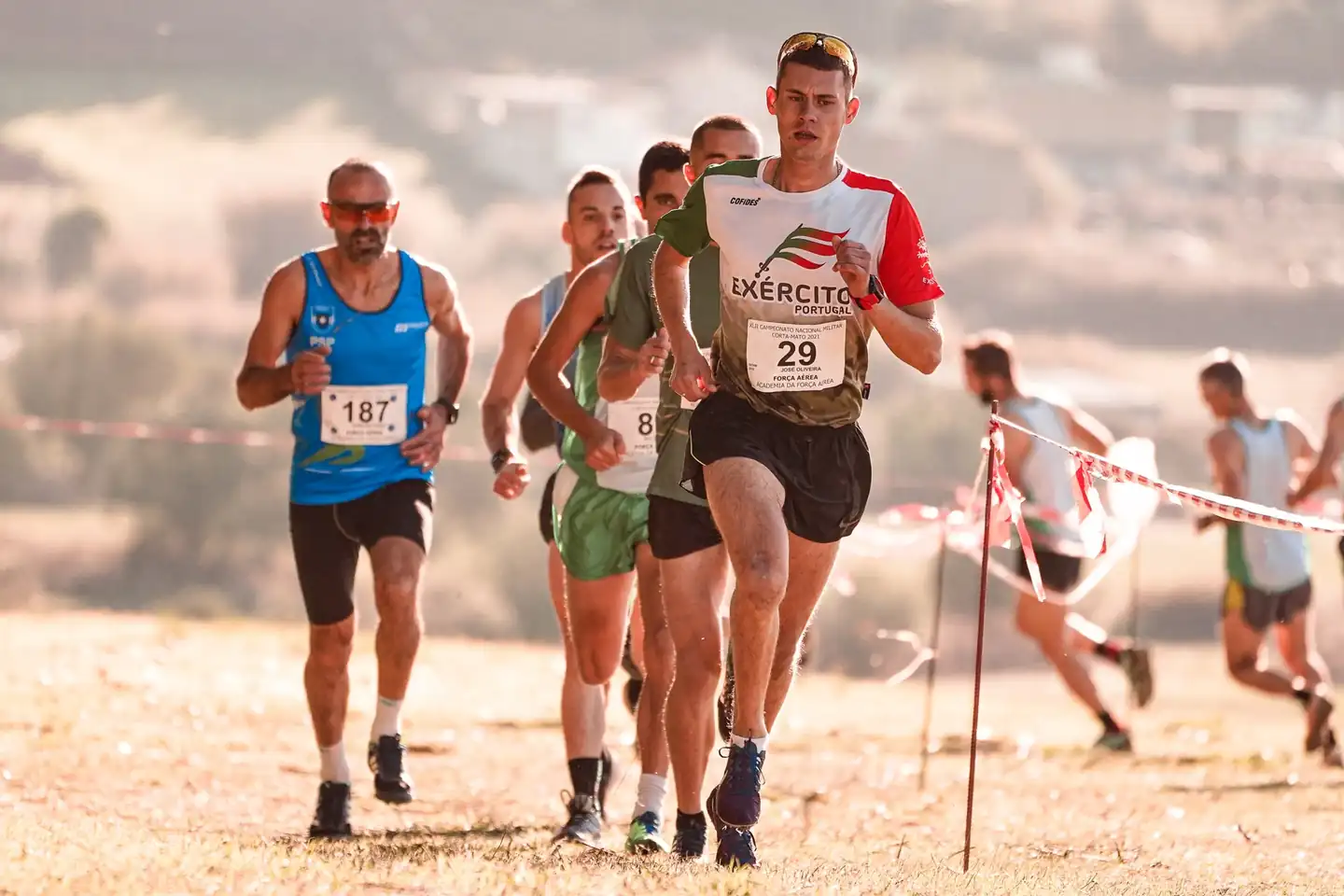
Spanish cross-country has its own hierarchy: a few meetings concentrate prestige, points, and international talent, while dozens of races support the foundation of a calendar that runs from winter mud to major club championships. Among them all, the Cross Internacional de Itálica has ended up occupying a unique place, both for its sporting level and for its ability to draw the world elite to Santiponce, in Seville.
The clearest picture of cross-country in Spain is not offered by a single race, but by the whole: Atapuerca, Soria, Zornotza, Alcobendas, San Sebastián, Venta de Baños, Cantimpalos, and Valladolid form a competitive network that shapes a discipline closely tied to the territory, to winter, and to uneven ground. On that map, Itálica stood out in 2021 as the best national race by points in the RFEA annual ranking, a fact that neatly sums up the weight a competition can achieve when it combines organization, history, and a top-class lineup.
Itálica, the showcase that raised the bar
The Cross Internacional de Itálica was Spain’s benchmark in 2021 in the annual cross-country ranking compiled by the RFEA. The race held in Santiponce scored 4,056 points, its best result in recent years, ahead of Atapuerca, which reached 3,846, and Soria, which completed the podium with 2,293. This was not a minor triumph or a symbolic victory; it was confirmation that Itálica had established a very high sporting ceiling within Spanish cross-country.
That leadership rested on a men’s race of enormous quality. Burundian Rodrigue Kwizera won convincingly in a season in which he also dominated in Soria, Lasarte, Venta de Baños, Cantimpalos, Albufeira, and the European Club Cup. Behind him finished Ethiopian Nibret Melak and Eritrean Aron Kifle, second and third, in a finish that left Carlos Mayo as the best Spaniard, sixth, and Abdessamad Oukhelfen in seventh place. The density of top-level African athletes once again showed that Itálica is not a domestic race, but a truly international event.
In the women’s race, the level was just as demanding. Norah Jeruto headed a Kenyan podium with Margaret Chelimo Kipkemboi and Beatrice Chebet, in a pack that also included names such as Senbere Teferi, Rahel Daniel, Eva Cherono, Lucy Mawia, and Yasemin Can. The best Spaniard was Carolina Robles, thirteenth, followed by Irene Sánchez-Escribano, sixteenth. The Seville race thus became a reference showcase for measuring the state of European and African cross-country in the middle of the competitive winter.
The annual ranking that organizes cross-country power
The RFEA uses a points-based ranking to order the cross-country races held in Spain, and that annual total ends up drawing a kind of competitive thermometer. It is not only about who wins on a given day; the caliber of the participants, the continuity of the event, and the ability to attract international-level teams and athletes also matter. That is why Itálica, with 4,056 points, finished ahead of Atapuerca, a meeting that for years has been the historic leader, and Soria, which held third place with 2,293.
Further down the list appeared races with a very stable presence in the calendar: Zornotza, with 2,123 points; Alcobendas, with 2,078; San Sebastián, with 1,856.5; Venta de Baños, with 1,703; Cantimpalos, with 1,236; and the Constitution Cross of Aranda de Duero, with 1,200. The reading is clear: Spanish cross-country does not depend on a single major event, but on a broad geography of organizers who sustain the level throughout the season.
Also included in that list were Valladolid, Sonseca, Alcalá de Henares, Castellón, Toledo, Granollers, Amurrio, Yebes-Valdeluz, Torredonjimeno, Villanueva de la Torre, and Llodio. The result is a diverse calendar, with urban races, parks, mixed circuits, and settings that change the behavior of the race as much as each athlete’s form. In cross-country, the terrain is not a backdrop: it is an active part of the result.
What makes a cross-country race different
Cross-country is unlike both track and road racing. Its logic comes from natural terrain: grass, mud, dirt sections, short hills, tight corners, and often pace changes imposed by the course itself. On rainy days, the ground becomes heavy and punishes the legs more; on dry courses, the battle becomes more tactical, with surges, positioning, and the ability not to lose ground at every turn.
Distances also vary according to category and event. In international and elite competition, the most common reference points have been the men’s 10 kilometers and the women’s 8 kilometers, while in national or club events the route can be adapted to different ages and formats. The nature of cross-country forces you to read the race almost like a moving chess match: every short climb, every turn, and every muddy stretch alters the script.
Team tactics also change. On the road, pace tends to stabilize; in cross-country, the pack stretches and compresses violently. Starting too far back can be costly, but going to the front too early also takes its toll when the course bites. That is why the races held in Spain that aim for high points tend to reward runners with endurance, strength, and a cool head. Stamina matters, but the ability to sustain effort when the terrain stops being forgiving is just as decisive.
The weight of Atapuerca, Soria, and the classic block of the calendar
Atapuerca remains one of the great names in Spanish cross-country, even when it does not occupy the top position in the annual ranking. Its tradition, its drawing power, and its accumulated prestige keep it as a benchmark event. Soria, meanwhile, has gained ground as a high-level venue and has consolidated a very solid role near the top of the standings. Alongside them, Zornotza, San Sebastián, and Venta de Baños provide continuity and variety to a season that does not depend on a single host site.
The classic block of the Spanish calendar has one virtue that is not very visible from the outside: it sustains a competitive chain that goes far beyond the international showcase. Without that fabric, there would be no entry points for young athletes, clubs, and runners looking to test themselves in demanding races before moving on to bigger stages. The prestige of a cross-country race is measured not only by the winner, but by the depth of its fields, the quality of its organization, and the consistency of its history.
In that sense, the 2021 ranking gave a fairly accurate picture of the Spanish ecosystem. Itálica topped the standings thanks to the strength of its field and the prestige of a day that combined the Spanish Club Cross-Country Championship and international competition. Atapuerca maintained its status as a great classic; Soria confirmed that it can compete with anyone; and a series of medium-sized or historic races showed that cross-country in Spain works like an extensive league, not an isolated event. That is its strength and also its identity.
Clubs, points, and a dimension that goes beyond the elite
Spanish cross-country cannot be understood without club competition. In Itálica, the Spanish Club Cross-Country Championship was also contested, with FC Barcelona winning the women’s event and Playas de Castellón taking the men’s title. The Catalan women’s team totaled 19 points with Carolina Robles, Blanca Fernández, Águeda Muñoz, Marta García, and Ester Navarrete, while the Castellón men’s squad prevailed with Rodrigue Kwizera, Abderrahman El Khayami, Jorge Blanco, Sergio Jiménez, Thierry Ndikumwenayo, Rubén Gómez, and Mohamed Ali Jelloul.
That team format adds a collective dimension that completely changes how the sport is read. It is not only individual names competing; structures, schools, and training models are competing too. The sum of placings penalizes any lapse and rewards the consistency of the whole group. That is why cross-country races become a very precise snapshot of the condition of the clubs with the deepest competitive background.
The value of these races also lies in their role as a talent pipeline. They bring together established athletes, prospects, and runners in an intermediate range, which is essential so that the sport does not split apart between elite and grassroots. A well-organized cross-country race leaves images of mud and victory, yes, but also of quiet learning: young runners getting used to racing in the cold, positioning themselves in a pack, handling changes of pace, and fighting for every meter. That is where a large part of Spanish athletics is forged before it later appears on the track, road, and marathon.
Spain as a favorable territory for cross-country
Spain’s geography helps cross-country develop its own character. Some areas have mild winters, others have heavy mud, urban parks are transformed into technical circuits, and natural settings where the cold air sharpens the competition. This variety means the discipline is neither uniform nor predictable. Each venue imposes its own character and forces adjustments in strategy, pace, and even the choice of spikes or shoes.
In the Valencian Community, for example, cross-country coexists with a very strong road-running culture and an athletic tradition that is also expressed in urban races and half marathons. Castellón appears both in road racing and in cross-country, reflecting a very Spanish reality: cities and their clubs often alternate terrain, as if the calendar were a map of seasons. Cross-country serves as a bridge between the track and the major road races.
In addition, the sport has managed to retain a special appeal because it does not depend on major infrastructure. A well-laid course, terrain that can be hard or soft depending on the weather, and careful organization are enough to produce a memorable competition. That apparent simplicity, however, is deceptive: staging a good race requires precision in the turns, access control, visibility along the course, and a careful approach to safety. The beauty of cross-country is that it seems simple, but in reality it is anything but.
Why Itálica marked a recent turning point
Itálica did not just win a ranking; it reinforced a narrative. The story of a race capable of attracting the world’s best, hosting a national club championship, and becoming one of the most recognizable names on the European calendar. That its best result in recent years came precisely in 2021 was no coincidence: a recognized course, an established tradition, and a field of enormous quality all came together.
The image of Santiponce on a cross-country Sunday sums up the moment well. A course that looks fast, but is demanding because of the standard of the field; spectators attentive to the surges; athletes from several continents competing as if the event had world-championship status. When a local race becomes an international reference, the effect is felt throughout the whole ecosystem: expectations rise, visibility improves, and other organizers take notice.
That boost also has symbolic value. Spain has spent decades defending strong positions in cross-country, but the consolidation of an annual leader like Itálica shows that prestige is not inherited by history alone; it is built through continuity, demands, and sound organizational judgment. In a sport where the mud erases the trace of the day before, leaving a memory is harder. Itálica left one.
The Spanish cross-country map remains alive because it remains useful
The true strength of cross-country in Spain lies in its sporting usefulness. It serves to measure clubs, sharpen athletes before the decisive stretch of winter, and offer a real showcase for those who need to compete in changing conditions. It is not an ornamental discipline or a seasonal oddity; it is a central part of athletics, with its own rules and a logic that rewards the complete runner.
The 2021 RFEA ranking showed more than a podium. It showed a country with several venues capable of hosting top-level races, a strong club structure, and an international elite that finds Spain a reliable place to compete. When cross-country works, the calendar becomes richer and athletics gains depth. That is the story told by Itálica, Atapuerca, Soria, and the rest of the races that keep the discipline alive.
At a time when many races tend to look alike, cross-country retains a rough, elemental, and highly recognizable identity. Mud, cold, surges, and reading the terrain. That is where its relevance lies: in continuing to demand the same things as always, but never in quite the same way.
You may also like: Quintanar de la Orden Cross Country 2025: Key points of a historic event.



How to prevent thigh chafing: causes and real solutions

Women’s running windbreakers: seven jackets and how to choose

Do more workouts get rid of soreness? A guide for runners

Jaén Half Marathon 2026: Record 3,800 Runners Registered

Men’s short running tights: how to choose the right pair

World Triathlon confirms data breach involving medical data

Izan Edo targets podium at Miyazaki World Cup

María Pérez ranks ninth in World Athletics’ 2026 top ten

Dos Santos, Duplantis and Sawe: World Athlete of the Year finalists

San Silvestre Vallecana 2026: 42,000 places, prices and start times

 Races4 months ago
Valencia Half Marathon 2027: date and registration

 Races4 months ago
Valencia Marathon 2026: entry, ballot and course

 Reviews and Comparisons4 months ago
Asics Gel-Roadmiles 3 for men: review and current price

 Reviews and Comparisons4 months ago
Asics Gel Sonoma 8 Gore-Tex: complete analysis for trail and rain

 Sneakers3 months ago
Saucony Endorphin Pro 4: full review and verdict

 News5 months ago
Strava API 2026: what changes for clubs, challenges and runner apps?

 Reviews and Comparisons5 months ago
Nike Alphafly 3: opinions, sensations, and real key points

 Reviews and Comparisons4 months ago
Under Armour running shoes review 2025-2026: models and key features

 Sports Equipment4 months ago
Shoe sizes in cm: a clear guide to getting the right fit for your footwear

 Sneakers3 months ago
Skechers GO RUN Consistent 2.0 analysis: comfort and limits

 News5 months ago
Valencia Marathon 2026 route: key tips to train and run better

 Sneakers4 months ago
Adidas Adizero Boston 13 for men: review and verdict