Races
Quintanar de la Orden Cross Country 2025: Key points of a historic event
More than a thousand athletes, a demanding course, and spots up for grabs defined a highly followed edition of the historic Toledo event.

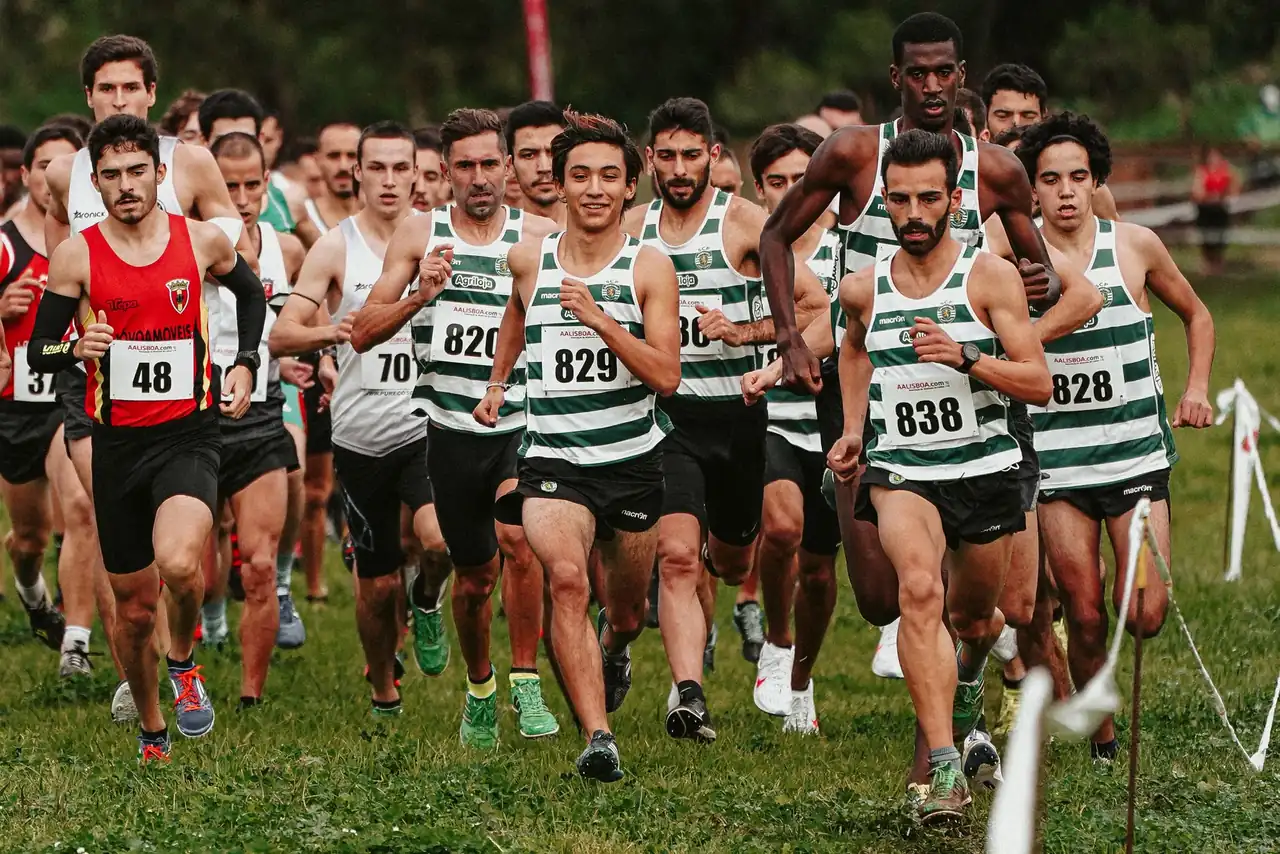
Imagen: RUN 4 FFWPU / Pexels
Quintanar de la Orden once again put cross-country running on the map with an edition that confirmed why this meeting carries so much weight in Castilla-La Mancha and on the Spanish calendar. The Alto Losar circuit, tough, rugged and unforgiving, was the setting for a morning in which the international elite, the best regional clubs and the youth categories all came together. The event surpassed a thousand participants and left a very clear image: when the mud bites, the hierarchy in distance running is also set.
The men’s victory went to Moroccan Abderrahmane Aferdi, who completed the 7,000 metres in 21:54. He was followed by Granadan Ignacio Fontes, second in 22:00, and Kenyan Meshack Kipkurgat Kirwa, third in 22:08. In the women’s race, Ecuadorian Katherine Ruth Tisalema Puruncaja prevailed in 25:09, ahead of Idaira Prieto and Queralt Criado. The podium summed up the level of the event: athletes with international experience, high paces from the start and a race in which every corner weighed like a slab.
A cross-country race with its own place on the calendar
The Manuel Goya Burgués Memorial Castilian-Manchegan Cross-Country Race is not just another winter race. Its identity has been built over decades on an uncommon mix: local tradition, strong competitive level and a circuit that truly punishes. In Quintanar, you do not run to look good; you run to endure, measure your strength and leave with the standings securely tied up. That sporting value explains why the event continues to attract clubs, distance runners and young prospects from different parts of the country.
The most recent edition also hosted the 38th Regional Club Championship, a condition that raises the competitive temperature. In that context, the day is not decided only at the finish line. It is decided in every relay, in every step by a second runner who keeps the team’s chances alive, and in every athlete who sacrifices their own time to support the group. Cross-country, more than any other discipline, turns individual effort into a collective matter.
The event also preserves a very distinctive feature: the traditional prize of wine, chocolate and cheese for the winners of some categories. That gesture, which might seem anecdotal from the outside, reinforces the bond between cross-country and its region. Quintanar does not offer a laboratory-perfect postcard; it offers a recognizable Manchegan scene, with seasonal cold, dust or mud depending on the year, and a community fully engaged around the race.
The Alto Losar circuit, where substance is separated from appearance
Alto Losar is a course that demands good race reading. A powerful engine is not enough. You have to pace yourself, find traction, know when to push and accept that asphalt does not save anyone here. Its turns, changing terrain and the tension of the hardest sections force you to run with your head. That is why Quintanar often rewards complete athletes, able to combine strength and technique, not just pure speed.
That kind of circuit has one virtue and one curse. The virtue is that it reveals the real level; the curse is that it forgives very little. Those who go out too hard pay for it later. Those who hold back too much lose the train. In a race like this, the ideal pace is like a fine needle: too slow and the chance slips away; too fast and the body collects the debt on the last lap. The Quintanar cross-country race works as an examination of mental and physical endurance.
The organisation, led by local institutions and the reference athletic club, once again supported a complex structure with more than a thousand bibs, linked schedules and categories ranging from the youngest to the senior athletes. That volume gives an idea of the event’s roots. It is not just about seeing who wins; it is about sustaining a major athletics day with efficiency, safety and historical continuity.
The big names and the value of the times
Aferdi’s 21:54 and Tisalema’s 25:09 say much more than it might seem. In a cross-country race of this kind, times are not read the same way as on a track. The terrain does not offer precision, tactics alter the stopwatch and fatigue turns every second into an expensive currency. Even so, the times help gauge the quality of the event and compare the level of its winners with other settings on the national calendar.
Ignacio Fontes, second at the finish, brought the profile of a runner capable of surviving tactical races and maintaining a strong change of pace at the decisive moment. Behind him, Kirwa once again showed the growing weight of African athletes in Spanish distance events, where consistency, reading the terrain and competitive toughness often translate into a constant presence in the top places. The mix of origins and styles makes cross-country a very revealing sporting laboratory.
In the women’s race, Tisalema made the difference from the start and turned the race into a display of authority. Idaira Prieto and Queralt Criado kept the pressure on with merit, but the Ecuadorian opened a gap that was never closed. That early dominance is a typical sign of runners who trust their form and their ability to sustain uncomfortable paces on uneven ground. In Quintanar, whoever takes the lead does not always win; whoever holds it usually comes away strengthened.
The other race: the clubs and the regional map
The prominence of Castilian-Manchegan clubs was one of the most interesting takeaways from the day. The case of Club Atletismo San Ildefonso de Toledo clearly illustrates what it means to compete as a team in an event of this calibre. Their leading man, Pedro Javier Vega Ballesteros, finished as the best regional athlete, sixth overall and fifth in the autonomous community standings, a position that helped secure a sixth-place team finish with a direct reward: a spot in the Spanish Club Championship in Atapuerca.
Behind that result lies a clear sporting message. Cross-country does not only measure an athlete’s speed; it measures the breadth of the group, the solidity of the base and a club’s ability to arrive intact at a key event. Jorge Cid, César García, Sergio Rodríguez, Mario Martínez and Alberto Rodríguez completed a compact performance, enough to support a result of enormous competitive value. In a club cross-country race, sixth can be worth almost as much as a podium.
The mixed relay also had its place, with the team formed by Marina Sánchez, Raúl Villalta, Iria Vega and Santiago Quintanero securing a commendable sixth place in a category where only two teams earn a national ticket. The takeaway is important because it shows that the youth ranks do not just show up to make up the numbers: they compete, learn and leave behind a technical base that is later felt in the senior category. In a sport so often marked by the fleeting nature of headlines, these quiet performances sustain the future.
Why Quintanar remains a benchmark for Spanish distance running
The Toledo event has managed to preserve a recognizable identity without giving up sporting demands. That combination explains its survival in an increasingly crowded calendar. Quintanar offers a setting where the epic is not manufactured; it appears on its own, in the November cold, amid shouts of support, heavy breathing and shoes that sink into capricious terrain. That atmosphere has a value that cannot be bought with posters.
Another decisive trait is organisational consistency. Races that endure do so not only because of tradition, but because runners know they will find a reliable structure, an honest circuit and a competition with purpose. That confidence attracts athletes of different profiles: pure distance runners, middle-distance athletes who venture into the mud, and clubs looking for a real assessment of their level. Quintanar functions as a boundary between the track season and the winter of distance running.
The symbolic prize, the crowd’s response and the presence of international names consolidate a formula that Spanish athletics needs to preserve. At a time when many events struggle to stand out amid the noise, this race maintains its own language. It does not need gimmicks. The terrain, the times and the sense that each edition says something about the real state of regional and national distance running are enough.
A day that offers sporting insight beyond the podium
Quintanar de la Orden’s balance goes beyond the overall winners. The day confirmed the good health of cross-country in Castilla-La Mancha, reinforced the role of the Toledo clubs and left a powerful image of continuity between generations. When an event brings together elite athletes, youth talent and ambitious teams, the result is a complete snapshot of the athletics that truly matters: the kind trained far from the spotlight and decided in plain sight.
That is probably the main value of the event. It does not simply hand out victories. It orders the season, sets goals and provides a reliable thermometer for measuring distance running at this time of year. From there, each club interprets its results, adjusts its roadmap and decides what it can sustain in the weeks that follow. Cross-country does not deliver promises; it delivers signals, and in Quintanar those signals were clear.
With more than a thousand runners, victories of international level and a regional structure that responded solidly, the event once again proved that it remains a distance-running reference in Spain. Its strength lies not only in who raises their arms at the finish, but in everything that happens before: the tension of the circuit, the work of the clubs, the youth categories learning and the crowd recognising a living tradition. In a sport so exposed to immediacy, Quintanar still preserves something increasingly rare: authority without fanfare.



How to prevent thigh chafing: causes and real solutions

Women’s running windbreakers: seven jackets and how to choose

Do more workouts get rid of soreness? A guide for runners

Jaén Half Marathon 2026: Record 3,800 Runners Registered

Men’s short running tights: how to choose the right pair

World Triathlon confirms data breach involving medical data

Izan Edo targets podium at Miyazaki World Cup

María Pérez ranks ninth in World Athletics’ 2026 top ten

Dos Santos, Duplantis and Sawe: World Athlete of the Year finalists

San Silvestre Vallecana 2026: 42,000 places, prices and start times

 Races4 months ago
Valencia Half Marathon 2027: date and registration

 Races4 months ago
Valencia Marathon 2026: entry, ballot and course

 Reviews and Comparisons4 months ago
Asics Gel-Roadmiles 3 for men: review and current price

 Reviews and Comparisons4 months ago
Asics Gel Sonoma 8 Gore-Tex: complete analysis for trail and rain

 Sneakers4 months ago
Saucony Endorphin Pro 4: full review and verdict

 News5 months ago
Strava API 2026: what changes for clubs, challenges and runner apps?

 Reviews and Comparisons5 months ago
Nike Alphafly 3: opinions, sensations, and real key points

 Reviews and Comparisons4 months ago
Under Armour running shoes review 2025-2026: models and key features

 Sports Equipment4 months ago
Shoe sizes in cm: a clear guide to getting the right fit for your footwear

 Sneakers3 months ago
Skechers GO RUN Consistent 2.0 analysis: comfort and limits

 News5 months ago
Valencia Marathon 2026 route: key tips to train and run better

 Sneakers4 months ago
Adidas Adizero Boston 13 for men: review and verdict