News
Núria Cirque: route, sections and key features of the alpine trail layout
Ridges, summits and elevation gain on a high mountain route as demanding as it is emblematic in the Pyrenees.

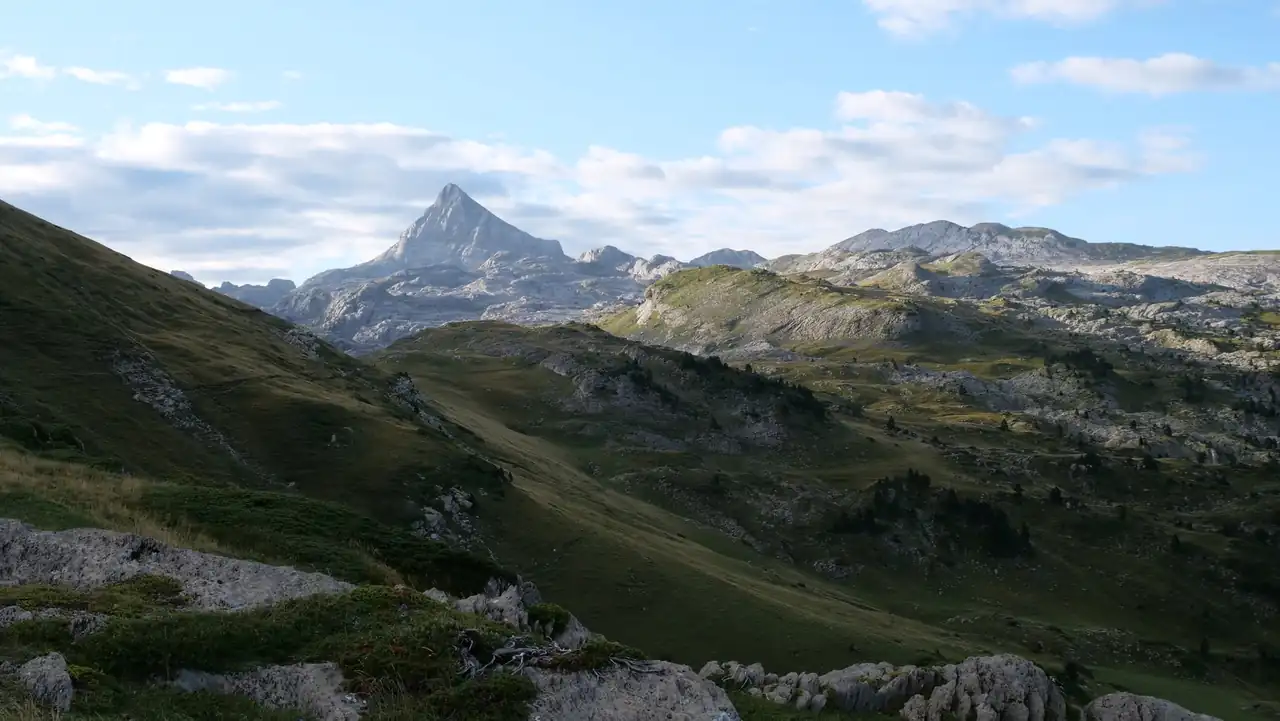
La Olla de Núria is one of the most recognizable mountain routes and races in the Catalan Pyrenees for a simple reason: in just a few hours, it packs together a succession of peaks, ridges, and descents that sketch a kind of alpine amphitheater around the sanctuary. For years, the classic course has been a benchmark in trail running for its mix of beauty and toughness, with a profile that offers no respite and a constant sense of altitude, rock, and open horizon.
Its original course is about 21.5 kilometers long and accumulates around 1,800 positive meters, although historical references to the event have also spoken of 3,880 meters of accumulated elevation gain when ascent and descent are added together. The start and finish are located in the esplanade in front of the Santuari de Núria, in Queralbs, and the route crowns the Puigmal, at 2,913 meters, before linking together a chain of summits that explain its fame among mountain runners and experienced hikers.
A route that turns back on itself around Núria
The classic route traces a large loop around the head of the valley, with a very marked circular character and a ridge-line logic that is as aesthetic as it is demanding. It is not a route for gaining elevation gently, but rather a mountain circuit that forces you to read the terrain, ration your energy, and understand that the effort is distributed among steep ramps, technical sections, and areas exposed to wind and sudden weather changes.
The first major landmark on the route is the Puigmal, the high point of the day, from where the route opens toward the Pic del Segre and continues through a sequence of peaks and passes that keep the runner on high ground for much of the morning. That command of altitude explains one of the most striking figures of the route: nearly 72% of the course runs above 2,700 meters, a number that helps explain the feeling of constant hardness.
The passage through Coll de Finestrelles, the climb to the Pic de Finestrelles, and the link toward Pic d’Eina define a stretch in which the terrain forces a balance of pace, balance, and concentration. Here, the mountain is not a backdrop but an interlocutor. Each climb calls for silence in the legs; each descent, precision. And in that back-and-forth, the race’s character is built, always standing out more for the alpine experience than for the mere distance.
The points along the route that define the experience
Beyond the names, the route gains identity from the way it connects its landmarks. After the Finestrelles and Eina section, the runner tackles the Pic de Nou Fonts and Coll de Nou Fonts, another of the passes that hold the full design together. Then comes the stretch toward Noucreus, the Fossa del Gegant, and the Puig de Fontnegra, before finishing at the Pic de l’Àliga and returning to the sanctuary. It is a long sequence, with ridge-line logic, that never offers the same landscape twice.
La Olla works as a lesson in lived geography: each summit changes the perspective, each pass opens a different valley, each descent returns the runner to the center of the basin. In events like this, time matters, but so does the ability to keep the mind attentive to what is happening underfoot. Loose rock, fog, cold mountain breeze, or a simple change in humidity alter much more than the landscape; they alter the body’s rhythm.
The historical accumulated elevation gain of 3,880 meters turns this loop into a true high-mountain day. Those who approach the route usually do so with a mix of respect and fascination, because the visual appeal does not hide the real challenge. The beauty here is not gentle; it is vertical, rugged, and expansive at the same time, as if the mountain wanted to reveal all its anatomy in a single route.
Why the classic left its mark on Catalan trail running
For years, the classic format was a benchmark for its ability to bring together sport, landscape, and hiking tradition in a single event. The start from Núria, in such a setting linked to mountaineering history, reinforced an identity that went beyond the stopwatch. The race became a symbol of endurance and direct contact with the terrain, without urban concessions or artificial transition sections.
One of its most appreciated features was the complete absence of asphalt. That condition, so simple in appearance, placed it in a territory of authenticity that mountain runners value especially highly. The route did not mix worlds; it was pure mountain from start to finish. And in that setting, self-sufficiency and technique mattered as much as fitness, because the race forced competitors to solve the day with their own resources and with a fine reading of the environment.
The Olla’s reputation was also fueled by its international character and the level of its winners, with names that helped place it on the European trail map. But beyond the podiums, what sustained its prestige was the coherence of the course. It was not a route designed to seem epic; it truly was. And that difference, in the mountains, is noticeable in every meter.
The course change and the arrival of Valls de l’Olla
The organization was forced to reformulate the course starting in 2025 due to the ban on passing through the National Nature Reserve of Vall d’Eina, a key section that linked the summits of Finestrelles and Eina. The solution was Valls de l’Olla, a new 24-kilometer route with about 2,000 positive meters that preserves the event’s alpine spirit, but with a different map and one more aligned with environmental and safety constraints.
The new route preserves the essence of the great loop around Núria, although it reorganizes the passages and rebalances the effort. It climbs the Puigmal, the Pic del Segre, and the Finestrelles area, then descends to the sanctuary and again links passes and peaks such as Nou Fonts, Noucreus, Fontnegra, and the Pic de l’Àliga. It is an adaptation that avoids easy nostalgia and opts for functional continuity: less clinging to the past than extending the sporting life of an event that is part of the mountain calendar.
The transition between the classic route and the new one has not reduced the challenge. On the contrary, the race remains a complete exercise in endurance, navigation, and effort management. The runner no longer pursues exactly the same old image, but still enters a high-mountain setting that retains its magnetism. In the end, the mountain is still there; what changes is the route used to listen to it.
The vertical and the night race broaden the Olla family
The event is not limited to the main format. The Olla de Núria Vertical, created in 2016, offers a concentrated effort between the Santuari de Núria and the Puigmal, with 4 kilometers and 949 meters of positive elevation gain in its most recent version. It is a linear, direct, and explosive ascent that condenses the logic of the mountain into a short time: climb without rest and learn to sustain effort from base to summit.
The vertical demands another kind of physical intelligence. Here there are no long ridges to manage, but rather an almost continuous climb where pace control is decisive. Shortness does not mean ease, but concentrated intensity. It is the driest, most vertical, and perhaps rawest version of the Olla universe, designed for runners seeking a pure climb, without the distractions of long-distance effort.
Since 2022, a night format has also been added, introducing a different and almost cinematic dimension. Starting from the sanctuary, it climbs via Finestrelles and the Pic de Finestrelles to the coll d’Eina before returning to Núria. Running under the moon completely transforms the perception of the landscape: outlines become more austere, silence weighs more heavily, and the mountain seems reduced to a handful of lights, shadows, and breath.
What the route reveals about the mountain and about those who take it on
The Olla de Núria, in any of its versions, is not just a sequence of technical data. It is a test of one’s relationship with altitude. Distance matters, but so does the way the body responds to altitude, the lack of flat terrain, live rock, and weather changes. In this kind of route, the runner does not just move forward: they negotiate with the relief, manage risk, and accept that the mountain sets its own agenda.
The terrain requires constant reading of the surroundings. It is not enough to run well on flat ground or to be strong on climbs. Adaptation is needed, a kind of silent conversation with the profile. Ridges call for a firm step; descents, control; passes, patience. That combination turns the race into something richer than a simple athletic challenge. It is a total experience, where the landscape is part of the performance.
That is also why the Olla continues to come up in conversations among people who practice trail running or follow high-mountain routes in the Pyrenees. The route condenses a very recognizable idea: in just a few hours, you can go from the calm of the sanctuary to the severity of the summits, and return once again to the center of the valley with the feeling of having crossed a small world. That density is what makes it memorable.
What you should know before looking at the map with a runner’s eyes
The route, both in its classic and new versions, shares an essential feature: it is designed for real mountain terrain. That means altitude, weather changes, stretches of sustained effort, and the need to be properly equipped. In summer, the heat in the lower sections can be misleading; up high, wind and fog are capable of cooling the environment in a matter of minutes. The impression of stability in such a setting usually lasts only a short time.
Safety depends on accepting that the route gives nothing away. Even though the event is associated with high-level trail running, the reality of the terrain remains that of an alpine circuit, with sections where balance matters as much as power. That is one of the reasons why the Olla has maintained its aura as a serious event: it is not a decorative challenge, but a full mountain day, with everything that implies.
That is why the route is best understood as a chain of connected settings. First the hard climb, then the high line, later the passes, after that the descents, and finally the return to the sanctuary. All of this forms an architecture of effort that gives meaning to the event’s fame and explains why so many runners have included it on their list of pending routes for years. La Olla, after all, is not limited to circling Núria: it turns it into the center of gravity of an alpine day that continues to mark the mountain calendar in the Pyrenees.
A route that still says a great deal about Núria and the Pyrenees
The continued relevance of the Olla de Núria rests on something deeper than competition. Its route speaks of a territory and of a way of understanding the mountain that blends hiking tradition, modern sport, and respect for a fragile environment. When the route changes from a classic design to an adapted one, the essence does not disappear; it is reorganized so it can still make sense on the map and in memory.
What remains is the logic of altitude, ridge, and return. That pattern, as elementary as it is powerful, remains the core of its appeal. The race and the route preserve a rare quality: they make the runner feel small without taking away their place at center stage. The landscape is not a backdrop, but a presence. And that is where much of its narrative and sporting power lies.
The Olla de Núria remains, therefore, a benchmark in trail running and high mountain sport in Catalunya. Its route has changed, its formats have expanded, and the legal and environmental context has evolved, but the overall impression remains intact: a great alpine loop, rugged and beautiful, that turns the valley into a very singular arena of effort. Few events so clearly capture the combination of technique, altitude, and character that defines the Pyrenees.
You may also like: Cursa Olla de Núria 2025: routes, schedules, and key details.



How to prevent thigh chafing: causes and real solutions

Women’s running windbreakers: seven jackets and how to choose

Do more workouts get rid of soreness? A guide for runners

Jaén Half Marathon 2026: Record 3,800 Runners Registered

Men’s short running tights: how to choose the right pair

World Triathlon confirms data breach involving medical data

Izan Edo targets podium at Miyazaki World Cup

María Pérez ranks ninth in World Athletics’ 2026 top ten

Dos Santos, Duplantis and Sawe: World Athlete of the Year finalists

San Silvestre Vallecana 2026: 42,000 places, prices and start times

 Races3 months ago
Valencia Half Marathon 2027: date and registration

 Races3 months ago
Valencia Marathon 2026: entry, ballot and course

 Reviews and Comparisons4 months ago
Asics Gel-Roadmiles 3 for men: review and current price

 Reviews and Comparisons4 months ago
Asics Gel Sonoma 8 Gore-Tex: complete analysis for trail and rain

 Sneakers3 months ago
Saucony Endorphin Pro 4: full review and verdict

 News5 months ago
Strava API 2026: what changes for clubs, challenges and runner apps?

 Reviews and Comparisons5 months ago
Nike Alphafly 3: opinions, sensations, and real key points

 Reviews and Comparisons4 months ago
Under Armour running shoes review 2025-2026: models and key features

 Sports Equipment4 months ago
Shoe sizes in cm: a clear guide to getting the right fit for your footwear

 Sneakers3 months ago
Skechers GO RUN Consistent 2.0 analysis: comfort and limits

 News5 months ago
Valencia Marathon 2026 route: key tips to train and run better

 Sneakers4 months ago
Adidas Adizero Boston 13 for men: review and verdict