Races
Cursa Olla de Núria 2025: routes, schedules, and key details
Núria’s race renews the route, schedules, and formats in an edition marked by the mountains and sustainability.

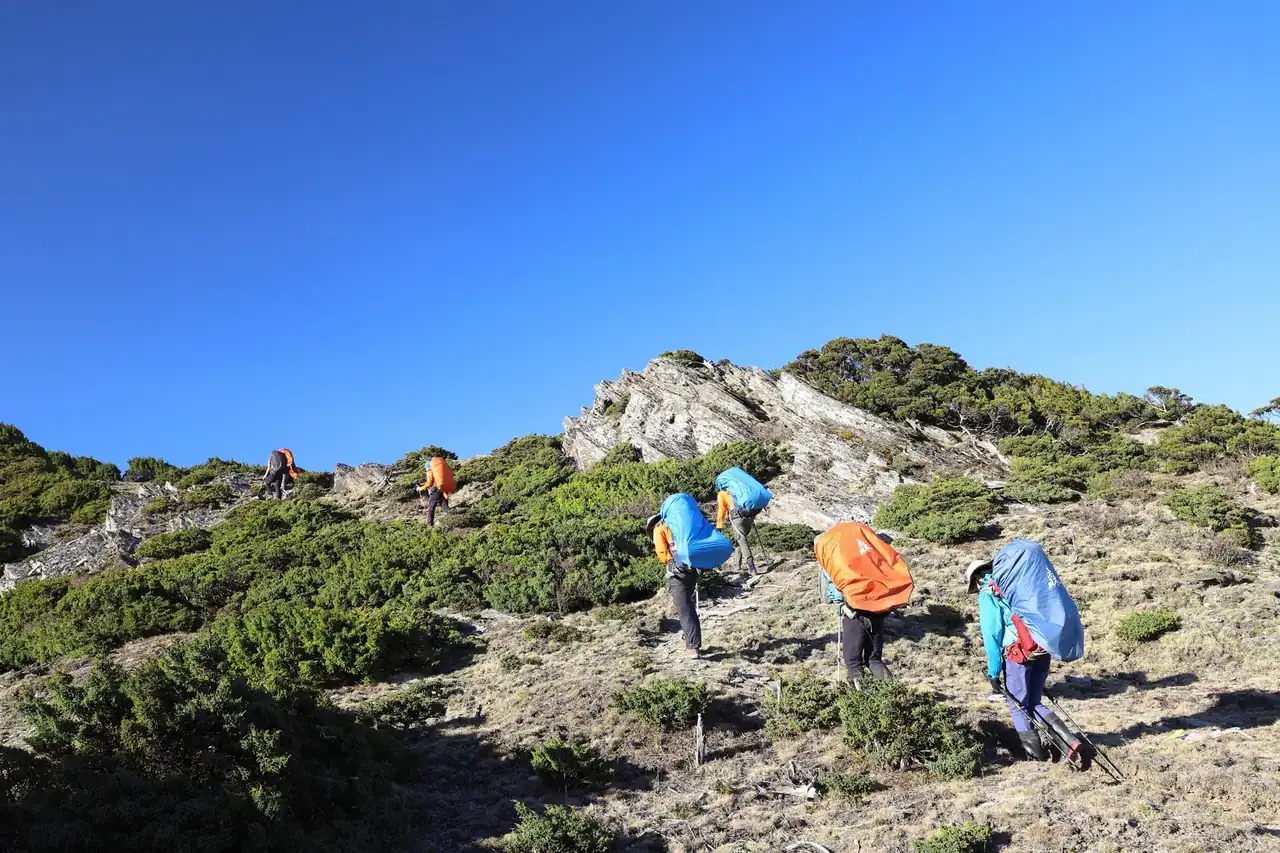
Vall de Núria will once again become a high-mountain amphitheater on September 20 and 21, with Puigmal as a backdrop and an edition that consolidates a transformation already visible the previous year. The weekend’s main race leaves behind the historic route between Núria and Eina and settles on a new 24-kilometer course with 2,000 meters of positive elevation gain, designed to coexist with the demands of the environment and with a sporting identity that remains very recognizable.
The 2025 edition arrives with four disciplines, live television coverage and a broader interpretation of the event: elite sport, youth development, visual spectacle and environmental management in the same setting. The marquee race, renamed Valls de l’Olla, shares the spotlight with the Olla Vertical, the Mitja Olla and the Olletes, in a program that preserves the alpine essence of one of the most singular trail-running events in Catalunya.
A new route for a race that refuses to lose its identity
The most relevant change in this edition is not only sporting, but also territorial. For years, the organizers tried to recover the race’s original route, but the refusal of the Eina Nature Reserve to authorize passage between Pic de Finestrelles and Pic d’Eina forced them to accept an alternative itinerary. Far from diluting the race, that adjustment has ended up defining a new phase with its own name and a commitment to continuity.
Valls de l’Olla retains the mountain language that made the former Olla de Núria famous. Its 24 kilometers and 2,000 meters of positive elevation gain create a highly concentrated effort, with two marked climbs and a passage through the Santuari de Núria right in the middle of the race that amplifies the atmosphere. It is not a course of long flat sections or steady pace; it is a succession of changes in gradient, altitude and terrain that forces runners to pace each stride as if they were counting their breath.
In the trail calendar, this race retains an uncommon value. It does not rely on mass participation or length to stand out, but on a geography so precise it almost seems tailor-made to test the character of those who tackle it. The mountain does not accompany you: it decides, and that is one of the reasons Núria continues to hold a distinct place in the national and international scene.
Schedule, start order and a broadcast that is gaining importance
The sporting program begins on Saturday with the Olla Vertical, an explosive 3.78-kilometer climb with 986 meters of elevation gain that connects the Santuari de Núria with the summit of Puigmal. The start is set for 10:30 a.m. and, given its short and demanding format, it works as a kind of distillation of everything Vall de Núria represents: steep gradients, altitude and no respite.
Sunday concentrates the larger part of the program. Valls de l’Olla and Mitja Olla open the day with separate starts by sex: 8:35 a.m. for women and 8:50 a.m. for men. The adjustment responds to the television broadcast and aims to give greater visibility to the women’s race, a move that is becoming increasingly common in events that want to structure coverage using sporting criteria rather than purely logistical ones. The finish line will remain open until 2:50 p.m.
The live signal will be provided by TV3 and 3Cat, with the broadcast window running from 8:30 a.m. to 12:00 p.m. That exposure is not a minor decorative element. The race is increasingly followed beyond the valley, and television has turned a very specific mountain race into a recognizable event for a broad audience, even for those who have never set foot on a high-mountain trail. The image of the Pyrenees, with runners climbing under rock walls and open meadows, has immediate visual power.
The flagship race: 24 kilometers, 2,000 meters and a very clear script
The Valls de l’Olla route is built on a simple yet punishing idea: climb, descend and climb again on terrain that offers no break. The first half concentrates much of the elevation gain and forces a cautious pace from the start. In mountain racing, going out too fast is often a polished way of signing an early defeat, and Núria usually punishes precisely those who confuse determination with haste.
Altitude adds an extra layer of difficulty. Running above 2,000 meters already changes the sensation of effort; doing so near peaks that approach 3,000 meters turns each section into a negotiation with the body. Puigmal, at 2,913 meters, serves as a constant reference. You do not need to reach the summit to feel it: it is enough for it to appear on the horizon to remind you that the race unfolds in a setting where oxygen weighs more than usual.
The technical heart of the route retains the logic of great Pyrenean mountain races. Tracks, trails, ridgelines and marked descents combine in a course that changes shape with ease. In that context, the race rewards not only power; it demands reading the terrain, adapting and keeping a cool head. The runner who understands the course usually suffers less than the runner who simply lets the legs take over.
The Olla Vertical, a short climb that separates intention from reality
If Sunday’s race offers a fuller reading of the territory, the Olla Vertical acts like a sharp blow. It is 3.78 kilometers with 986 meters of positive elevation gain, a ratio that explains its character by itself. The start at the Santuari de Núria and the finish at Puigmal condense a climb that leaves no room to negotiate effort. There is no space here to manage resources for the long term; what matters is resisting the initial burn in the legs and maintaining technique when the slope already feels like a wall.
This format also has a very specific appeal for spectators. It is visual, direct and easy to read from outside: a line of runners climbing nonstop up a slope that visibly drains energy. In races like this, the difference between those who climb with purpose and those who crack in the first section becomes visible sooner than the clocks suggest. The vertical lays bare the true state of form.
The race has carved out its own place within the weekend because it serves as a counterpoint to the main event. Where Valls de l’Olla mixes pacing, tactical reading and sustained endurance, the Vertical focuses on explosiveness and the ability to sustain effort on an almost continuous ascent. They are two different languages of the same mountain.
Mitja Olla and Olletes: from youth performance to a family atmosphere
Mitja Olla, with 12.5 kilometers and around 1,000 meters of elevation gain, has an intermediate personality that makes it especially interesting. It may seem a short distance for runners used to longer endurance races, but the profile and altitude give it a much harsher character than its name suggests. It is not a lesser version of the flagship race, but another event with its own reading and its own risks.
The 2025 edition also introduces an important change: Mitja Olla opens participation to those over 18, while still giving registration priority to younger runners. That adjustment broadens the entry window without erasing its training role, because it remains a very useful option for those seeking demanding terrain without taking on the full burden of the main course. The mountain is also learned over middle distances, and Núria offers precisely that bridge between ambition and real challenge.
The Olletes complete the weekend with a non-competitive approach, designed for the youngest participants. Their value is not in the stopwatch or comparison, but in the atmosphere they create. In races like this, youth development is not a side note, but the foundation of a sporting culture passed down almost by imitation: see, walk, run, return. In that friendlier format, the mountain is also inherited.
Sustainability, territory and an organization that has shifted its focus
The 2025 edition insists on a message that can no longer be treated as secondary: the impact on the environment matters as much as the sporting result. The organizers emphasize their commitment to reducing the environmental footprint and generating economic return in the area. That translates into hotel occupancy, the purchase of local products for aid stations and runner packs, and concrete decisions about materials.
The official T-shirt, made by the company Bside from recycled bottles and produced entirely in its factory, neatly sums up the desire to fit the event into a more responsible model. In an era when many mountain races must justify their presence in sensitive areas, Núria tries to align its sporting narrative with coherent behavior. It is not a matter of decorative marketing, but of medium-term survival.
That balance between race and territory also shapes the tone of the organization. The event does not present itself as an occupation of the valley, but as a way of activating it without wearing it down too much. High mountains allow beauty, but also limits, and that boundary, increasingly visible, conditions much of the decision-making of the events that survive there.
The names that sustain the Núria legend
Talking about the race without mentioning its history would be to stay at the surface. Since its birth in 2007, the event has gone through victories and duels that have made it a benchmark in trail running. Kilian Jornet, Stian Angermund, Oriol Cardona, Emelie Forsberg and Sheila Avilés have all delivered performances there that feed a very specific sporting memory: Núria as a place where prestige is put to the test in an unforgiving setting.
The list of favorites for 2025 once again places this edition within a high-level conversation. Among the men, names such as Albert Ballús, Jan Margarit, Pere Rullán, Jan Castillo, Josep Miret, Aniol Pujiula, Miquel Corbera, Arnau Aranda, Lluís Puigvert and Pep Mirabet appear, alongside French runners like Lilian Gugliero and Kilian Allaire. In the women’s field, the lineup includes Gabriela Lasalle, Laura Orgué, Blanca Batlle, Aina Cusí, Núria Llansó, Anna Guirado, Rosa Navarro and Laia Calzada. The quality of the field ensures an open competition with no predictable script.
The absence of the 2024 winners, Jan Torrella and Laia Montoya, adds a layer of competitive uncertainty that usually enriches this kind of event. When the defending champions are absent, the rest of the field senses an open window. And in a race where the margin between success and fatigue is so thin, any gap on the start line can alter the whole map of the day.
Why this event still matters on the trail calendar
Olla de Núria does not compete in size with the major mass-participation events; it competes in character. Its value lies in the combination of landscape, toughness and sporting narrative. While other races seek length, sheer numbers or kilometer-long deployments, Núria preserves a more controlled, almost intimate scale, where the terrain remains in charge and the runner cannot hide behind the pack.
That profile makes it especially interesting for mountain runners looking for more than a finishing time. Núria works as a test of efficiency, but also as a sensory experience: thinner air, silence broken by the scrape of shoes, abrupt changes in light on the slopes, the sensation of looking down at a valley and feeling everything else left below. Some races are remembered for the time and others for the place; this one belongs to both categories.
The 2025 edition reinforces that idea with a more organized program, greater media presence and a more explicit sustainability message. The result is a race that does not give up on epicness, but also does not ignore the demands of the present. That combination explains why it continues to occupy a prominent place on the Catalan trail map and why every September it once again draws attention to a valley that, for a few hours, seems to condense the whole mountain into a single gesture.
In Núria, the stopwatch matters, but geography rules. And that is where much of its strength lies: in reminding us that mountain running is not just about going fast, but about understanding the terrain, respecting its limits and accepting that, sometimes, the summit decides as much as the legs do.



How to prevent thigh chafing: causes and real solutions

Women’s running windbreakers: seven jackets and how to choose

Do more workouts get rid of soreness? A guide for runners

Jaén Half Marathon 2026: Record 3,800 Runners Registered

Men’s short running tights: how to choose the right pair

World Triathlon confirms data breach involving medical data

Izan Edo targets podium at Miyazaki World Cup

María Pérez ranks ninth in World Athletics’ 2026 top ten

Dos Santos, Duplantis and Sawe: World Athlete of the Year finalists

San Silvestre Vallecana 2026: 42,000 places, prices and start times

 Races3 months ago
Valencia Half Marathon 2027: date and registration

 Races3 months ago
Valencia Marathon 2026: entry, ballot and course

 Reviews and Comparisons4 months ago
Asics Gel-Roadmiles 3 for men: review and current price

 Reviews and Comparisons4 months ago
Asics Gel Sonoma 8 Gore-Tex: complete analysis for trail and rain

 Sneakers3 months ago
Saucony Endorphin Pro 4: full review and verdict

 News5 months ago
Strava API 2026: what changes for clubs, challenges and runner apps?

 Reviews and Comparisons5 months ago
Nike Alphafly 3: opinions, sensations, and real key points

 Reviews and Comparisons4 months ago
Under Armour running shoes review 2025-2026: models and key features

 Sports Equipment4 months ago
Shoe sizes in cm: a clear guide to getting the right fit for your footwear

 Sneakers3 months ago
Skechers GO RUN Consistent 2.0 analysis: comfort and limits

 News5 months ago
Valencia Marathon 2026 route: key tips to train and run better

 Sneakers4 months ago
Adidas Adizero Boston 13 for men: review and verdict