News
Results of the El Corte Inglés Race 2025: winners and times
Bossy and Ouboukir shone in Barcelona, with 40,000 runners and an edition marked by emotion and solidarity.

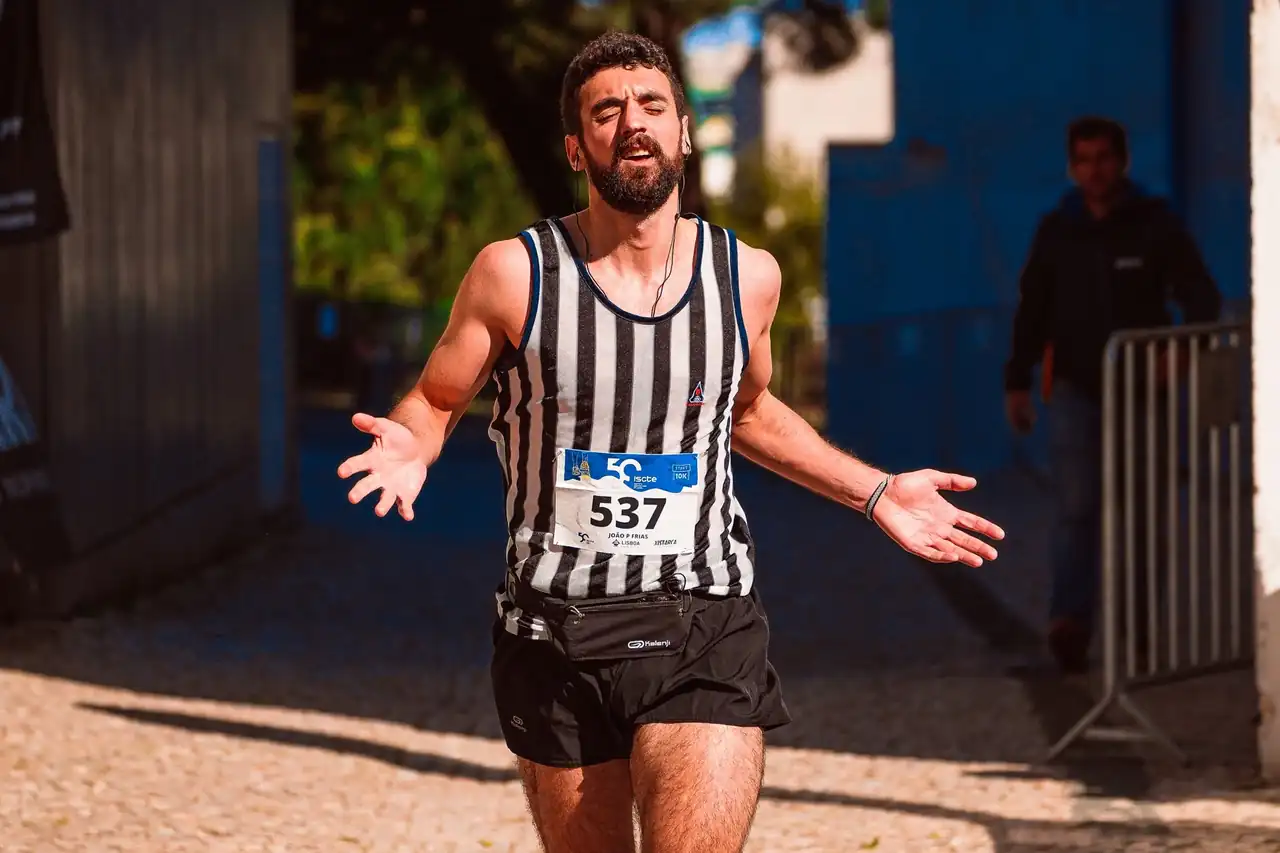
Artur Bossy and Douae Ouboukir claimed victory in the Cursa El Corte Inglés 2025, an edition that once again turned Barcelona into a long avenue of sneakers, applause, and different rhythms sharing the asphalt. The Catalan runner prevailed in 29:53 and the Moroccan runner in 31:48, on a May morning in which the race not only handed out trophies, but also a clear image of what popular athletics is when it fills a city.
Interest in the Cursa results is not limited to the podium. The event brought together 40,000 participants on a 10-kilometer route between Avinguda Diagonal and Plaça Catalunya, with a massive start and a finish that mixed experienced runners, first-timers, families, and people running purely for the atmosphere. The race produced very fast times at the front, but also a broader snapshot: that of a free, hugely attended race with a strong charitable component.
An edition that confirmed the race’s importance in Barcelona
The 45th edition of the Cursa once again showed why it holds a unique place in the Spanish popular running calendar. It is not just a 10-kilometer city race; it is an event that mobilizes tens of thousands of people and turns the center of Barcelona into a continuous human corridor, with a pace that changes depending on the stretch, the group, and each participant’s ambition. That contrast between elite competition and mass participation is one of the features that explain its impact year after year.
The morning was ideal: mild temperature, no wind or rain, and a route conducive to running with some fluidity. In events like this, the weather is no minor detail, but a key piece that helps explain why the front times were so tight and why many amateur runners were able to complete the course feeling strong. Barcelona offered a clean, bright, and favorable backdrop for sustained effort.
Beyond the times, the race left a sense of continuity. The Cursa El Corte Inglés does not need gimmicks to make headlines: its size, tradition, and open nature are enough to make it a benchmark. In a city where urban running coexists with daily life, getting 40,000 people to share the course without the event losing its sporting identity is, in itself, an organizational and cultural achievement.
Bossy won in a finish of control and nerve
The men’s victory was decided through a combination of tactical intelligence and resistance to the final attack. Artur Bossy crossed the finish line in 29:53 after launching a decisive move in the closing stretch, when the most selective part of the race had already taken shape. Behind him, Frenchman Elliot Tissier pushed all the way to the final meter, forcing the winner to empty himself on the home straight, that short strip where a race can feel like an ambush.
The podium was completed by Marc Fernández, also with a solid performance, in an edition where the top positions were decided by details rather than wide margins. In a 10-kilometer city race, breaking 30 minutes demands a very carefully measured effort; doing so on a course open to such varied paces adds a layer of difficulty that is not always apparent from the outside. Bossy read the race better and saved his final blow for the right moment.
His time also reflects the level of the front of the race in Barcelona. The finish was fast, but also controlled, without chaotic wear and tear from start to finish. That balance between toughness and control is often typical of races where the podium is known to be decided by a brief maneuver rather than by linear attrition. Bossy did not win by accumulating meters, but by choosing the exact moment.
Ouboukir and Soler delivered the closest finish of the day
In the women’s category, the duel was even more striking. Douae Ouboukir and Meritxell Soler, winner in the previous edition, pulled away from the main group and maintained a high-tension battle for much of the course. There was no immediate break or an attack that ended the suspense; rather, it was a race of subtle attrition, like a rope being stretched little by little until one of the two runners manages to gain a crucial few meters.
Ouboukir ended up prevailing in 31:48, while Soler posted 31:54, just six seconds behind. The minimal gap says a great deal about the level of both athletes and the kind of race seen in Barcelona. It was neither a long breakaway nor a pure sprint finish, but a race in which legs, tactical reading, and the ability to sustain pace in the closing stretch proved decisive.
The equality was real and produced one of those finishes that explain why popular races can also generate very intense elite scenes. Ouboukir managed to pull away just before the decisive straight, which gave her enough margin to finish confidently. Soler, for her part, not only defended her position: she also improved her personal best, confirming that the battle was not ornamental, but of a high level and competitive depth.
The times show a fast race, but not an easy one
The winners’ times help explain the type of course and context offered by the edition. 29:53 in the men’s race and 31:48 in the women’s race are serious marks for a mass urban event, especially in a race with a huge start and sections where the traffic of amateur runners can affect initial positioning. Anyone familiar with this kind of event knows that running among thousands of people requires negotiating space, pace, and overtaking with a precision that does not appear in the final classification.
The Barcelona Cursa combines that dual condition of fast race and collective experience. For the elite, the course allows for a strong time if gaps and rhythm are found from the start. For the vast majority of participants, the value lies elsewhere: completing the 10 kilometers in an emblematic setting, with streets closed to traffic and an atmosphere that turns the city into a shared track. That mix is what explains the race’s sustained success.
The profile of the circuit also matters. The race runs through major urban arteries such as Avinguda Diagonal, Aragó, and Gran Via, before ending at Plaça Catalunya. It is not a mountainous or technical route, but it is a course with enough urban density to require constant attention. In that kind of setting, running fast is only part of the challenge; the other part is maintaining efficient effort when the pack becomes compact and the air smells of humidity, hot asphalt, and race bib paper.
A popular tide that was much more than a list of times
Official results matter, but in this race the finishing order does not tell the whole story. The Cursa once again brought together people who came to compete, others who wanted to finish without watching the clock, and many who simply wanted to be part of a collective morning in Barcelona. That coexistence between performance and experience gives the race meaning and keeps it away from a purely competitive format.
The popular dimension was evident from the start. The 40,000 entrants filled Avinguda Diagonal with a mix of shirts, paces, and goals seen only at major urban events. There were those starting at nearly three minutes per kilometer and those using the race to jog, chat, or cross the line with their group. That diversity does not weaken the race; it makes it more recognizable, more approachable, and, in a sense, more democratic.
The finish at Plaça Catalunya reinforced that idea. At a highly visible finish line, the feeling is that of entering an open stage, with the center of Barcelona as a backdrop and each runner carrying their own story. Some were chasing a personal best; others, a personal promise. Everyone shared the same final avenue, as if the city had decided for a few hours to adapt its pace to popular athletics.
The charitable cause also gave meaning to the edition
The charitable aspect was another of the elements accompanying the 2025 edition. The race supported the Fundació Xana, linked to the care of children and young people with serious illnesses, through the sale of the solidarity T-shirt. That component does not alter the sporting result, but it does broaden the meaning of the race and explains why so many people experience it as more than just a competition.
Luís Enrique’s presence as ambassador for the foundation added visibility to a cause already closely associated with the race. The coach ran the 10 kilometers and gave a face to an emotional dimension that, in events of this size, usually falls outside the main headline but weighs heavily on the identity of the day. His gesture of running amid a demanding schedule also speaks to the place the Cursa holds in Barcelona’s sporting memory.
In mass races like this, solidarity is not an external decoration. It becomes part of the participant’s experience, the shirt they buy, the narrative of the day, and the post-race conversation. That is why the final results coexist with another, less quantifiable victory: bringing thousands of people together around a shared cause without losing the sporting edge.
What the 2025 Cursa results really tell us
The standings confirm that the event remains capable of attracting competitive talent while preserving its essence as an open race. Bossy, Ouboukir, and Soler provided a headline trio worthy of the occasion, with quality times and minimal gaps in the women’s race. Behind them, tens of thousands of runners built a much broader scene, where the clock mattered as much as the experience of crossing Barcelona on foot, with a bib and emotion.
There is also an important idea for readers looking for results: the Cursa is not measured only by first place. In this event, participation numbers, street atmosphere, social support, and the urban course are all part of the same message. It is a race where the podium has names, but where the overall picture carries almost as much weight as the official classification.
Barcelona once again behaved like a capital of popular running. The 45th Cursa El Corte Inglés left clear winners, high-level times, and a huge wave of participants that turned the asphalt into a sports festival. The results tell who won; the context explains why that victory had such an impact and why this race remains one of the most distinctive on the Spanish calendar.
A race that tests the best and portrays the whole city
The Cursa El Corte Inglés 2025 produced a clear set of podiums, but also an urban scene that neatly sums up the state of running in Barcelona: massive, open, and able to bring together very different profiles on the same morning. That coexistence between performance and participation explains why the race continues to draw interest even when the most visible thing is just two names at the top of the table.
In an era of increasingly specialized races, this event retains a rare identity. It is both a neighborhood race and an elite race, a race for time and for enjoyment, for ambition and celebration. Bossy and Ouboukir’s results will stand as the edition’s benchmark, but the full memory also belongs to the thousands of steps that filled Diagonal, Aragó, Gran Via, and the heart of the city all the way to the finish at Plaça Catalunya.
You may also like: El Corte Inglés Race 2025 results: winners and times and Results and photos from the El Corte Inglés Race 2025.



How to prevent thigh chafing: causes and real solutions

Women’s running windbreakers: seven jackets and how to choose

Do more workouts get rid of soreness? A guide for runners

Jaén Half Marathon 2026: Record 3,800 Runners Registered

Men’s short running tights: how to choose the right pair

World Triathlon confirms data breach involving medical data

Izan Edo targets podium at Miyazaki World Cup

María Pérez ranks ninth in World Athletics’ 2026 top ten

Dos Santos, Duplantis and Sawe: World Athlete of the Year finalists

San Silvestre Vallecana 2026: 42,000 places, prices and start times

 Races4 months ago
Valencia Half Marathon 2027: date and registration

 Races4 months ago
Valencia Marathon 2026: entry, ballot and course

 Reviews and Comparisons4 months ago
Asics Gel-Roadmiles 3 for men: review and current price

 Reviews and Comparisons4 months ago
Asics Gel Sonoma 8 Gore-Tex: complete analysis for trail and rain

 Sneakers4 months ago
Saucony Endorphin Pro 4: full review and verdict

 News5 months ago
Strava API 2026: what changes for clubs, challenges and runner apps?

 Reviews and Comparisons5 months ago
Nike Alphafly 3: opinions, sensations, and real key points

 Reviews and Comparisons4 months ago
Under Armour running shoes review 2025-2026: models and key features

 Sports Equipment4 months ago
Shoe sizes in cm: a clear guide to getting the right fit for your footwear

 Sneakers3 months ago
Skechers GO RUN Consistent 2.0 analysis: comfort and limits

 News5 months ago
Valencia Marathon 2026 route: key tips to train and run better

 Sneakers4 months ago
Adidas Adizero Boston 13 for men: review and verdict