News
Barcelona Women’s Race 2025 route: start and finish
Barcelona debuts a flatter course, with the start at Estació de França and the finish at Pujades, and key stretches through the city center.

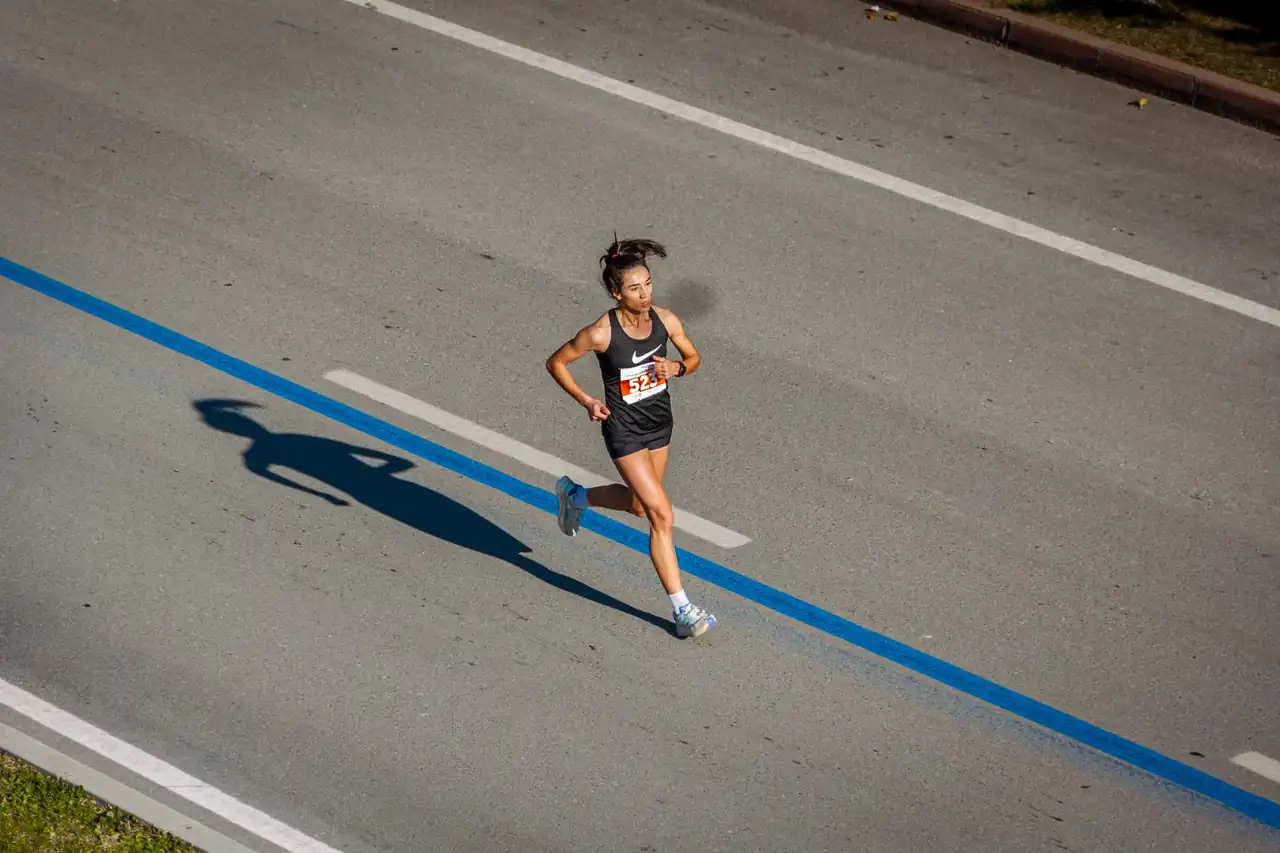
The Barcelona Women’s Race returns in 2025 with a revamped route, kinder to the legs and more recognizable for anyone familiar with the pulse of the city center. The start is located on Avinguda del Marquès de l’Argentera, next to Estació de França, and the finish awaits on Avinguda Pujades, between Nàpols and Roger de Flor, on a course of about 7.6 kilometers that combines wide avenues, monumental turns, and some of the most heavily traveled urban landscapes for popular runners.
The main new feature is its flatter, more accessible profile, a change that not only alters the look of the course, but also the way it is run. In a mass event, where sporting goals are mixed with a charitable and festive spirit, the gentleness of the route matters just as much as the beauty of the surroundings. This year the organizers have opted for an itinerary that reduces the accumulated demands of previous editions and favors a smoother pace through the city’s inner seafront promenade and the major roads of the Eixample and Ciutat Vella.
A flatter course for a mass edition
The 2025 route is built around a very clear idea: make the race easier without giving up its symbolism. It is not a neutral route, but rather an itinerary that connects highly recognizable points of Barcelona while also avoiding unnecessary toughness. In a race with massive participation, that balance matters more than it seems. Less elevation means fewer abrupt slowdowns, less effort buildup on each climb, and a more continuous feeling for those who run, jog, or walk.
The official distance is around 7.6 kilometers, a length that is accessible enough for many first-timers and, at the same time, demanding enough for those who want to tackle the race at a brisk pace. That hybrid character explains much of the event’s success: it does not force a choice between competition and celebration. At the start, fast runners mingle with groups of friends, participants who do it walking, and women using it as a first experience on asphalt in a major urban race.
The start at Estació de França is no coincidence. The surroundings allow for broader organization and a powerful visual image from the very beginning, with the urban corridor opening toward Passeig de Colom and the central roads that lead the pack toward the heart of the city. The finish on Pujades, already in the area around the Arc de Triomf and the part of Poblenou closest to the Eixample, completes a comfortable, visible finish that is well connected to the event’s support areas.
This is how the route unfolds, street by street and without sudden shocks
The 2025 route crosses a very recognizable part of Barcelona. From Marquès de l’Argentera, the race moves along Passeig de Colom and Josep Carner before connecting with Avinguda del Paral·lel, one of the city’s longest and most symbolic arteries. That first stretch usually sets the tone for the race: enough space, urban noise, clear visual references, and a pack that is still compact and looking to settle in without tension.
From there, the course turns onto Ronda de Sant Pau and continues along Urgell, where the race enters a more residential and straight-lined Barcelona, ideal for maintaining steady paces. Then comes Gran Via, a road that, because of its length and width, allows runners to breathe a little before taking Carrer de Marina. That stretch is especially useful for avoiding the feeling of confinement that popular races with too many turns can sometimes create. Here the landscape stretches out, the pace steadies, and each runner finds her cadence more easily.
The final section gains scenic and emotional value. After Ausiàs March, the pack crosses Passeig de Sant Joan and heads up to Avinguda Vilanova and Passeig de Lluís Companys, where the route changes character and offers a more open perspective. In that area, the course enters the return stretch toward the Arc de Triomf area and then continues along Bonaventura Muñoz, Wellington, and Pujades to the finish. It is a logical sequence, fairly clean and designed to avoid unnecessary bottlenecks in the decisive part.
The urban map of the race and the streets that take center stage
More than a succession of streets, the route draws a very specific reading of Barcelona. The race does not merely link start and finish; it links images: the stone and traffic of the old seafront, the breadth of Paral·lel, the elegant rigidity of Urgell and Gran Via, the more open air around Sant Joan and Lluís Companys. That combination explains why many participants remember the course as a race of the city in capital letters, with the center turned into a sporting corridor for a few hours.
The choice of relatively wide roads also responds to a practical need. In a race with tens of thousands of registered runners, the width of the roadway is not a minor detail, but the difference between an orderly start and a bottleneck. The stretches that work best in this type of event are usually those that allow the pack to spread out without punishing it with constant turns. Barcelona offers that kind of streets, and the organizers take advantage of them to create a sense of flow from the first meters.
The passage along Passeig de Lluís Companys and the area around Wellington gives the final stretch a different texture. There, the race leaves behind the more linear pulse of the Eixample and regains a certain monumentality, with visual space, open light, and a finish that feels less enclosed than in other editions. That feeling matters a lot to popular runners: the last kilometer is not only endured, it is also remembered. And a broad finish, with the line clearly visible, helps turn effort into celebration.
Start time, expected finish, and race atmosphere
The start is set for 9:00 a.m. on Sunday, November 16. It is a time chosen to minimize the impact of heat, gain logistical breathing room before the large crowds arrive, and make getting there beforehand easier. In a city like Barcelona, where traffic and public transport have their own weekend rhythm, starting early allows the neighborhood to wake up to the echo of a pink tide filling entire avenues without waiting until midday.
The actual duration of the race depends greatly on each participant’s profile. Those who tackle it running can complete the distance in just over half an hour or get close to an hour, while walkers or those using it as a social activity spend longer on the course. That variety is part of its identity. It is not a race closed to pure performance, but an event where the clock coexists with the group photo, a steady pace, and the gesture of crossing the finish line with thousands of women around you.
The atmosphere also shapes the way it is run. There is not one single story on the asphalt, but many at once: nervous first-timers, experienced runners, groups moving as one, others saving energy for the final stretch. The new route, being flatter, softens the tension created by those differences. The feeling it leaves is similar to a long, well-lit urban corridor: it does not force you to attack every corner, but to sustain a coherent forward motion until the end.
What changes for runners with a more accessible route
A flatter course does not make the race easy, but it does make it more readable. For those who do not run regularly, the absence of long inclines reduces the sense of accumulated fatigue. For those who do compete, the continuity of the route makes it easier to calculate splits and avoid sudden pace changes. In urban races, where the terrain usually offers few major surprises, that clean design can be decisive for the overall experience.
It also changes how runners approach mental preparation. Knowing the route is more favorable encourages a more sustained and less defensive effort. Instead of saving energy for a hill or a particularly hard stretch, many participants can focus on an orderly start, the first third of the course, and group management. That detail is especially useful in a massive event, because the biggest challenge is not always the distance, but the human density of the first meters.
The accessibility of the route broadens the profile of those who are encouraged to take part. The Barcelona Women’s Race has always served as an entry point into popular running for many women, and a kinder route reinforces that role. It is not an empty simplification; it is an adaptation to the kind of event it is: a massive, urban, symbolic, and open race, where the experience of completing the course matters as much as the final time.
Race bib pickup and the role of the Runner Expo
Before stepping onto the start line, stop by the Runner Expo. There you collect your bib and official T-shirt, a routine that in this kind of race has become part of the ritual. The pickup point is located at the Complex Esportiu Municipal de la Mar Bella, on Avinguda del Litoral, a spacious venue that concentrates pre-race traffic and makes it possible to handle issues without turning the day before into an odyssey.
Pickup is organized over two days, Friday, November 14, and Saturday, November 15, from 10:00 a.m. to 8:00 p.m. It is advisable to bring the registration confirmation and identification document, because the organizers require data verification before handing over the material. That step may seem minor, but in races of this size it acts as a small safety valve: it prevents mistakes, speeds up distribution, and helps keep Sunday morning reserved for running, not improvising.
The bib matters more than it may seem. It is not just a number; in this race it includes the timing chip and becomes the administrative key to participation. Placing it properly, visibly, and without folds is part of the basic logistics of any runner. The Expo, moreover, does more than organize the distribution of materials: it also concentrates the pre-race atmosphere, with a steady flow of women collecting shirts, asking questions, comparing sizes, and mentally stepping into the race long before the starting gun.
Participation, solidarity, and why Barcelona has made it its own
The 2025 edition once again comes close to the historic cap with 36,000 registered runners, a figure that alone explains the importance of this race in the popular calendar. It is not just another race in Barcelona’s autumn schedule. It is an event that mobilizes neighborhoods, transport systems, traffic officers, sports organization, and a huge community of participants who see it as an annual tradition. Its strength lies in that mix of scale and meaning.
The solidarity dimension is also part of the story. The race is linked to the fight against breast cancer and, this year, also highlights the metastatic stage of the disease. That focus gives it an extra layer of meaning beyond sport. In a city accustomed to major events, this race endures not only because of its size, but because of the way it connects physical activity with a recognizable social cause of broad reach.
Barcelona has turned the Women’s Race into a fixture of its sports calendar. For a few hours, the city center changes scale. Streets designed for cars fill with human movement, the visual links between station, promenade, and avenues become symbolic finish lines, and the city shows an unusual image: thousands of women moving together along a route that is not only sporting, but also collective and representative.
A race that is better understood when you look at its route calmly
The 2025 course does not aim to surprise, but to be coherent. It is flatter, more urban, and kinder, but also clearer in its reading. It starts by the sea and the stone of Estació de França, runs through recognizable arteries of the city center, and ends at a well-placed finish line that is easy to identify and convenient for closing a day with a huge number of participants. Everything is designed so the race can flow without losing its mass-event character.
Seen as a whole, the route works as a line connecting neighborhoods, paces, and runner profiles. It does not require experience to complete, but it does offer enough interest for those already familiar with Barcelona’s asphalt. That balance is part of its success: a route that does not overwhelm, does not punish excessively, and yet still retains the feel of a major event. Sometimes a race is defined by its numbers; other times, by its drawing across the city. This one has both.
Barcelona will once again be dyed pink with a route designed to add, not divide. What remains is a course that anyone can follow on a map and understand at a glance: start on Marquès de l’Argentera, pass along the city’s major avenues, final stretch on Lluís Companys, and finish on Pujades. The geometry is simple, but the effect is powerful. And in a race like this, the shape of the route also tells the story.



How to prevent thigh chafing: causes and real solutions

Women’s running windbreakers: seven jackets and how to choose

Do more workouts get rid of soreness? A guide for runners

Jaén Half Marathon 2026: Record 3,800 Runners Registered

Men’s short running tights: how to choose the right pair

World Triathlon confirms data breach involving medical data

Izan Edo targets podium at Miyazaki World Cup

María Pérez ranks ninth in World Athletics’ 2026 top ten

Dos Santos, Duplantis and Sawe: World Athlete of the Year finalists

San Silvestre Vallecana 2026: 42,000 places, prices and start times

 Races4 months ago
Valencia Half Marathon 2027: date and registration

 Races4 months ago
Valencia Marathon 2026: entry, ballot and course

 Reviews and Comparisons4 months ago
Asics Gel-Roadmiles 3 for men: review and current price

 Reviews and Comparisons4 months ago
Asics Gel Sonoma 8 Gore-Tex: complete analysis for trail and rain

 Sneakers3 months ago
Saucony Endorphin Pro 4: full review and verdict

 News5 months ago
Strava API 2026: what changes for clubs, challenges and runner apps?

 Reviews and Comparisons5 months ago
Nike Alphafly 3: opinions, sensations, and real key points

 Reviews and Comparisons4 months ago
Under Armour running shoes review 2025-2026: models and key features

 Sports Equipment4 months ago
Shoe sizes in cm: a clear guide to getting the right fit for your footwear

 Sneakers3 months ago
Skechers GO RUN Consistent 2.0 analysis: comfort and limits

 News5 months ago
Valencia Marathon 2026 route: key tips to train and run better

 Sneakers4 months ago
Adidas Adizero Boston 13 for men: review and verdict