News
Barcelona Runner Fair 2025: complete guide and schedule
Dates, bib collection, schedule and route for the big pink event in Barcelona, with all the key information.

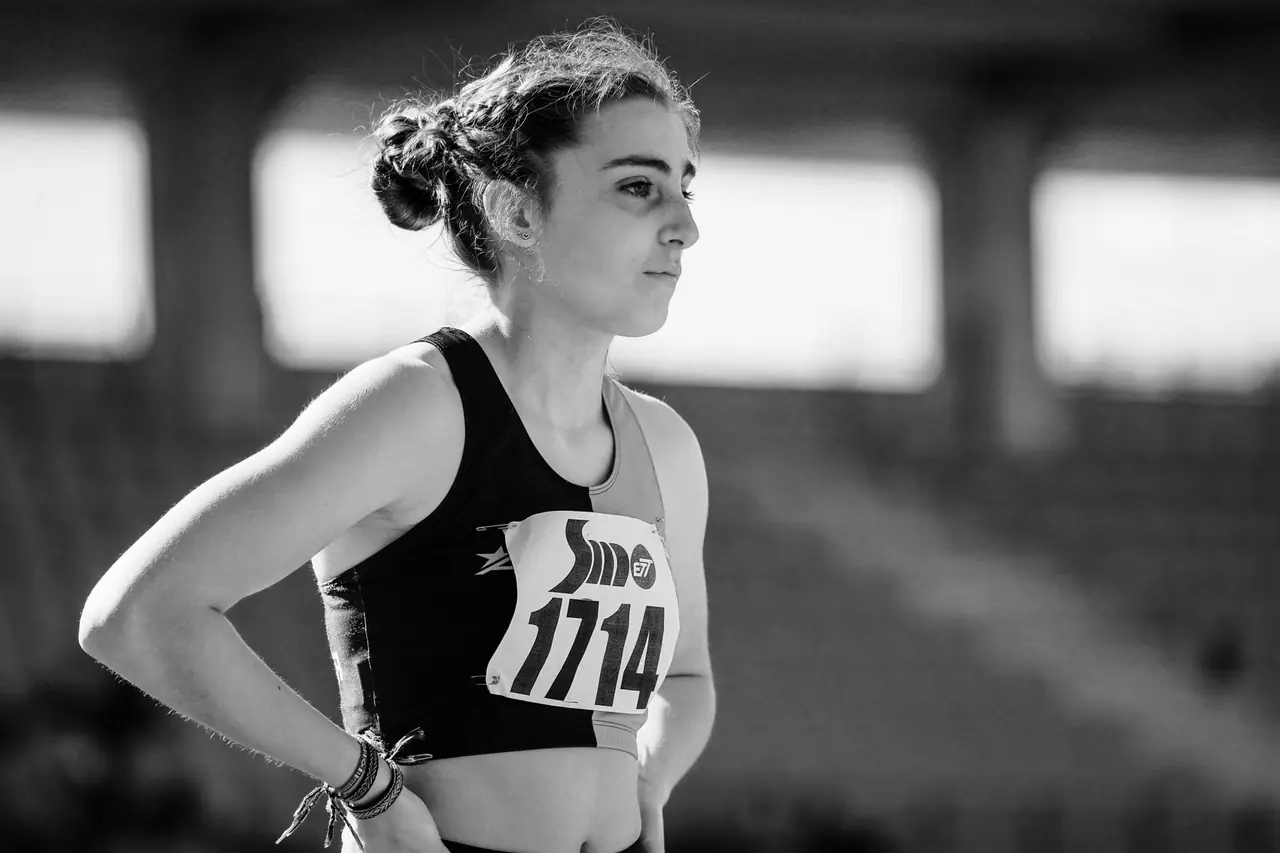
The Barcelona Women’s Race Expo 2025 once again brings together the activity leading up to one of the biggest events on Spain’s women’s calendar. At the La Mar Bella sports complex, bib collection, the official T-shirt and the goodie bag will all be gathered in an expo format designed to streamline the flow of thousands of participants and, in just a few hours, sort out everything needed before the start.
The Barcelona edition also arrives with special weight within the national circuit: the race has established itself as a major showcase for popular running, with more than 30,000 registered runners in the final stretch of the bib campaign and an operation that combines sport, social engagement and highly polished logistics. The expo is not just a formality; it serves as a prelude to the race, a meeting point and a thermometer for the atmosphere that will be felt in the city streets.
The prelude that brings order to a pink tide
The pavilion and adjoining spaces at La Mar Bella become, for two days, a kind of intermediate station between registration and the big day. There, registration is checked, documents are validated and the items that identify each participant are collected. That process, which may seem routine, is in fact a key piece in making the race run smoothly: fewer queues on Sunday, fewer incidents and a smoother experience from the very first minute.
The organizers have placed the expo in a setting already accustomed to major sporting events. The La Mar Bella complex, beside Barcelona’s coastline, offers space, reasonable access and the capacity to receive a large turnout of runners on the Friday and Saturday before the race. The timetable is also broad, from 10:00 a.m. to 8:00 p.m. without interruption, a window designed to spread out visits and avoid overcrowding during the afternoon peaks.
This model fits the logic of mass-participation races: the bib is not improvised and the T-shirt is not left until the last minute. The expo concentrates everything in one place and on a precise schedule, so that race day is left clear for what matters: the start, the run and the finish. In a city where mobility and timing count as much as the distance covered, that prior order is worth almost as much as the stopwatch.
Dates, times and what happens inside the venue
Material collection is scheduled for Friday, November 14, and Saturday, November 15, 2025, with continuous opening hours between 10:00 a.m. and 8:00 p.m. The event takes place at CEM La Mar Bella, at Av. Litoral 86-96, a location that is already part of the mental map of many Barcelona runners because of its connection with other sporting events and with the city’s own culture.
Access is not limited to a collection counter. The expo functions as a small race ecosystem, with space to answer questions, collect materials and, in some editions and associated activities, experience part of the atmosphere surrounding the event. The reference information also stresses that it is essential to present the confirmation email, ID card or registration receipt, although the organizers accept a digital PDF, a photo of the document or proof on a phone.
That flexibility matters because most logistical problems do not start at the line, but in the preparation. Clear verification reduces errors, avoids duplicates and allows the access flow to move faster. At events of this scale, a simple difference between paper and mobile can save minutes, and those minutes, added together, end up shaping the overall atmosphere of the venue.
Bib collection and the official T-shirt
The most visible part of the expo is the delivery of the bib and the Oysho official T-shirt, a very recognizable hallmark of the Women’s Race. Along with this, the goodie bag is distributed, an element that is already part of the pre-race ritual for many participants. The technical clothing, bib and supplementary materials cease to be scattered items and become the physical image of the race that is about to take place.
The organizers insist that collection must be made with the correct documentation and within the scheduled hours. If a runner cannot attend, another person may do it on her behalf as long as they bring the registration receipt and the ID card or a photocopy of the registered runner’s ID. The rule may seem simple, but it prevents a chain of common incidents in mass events, from oversights to identification errors in the database.
In this kind of expo, the prevailing feeling is that of an industrial setup with a human pulse. Boxes, tables, credentials and bags coexist with brief conversations, repeated questions and that mix of anticipation and haste that accompanies big sporting days. The pre-race experience is not just an administrative prelude; it is also a way of mentally entering the race.
A solidarity registration with its own name
Barcelona preserves the social component that sets this race apart. The 2025 edition includes registration options with in-person pickup and also an at-home delivery option, both linked to the event’s solidarity side. In the case of the 100% solidarity option, the funds go to the Associació de Dones Ca l’Aurèlia, an organization dedicated to supporting and accompanying women in vulnerable situations.
Solidarity is not presented as a communication flourish, but as a structural part of the event. The race has built much of its identity on that combination of popular sport and social cause, a pairing that explains its draw and its lasting power over time. It is not just about running; it is about taking part in a network that gives visibility to concrete projects and needs.
This approach also helps explain why the expo carries so much weight. Collecting race materials is not an isolated act, but the point where sports logistics and the meaning of registration intersect. Behind every bib there is a decision, a cause and a way of being present at an event that, year after year, has managed to expand its impact beyond the asphalt.
The Barcelona course and the change in profile
The 2025 Barcelona edition also introduces a new, flatter route of about 7.8 kilometers, with the start on Marquès de l’Argentera avenue, next to Estació de França, and the finish on Pujades avenue, between Nàpols and Roger de Flor. The change is no small one: a faster, friendlier course usually favors the participation of very different profiles, from regular runners to those approaching the race with a more recreational than competitive goal.
The variation in the course profile also helps explain the atmosphere surrounding the expo. If the route becomes more accessible, the prelude takes on an even more diverse tone, with runners arriving from experience, from first-time participation or from family involvement. In popular races of this size, a flatter course usually lowers the psychological barrier to entry and broadens the range of paces and expectations.
The finish on Pujades avenue and the later fitness and aerobics festival, located next to the Arc de Triomf, complete that idea of an expanded day. Not everything happens on the stopwatch. The race goes on through activities, meetings and an atmosphere that blends sport, spectacle and community, a formula that Barcelona has known how to sustain naturally for years.
An expo that is also part of the city’s memory
The La Mar Bella event fits well with the way Barcelona organizes its major urban events. Coastline, wide access routes, proximity to other transport hubs and a very direct relationship with public space. The Women’s Race expo takes advantage of this geography to set up a small operations center for two days, while never losing sight of the race’s popular character.
In a city where running has become part of parks, avenues and coastal stretches, these expos function as mirrors of a collective habit. Those who stop by to collect a bib are not just picking up a bag; they encounter a shared scene, a choreography of volunteers, brands, organizers and runners that reveals the extent to which running has become a cultural phenomenon as well as a sporting one.
There is also an element of urban ritual. Mar Bella ceases to be just a sports facility and becomes a place of emotional transit, where the race begins to exist before the starting gun. That prior moment, with the bib in hand and the T-shirt folded, has something of a promise and something of order; the city sets the stage and the runner completes the meaning.
The scale of the event and Barcelona’s role in the circuit
The Central Lechera Asturiana Women’s Race maintains a multi-city circuit, and Barcelona stands out as one of its most prominent stops in terms of size, visibility and public response. The 2025 edition is presented as the eighth race of the 21st Circuit, a fact that underscores the continuity of a structure that has managed to grow without losing its identity as a major participatory event.
In terms of turnout, the figure of more than 30,000 registered runners places Barcelona among the largest gatherings of women runners in Europe. That volume requires fine-tuning from the expo to the finish line. Logistical success is measured not only by the absence of problems, but by the ability to make such a large group move, collect materials and arrive on Sunday with the feeling that everything had been planned.
Barcelona also provides a highly recognizable backdrop for the event’s final image. The city offers a combination of sea, wide avenues and iconic landmarks that multiply the race’s visibility. That ability to become an image explains part of the expo’s strength, since it not only hands out materials: it also builds visual and narrative anticipation around a day that is experienced both inside and outside the course.
What the expo leaves behind before Sunday
The value of the expo is better understood when the race is seen as a complete process rather than an instant. Before the starting gun, there is a chain of simple decisions that prevents setbacks: check the schedule, bring the correct document, arrive with enough time, locate the venue and review the registration type. All of that reduces noise and leaves room for what matters most, which is running or taking part as support.
In Barcelona, that process carries an extra layer of symbolism because the expo is located in a space closely tied to civic sport and life by the coast. It is not just any place or a purely technical operation. The Runner’s Expo serves as a gateway to the race and, at the same time, as a small snapshot of how a large-scale women’s event is organized today: precision, volume, accessibility and social purpose.
That is why the expo matters as much as Sunday itself. What remains in the air is the murmur of collection, the feel of the new T-shirt, the weight of the bib and that mix of calm and energy that only appears on the eve of major events. In Barcelona, the race begins there, at a collection table, in a pavilion by the sea and in a city that already knows the language of the pink tide.



How to prevent thigh chafing: causes and real solutions

Women’s running windbreakers: seven jackets and how to choose

Do more workouts get rid of soreness? A guide for runners

Jaén Half Marathon 2026: Record 3,800 Runners Registered

Men’s short running tights: how to choose the right pair

World Triathlon confirms data breach involving medical data

Izan Edo targets podium at Miyazaki World Cup

María Pérez ranks ninth in World Athletics’ 2026 top ten

Dos Santos, Duplantis and Sawe: World Athlete of the Year finalists

San Silvestre Vallecana 2026: 42,000 places, prices and start times

 Races3 months ago
Valencia Half Marathon 2027: date and registration

 Races3 months ago
Valencia Marathon 2026: entry, ballot and course

 Reviews and Comparisons4 months ago
Asics Gel-Roadmiles 3 for men: review and current price

 Reviews and Comparisons4 months ago
Asics Gel Sonoma 8 Gore-Tex: complete analysis for trail and rain

 Sneakers3 months ago
Saucony Endorphin Pro 4: full review and verdict

 News5 months ago
Strava API 2026: what changes for clubs, challenges and runner apps?

 Reviews and Comparisons5 months ago
Nike Alphafly 3: opinions, sensations, and real key points

 Reviews and Comparisons4 months ago
Under Armour running shoes review 2025-2026: models and key features

 Sports Equipment4 months ago
Shoe sizes in cm: a clear guide to getting the right fit for your footwear

 Sneakers3 months ago
Skechers GO RUN Consistent 2.0 analysis: comfort and limits

 News5 months ago
Valencia Marathon 2026 route: key tips to train and run better

 Sneakers4 months ago
Adidas Adizero Boston 13 for men: review and verdict