News
Dehydration while running: early signs and summer mistakes already
Fluid loss can affect performance and safety. These are the signs and basic guidelines to prevent it.

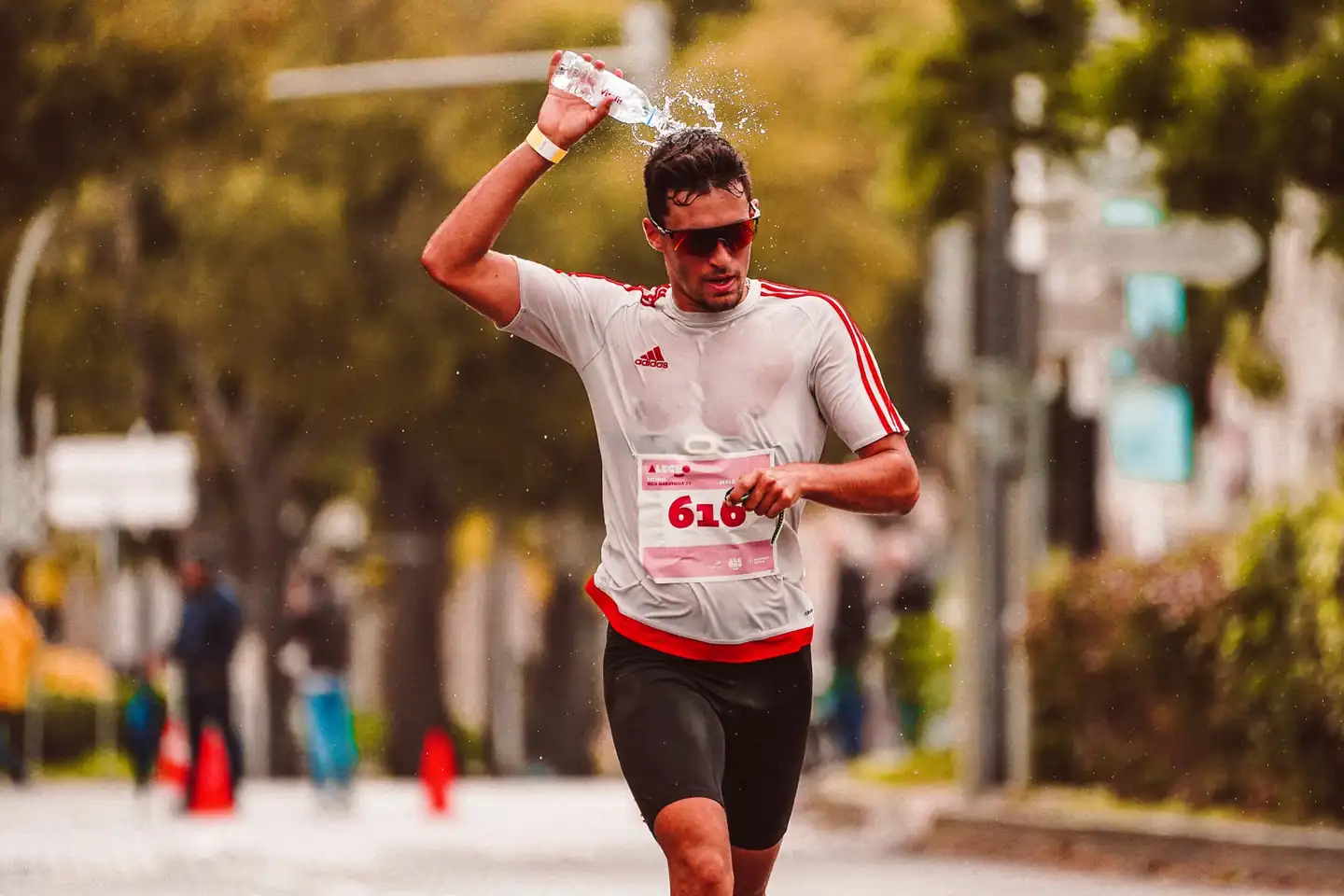
Dehydration during a run is not just a summer nuisance: it can alter your pulse, body temperature, concentration, and your ability to keep pace normally. In long races, and especially when the heat or humidity really bites, the problem stops being anecdotal and becomes one of the most frequent causes of physical drop-off and dropping out.
The risk increases because running raises internal temperature and speeds up water loss through sweat and breathing. Added to that are factors like the duration of the effort, elevation gain, sun exposure, and the salt lost in sweat. In competition, poorly adjusted hydration can trigger anything from early fatigue to dizziness, cramps, or heat collapse.
What happens in the body when fluids are lacking
The body works like a cooling system. When temperature rises, sweat helps dissipate heat; if sweat is not properly replaced, plasma volume drops, the heart has to work harder, and the blood transports oxygen and nutrients less effectively. The result is usually felt first in the legs, but the origin is a loss of internal balance.
Thirst comes late. It is a useful signal, yes, but not a very precise one for running. In many cases it appears when there is already a fluid deficit. That is why relying only on thirst leaves too narrow a margin, especially in long sessions, steady-pace runs, or races in which hours pile up under heat, wind, or high humidity.
Weight loss during effort is a more reliable clue. A drop of around 2% of body weight can already affect performance, and from there the deterioration usually becomes more visible. You do not need to reach an extreme for the body to start complaining: a combination of heavy sweating, insufficient replacement, and adverse environmental exposure is enough.
Signs that give the problem away before it is too late
The first warning is usually subtle: dry mouth, a persistent feeling of thirst, darker and less frequent urine, fatigue that appears earlier than normal, or a strange perception of effort. A slight mental sluggishness can also appear, as if the head takes longer to react. In a race, that delay turns into poor decisions, clumsy pace changes, or a sudden inability to hold your stride.
When the deficit advances, the picture becomes clearer: dizziness, weakness, nausea, headache, a racing pulse, and a feeling of heat that does not let up. At that point it is no longer just a warning. Running mechanics suffer, coordination drops, and the risk of falling increases, something especially delicate in trail running, technical descents, or traffic-heavy road sections.
Cramps do not always mean dehydration, but they do often appear in contexts of heat stress, prolonged effort, and insufficient sodium replacement. Hyponatremia can also occur, an abnormal drop in blood sodium that does not always announce itself and can be confused with exhaustion or overexertion. Drinking a lot of water without salts, or drinking more than the body needs, does not protect against this risk.
When the danger spikes in a race
Events longer than two hours deserve special attention. From that threshold on, the margin between feeling comfortable and starting to empty the tanks gets narrower. In marathons, hot half marathons, trail races, and ultras, the problem is usually less about one isolated failure and more about a sum of small mismatches: starting underhydrated, drinking too late, not replacing sodium, or underestimating the heat.
Summer in Spain adds an extra layer of difficulty. Radiation, asphalt temperature, humidity in some coastal areas, and dry wind can speed up fluid loss. In the Valencian Community, a heavy, muggy morning can punish more than a day with a slightly higher thermometer reading but dry air, because sweat evaporation becomes less effective and the body does not cool down the same way.
Trail running raises the demand even more. Elevation gain forces you to work closer to threshold for longer, aid stations are farther apart, and the terrain reduces efficiency. In the mountains, hydration is not a one-off gesture; it is an ongoing strategy. Every long climb and every exposed section multiplies the cost and makes a fluid deficit show up sooner than on the road.
How much fluid is lost and why there is no single number
There is no universal amount that works for everyone. Sweating depends on body weight, intensity, temperature, humidity, clothing, heat acclimation, and even genetics. Two runners at the same pace can lose very different amounts. That is why copying someone else’s plan usually ends up being expensive.
In prolonged efforts, a practical and cautious reference is often around 500 to 700 milliliters per hour, although for some athletes and contexts it may be less and for others more. In tough conditions, losses can clearly exceed that figure. The goal is not to drink for the sake of drinking, but to get close to what is actually being lost without going overboard.
The clearest way to approach that figure is to check weight before and after a workout similar to race conditions, with comparable conditions and while controlling what was consumed during the effort. A noticeable drop means the plan is falling short; a weight gain during exercise, on the other hand, may suggest excessive replacement and increase the risk of hyponatremia.
Sodium matters as much as water
Replacing only water does not always solve the problem. Sweat does not carry away only fluid; it also takes sodium with it, an essential mineral for muscle function, fluid balance, and nerve transmission. If a lot of volume is replaced with too little salt, the body can remain out of balance even if the bottle is empty.
Isotonic drinks and salts make sense precisely in long efforts or in high heat, when the loss is not limited to water. There is no need to turn every outing into a lab experiment, but it is important to understand that effective hydration combines fluid, sodium, and sometimes carbohydrates. That trio helps sustain performance and reduce the risk of premature depletion.
Excess also has a cost. Drinking very large amounts of water without needing it can dilute sodium in the blood. This problem, more common than it seems in endurance races, has been described in marathons and ultras. The uncomfortable fact is that it can look like heat exhaustion at first, which makes it harder to distinguish without medical evaluation.
What to drink before, during, and after running
Before heading out, it is best to arrive well hydrated. That does not mean chugging liters at the last minute, but rather maintaining normal hydration in the hours beforehand. A big mistake is trying to make up for an entire morning of low intake with several glasses right before the warm-up. The result is usually gastrointestinal discomfort and a heavy feeling that does not help at all.
During the effort, the general approach should be regular and restrained. Better small, steady sips than occasional binges. In long races, alternating water with electrolyte drinks can be more sensible than using only water. On hot days, aid stations stop being a secondary pause and become part of the race strategy.
After running, rehydration does not end at the finish line. The body keeps correcting losses for hours. A drink with minerals, some food, and rest help restore balance. The color of urine becomes a practical indicator again: the clearer and more frequent it is, the better the replacement is going. Very dark or scarce urine is still a sign of deficit.
The most common mistakes among recreational runners
The first is trusting the day-to-day routine. Drinking little during the week and thinking that one bottle before the race will fix everything is a weak bet. Hydration status is built in the hours before, not just in the parking lot at the start. Arriving with the body already in reserve means starting the race with an invisible backpack.
The second mistake is improvising. Changing drink, gel, or quantity on race day can cause digestive problems or leave sodium intake too low. In a long race, the stomach appreciates predictability. What has not been tolerated before in training has a very good chance of protesting in the middle of the race.
The third is underestimating humid heat. Some runners watch the thermometer and forget about humidity. Yet a day that is not especially scorching can feel suffocating if the air is loaded with moisture. Sweat takes longer to evaporate, the body cools less effectively, and fatigue settles in with an almost deceptive ease.
What happens in a half marathon, marathon, and long trail race
In a half marathon, dehydration may seem secondary at first, but on a hot morning it already affects the second half of the race. In a marathon, the margin narrows much more. After kilometer 25 or 30, when glycogen drops and accumulated heat starts to weigh on you, any fluid deficit speeds up the feeling of emptying out.
In long trail races and ultras, the issue changes scale. It is not only about sustaining pace, but about managing hours of exposure. Long climbs, punishing descents, altitude changes, and distant aid stations make the body live in a constant negotiation between energy, water, and salts. There, poor hydration does not just reduce performance; it can force a withdrawal.
Heat acclimation also matters. After several days exposed to high temperatures, the body improves its ability to sweat and preserves plasma volume better. That adaptation, however, is not a license to let your guard down. It helps, but it does not replace a sensible replacement strategy.
How to interpret weight and urine without obsessing
Weighing yourself before and after a workout can provide a very useful reference, as long as it is done with judgment. The difference roughly reflects what was lost through sweat, once what was drunk and eaten is subtracted. There is no need to turn every run into an audit, but this tool should be used as a compass, not as punishment.
Urine color works as a basic traffic light. Very light yellow usually indicates a reasonable state; dark or amber tones point to a lack of fluids. Even so, the reading should not be rigid, because diet, some supplements, and certain medications can change the color. It is a clue, not a verdict.
The key is the whole picture. General feeling, hunger, thirst, weight, sweating, and environmental conditions offer a truer image than any isolated data point. The body speaks in several languages at once; the prudent runner learns to listen to the full tone and not just a single word.
Warning signs that require stopping
Not everything can be fixed with one more sip. If confusion, severe dizziness, persistent vomiting, lack of coordination, very hot skin, or a racing pulse that does not come down appear, the problem has already gone beyond the simple discomfort of effort. In that scenario, continuing to run only makes things worse.
Heat stroke and severe dehydration can overlap. Both compromise thermoregulation and neurological function. The body stops cooling properly, the mind becomes slower, and the runner can enter a dangerous spiral of exhaustion. In competition, recognizing that point in time prevents bigger problems.
Withdrawing is not a minor gesture. In a race, stopping in time can be the smartest decision of the day. The goal of endurance sport is not to withstand anything and everything, but to finish safely. Prudence, here, does not take away merit; it preserves it.
Hydration as part of the runner’s identity
The most common scene at a summer finish line says a lot: red faces, sweat-soaked shirts, bottles in hand, and eyes looking for shade. Behind that image there is a simple truth. Running well does not depend only on the aerobic engine, strength, or technique; it also depends on something as basic as keeping the body in balance.
Dehydration while running is not avoided with miracle formulas or with a random number pulled out of nowhere. It is reduced with consistent habits, accumulated experience, and respect for the context. Valencian heat, a long mountain outing, or a demanding marathon do not forgive improvisation. Water, salts, and judgment matter more than they seem when the kilometers start to take their toll.
In the end, the runner who manages fluids well is not running worried about the bottle, but about the race. And that difference, subtle on the surface, is usually what separates a second half that falls apart from one that still lets you keep moving with your head, with your legs, and with enough clarity to keep competing for real.



How to prevent thigh chafing: causes and real solutions

Women’s running windbreakers: seven jackets and how to choose

Do more workouts get rid of soreness? A guide for runners

Jaén Half Marathon 2026: Record 3,800 Runners Registered

Men’s short running tights: how to choose the right pair

World Triathlon confirms data breach involving medical data

Izan Edo targets podium at Miyazaki World Cup

María Pérez ranks ninth in World Athletics’ 2026 top ten

Dos Santos, Duplantis and Sawe: World Athlete of the Year finalists

San Silvestre Vallecana 2026: 42,000 places, prices and start times

 Races3 months ago
Valencia Half Marathon 2027: date and registration

 Races3 months ago
Valencia Marathon 2026: entry, ballot and course

 Reviews and Comparisons4 months ago
Asics Gel-Roadmiles 3 for men: review and current price

 Reviews and Comparisons4 months ago
Asics Gel Sonoma 8 Gore-Tex: complete analysis for trail and rain

 Sneakers3 months ago
Saucony Endorphin Pro 4: full review and verdict

 News5 months ago
Strava API 2026: what changes for clubs, challenges and runner apps?

 Reviews and Comparisons5 months ago
Nike Alphafly 3: opinions, sensations, and real key points

 Reviews and Comparisons4 months ago
Under Armour running shoes review 2025-2026: models and key features

 Sports Equipment4 months ago
Shoe sizes in cm: a clear guide to getting the right fit for your footwear

 Sneakers3 months ago
Skechers GO RUN Consistent 2.0 analysis: comfort and limits

 News5 months ago
Valencia Marathon 2026 route: key tips to train and run better

 Sneakers4 months ago
Adidas Adizero Boston 13 for men: review and verdict