News
Garmin updates: software, health, and changes shaping 2026
Garmin’s latest updates mix useful improvements, more features, and an increasingly selective software policy.

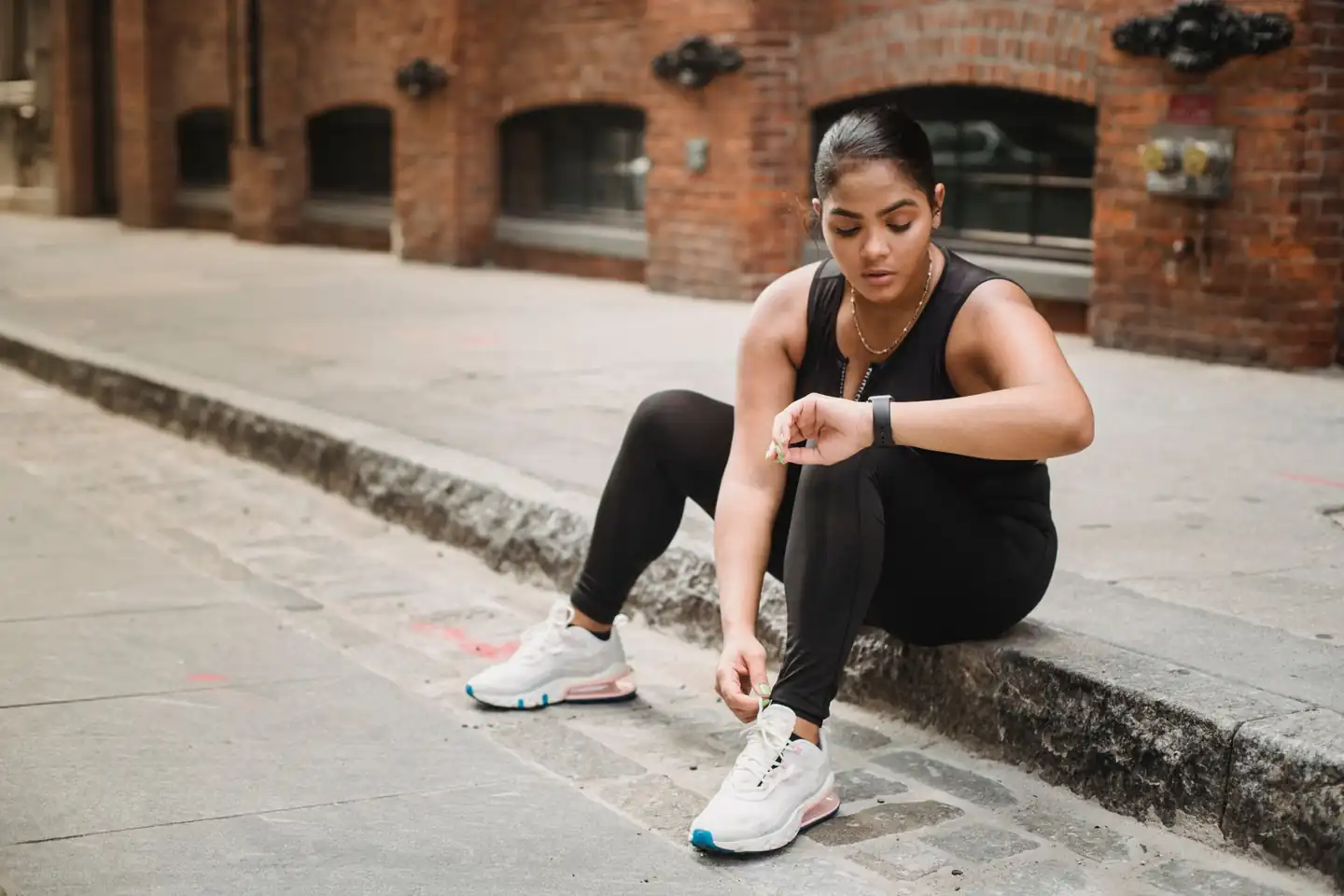
Garmin has picked up the pace in 2026 with a chain of changes affecting watches, bike computers, satellite services, and health features. The latest updates for Forerunner and Instinct have fixed specific bugs, while the big quarterly package has expanded golf, recovery, and health tracking tools on recent models. At the same time, the brand keeps pushing its most recognizable strategy: differentiating ranges not just by hardware, but by software.
The result is a more alive catalog, but also a more uneven one. Some models get new features almost at the pace of the flagships, while others, even if they’re recent and capable, are left out of the next wave. For anyone following the brand’s ecosystem from training, navigation, or everyday use, the new stuff isn’t limited to a brighter screen or a longer battery life: it also says a lot about how Garmin decides what stays in and what gets reserved for the top end.
A very active June in the Garmin ecosystem
The sequence of releases at the start of June paints a clear picture: Garmin is fine-tuning the experience of its most current watches with frequent fixes and software improvements that show up in real-world use. The stable 28.05 version for Forerunner, for example, fixes issues related to activities not uploading properly to Garmin Connect, Garmin Run Coach plans with mismatched numbering, duplicated or missing race events, and navigation errors while saving activities. They’re not flashy changes, but they are exactly the kind of tweaks that keep an excellent watch from becoming a source of small frustrations.
On Instinct 3, the stable 14.15 version has focused on stability. In particular, it resolves a possible unlock failure after entering the passcode on the Instinct E variant and fixes strange characters on the heart rate screen in certain configurations. It’s a modest update, though a valuable one for a family that prides itself on toughness, simplicity, and reliability. With Garmin, the news often isn’t in a big leap, but in the sum of layers that make the watch work better the day after the update than before it.
The underlying idea is easy to read: software has become a central part of the product’s value. It doesn’t just fix bugs, it also keeps interest alive around watches that, in another context, would already have been left in the shade. And that’s especially important in a brand that launches many variants by family and updates its devices on its own schedule, often more granular than its competitors’.
The features arriving on the newest watches
The second-quarter 2026 software package is less noisy than others, but no less revealing. Garmin has added Premium Golf Features to devices such as Venu 4, vivoactive 6, D2 Air X15, and several high-end models, always tied to the Garmin Golf subscription. It has also expanded compatibility with Approach CT1, the small sensors that track the use of each club and help build distance stats over time. For sportier watches, like the Forerunner 570 and 970, that detail matters because it confirms that Garmin keeps bringing golf closer to lines that were once more focused on running and triathlon.
Another useful change is Recovery Mode, a tool designed for when a software update fails or the watch gets stuck partway through booting. It’s not a training feature, but it is a piece that reduces the impact of a bad flash or a problematic startup. Health Status History also appears, letting users see the evolution of health status instead of just a single snapshot. It’s a more coherent approach with the way users interpret well-being: not so much as an isolated number, but as a film with a trend, ups and downs, and context.
In practice, Garmin is doing something very clear: turning premium features into a kind of common language for its recent ranges. The running watch, the golf watch, the adventure model, or the urban-looking hybrid increasingly share a similar software base, even if access to certain pieces still depends on the family chosen. The boundary is no longer just in the sensor or the design, but in which layer of experience gets unlocked for each device.
Sport still leads, but with a broader reading
Garmin has also taken advantage of World Running Day to publish new global data on running and cycling. The numbers help explain the kind of user that supports the ecosystem. In running, the average was 4.82 miles per outing, about 7.8 kilometers, and runners aged 50 to 59 logged the longest average runs, at 5.11 miles. The fastest pace appeared in Ireland, at 9:09 per mile, ahead of Portugal and Italy. These are figures that break the cliché of the young, fast runner; the real picture is broader, more mature, and more diverse.
In cycling, the average outing was 28.59 miles and about 115 minutes. Users aged 60 to 69 were the ones who accumulated the most elevation gain per ride, while the United Arab Emirates led the fastest paces. Spain also appears near the top of the elevation ranking, with 1,704 feet of average gain per route, which is a little over 520 meters. These are details that place Garmin not only as a watch maker, but as a thermometer for real training across much of the world.
There’s an even more interesting reading: the company doesn’t just count kilometers. It combines sleep, resting heart rate, VO2 max, strength activity, and workout frequency to build a broader view of performance. In 2025, runners who exceeded 31 miles per week had an average resting pulse of 55 beats per minute, compared with 62.2 among those who didn’t run. In addition, the combined use of running and strength training rose 23% year over year. Garmin is selling a much more complete idea of progression than it did a few years ago, when the main data point was almost always time or distance.
The software shift: less visible difference, more commercial difference
Comparisons between recent generations show a pattern that is no longer a coincidence. Many new models arrive with the same sensor, the same base display, or the same case size as their predecessor, but with new features enabled by software. In some cases the leap is slight: a somewhat brighter screen, a bit more memory, an added sensor. In others, the important change is in the experience, not the architecture. That explains why a user can look at two almost identical watches and discover that one offers Training Status, Sleep Coach, or Training Readiness and the other doesn’t.
That approach has an obvious advantage for Garmin: it allows the catalog to be segmented with surgical precision. It also creates a sense of a ladder where each rung promises something specific, even if it doesn’t always depend on a real technical leap. The company reserves features like full maps, an LED flashlight, multiband GPS, or an ECG-reading sensor for higher ranges, but it increasingly relies on software to justify the model change. It’s an effective business strategy, although some users find it hard to accept when an expensive watch stops getting new features sooner than they expected.
What stands out most is that Garmin does keep supporting devices for years, but it doesn’t distribute new capabilities equally. The difference matters. It’s not the same to abandon a product as it is to decide that only the latest families will receive the next wave of features. In Garmin’s ecosystem, the watch doesn’t age all at once; rather, it gradually gets left out of certain doors. And many of those doors, it’s worth stressing, are still software doors, not hardware ones.
The role of Connect+ and the new subscription frontier
The arrival of Garmin Connect+ has added another layer to this debate. The subscription, launched in March 2025, costs $6.99 a month or $69.99 a year and includes features like Active Intelligence, performance dashboards, streaming for indoor activities, and additional coaching tools. Garmin has insisted that the free app isn’t going away, but the message many users receive is different: part of the most useful intelligence in the ecosystem no longer lives only on the watch, but also in a paid layer.
The reaction was cold because it hits a sensitive nerve: if the hardware is already expensive, the idea of paying again for certain insights creates resistance. The company tries to defend itself with a familiar tech logic: the device buys the base, the subscription buys the continuity of advanced services. But in a sports product sold as a training and health companion, the line becomes more delicate. The real question isn’t only how much the watch costs, but how much it costs to keep it in the top tier of features.
In that context, the latest wave of features leaves a dual feeling. On one hand, Garmin keeps improving the user experience in a tangible way; on the other, it is building an ecosystem where newness doesn’t always mean universal access. The brand rewards recent purchases and, at times, the subscription, and that reshapes the perception of value even in watches that not long ago seemed fully current.
Satellite, safety, and a market that’s moving fast
One of the most relevant announcements in June is less visible in day-to-day use, but more decisive in the long run: Garmin has started offering free SOS for 12 months on suspended inReach plans. The new feature affects users who pause their subscription seasonally and who, until now, also lost emergency access. With this change, they can keep the ability to send an SOS signal for up to a year after suspension, while messaging, tracking, and the rest of the services still require an active plan.
The measure fits a very specific use case: people who only need the service during mountain trips, navigation, crossings, or occasional getaways. It doesn’t make inReach a free system, not by a long shot, but it does improve its usefulness as a safety backup. Garmin keeps a strong advantage over the phone and over other devices: a 24-hour assistance network, coordinated through Garmin Response, and a dedicated ecosystem that remains very solid when you go out of coverage.
All this is happening while the satellite market is moving. Amazon is preparing changes in Globalstar, Apple keeps refining its emergency capabilities, and Google is exploring more open formulas for its devices. Garmin, which already had a strong position in satellite communication, needs to adapt the message without losing its identity. Its advantage lies in autonomy, durability, and the reliability of hardware built for harsh scenarios, not in trying to look like another smartphone.
Even in that area, the brand is moving carefully. Satellite is no longer an exotic territory reserved for expeditions; it is starting to look like a safety feature that more and more consumers understand and compare. That’s why Garmin, far from standing still, is adjusting plans, access, and compatibility so its devices don’t look like relics from another tech cycle.
Market signals: accessories, competitors, and watches that age differently
The rest of the sector helps explain the pressure on Garmin. Google has published designs so third parties can make accessories compatible with Fitbit Air, a screenless device aimed at the minimal tracking market. Oura has launched a smaller, lighter ring, reinforcing the idea that part of the market wants more discreet, less intrusive sensors. Strava, meanwhile, has opened access to conversational analysis with Claude for its subscribers. All of this sketches a market where the key is not just measuring, but making measurement fit naturally into daily life.
Garmin responds to that pressure with three simultaneous moves: increasingly complete watches, better software, and a finer division of ranges. There is also a luxury layer, like MARQ (Gen 2), which remains attractive for its materials and finishes, even if the passage of time is already showing on its platform. The recent $300 discount on that series is not just an offer, it is also a sign of product maturity. When a premium model starts being discounted consistently, the market reads that the next move isn’t far off or, at the very least, that the current generation is no longer the technological priority.
The key to understanding Garmin’s new features is accepting that they don’t all carry the same weight. A stability improvement can be more useful than a flashy feature. A new recovery mode can matter more than a slightly brighter screen. And a commercial decision about which watch gets a new feature can have more impact on user perception than a millimeter-level improvement in the case. Garmin makes watches, yes, but what it really sells is a chain of software, sport, health, and positioning decisions.
The 2026 map points to a company that is solid, ambitious, and increasingly selective. Its new features are not just a matter of launches, but of distribution. Who gets what, when, and under what conditions now defines the experience of a Forerunner just as much as the value of a Fenix, an Instinct, or a Venu. And in that architecture, the most important new thing is not always the most spectacular feature, but the one that confirms where Garmin wants to take its entire ecosystem.
An ecosystem that changes in layers and no longer looks only at the watch
The final picture from these latest updates is clear: Garmin keeps growing, but it no longer does so only through more sensors or more battery life. The company is organizing its offer by layers of value, adjusting software more frequently, and expanding its reach into areas like health, golf, cycling, safety, and satellite connectivity. The watch is no longer an isolated object; it is the visible center of a broader network of data and services.
That explains why the June updates matter so much. They fix everyday bugs, yes, but they also reveal the brand’s internal script. Garmin wants the user to see continuity, not simple replacement. It wants each recent model to feel alive for longer and the difference between generations to be measured not just in inches, grams, or watts. In a market where hardware looks more and more alike, the real battle is in software and in the ability to sustain it.
And that’s the underlying news. Garmin’s new features don’t arrive like a single explosion, but like a constant current that keeps reshaping the real use of its products. For anyone who runs, rides, or heads into the mountains, that means a more complete ecosystem. For anyone comparing models, it also means a brand that is more complex, more calculated, and harder to read from a single spec sheet.



How to prevent thigh chafing: causes and real solutions

Women’s running windbreakers: seven jackets and how to choose

Do more workouts get rid of soreness? A guide for runners

Jaén Half Marathon 2026: Record 3,800 Runners Registered

Men’s short running tights: how to choose the right pair

World Triathlon confirms data breach involving medical data

Izan Edo targets podium at Miyazaki World Cup

María Pérez ranks ninth in World Athletics’ 2026 top ten

Dos Santos, Duplantis and Sawe: World Athlete of the Year finalists

San Silvestre Vallecana 2026: 42,000 places, prices and start times

 Races3 months ago
Valencia Half Marathon 2027: date and registration

 Races3 months ago
Valencia Marathon 2026: entry, ballot and course

 Reviews and Comparisons4 months ago
Asics Gel-Roadmiles 3 for men: review and current price

 Reviews and Comparisons4 months ago
Asics Gel Sonoma 8 Gore-Tex: complete analysis for trail and rain

 Sneakers3 months ago
Saucony Endorphin Pro 4: full review and verdict

 News5 months ago
Strava API 2026: what changes for clubs, challenges and runner apps?

 Reviews and Comparisons5 months ago
Nike Alphafly 3: opinions, sensations, and real key points

 Reviews and Comparisons4 months ago
Under Armour running shoes review 2025-2026: models and key features

 Sports Equipment4 months ago
Shoe sizes in cm: a clear guide to getting the right fit for your footwear

 Sneakers3 months ago
Skechers GO RUN Consistent 2.0 analysis: comfort and limits

 News5 months ago
Valencia Marathon 2026 route: key tips to train and run better

 Sneakers4 months ago
Adidas Adizero Boston 13 for men: review and verdict