News
Half marathon calendar in Spain 2025: dates and locations
Dates, venues and key features of the Spanish half marathons of 2025, ordered by month.

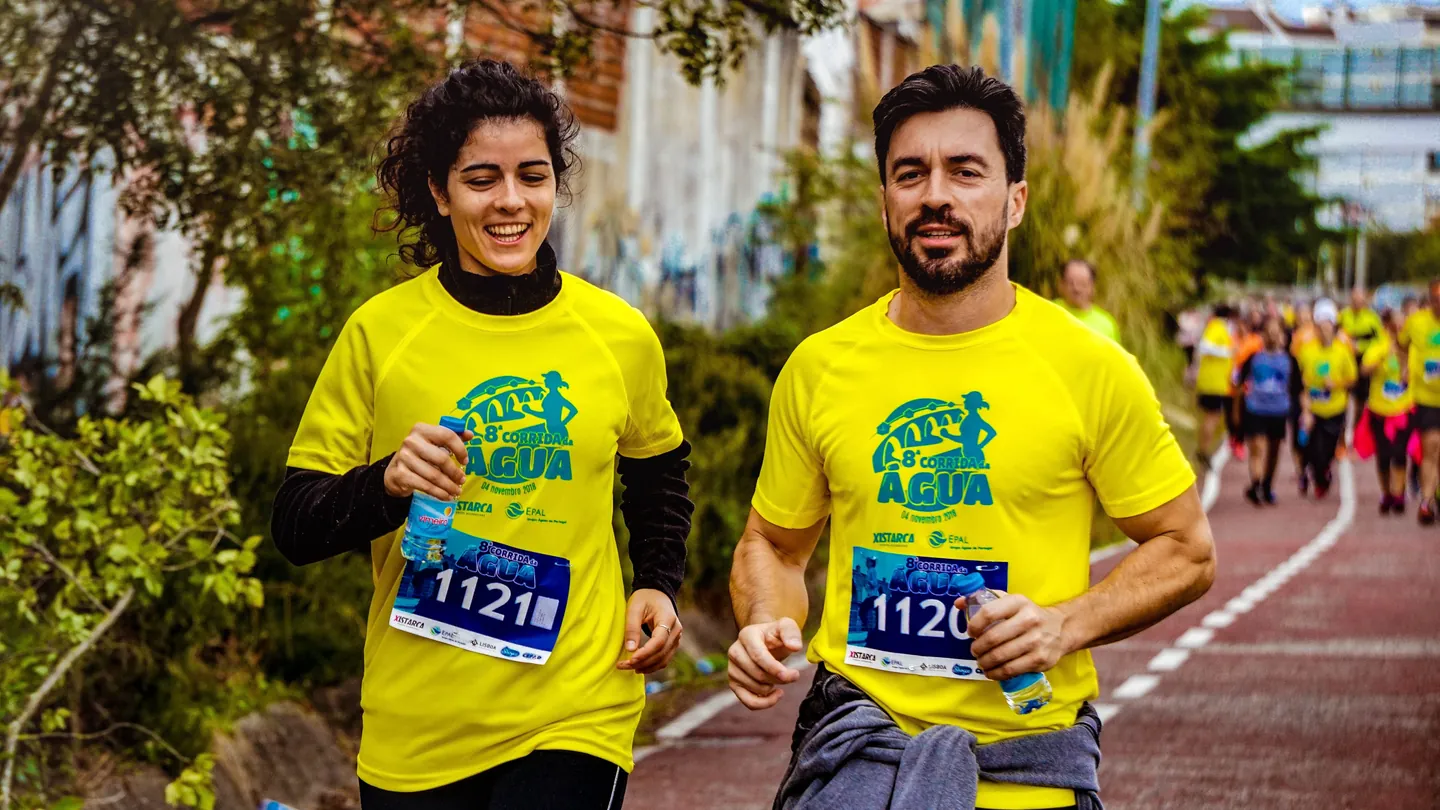
Imagen: RUN 4 FFWPU / Pexels
The half marathon calendar in Spain for 2025 sketches out a long, diverse season spread across the map. There are fast races by the sea, urban courses designed for speed, hilly routes that demand more legs than clock, and winter events that have become a form guide for the fitness of thousands of runners.
The overall picture is clear: the 21K remains the bridge distance between the 10K and the marathon, and Spain maintains a broad circuit that runs from January to December, with a notable break in summer. In 2025, several events also continue to attract attention because of their competitive profile, tradition, or ability to draw large fields in cities and towns across the country.
January opens the season with fast races and very different courses
The start of the year usually sets the tone for the season. In January, the calendar combines well-established races with others of a unique profile, and that explains much of the month’s appeal. The Sitges Half Marathon, the Cross of La Puebla del Río, Los Barruecos, Santa Pola, Terrassa, Seville, Alzira, Getafe, Toro, and Castellón provide an initial snapshot of the year: road, trail, urban stretches, coastal air, and even a late-afternoon start in one of the most eye-catching races in Castellón.
The variety of profiles is enormous. Sitges and Santa Pola look out over the Mediterranean, Seville and Getafe are usually seen as very fast options, and La Puebla del Río or Los Barruecos completely change the script with paths, tracks, and rougher terrain. That contrast is part of the charm of the Spanish 21K: in just a few weeks, a runner can go from a race designed for a personal best to another where pace is also measured against mud, wind, or the terrain.
The Seville Half Marathon once again opens the year as one of the benchmarks on the national calendar. Its almost flat course makes it a highly sought-after event for those chasing a personal best, just like Getafe, which retains its reputation as a fast, certified course. At the other end of the spectrum, La Puebla del Río or Los Barruecos call for a different kind of runner: one who accepts that the terrain also competes, and that the feeling of effort changes when dirt replaces asphalt.
February brings together some of the biggest 21K races in Spain
February is usually a month of high competitive density. Torremolinos, Puente Genil, La Cal and El Olivo, Sagunto, Granollers, Fuencarral-El Pardo, Orihuela, Barcelona, the Mozarabic Way, Aguas de Alicante, Cambrils, Mijas, Valdepeñas, Xàtiva, and A Coruña form a very strong block, with races rich in tradition and others that have been consolidating in recent editions. Anyone looking for a half marathon at this time of year will find options along much of the coast, in the inland Peninsula, and in major urban centers as well.
Barcelona remains one of the country’s biggest showcases. The city’s half marathon stands out for its urban course, high participation, and the ease with which it usually attracts top-level international athletes. Málaga too, although in the 2025 listing it appears in March, has established itself as a very fast race with strong appeal beyond Spain, confirming the importance of the south and the Mediterranean within the national 21K map.
February also leaves room for less predictable courses. Granollers, Les Franqueses, and La Garriga form a race with history and character, while Mijas or the Mozarabic Way offer a more contained experience, less crowded and with scenery that matters as much as the bib number. In Xàtiva, Cambrils, or A Coruña, by contrast, the city atmosphere and course control once again make speed a reasonable goal for many participants.
March draws a transition between pace and endurance
March serves as the hinge between the competitive winter and the strong spring season. Collado Villalba, Latina, Lucena, Salamanca, the Camino de Santiago, Palencia, Toledo, Huelva, Cádiz, Zaragoza, Coslada, Azkoitia-Azpeitia, and Segovia make up a very broad calendar in which popular races, technical events, and races with history coexist. The season begins to stretch out, the legs already have a few miles on them, and runners find courses that start to punish accumulated fatigue more heavily.
March’s lineup is useful because it draws a clear line between half marathons designed to be run at a controlled pace and those where the setting demands a different approach. Salamanca, Zaragoza, or Huelva offer urban contexts where managing pace remains important, while Azkoitia-Azpeitia operates with a logic more rooted in tradition and toughness. Segovia, meanwhile, usually combines the beauty of the city with a profile that requires better effort management.
At this point in the year, much of the amateur season is decided. Many runners arrive in March having already chosen their target half marathon, while others use these races as a dress rehearsal for more ambitious events in April, May, or October. The Spanish calendar makes that strategy possible because it distributes races with territorial logic: not everything happens in the major capitals, which greatly increases the chances of finding a half marathon close to home or within a manageable trip.
April and May bring together some of the country’s most recognizable races
Spring triggers a surge in activity. Madrid, Donostia, Vigo, Arona, León, Mérida, Magaluf, Vélez-Málaga, Gijón, and the Rock & Roll Madrid Half Marathon appear as reference points in a stretch of the year when runners are often looking for more than just finishing. Here, reputation, course layout, weather, and the ability to run well all come into play. It is no coincidence that several of these events have earned a reputation for being fast, scenic, or very well organized.
San Sebastián and Madrid are among the most powerful names on the calendar. The capital of Gipuzkoa combines beauty and speed in an especially runner-friendly setting, while Madrid offers two half marathons with their own personality, one closely tied to the city center and another with a more festive, mass-participation feel. In both cases, the appeal is not only about the clock; it is also about the experience of running along iconic streets surrounded by thousands of bibs.
May continues that momentum with Granada, Ibiza, Formentera, Azuqueca, Lugo, Santander, and the Route of the Conquest in Asturias. These races help reveal the geography of the Spanish 21K more clearly: the north brings climatic and scenic toughness; the islands bring uniqueness and sports tourism; the interior brings tradition and a strong local network. Formentera, moreover, often condenses the idea of race and getaway into a single name, with a course that invites you to run while taking in the surroundings as much as the clock.
At this point in the year, runners also begin to distinguish between urban half marathons and others that rely on their landscape. Santander, Lugo, or Granada offer very different settings, but share an important trait: the 21K works both as a distance test and as a city experience. That combination explains why these dates often sell out quickly in many races.
June closes the first half of the year with few races and lots of selectivity
June no longer offers such a long list as the first months, but it still holds appeal with Carabanchel and Os 21 do Camiño. The reduced supply does not diminish its value; on the contrary, it concentrates attention on races chosen deliberately, not by mere inertia. The heat starts to weigh on you, and runners think more about effort management, hydration, and start time than about elevation gain or course profile.
The scarcity of races in June is no accident. Spain’s 21K calendar usually leaves a summer gap that responds both to temperatures and to changing training habits. Half marathons, even the most urban and fast ones, require a solid mileage base and a tolerance for effort that suffers when the thermometer rises. For that reason, June races are almost like one last climb before the summer break.
That gap has both sporting and practical implications. Those looking for a half marathon at this time of year usually know exactly what they want: to maintain fitness, test their sensations, or arrive with a very advanced preparation. The race stops being just a popular event and becomes an endurance exam in less favorable conditions than in winter or spring.
September reopens the circuit with bodies already worn by summer
After the heat break, September brings the calendar back to life with Piélagos, Soria, Valdigüelo, Valladolid, and Córdoba-Almodóvar del Río. It is an important return because many runners come back to competition feeling a little rusty, but with enough room to build a second block of the season. Summer usually splits the year in two, and these races act as a natural reentry into the 21-kilometer routine.
Soria and Valladolid bring a mix of tradition and a good atmosphere, while Piélagos and Córdoba-Almodóvar del Río show two different ways of understanding the half marathon: one more rooted in the Cantabrian landscape, with both urban and rural settings, and another with a very recognizable, almost cinematic finish at the foot of a historic fortress. Valdigüelo, meanwhile, stands out for a more demanding profile, with rural terrain and a setup that is less friendly to steady pace.
September is a month of adjustment. Many runners arrive feeling they have lost a bit of sharpness, but also with the chance to recover a competitive rhythm without the pressure that dominated the first half of the year. The Spanish calendar, so spread out yet fragmented, makes it possible to start again without waiting for autumn, and that keeps the distance alive across the country.
October marks the high point of autumn and delivers some of the fastest races
October is usually one of the richest months of the year for half marathon runners. Logroño, San Sebastián, Oviedo, Bilbao, Ciudad Real, Pontevedra, and Valencia draw much of the attention, and not just because of participation numbers. It is also about the context: more favorable temperatures, greater training stability, and courses that, in several cases, invite fast times. The calendar tightens and the level of demand rises.
Valencia holds a central place here. The city has established itself as one of the great long-distance references in Spain and beyond, with a very fast course and an international reputation that puts it among the quickest half marathons on the planet. San Sebastián is not far behind: its urban beauty, proximity to the sea, and smooth course make it a frequent name whenever people talk about races suited to running fast.
Bilbao, Oviedo, and Pontevedra add other nuances. Some cities have courses that are tougher than their reputation suggests, while others offer visual charm that makes up for a slightly less forgiving route. October is the great month of balance: it allows you to run well, travel with purpose, and close goals before the calendar becomes tighter again in November and December.
November and December close the year with tradition, atmosphere, and one last chance to compete
The final stretch of the year brings together Teruel, Elvas-Badajoz, Behobia-San Sebastián, Tenerife, Benidorm, Córdoba, San Sebastián once again, and, in December, Guadalajara and Sevilla-Los Palacios. These are races that blend tradition, local identity, and a season-ending mood full of symbolism. For many runners, these events feel like an annual review: the chance to see what form remains after so many months of work.
Behobia deserves a special mention, even though it is not a certified half marathon. Its 20 kilometers still occupy a unique place in the Spanish runner imagination, with massive participation and a course that requires more head than blind courage. Benidorm, Córdoba, and Tenerife have also become closing-season fixtures, each with its own personality, from the coastal setting to the milder southern heat or the island contrast.
The end of the season is never just an epilogue. December, above all, works as a second chance for those who did not find the right race in spring or preferred to save their main goal for after summer. Guadalajara and Sevilla-Los Palacios keep the distance alive as the year draws to a close, and that explains why the 21K remains such a constant presence on the popular running calendar.
What the Spanish 21K map reveals in 2025
More than just a list of dates, the 2025 half marathon calendar in Spain shows how the popular runner has evolved. There is more criteria in choosing races, more attention to course profile, and a growing search for specific experiences: running fast, making a confident debut, enjoying the scenery, or completing a meaningful sports trip. The 21K is no longer just a distance; it is a way of reading the territory.
The offering also confirms the strength of running in Spain. From major capitals to mid-sized towns, the half marathon has become a fixed part of the local calendar, with a mix of organization, tradition, and ambition that sustains interest year after year. The key in 2025 is that breadth: there are options for every type of runner, every level of fitness, and almost any area of the country.
And yet the essence does not change. The half marathon remains the exact point where effort stops being small and the distance is still not excessive. It is a boundary that is both friendly and hard, a territory of 21.097 kilometers where Spain offers, for almost the whole year, enough routes to start again, improve a personal best, or simply finish with the feeling of having chosen the right race.



How to prevent thigh chafing: causes and real solutions

Women’s running windbreakers: seven jackets and how to choose

Do more workouts get rid of soreness? A guide for runners

Jaén Half Marathon 2026: Record 3,800 Runners Registered

Men’s short running tights: how to choose the right pair

World Triathlon confirms data breach involving medical data

Izan Edo targets podium at Miyazaki World Cup

María Pérez ranks ninth in World Athletics’ 2026 top ten

Dos Santos, Duplantis and Sawe: World Athlete of the Year finalists

San Silvestre Vallecana 2026: 42,000 places, prices and start times

 Races3 months ago
Valencia Half Marathon 2027: date and registration

 Races3 months ago
Valencia Marathon 2026: entry, ballot and course

 Reviews and Comparisons4 months ago
Asics Gel-Roadmiles 3 for men: review and current price

 Reviews and Comparisons4 months ago
Asics Gel Sonoma 8 Gore-Tex: complete analysis for trail and rain

 Sneakers3 months ago
Saucony Endorphin Pro 4: full review and verdict

 News5 months ago
Strava API 2026: what changes for clubs, challenges and runner apps?

 Reviews and Comparisons5 months ago
Nike Alphafly 3: opinions, sensations, and real key points

 Reviews and Comparisons4 months ago
Under Armour running shoes review 2025-2026: models and key features

 Sports Equipment4 months ago
Shoe sizes in cm: a clear guide to getting the right fit for your footwear

 Sneakers3 months ago
Skechers GO RUN Consistent 2.0 analysis: comfort and limits

 News5 months ago
Valencia Marathon 2026 route: key tips to train and run better

 Sneakers4 months ago
Adidas Adizero Boston 13 for men: review and verdict