News
Race calendar in the Community of Madrid 2025
Monthly schedule with the most relevant events of 2025 in Madrid and the surrounding area, distances, and key dates.

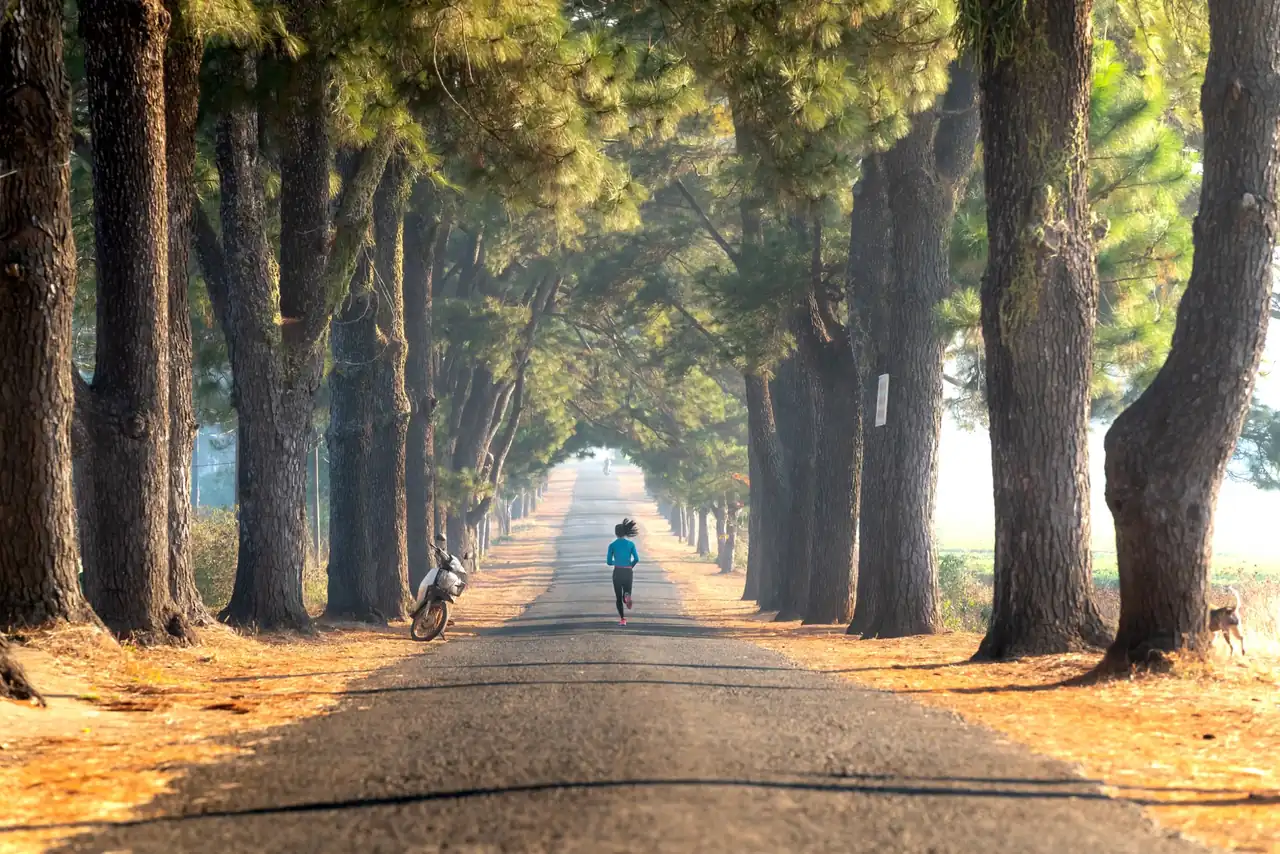
In 2025, the Community of Madrid once again put a race bib on the asphalt almost every weekend, from the most accessible 5 kilometers to marathons and half marathons with huge appeal. The offering is not limited to the capital: there are events in historic districts, municipalities in the metropolitan area, and also races that edge toward the mountains or move between asphalt and natural terrain. The density of the calendar reflects an exceptionally lively running ecosystem, with popular races, charity events, neighborhood runs, and high-profile showcases all sharing the same map.
That abundance has a clear consequence for runners: planning the season matters just as much as training. In Madrid, the calendar is not concentrated into a few key moments, but spread out with a pulse-like logic. Winter opens the year with urban races and middle-distance events; spring pushes hard with 10Ks, half marathons, and marathons; summer slows the pace; and September, October, and November regain cruising speed before December closes with the traditional San Silvestre races. What follows is a journalistic reading of that season, month by month, with the names that carry the most weight and the context that helps explain why Madrid remains one of the great stages of Spanish running.
A calendar that turns Madrid into a city of race bibs
Madrid has a competitive advantage that depends on more than just its size. The network of neighborhoods, wide avenues, urban parks, and nearby municipalities makes it possible to design very different routes without leaving the same region. La Castellana, Paseo del Prado, Casa de Campo, Valdebebas, and the surroundings of El Retiro appear again and again as recognizable settings, while places like Getafe, Alcobendas, Torrejón, Leganés, Aranjuez, or San Lorenzo del Escorial add variety and elevation to the calendar.
In 2025, the agenda also shows a very characteristic mix of Madrid’s popular athletics scene. There are neighborhood races with strong local identity, charity events that act as a social megaphone, competitions with major technical production, and races that have become benchmarks because of their history or participation. Distance variety is also a hallmark: 5K for those looking to start, 10K as the city’s king distance, half marathons with strong symbolic weight, and marathons that demand longer and more disciplined preparation.
The map is not uniform. January and February concentrate many urban asphalt races, March and April mix major events with neighborhood popular races, May and June expand the offering with more charitable and community events, and from September onward activity picks up again with a very recognizable rhythm. In the final stretch of the year, San Silvestre Vallecana remains the great icon, but it does not arrive alone: it is accompanied by many other races that have turned December into a small festival of sneakers and stopwatches.
The start of the year: January and February set the tone
Madrid’s 2025 calendar begins with an almost uninterrupted sequence of races. January opens with the Trofeo París, the Three Kings Race in Leganés, the Ciempozuelos San Silvestre, the Three-Cities Road Race, the Sanchinarro night race, and the Getafe half marathon. The start is anything but timid: it combines neighborhood races with well-established names and distances ranging from 5K to the half marathon.
February keeps that continuity with events such as the Spring Race, the Fuencarral-El Pardo Half Marathon, and the Latina Half Marathon. More specific offerings also appear, such as university cross-country races or charity runs, widening the profile of the runner who comes out to compete. This month clearly shows a very Madrid-like pattern: the street, the park, and the district are not just scenery, but sporting identity. Running in Madrid is not only about adding kilometers; it is also about crossing neighborhoods, recognizing avenues, and measuring effort against the city’s topography.
In this first stretch of the year, 5K and 10K races are especially common, although the calendar already leaves room for half marathons such as those in Getafe, Fuencarral-El Pardo, or Latina. That balance benefits both those returning to activity after the holiday break and those looking for an intermediate test before more ambitious goals. The season starts with many entry points, and that explains part of Madrid’s scene success.
March and April: Madrid’s spring steps on the gas
March is traditionally one of the most intense months for running in the region. In 2025, events include the Madrid Firefighters Race, the University Half Marathon, the Carabanchel Urban Mile, Movistar Estudiantes’ inclusive fan race, and the 15K Metlife Madrid Activa, among others. Madrid’s spring does not just bring better light; it brings greater competitive density. The schedule becomes tighter and forces choices, because the options multiply.
That same month, the calendar alternates very popular races with events of major urban significance, such as the Water Race, the Hortaleza Popular Race, and the Rocker Half Marathon. Together, they form a mosaic where mass participation and neighborhood atmosphere coexist. The PAU de Vallecas Popular Race also appears, an event that neatly sums up the relationship between neighborhood and running: closeness, belonging, and a route where public support matters almost as much as the clock. Madrid runs in March with a mix of noise, color, and ambition.
April puts the spotlight on one of the biggest names on the calendar: the Movistar Madrid Half Marathon. Alongside it, the Mediterranean Culture-Heroes Race, the Madrid-Nebrija Mini Marathon, and the Zurich Rock and Roll Running Series Madrid raise the season’s level. The latter, with marathon, half marathon, and 10K, is one of the capital’s most recognizable events and leaves a very visible mark on central avenues and major urban arteries. Madrid then becomes a city of major routes, with a narrative of a city open to runners and spectators alike.
Spring also brings back symbolic routes into focus. Running along Paseo del Prado, Recoletos, La Castellana, or near Cibeles adds an emotional layer that does not exist in other cities. In Madrid, the urban landscape is not neutral: it has memory, slope, and character. That explains why April, more than just a competitive month, becomes the stretch in which many runners decide whether the season will be one of mere continuity or a real leap in level.
May and June: charity, neighborhoods, and big avenues on the same map
May is usually one of the richest months in variety, and 2025 confirms that trend. The Women’s Race, the Casa de Campo Loop, the Guardia Civil Foundation Race, the Colors Race, the Generali Race for Inclusion, the Multiple Sclerosis Race, and the Race Against Gender Violence all coexist within a few weeks. The social dimension of Madrid running becomes very visible at this time, with a calendar that is not only about times, but also about causes and communities.
Distances also diversify. Alongside the 10K, still the most common unit of measurement, there are 5-kilometer courses, health walks, children’s races, and events with mixed formats. This pluralism allows a single day to bring together very different profiles: first-timers, families, regular runners, and athletes preparing bigger goals. Popular running in Madrid does not function as a closed club, but as an avenue with several speeds.
June takes that logic to another level. The Tree Race, the Madrid International Walking Grand Prix, Correr sin Glu10, the Rayismo Race, the Environment Race, Madrid Vintage Run, La Nocturna de Madrid, the San Juan Race, and the Madrid North vs South Race sustain activity before the summer slowdown. At this point, the city starts breathing differently: more heat, more nighttime events, and more races scheduled to avoid the sun. Nighttime gains ground as an ally for runners, and that changes the texture of effort.
Long-distance and triathlon events also become more established, enriching the panorama beyond pure asphalt. Even if readers are mainly looking for races, it is worth noting that Madrid offers an ecosystem where trail running, triathlon, and duathlon share the calendar with classic popular races. That coexistence broadens the region’s running culture and makes the calendar not just a schedule, but a sporting portrait of the whole community.
Summer slows the pace, but does not silence the scene
July and August reduce the intensity, as happens in almost all major capitals with demanding temperatures. Even so, Madrid does not go quiet. In July, the Nelson Mandela Race and the San Lorenzo Trophy appear, while August keeps the Villa de Cerceda Popular Race and the Valdebebas Night Race. Heat does not eliminate races; it shifts them toward smaller formats and more tolerable schedules.
This relative pause has strategic value. After months of a crowded calendar, summer allows runners to breathe, recover, reorganize goals, and look toward autumn with greater clarity. Those who keep competing at this time often do so with a mix of endurance and calculation: choosing the right race, controlling pace, and avoiding unnecessary effort under harsher conditions. Madrid in summer demands prudence and a cool head, especially in urban races with little shade.
This slowdown should not be mistaken for absence. The community maintains enough activity for anyone who wants to run to find options. What changes is the format of the effort: less density, more selection, and a finer reading of the weather. This pause, far from weakening the season, helps September arrive with renewed competitive appetite.
September and October regain the main rhythm
September reopens the running season with force. The Melonera Race, the Elipa Festivities Popular Race, the Workshop Race, Madrid Runs for Madrid, the Heart Popular Race, the TotalEnergies Madrid Mile, Run for the SDGs, the Little Hearts Charity Race, and the Tetuán Popular Race make for a very full month. The return to sporting routine finds in Madrid an almost tailor-made calendar, with options to start competing again without waiting too long.
September’s value lies in its balance. Temperatures drop, legs respond better, and the calendar regains breadth. Intermediate distances and mile races also return, which have a very special appeal in a city where the recreational runner coexists with the marks-focused enthusiast. The mix of 5K, 10K, 15K, and shorter events means every weekend has its own personality. The agenda stops being a list and becomes a decision board.
October reinforces that feeling. The Down Madrid Charity Race, the Ciudad Lineal 10K, Run for the Earth, the Race Against Suicide, the Science Race, the Race Against Occupational Therapy, the Stroke Race, and the Madrid Women’s Half Marathon show a particularly active community. If September is reactivation, October is consolidation. Madrid’s autumn usually offers the best conditions for running: less heat, more stability, and a general feeling of a season in motion.
In addition, October concentrates some of the most symbolically loaded races of the whole year. The Science Race and the Niño Race, for example, not only add participation, but also tradition and recognition among runners who return year after year. At this point in the calendar, Madrid combines routine and prestige, and that combination feeds the loyalty of those looking for a clear schedule to compete regularly.
November and December close the year with tradition and popular strength
November is a very Madrid month in the most literal sense: the Fans’ Derby Race, the Moratalaz Popular Half Marathon, the Kangaroo Cross Trophy, the Race and Walk for Diabetes, Ponle Freno Madrid, the Zara Athleticz Speed Run, the Cities Against Pancreatic Cancer Race, and the Fly Against Gender Violence Race shape a very powerful end to the season. Here the runner finds a stretch where the city blends history, social causes, and high performance.
The presence of cross-country, half marathon, and 10K events in the same season once again demonstrates the breadth of the calendar. Madrid is not limited to its flat urban side; it also offers natural terrain and races with a stronger athletic component. That diversity is one of the reasons the regional calendar gets so much attention. For enthusiasts, November works like a moving annual summary. The best of the season comes together in just a few weeks.
December, for its part, is marked by the holiday season and the power of the San Silvestre races. The Constitution Race, the Companies Race, the Santa Claus Race, the Villaverde San Silvestre, the Hortaleza San Silvestre, and, above all, the San Silvestre Vallecana, condense the festive spirit of the end of the year. The final night of December 31 remains a sporting and urban ritual, a mix of noise, emotion, tradition, and shared running that few cities can reproduce with the same intensity.
There is more than just an iconic race in that year-end finish. There is a way of saying goodbye to the season as a community, of measuring what has been run, and of turning the street into a sporting celebration. Madrid makes that closing into a collective celebration, but also a call to the next cycle. Anyone pinning on a bib in December is not only looking back: they are setting up the next lap of the calendar, because in this region running rarely stops completely.
How to read the season so you don’t miss the races that suit you best
The 2025 calendar offers an obvious practical lesson: Madrid requires choosing wisely. The concentration of races means there is no point in trying to do everything. The runners who make the most of this schedule are those who understand that not all events matter equally at the same point in the year. A 10K in March does not demand the same thing as a half marathon in April, and a June night race is not run the same way as a cold January morning.
It is also worth looking at the profile of each race. Some have central routes and stronger public support; others take place in large neighborhoods with more runnable courses; a few lean toward the mountains or cross-country. The Community of Madrid offers a wide enough range to cover almost any preference, from those looking to make their debut to those chasing a personal best or simply wanting to run in a lively atmosphere.
The journalistic reading of the season, in the end, says this: Madrid does not have a calendar, it has a way of understanding running. Neighborhoods take part, the capital concentrates the spotlight, nearby municipalities support the volume, and the great avenues become athletic catwalks. Throughout 2025, that map draws a certainty. The Community of Madrid remains one of Spain’s great territories for popular racing, not because of a single event, but because of the sum of many, the consistency of its network, and the ease with which an entire city gets used to living among race bibs.



How to prevent thigh chafing: causes and real solutions

Women’s running windbreakers: seven jackets and how to choose

Do more workouts get rid of soreness? A guide for runners

Jaén Half Marathon 2026: Record 3,800 Runners Registered

Men’s short running tights: how to choose the right pair

World Triathlon confirms data breach involving medical data

Izan Edo targets podium at Miyazaki World Cup

María Pérez ranks ninth in World Athletics’ 2026 top ten

Dos Santos, Duplantis and Sawe: World Athlete of the Year finalists

San Silvestre Vallecana 2026: 42,000 places, prices and start times

 Races4 months ago
Valencia Half Marathon 2027: date and registration

 Races4 months ago
Valencia Marathon 2026: entry, ballot and course

 Reviews and Comparisons4 months ago
Asics Gel-Roadmiles 3 for men: review and current price

 Reviews and Comparisons4 months ago
Asics Gel Sonoma 8 Gore-Tex: complete analysis for trail and rain

 Sneakers4 months ago
Saucony Endorphin Pro 4: full review and verdict

 News5 months ago
Strava API 2026: what changes for clubs, challenges and runner apps?

 Reviews and Comparisons5 months ago
Nike Alphafly 3: opinions, sensations, and real key points

 Reviews and Comparisons4 months ago
Under Armour running shoes review 2025-2026: models and key features

 Sports Equipment4 months ago
Shoe sizes in cm: a clear guide to getting the right fit for your footwear

 Sneakers3 months ago
Skechers GO RUN Consistent 2.0 analysis: comfort and limits

 News5 months ago
Valencia Marathon 2026 route: key tips to train and run better

 Sneakers4 months ago
Adidas Adizero Boston 13 for men: review and verdict