News
How many kilometres are 21,000 steps for runners?
21,000 steps are equivalent to a few kilometers, but it depends on your stride. We explain how to estimate it and why it varies.

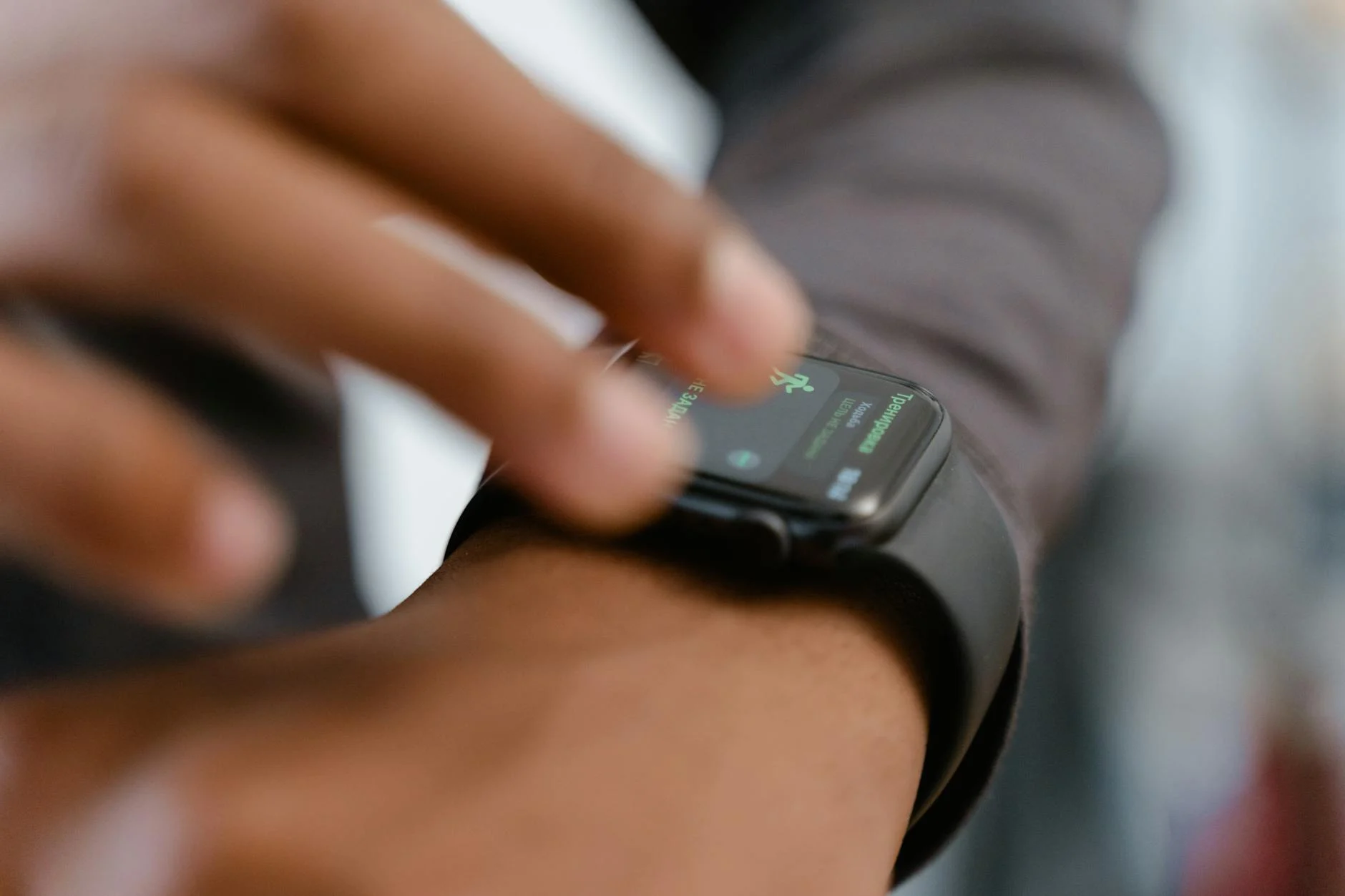
21,000 steps do not convert into one exact distance, which is worth remembering when you run, too. Everyone has a different stride length, and it can change with pace, terrain and fatigue; watches and phones also count steps using estimates. The usual range can still give you a rough idea of the distance covered on an active day or during a long session, but it is not a substitute for measuring your route with GPS or using a course of known distance.
As a practical reference, many converters use that 1 km usually corresponds to between 1,300 and 1,500 steps, depending on sex, height, and walking style. With those values, 21,000 steps fall, approximately, between 14 and 16 kilometers. That margin is not a minor detail: it is precisely the kind of variation that explains why two people with the same step count may have covered different distances.
In this guide you are going to see how to estimate the conversion, what numbers are usually used for the calculation, why the results change between devices, and how to get much closer to your real distance with a homemade calibration. All designed so that when you look at your total steps, you can translate them into a clear idea of kilometers, whether to plan a workout, compare routes, or simply better understand your daily activity.
What it means to convert steps to kilometers and why it is never exact
Converting steps to kilometers consists of estimating the total distance using the number of steps and the average stride length. In simple terms: if each step equals an approximate length, then the total number of steps multiplied by that length gives you a distance. The problem is that stride length is not constant either within the same person throughout the day, or between different people.
Factors such as walking speed, the type of surface (asphalt versus dirt), incline, accumulated fatigue, and even the way you carry your phone or watch all play a role. That is why, when a device gives you steps, it does so with algorithms that infer movement from motion; then it converts that movement into distance with assumptions that may not match your stride 100%.
The good news is that, even if it is not exact, the result is usually close enough for everyday use. If your goal is to know whether a walk was short, medium, or long, or whether you are getting close to a daily target, the range based on 1 km = 1,300 to 1,500 steps usually works quite well.
The most commonly used estimate: 1 km equals between 1,300 and 1,500 steps
Many popular converters and reference guides start from an approximate rule: 1 km is between 1,300 and 1,500 steps. The differences are attributed mainly to the fact that average stride length varies. In some references, the use of ~1,300 steps per kilometer is associated with a shorter-stride profile and ~1,500 with a longer one, but the reality is that there is a lot of individual variation.
When converting, the calculation is straightforward: kilometers = steps ÷ steps_per_km. If you take 21,000 steps and apply those two extremes, you get a range. With 1,300 steps per km, 21,000 ÷ 1,300 gives approximately 16.15 km. With 1,500 steps per km, 21,000 ÷ 1,500 gives exactly 14 km.
That range, around 14 to 16 km, is not a random figure: it reflects the usual margin that appears when your real strides and the device algorithm’s assumptions change. In practice, if you want a single figure for everyday use, you can choose a midpoint, such as 1,400 steps per km, which would give approximately 15 km.
Quick calculation of 21,000 steps to kilometers: the range you should expect
To answer in a useful way the specific figure you are interested in, you have to translate 21,000 steps into distance using the reference values usually employed in this type of conversion. With 21,000 steps and the equivalence 1 km = 1,300 to 1,500 steps, the approximate conversion falls between 14 and 16 km.
If you need a more digestible result to compare with other days, a central figure usually helps: using 1 km = 1,400 steps, 21,000 ÷ 1,400 gives exactly 15 km. That estimate fits very well in everyday use, where what matters is not the exact meter but the magnitude.
However, there is a key nuance: the real value in your case may move outside the range if your way of walking is very particular or if the device counts steps differently. Two people who walk at different paces, even if they are similar in height, can have different strides and cadences, and that changes the distance per step.
From steps to km and from km to steps: formulas and how to interpret them
When dealing with conversions, it is worth being clear about the direction of the operation. To go from steps to kilometers, you divide the steps by the steps per kilometer. To go from kilometers to steps, you do the reverse calculation: multiply kilometers by steps per km. It is simple math, but the interpretation requires understanding that steps per kilometer are an estimate, not a universal constant.
For example, if you take 1 km as 1,300 steps for a shorter-stride profile, then 10,000 steps would be approximately 7.7 km (10,000 ÷ 1,300). With 1,500 steps per km, those same 10,000 steps would be 6.7 km. That is why a lot of information circulating online about 10,000 steps can vary quite a bit: it depends on the value adopted for steps per kilometer.
This variation is not necessarily a device error; many times it is the error of the general assumption. If you are using steps to make practical decisions, such as comparing sessions or estimating effort, work with ranges and not with false precision.
How to convert more accurately using your own stride
The conversion improves a lot if you calibrate it with a real route. The idea is to measure your average stride length without turning it into a technical project. You can do a controlled walk of, for example, 1 km on a known route or one measured with GPS, and record the steps from the device. If the steps it marks for that kilometer are 1,350, your personal factor would be 1,350 steps per km, much more precise than the generic range.
With that personal factor, converting 21,000 steps to kilometers becomes more realistic. If in your case 1 km is 1,350 steps, then 21,000 ÷ 1,350 gives 15.56 km. If it is 1,420 steps per km, the result drops to 14.79 km. In other words, the personal factor shifts the distance quite clearly.
This approach also helps you understand why the same device can change figures when you alter your walking style. If you do brisk walks, with longer strides, the steps-per-km value will tend to rise and the estimated distance from the same count may shift.
Why the result changes depending on the device and how you wear it
Steps are calculated from motion sensors and, in some cases, from additional information such as elevation or tilt. The watch, the phone, and where it is placed on the body all influence the signals the system receives. It is not the same to wear it on your wrist while walking as it is to have the phone in a pocket, nor is it the same to walk at a steady pace as to make frequent stops.
In addition, some devices distinguish between walking and other activities with classification algorithms. When the classification is uncertain, the step count can go up or down, and with it the estimated distance as well. Although it may seem like a small detail, the difference is noticeable when the goal is to convert long series, such as when you accumulate daily totals.
That is why, if your watch gives you a precise figure over short distances, it may not maintain the same behavior in long sessions. It is not a failure; it is the result of a statistical model trying to generalize. Personal calibration, therefore, not only improves the number, it also makes you more aware of its limits.
What happens if you use values by sex or height: useful, but not definitive
In many references it is said that 1 km can be equivalent to about 1,300 steps for men and 1,500 for women. That data is used because, on average, there are stride differences between groups, but it does not explain the full extent of individual variability. There are people with a stride length outside the average because of height, body proportions, or movement habits.
In practical terms, those values are a starting point. If you have no way to calibrate, they allow you to estimate reasonably well. If you already have a history of your outings and know that, for example, your walks tend to come out close to 14.5 km when the device marks 21,000 steps, then your personal factor is probably somewhere between the 1,300 and 1,500 extremes.
The key is not to cling to the number as if it were a physical law. It is a guide that reduces uncertainty. And as a guide, it works: it gives you an order of magnitude to decide whether your session was equivalent to a long march, whether you are maintaining a steady pace, or whether you still have a stretch of activity to cover.
What distance 21,000 steps cover compared with usual walks
A reference walk that is often mentioned is the famous daily goal of 10,000 steps. With the conversion range above, 10,000 steps can be roughly equivalent to between 6.7 and 7.7 km depending on the value adopted. If you understand that point, then you can easily imagine where 21,000 steps fall: around 14 to 16 km, that is, a distance that usually feels like a long outing.
In practice, approximately 15 km usually correspond to a session that takes up much of the morning or afternoon at a sustained walking pace, especially if there are areas with pauses, traffic lights, or changes in direction. That is why, rather than obsessing over the exact kilometers, it is useful to ask yourself whether the time you spent and the perceived effort match that range.
For running and endurance work, understanding these equivalents also provides perspective. A brisk walk or easy jog can accumulate many steps without you noticing. Translating it into kilometers helps you compare with other days and maintain a logic of progression.
How to use the data to plan weekly activity and see progress
Converting steps to kilometers serves, above all, to look at your week with more meaning. When you only see an abstract number of steps, it is hard to decide whether you are doing well, falling short, or changing your movement pattern. In contrast, if you turn those steps into kilometers, you can compare routes, estimate the type of stimulus, and assess consistency.
In public health, adults are often recommended a certain amount of moderate-intensity physical activity spread throughout the week. Although the figures vary depending on the organization and the country, a common guideline is to accumulate time rather than focus on a single daily count. In that context, steps are an indirect way to estimate movement, and kilometers give you a more intuitive translation.
The most sensible way to use this conversion is to look at trends. If this week you move more and your steps frequently get close to 21,000, you are probably improving your weekly volume. If the steps go down and the device also marks less relative distance, it may be a sign that your daily activity has cooled off.
An applied example: how to estimate your distance if the watch shows 21,000 steps
Imagine that one day you see a total of 21,000 steps on your device. Without GPS or a mapped route, the most honest thing is to translate it into a range: between 14 and 16 km with the common steps-per-kilometer rule. That range lets you understand the magnitude without inventing a false figure of precision.
If you want a single number to record, you can note 15 km as a central approximation. That figure is usually reasonable for most people in regular walking, especially if there are no sudden changes in pace during the day. If you also know how long you walked, you can check whether the average speed you get makes sense with your experience.
Over time, you can refine it by calibrating. A couple of GPS-measured walks, even if they are only two or three, are enough to adjust your factor. From there, going from steps to kilometers stops being a generic calculation and becomes a fairly useful personal estimate.
Advantages of tracking steps and understanding their equivalent in kilometers
Steps are a practical indicator because they are easy to record and are usually always available on devices. Distance in kilometers, on the other hand, is the metric that many people connect with real experience: how many kilometers a outing really is, how it compares with other weeks, and what kind of session you are doing. That is why, understanding the conversion improves the usefulness of the data.
In addition, distance allows you to plan better. For example, if you want to alternate long days with lighter ones, you can decide that a hard day equals several accumulated kilometers and that the rest focuses on maintaining the habit. When that criterion is supported by steps, the conversion to kilometers helps you keep the logic going.
Finally, comparing progress is more tangible with kilometers. Going from 10,000 steps to 21,000, even if gradually and with variations, means doubling the accumulated volume to some extent. That perception helps maintain motivation without falling into obsessive tracking: it serves to see whether you are building consistency.
What you should remember when interpreting the conversion of 21,000 steps
The number of steps is an estimating tool. Converting them to kilometers requires a steps-per-kilometer factor, which in turn depends on your stride and on how the device measures. That is why, when someone tells you that 21,000 steps are exactly X kilometers, the correct thing is to think in terms of a range. In everyday use, the reasonable thing is to place them around 14 to 16 km, with a central value close to 15 km.
The difference between the low end and the high end is not arbitrary: it is the translation of how the average step length changes. A device that counts steps with a conservative model may estimate more distance than another that does it with a different model. And when the environment changes, your cadence changes too.
If you want to get closer to the real figure, calibrate with a measured route and repeat. If not, use the estimate as a volume guide. With that approach, the figure will be useful for training, for moving more, and for better understanding your daily activity.
How to use 21,000 steps when planning your training
As a general guide, 21,000 steps work out at roughly 14 to 16 kilometres using the reference of 1,300 to 1,500 steps per kilometre. For a runner, that figure should not automatically be treated as the distance of a run: a step counter may include walking, everyday journeys and the time before or after your workout. Stride length can also change with pace, hills, surface and fatigue, so the same step count does not always represent the same distance.
Use the conversion as a clue to your overall activity, not as a replacement for the distance recorded during a session. If you are following a training plan, check your run against GPS data or a route with a known distance. To get a more personal estimate, compare your step count with a measured distance under familiar conditions, and repeat the check on your runs: walking and running may produce different results. Wear your watch or carry your phone consistently, since the device’s position can affect the count.
When building up your training, pay attention to how you feel as well as to your step total. If a long run leaves you unusually tired, adjust the next session and prioritise recovery rather than chasing a daily number. Notice whether fatigue is accumulating or pain appears; if it persists, consult a healthcare professional. Steps can help put your movement in context, but on their own they do not show whether a session was appropriate or how your body is responding.
When the number is an estimate, what matters is what it lets you do
Beyond the specific conversion, the value lies in turning a daily record into something understandable. Knowing that 21,000 steps are around 14 to 16 km is not just a loose fact: it helps you understand the impact of your routine, compare days, and detect changes in the way you walk. That clarity is often better than obsessing over meter-level accuracy.
Over time, your own history will give you the best calibration. And in the meantime, a well-understood approximate rule keeps you in the realm of what is useful, realistic, and comparable. In the end, walking is not measured with a perfect figure, but with consistency, and translating your steps into kilometers gives you a map to sustain that path.
You may also like: How many km are 12,000 steps, and what does the distance depend on?.



How to prevent thigh chafing: causes and real solutions

Women’s running windbreakers: seven jackets and how to choose

Do more workouts get rid of soreness? A guide for runners

Jaén Half Marathon 2026: Record 3,800 Runners Registered

Men’s short running tights: how to choose the right pair

World Triathlon confirms data breach involving medical data

Izan Edo targets podium at Miyazaki World Cup

María Pérez ranks ninth in World Athletics’ 2026 top ten

Dos Santos, Duplantis and Sawe: World Athlete of the Year finalists

San Silvestre Vallecana 2026: 42,000 places, prices and start times

 Races4 months ago
Valencia Half Marathon 2027: date and registration

 Races4 months ago
Valencia Marathon 2026: entry, ballot and course

 Reviews and Comparisons4 months ago
Asics Gel-Roadmiles 3 for men: review and current price

 Reviews and Comparisons4 months ago
Asics Gel Sonoma 8 Gore-Tex: complete analysis for trail and rain

 Sneakers4 months ago
Saucony Endorphin Pro 4: full review and verdict

 News5 months ago
Strava API 2026: what changes for clubs, challenges and runner apps?

 Reviews and Comparisons5 months ago
Nike Alphafly 3: opinions, sensations, and real key points

 Reviews and Comparisons4 months ago
Under Armour running shoes review 2025-2026: models and key features

 Sports Equipment4 months ago
Shoe sizes in cm: a clear guide to getting the right fit for your footwear

 Sneakers3 months ago
Skechers GO RUN Consistent 2.0 analysis: comfort and limits

 News5 months ago
Valencia Marathon 2026 route: key tips to train and run better

 Sneakers4 months ago
Adidas Adizero Boston 13 for men: review and verdict