News
Water or isotonic drink when running: when you need electrolytes and when you don’t anymore
Hydration while running depends on the effort, the duration, and the heat. It’s not always the same.

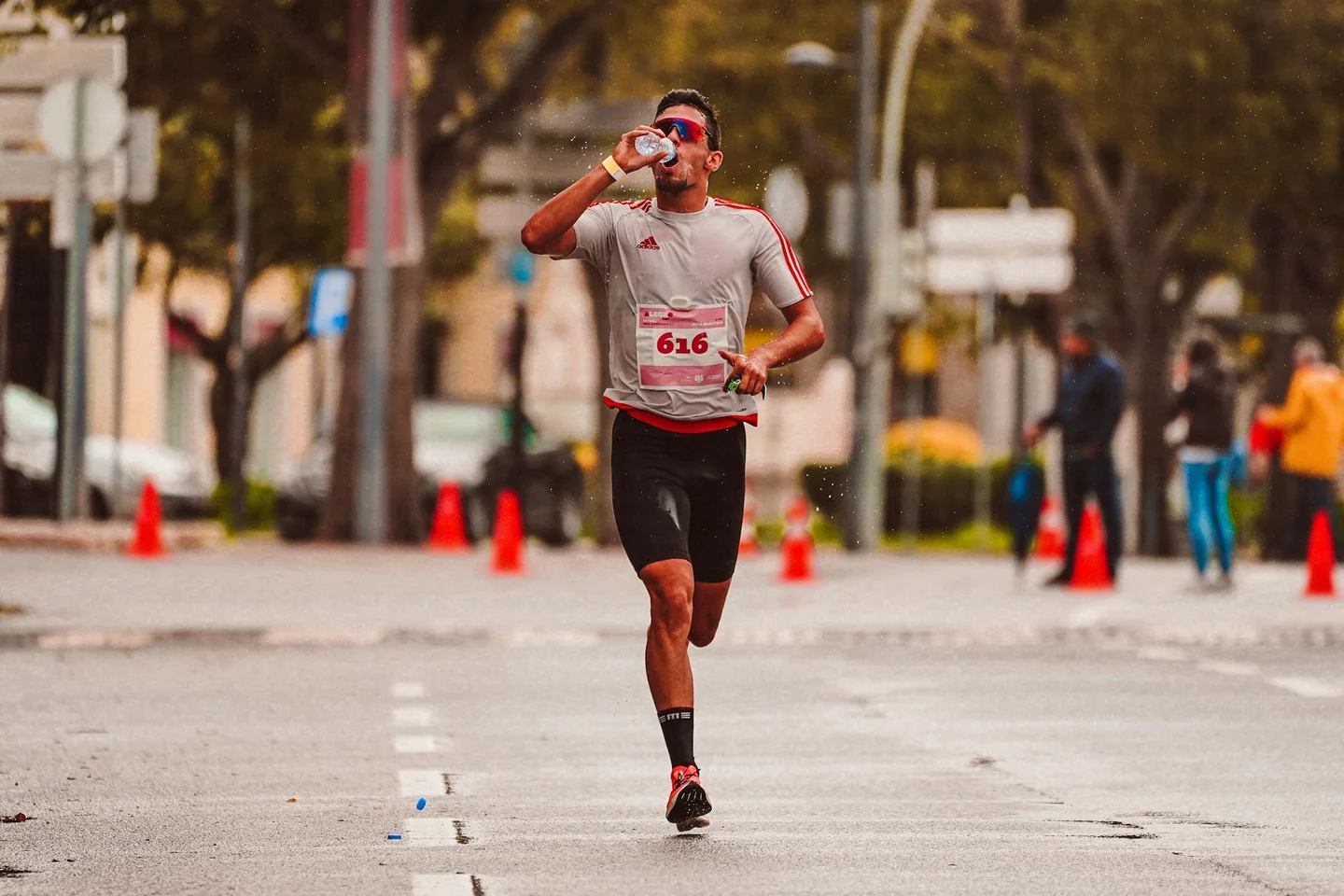
Imagen: RUN 4 FFWPU / Pexels
On a short, easy outing, water is usually enough; in a long workout, with heat or a lot of sweating, an isotonic drink becomes more important. The difference is not minor: one provides clean, quick fluid, the other adds electrolytes and, in many cases, carbohydrates that help sustain the effort when the session goes on longer.
The right choice is not about a trend, but about what the body loses in each session. In running, sweat does not carry away only water; it also takes sodium and other minerals with it. The more intense the work and the hotter the environment, the more sense it makes to think about a sports drink. When the load is light, the simplest bottle is usually the most sensible one too.
What changes between one bottle and the other
Water hydrates; isotonic drink hydrates and replenishes. That is the central idea. Water comes into play when the priority is to recover fluid without adding energy or extra salts. Isotonic drink, on the other hand, is formulated to come close to the concentration of body fluids and make absorption easier, something useful when exercise gets demanding and the body loses more than usual.
The composition makes the difference. A well-designed sports drink usually includes sodium, potassium and, at times, glucose or maltodextrin. That combination is not just decoration: sodium helps fluid retention, carbohydrates provide quick fuel and the rest of the minerals help sustain muscle contraction and internal balance. In a short run, that extra usually does not offer a clear advantage; in a long run, it can mark the pace of the second half.
Not all drinks sold as sports drinks play the same role. Some look more like a sugary soft drink than a real aid for the runner. It is worth checking the content per liter, not getting carried away by the color of the bottle. A good isotonic drink usually sits around 6% to 8% carbohydrates, with an amount of sodium designed to replace what is lost through sweat.
When water is enough
In sessions of less than an hour, at low or moderate intensity, water usually handles hydration without complications. This applies to an easy jog, a calm running drill or a short loop around the neighborhood on a cool day. In that context, the body does not easily deplete its energy stores and it also does not lose as many salts as to justify a specific intake of electrolytes.
It is also the logical option when the runner barely sweats or when the weather helps. A mild winter morning does not demand the same thing as a midday in August on the Valencian coast. The environment matters just as much as the kilometer. Less heat, less humidity and less time running mean less need for a drink with salts and sugars.
There is another less visible but important detail: the stomach usually handles water better during easy efforts. It adds no flavor, does not force the digestive system to process carbohydrates and does not leave that dense-liquid feeling that some people find heavy. For an everyday outing, that lightness is a practical advantage, almost like running without a burden.
When an isotonic drink is advisable
When the workout goes beyond an hour, the isotonic drink starts to make real sense. If the session is also intense, with intervals, hills, fartlek or competition, the body does not just lose water: it uses glycogen, empties energy stores and needs to keep circulation going without performance collapsing. In that scenario, a drink with carbohydrates can delay fatigue and improve tolerance to effort.
Heat changes the whole picture. A runner who could manage with water in spring may need a different strategy in the middle of summer. Sweating increases, sodium loss does too, and the risk of cramps, dizziness or a feeling of empty legs multiplies. The greater the thermal load, the more useful it is to replace salts along with fluid.
In endurance events, the sports drink also has a second function: providing easy-access fuel. The carbohydrates it contains do not replace a meal, but they do help keep blood glucose stable during the effort. It is the difference between slowly emptying the tank or noticing the needle drop suddenly in the final part of the workout.
What really happens in the body when you run
Sweat is a cooling tool, but also a way out for minerals. When the body heats up, it activates that mechanism to protect internal temperature. The price is a loss of fluid that varies a lot from one person to another. There are runners who barely dampen their shirt and others who leave their back soaked in a few minutes. They do not sweat the same and they do not lose the same amount.
Sodium is the key piece in that equation. It helps maintain fluid balance and makes it easier for ingested fluid to be retained. That is why it is not enough to just drink water without thinking about the context if the workout is long. Drinking a lot of fluid without salts during extended efforts can dilute blood sodium, something that is not desirable and that, in extreme cases, can become dangerous.
Carbohydrates also matter more than they seem. The body uses available glucose first and then draws on muscle glycogen. That fuel is not infinite. When it runs out, fatigue arrives with a harshness any runner will recognize: short stride, high heart rate, heavy head and a kind of invisible brake that slows everything down.
How to read a label without getting lost
The label matters more than the brand name. A drink may be called sports drink and not be especially useful for running, or it may be presented as refreshing and have a proper formula for prolonged efforts. What matters is checking the carbohydrate ratio, the sodium content and the actual serving size. Sometimes the difference between a good product and a mediocre one is just a few grams per liter.
A practical figure: if the drink is around 30 to 60 grams of carbohydrates per hour in long efforts, it usually falls into the useful range for endurance. There is no need to reach that level on every outing, but it does serve as a reference to understand why some bottles help and others only add calories. On easy days, that intake is unnecessary; in a half marathon or a long run in the heat, it can be part of the strategy.
It is also worth being wary of drinks with too much sugar and too little sodium. They may taste pleasant, even sell well, but they do not always solve what they promise. What makes a drink isotonic is not the color or the marketing, but its balance between water, salts and carbohydrates. That is the difference between a real aid and a bottle that is simply flashy.
The amount matters as much as the type of drink
There is no exact number for everyone. Sweat rate changes depending on weight, temperature, clothing, intensity and duration of effort. A lightly built runner on a cool morning will lose less than a more robust one on a closed circuit in the sun. That is why copying someone else’s guideline as if it were a universal recipe does not work.
A useful way to get oriented is to observe your own body and the environment. If the shirt ends up soaked, if there are dried salts on the clothing or if performance drops early, the runner probably needs to adjust hydration. The ideal is to drink at regular intervals, in small sips, instead of emptying half a bottle at once. The stomach appreciates that rhythm and absorption is usually more efficient.
In long workouts, an isotonic drink is best used before intense thirst appears. Thirst is a useful signal, but in many cases it comes late. By the time it really hits, part of the performance drop may already be done. That is why sports hydration works better as a well-spread habit than as a last-minute rescue.
Heat, humidity and distance: the triangle that changes everything
Distance alone explains nothing if the climate context is not considered. A fast 10K in August may require more hydration and salts than a 90-minute run on a cold January morning. Humidity, moreover, makes it harder for the body to cool itself, because sweat evaporates less effectively. You run with the feeling of a silent oven that is not always noticeable at first, but it takes its toll in the end.
In marathons, half marathons, long trail runs and races with little room to stop, the isotonic drink usually has a clearer role. Not because it is essential in every case, but because it helps cover two needs at once: fluid and fuel. In long races, that dual function saves the runner decisions, something that also matters when fatigue makes it hard to think clearly.
By contrast, in short races or well-measured quality sessions, water can be the cleanest option. It adds no digestive load or unnecessary sugars. It is a sober, almost austere choice, but perfectly valid. In running, often what works best is what draws the least attention.
What happens to health if sports drinks are overused
Taking them without needing them does not make them dangerous right away, but it does make them nutritionally unwise. They provide calories, sugar and sodium that are not always necessary. If they become the usual drink outside exercise, the problem is no longer performance, but habit: excess energy, more cavities and an unnecessary salt load for someone who does not sweat significantly.
In minors, caution should be greater. In children and teenagers, salt loss usually does not justify this type of drink except in very specific, supervised situations. Water remains the main reference for hydration in the general population, including those who practice sport recreationally. Normality, here, does not need embellishment.
It is also not a good idea to use these drinks as a substitute for an orderly diet. They are tools for specific moments, not nutritional shortcuts. Their value appears when exercise demands something more than water; outside that, they can be unnecessary. And in sports nutrition, what is habitually excessive ends up weighing you down.
After running, refueling also matters
Hydration does not end when you cross the finish line or stop the training watch. If the session has been long or very hot, the body needs to keep replacing fluid during the following hours. It is not a good idea to do it all at once, because the body does not absorb everything at the same speed. It is better to spread intake out and, if appropriate, accompany it with foods that provide water and sodium naturally.
A common mistake is drinking too little after a demanding session because you think the problem is already over. It is not. Fluid recovery is part of the effort, just like the warm-up or the cool-down. Recovering well helps you arrive better at the next workout. It is not dramatic, but it does have noticeable consequences in the legs the next day.
In very hard outings, an isotonic drink can still be useful at the end, especially if the runner takes a while to eat. At other times, water is enough and more than enough. What matters is not copying a fixed routine, but understanding what the session left in the body. That fine adjustment is what separates proper hydration from a simple automatic habit.
The rule that works for most runners
Water for short and moderate efforts; isotonic drink for long, intense or hot sessions. That is the practical rule that best sums up the evidence and experience in running. There is no need to make it more complicated to train with common sense. The runner who adapts what they drink to what they run usually gets it right more often than the one who always reaches for the same bottle out of habit.
In the end, the issue is not choosing a side, but understanding the function of each option. Water refreshes and rehydrates cleanly. Isotonic drink adds minerals and energy when the wear and tear calls for it. In running, as in so many things, the right tool depends on the exact moment it is used. And that moment is dictated by distance, intensity, heat and each body’s response.
That is why the debate between isotonic drink or water is resolved less by personal preference than by an honest reading of the workout. A fast-paced run under the sun does not ask for the same thing as a relaxed loop at dusk. Between one option and the other there is no universal winner; there is a context, and that context is what matters.
You may also like: Best sports drinks for Dry January: a real and useful guide.
Este artículo contiene enlaces de afiliado: si compras a través de ellos, se genera una pequeña comisión sin coste adicional para ti. Más información.



How to prevent thigh chafing: causes and real solutions

Women’s running windbreakers: seven jackets and how to choose

Do more workouts get rid of soreness? A guide for runners

Jaén Half Marathon 2026: Record 3,800 Runners Registered

Men’s short running tights: how to choose the right pair

World Triathlon confirms data breach involving medical data

Izan Edo targets podium at Miyazaki World Cup

María Pérez ranks ninth in World Athletics’ 2026 top ten

Dos Santos, Duplantis and Sawe: World Athlete of the Year finalists

San Silvestre Vallecana 2026: 42,000 places, prices and start times

 Races3 months ago
Valencia Half Marathon 2027: date and registration

 Races3 months ago
Valencia Marathon 2026: entry, ballot and course

 Reviews and Comparisons4 months ago
Asics Gel-Roadmiles 3 for men: review and current price

 Reviews and Comparisons4 months ago
Asics Gel Sonoma 8 Gore-Tex: complete analysis for trail and rain

 Sneakers3 months ago
Saucony Endorphin Pro 4: full review and verdict

 News5 months ago
Strava API 2026: what changes for clubs, challenges and runner apps?

 Reviews and Comparisons5 months ago
Nike Alphafly 3: opinions, sensations, and real key points

 Reviews and Comparisons4 months ago
Under Armour running shoes review 2025-2026: models and key features

 Sports Equipment4 months ago
Shoe sizes in cm: a clear guide to getting the right fit for your footwear

 Sneakers3 months ago
Skechers GO RUN Consistent 2.0 analysis: comfort and limits

 News5 months ago
Valencia Marathon 2026 route: key tips to train and run better

 Sneakers4 months ago
Adidas Adizero Boston 13 for men: review and verdict