News
Knee pain after running: signs, prevention and solutions
Knee discomfort after running is usually due to overuse, technique, or footwear, but it can also be a warning sign of an injury.

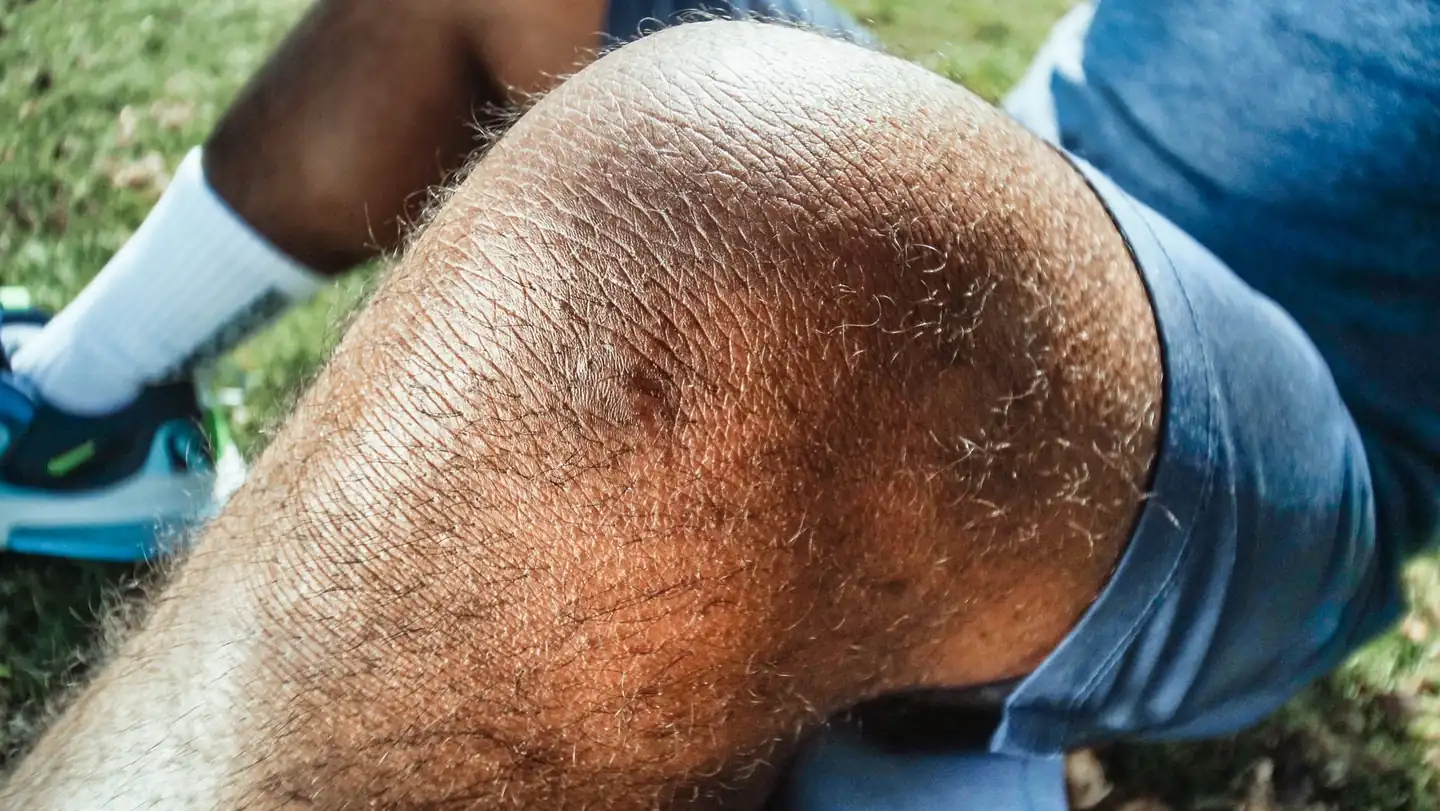
Knee pain after running is usually more of a warning sign than a simple passing annoyance. In most cases it appears because of overload, poor running mechanics, or a too abrupt increase in load, although it can also hide a problem in the meniscus, ligaments, tendons, or cartilage.
The location of the pain matters a lot: a discomfort in the front of the knee, near the kneecap, does not mean the same thing as a lateral stab, a deep sensation in the joint, or stiffness that appears when going downstairs. That pain map gives clues about the source and helps distinguish between a mild irritation and an injury that deserves medical evaluation.
What is happening in a knee when you run
The knee is a weight-bearing joint designed to flex, extend, and absorb impacts again and again. Each stride distributes forces between the femur, tibia, patella, menisci, ligaments, and a network of muscles that acts as a shock absorber. When everything works in coordination, the impact dissipates; when something fails, the pressure concentrates in a specific area and pain appears.
That is why running does not only punish the knee, but also the hip, the ankle, the thigh muscles, and the way the foot lands on the ground. A runner with weak glutes, underprepared quadriceps, or an unstable landing can turn a normal session into a sequence of poorly distributed micro-impacts. The joint, which works in silence, ends up protesting like a forced hinge.
Repetition is the big factor. Running usually does not injure through a single gesture, but through the sum of thousands of foot strikes. That cumulative nature explains why many discomforts appear at the end of a run, the next day, or after several training sessions in a row without enough recovery.
The most common causes of knee pain when running
The most frequent cause is overload. It happens when the joint receives more stress than it can absorb at that moment, something common in those who increase mileage, pace, or elevation too quickly. It can also appear if training is resumed after a break or if intense sessions are strung together without real rest.
Another very widespread cause is patellofemoral pain syndrome, popularly known as runner’s knee. In this case, the pain is usually felt in the front or around the kneecap and gets worse with stairs, hills, squats, or sitting for a long time with the knee bent. There is not always a visible injury; sometimes it is a problem of alignment, muscle control, or impact tolerance.
Iliotibial band friction also appears relatively often, and it usually causes discomfort on the outer side of the knee. This band of tissue connects the hip to the tibia and can become irritated when there is too much volume, inefficient technique, or weakness in the hip muscles. Lateral pain is usually sharper and very recognizable in long runs or downhill sections.
Beyond those conditions, it is worth keeping in mind other possibilities: patellar tendinopathy, quadriceps tendon irritation, meniscal problems, ligament sprains, or joint wear. They do not all show up in the same way. A meniscal injury can cause a feeling of locking, clicking, or pain when twisting; a tendon problem, on the other hand, usually hurts more at the start and during explosive efforts.
What usually changes between a new runner and an experienced one
In those who are just starting to run, pain usually has a clear adaptation component. Muscles and tendons are still not prepared to absorb so many repetitions and technique is usually less efficient. The body learns through trial and error, but if the progression is too aggressive, the knee pays the bill too soon.
In that profile, the most common mistake is confusing enthusiasm with real capacity. Going from walking to running several days in a row, or adding intervals and hills in the first weeks, can trigger a mix of overload, deep soreness, and joint pain. Sometimes the discomfort does not come from a specific injury, but from musculature that still does not know how to protect the joint properly.
In regular runners, the pattern changes. When the legs already have more base, a persistent ache is usually more related to poor effort management, a change of shoes, a harder-than-usual surface, or a technique that has gradually deteriorated with fatigue. It can also appear after accumulating miles in a demanding build-up, such as a half marathon or a marathon.
In both cases, age, body weight, injury history, and individual biomechanics have a major influence on the problem. The knee does not behave the same in two people running at the same pace. It is a joint sensitive to anatomy, training, and each runner’s context, like a wheel that only rolls well if the axle, pressure, and terrain all cooperate.
How to tell a mild discomfort from an injury that needs attention
Not every pain after running means a serious injury. A mild discomfort that decreases with brief rest, leaves no visible swelling, and does not alter your gait usually points to a passing irritation. In that scenario, the body is warning that the load has been excessive, but it still has room to recover.
Different is the picture that comes with swelling, heat, redness, instability, or difficulty bearing weight. A pain that appears suddenly, after a twist or a bad movement, should also raise concern, as should a feeling of locking, internal clicking, or inability to bend and extend normally. Those signs no longer fit so well with a simple overload.
The time course also gives clues. If the discomfort improves in a few days and does not return when you resume gentle activity, it is usually a self-limited episode. If, on the contrary, it lasts more than a week, increases little by little when running, or comes back earlier and earlier each time, it is worth thinking about a structural injury or a mechanical error that still has not been corrected.
Fever, marked loss of strength, or night pain mean the situation should not be brushed off. Although they are less common in runners, they change the picture and justify a medical check. The knee can hurt for sports-related reasons, yes, but also because of inflammatory or infectious processes that should not be confused with simple overload.
What usually helps relieve it without forcing the joint
Relative rest is the first sensible measure. It is not about immobilizing yourself for weeks, but about removing for a few days the stimuli that trigger the pain. Running on an irritated knee usually prolongs the problem, while a short pause allows the tissues to calm down and tolerate movement again.
Ice for 15 to 20 minutes, with a cloth between the skin and the cold source, can help reduce pain and inflammation when present. It does not work miracles, but it does provide relief in acute phases. Gentle compression with an elastic bandage can also provide stability, as long as it does not squeeze or cause tingling.
Elevating the leg during rest and avoiding intense sessions while the pain persists are simple but effective gestures. In some cases, over-the-counter anti-inflammatories or painkillers are used, although their use should be cautious and should not mask a problem that needs diagnosis. Taking a pill and keeping on running is usually the perfect recipe for making the injury worse.
Self-massage with a foam roller, applied with judgment and without violence on the tissue, can relieve tension in the quadriceps, glutes, or outer thigh band. It does not correct the cause on its own, but sometimes it reduces the mechanical pull that reaches the knee. Gentle stretching also helps, as long as it is not done with sharp pain or turned into a test of endurance.
Technique, footwear, and surface matter more than it seems
The way you run changes joint load. A foot strike that is too far ahead, an overly long stride, or a low cadence can increase pressure on the knee. You do not need to run like a robot to do it well, but you do need to avoid movements that brake the body with every contact with the ground, as if the leg were hitting an invisible wall.
Footwear also matters, even if it does not do all the work. Shoes that are very worn out, unsuitable for the runner’s weight, or too stiff can alter cushioning and stability. There is no universal model, but there is a clear idea: the foot needs to feel supported, and the transition with the ground should feel predictable and comfortable.
The surface adds or reduces impact. Asphalt, concrete, and sidewalks are usually more demanding than a compact dirt track or a regular terrain. Even so, always running on soft ground is not the perfect solution either, because very uneven terrain forces the leg to stabilize more. The key is to vary and not turn every outing into a small battle against the pavement.
Hills deserve a special mention. Going uphill demands more from the muscles, but going downhill can punish the knee much more because of repeated braking. Those who stack downhill intervals or routes with a lot of elevation usually feel the toll in the front of the joint, sometimes hours later, when the body has already cooled down.
Leg and hip strength protects better than any trick
A strong runner distributes loads better. Quadriceps, hamstrings, glutes, and calves work like a suspension system. If that system is weak, the knee takes on too much responsibility. That is why real prevention does not depend only on stretching or choosing the right shoes, but on building a muscular base capable of sustaining the repetition of the movement.
The hip deserves special attention. When the glutes do not stabilize the pelvis well, the knee tends to cave inward and the patella loses part of its natural guidance. That small misalignment, almost invisible to the naked eye, can trigger persistent discomfort. Sometimes the problem is not in the joint that hurts, but in the chain that governs it from above.
Strength work does not have to be complex, but it should be coherent and progressive. Controlled squats, lunges, calf raises, or stability exercises help the knee stop being the weak link. It is also wise to dose the total weekly load with some common sense, because a strong knee today can still get irritated tomorrow if it is subjected to too many miles.
Consistency matters more than intensity. It is better to have an orderly build-up, with modest increases and real recovery, than a roller coaster of efforts. The joint tolerates well-distributed repetition better than heroic weeks followed by stoppages because of pain.
When it makes sense to stop running and seek medical evaluation
There are moments when stopping is not a surrender, but a smart decision. If the pain forces you to change your stride, prevents you from running normally, or also appears when walking, the margin for self-protection has already been exhausted. Forcing it at that point usually turns a manageable problem into one that is longer and more expensive to solve.
A condition that always repeats in the same spot, wakes you at night, does not improve with relative rest, or gets worse every time you try running again also deserves a check-up. Persistence is an important clinical clue. It often means that resting for a few days is not enough, and that it is necessary to find out which structure is failing and why.
Physical examination is still essential. Sometimes a professional can identify the source just by observing gait, palpating tender points, and checking range of motion. In other cases, imaging tests such as X-rays or MRI will be needed, especially if meniscus, ligaments, or cartilage damage is suspected.
The knee does not always warn in an elegant way. It can start as a diffuse discomfort and end up as a clear brake in every stride. Listening to that warning, before it turns into an injury, often makes the difference between a short pause and an entire season lost.
Runner’s knee is not always just about the knee
Pain while running is often a story of the whole system. The knee receives the symptom, but many times the cause starts somewhere else: a glute that does not stabilize, a stiff hip, a foot that lands poorly, or a poorly planned increase in load. Thinking only about the joint would be like fixing a streetlight without checking the wiring.
That is why the most effective prevention is not based on a single remedy, but on a combination of sensible habits: progression, rest, strength, technique, reasonable gear, and attention to the body’s signals. The knee, after all, acts as the visible axis of a much broader system. When that system gets out of order, the warning usually appears there, right at the hinge where everything pushes.
For the recreational runner, the message is clear: a brief discomfort may be solved with rest and load adjustment, but persistent pain, the kind that changes the way you run or comes with swelling, should not be normalized. The knee can take a lot, yes, but it also keeps memory of every excess.
Este artículo contiene enlaces de afiliado: si compras a través de ellos, se genera una pequeña comisión sin coste adicional para ti. Más información.



How to prevent thigh chafing: causes and real solutions

Women’s running windbreakers: seven jackets and how to choose

Do more workouts get rid of soreness? A guide for runners

Jaén Half Marathon 2026: Record 3,800 Runners Registered

Men’s short running tights: how to choose the right pair

World Triathlon confirms data breach involving medical data

Izan Edo targets podium at Miyazaki World Cup

María Pérez ranks ninth in World Athletics’ 2026 top ten

Dos Santos, Duplantis and Sawe: World Athlete of the Year finalists

San Silvestre Vallecana 2026: 42,000 places, prices and start times

 Races3 months ago
Valencia Half Marathon 2027: date and registration

 Races3 months ago
Valencia Marathon 2026: entry, ballot and course

 Reviews and Comparisons4 months ago
Asics Gel-Roadmiles 3 for men: review and current price

 Reviews and Comparisons4 months ago
Asics Gel Sonoma 8 Gore-Tex: complete analysis for trail and rain

 Sneakers3 months ago
Saucony Endorphin Pro 4: full review and verdict

 News5 months ago
Strava API 2026: what changes for clubs, challenges and runner apps?

 Reviews and Comparisons5 months ago
Nike Alphafly 3: opinions, sensations, and real key points

 Reviews and Comparisons4 months ago
Under Armour running shoes review 2025-2026: models and key features

 Sports Equipment4 months ago
Shoe sizes in cm: a clear guide to getting the right fit for your footwear

 Sneakers3 months ago
Skechers GO RUN Consistent 2.0 analysis: comfort and limits

 News5 months ago
Valencia Marathon 2026 route: key tips to train and run better

 Sneakers4 months ago
Adidas Adizero Boston 13 for men: review and verdict