News
Getxo Half Marathon 2026 route: key details of the course
Flat, fast, and with iconic scenery: that’s the route the Getxo circuit takes in 2026.

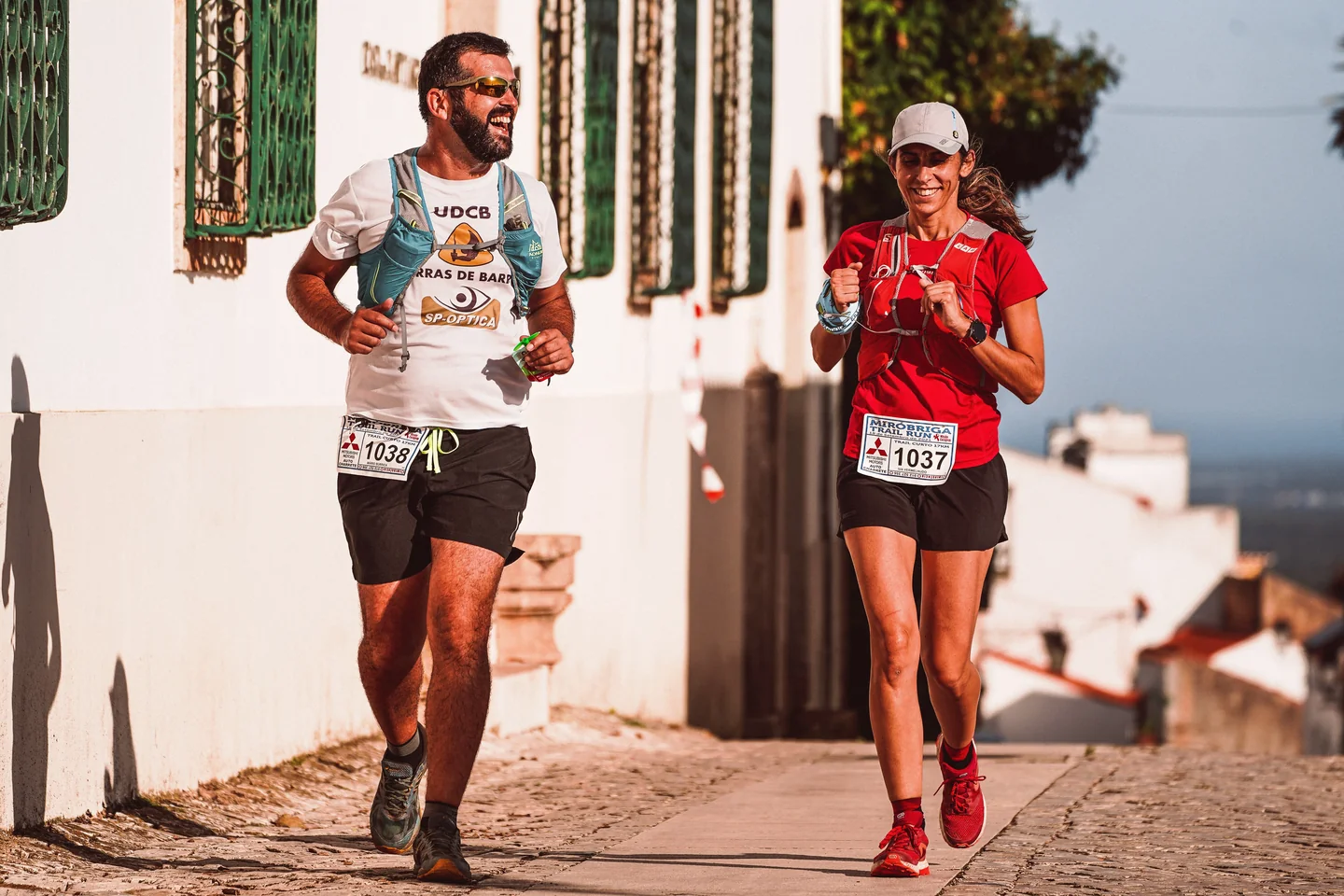
The Getxo Half Marathon 2026 will arrive with a course designed for running fast and taking in the scenery out of the corner of your eye. The main race, 21.097 kilometers, is run on a completely flat circuit that links some of the municipality’s most recognizable spots, with the start in Fadura and passage through some very photogenic areas of the Bizkaian coast. This mix of speed and urban postcard explains why the event has gained importance on the popular racing calendar.
The organizers have built a program with three distances, 5, 10 and 21 kilometers, and have set the start of the main race for 9:00 a.m. After that, from 11:30 a.m. onward, the shorter distances take center stage. The course design and timetable make the message clear: Getxo is aiming for a race open to many profiles, but with a serious, record-eligible half marathon in spirit, the kind that lets you hold pace without battling hills or sudden changes in terrain.
A flat circuit facing the Cantabrian Sea
The course’s main selling point is its profile. In an area where the terrain usually punishes the legs, Getxo opts for a friendly route, without steep inclines and with stretches designed to sustain cadence. That does not mean it is a race without character; on the contrary, its appeal lies in how it combines technical ease with an environment that leaves a lasting impression on the runner’s memory. Stride flows better when the ground helps, and here the asphalt acts like a carpet for a fast race.
The start in Fadura places the race in a very recognizable part of the municipality and gives access to a succession of settings that help you read the territory while running. The route links places such as the Vizcaya Bridge, Old Port, Marina and Zugazarte Avenue, a sequence that turns the effort into a kind of athletic stroll through Getxo’s best-known landmarks. There are no mountains or technical sections: there is pace, horizon, and a coastline that accompanies the runner like a living backdrop.
In races like this, the route does not just measure kilometers; it measures sensations. A flat course usually rewards those who know how to pace themselves, because the lack of elevation can be deceptive. It seems easier, but it demands consistency, control of effort and a cool head to avoid going out too hard. The Getxo Half Marathon 2026 fits that profile: a race where the terrain offers no excuses and every second is earned through steadiness, not heroics.
Fadura, the Vizcaya Bridge and the urban reading of the route
Starting at the Fadura sports complex brings logistical order and a clear reference point for runners. From there, the circuit heads toward a recognizable Getxo, open to the sea and to strolling, with a succession of streets and avenues that let you understand the race almost as a guided tour at competition pace. The Vizcaya Bridge concentrates much of the symbolic power of the route, because it brings sport and heritage together in the same visual frame.
The passage through Old Port and the Marina also adds a different layer to the experience. The former has the texture of places that preserve memory, with the smell of salt and damp stone; the latter introduces a broader image, cleaner, almost a straight line over the water. Between them is drawn a race that does not need mountains to be appealing. Asphalt, when well laid out, can be as expressive as a trail, and here it proves it with a sequence of urban landscapes that changes without losing continuity.
Zugazarte Avenue completes that story. It is a stretch that, by its very nature, favors running economy and allows you to focus on your form. For the recreational runner, that kind of road offers a double advantage: it helps maintain pace and reduces mental fatigue. The view opens up, the effort becomes organized, and the race moves forward with a clarity that is harder to find in other events. Getxo offers a route here that is recognizable, fast and visually very strong.
The three distances and what changes in each one
The big difference in this edition is variety. There is not only the half marathon; there are also 5K and 10K races, a format that widens the range of participants and turns the day into a more cross-cutting event. The shorter races start at 11:30 a.m., with an estimated finishing time of half an hour for the 5K and one hour for the 10K. It is a staggered setup that avoids unnecessary overlaps and spreads activity throughout the morning.
The 5K has a different meaning. As a distance with no age limit in the information provided, it opens the door to much broader profiles and to runners looking for a less demanding experience, but one still tied to the race atmosphere. The 10K, meanwhile, calls for a bit more sporting maturity: registration is reserved for runners aged 16 and over, a common condition in popular races that want to match participation to the physical demands of the distance. In the half marathon, the challenge increases and so does the minimum age, which in most events of this kind is set at the age of majority.
What is interesting is that all three formats share the same underlying philosophy: a flat, urban and fast circuit. Those who sign up for the 5K find a friendly race; those who choose the 10K get a distance that lets them sustain pace without surprises; those entering the half marathon get an ideal course to assess form, chase a personal best, or simply complete 21 kilometers on a day without major hardship. The sporting infrastructure adapts to different levels without losing its identity.
Registration, prices and deadlines that shape the planning
Registration opens well in advance and remains available until three days before the race, in this case until March 26 at 11:59 p.m. That long window is no small detail: it gives many runners time to make a decision, fit the race into their schedule and adjust their final preparation without rushing. In an increasingly crowded calendar, having real time to register is almost a sporting value in itself.
The prices also help explain the race’s positioning. The 5K is set at 15 euros, the 10K at 20 euros and the half marathon at 40 euros. These are not extravagant fees for a race with three distances, an attractive route and staggered organization. Rather, they reflect a commitment to combining accessibility and sustainability, with a higher cost for the long race, as is usually the case in this type of popular event.
Registration is done through the Kirolprobak website, an important detail because it concentrates the process on a single platform and leaves less room for last-minute doubts. That centralization usually simplifies the runner’s experience, with the basic information and the registration process in one place. In races with high demand, the deadline and the price are part of the story just as much as the route: they shape the size of the field and the type of public that ends up filling the starting line.
What the rules require and why that matters in the race
The general rules help explain that the Getxo Half Marathon is not just a festive day, but a race with official timing and electronic chip control. The chip, placed on the bib, records the start and finish, and the bib must be visible on the front of the shirt. These are familiar rules in the running world, but it is worth highlighting them because they determine the validity of the time and the correct identification of the participant throughout the course.
The organizers also prohibit accompanying runners with vehicles such as cars, motorcycles, bicycles or scooters. This restriction is not a meaningless formality; it protects safety, prevents interference on the course and maintains fairness among competitors. On an urban and relatively compact circuit, any outside element can disrupt the flow of the race or create unnecessary risks at the most sensitive points.
There is also a clear warning for those who start without registering. They will not be eligible for prizes or gifts at the finish. This limitation, very common in the popular racing calendar, aims to preserve organizational control and prevent participation from falling outside the planned coverage. In events with several hundred or thousands of entrants, rule discipline is not bureaucracy: it is the foundation that keeps the system running smoothly.
An event that is growing in participation and prestige
The second edition already provided a revealing figure: more than 1,800 registered participants, up from 1,040 in the inaugural event. That leap is explained not only by novelty, but also by the race’s ability to fill a real gap in Bizkaia. The reading of the calendar was decisive, and the public response confirmed that runners are looking for races with a clean route, a good location and an organized experience from start to finish.
The growth in women’s participation also deserves attention. The organizers put female participation at around 40%, a high figure in the context of many popular races and better than other comparable events in the area. That number reflects both the rise of women’s running and a race that seems to connect with a very broad audience, without being trapped in an exclusively male or competitive profile. The starting photo, with that mix of paces and ages, says much more about the race’s health than any promotional leaflet.
Another element that reinforces the event’s relevance is its certification by the Spanish Athletics Federation, mentioned by the local press in the previous edition. Certification adds a layer of rigor to the route and places it within the official calendar, something especially appreciated by those looking for reliable references for their times. A flat circuit is already attractive on its own; certified, it gains even more value for runners who want to compare times without doubt.
What the race feels like from the asphalt
The experience of running in Getxo is not limited to the technical side. There is a very marked sensory dimension: the sea breeze, the openness of the landscape, the reflection of light on the façades and the transition between residential areas and promenades open to the sea. Those kinds of settings affect how effort is perceived, because the body is not only measuring heart rate; it is also registering colors, ambient noise and visual rhythm. On a circuit like this, the mind gets a little rest while the legs keep working.
Flat stretches often give a sense of control that appeals to recreational runners. There is no need to negotiate each meter with elevation or save energy for a treacherous climb. That allows you to focus on breathing, stride frequency and exact pace per kilometer. The Getxo Half Marathon 2026 benefits from that clean, almost open-road layout, where the protagonist is pace and not survival. This is a race to run smart, not to suffer because of the profile.
Runners arriving with ambition will find a route conducive to chasing a personal best. Those coming for a more recreational experience will be able to enjoy an athletic morning without excessive punishment. And those signing up for the 5K or 10K will get a more accessible version of the same scene. That balance between performance and enjoyment explains much of the interest the race has generated in its first editions and helps explain why its course is already part of Bizkaia’s runner map.
An event that combines sport, heritage and coastal rhythm
Some races are defined by their toughness and others by their scenery. Getxo tries to bring both together in one proposal: enough competitive structure to measure times and an environment powerful enough to leave a mark. The passage through emblematic places, the orderly start in Fadura and the continuity of the route make the course feel like a seafront promenade turned into competition. It is no coincidence that many runners value the setting as much as the stopwatch.
The 2026 edition also arrives with an already consolidated image as a race well received by recreational runners. The combination of distances, the clarity of the rules and the appeal of the circuit point to a day of strong participation and sustained pace. In races like this, success does not depend only on the winner’s speed, but on the event’s ability to help every participant find their place. Getxo seems to have understood that logic precisely.
In the northern calendar, where races with elevation, mud or mountain demands are common, this half marathon offers a very valuable alternative. A flat, urban and recognizable circuit has a special magnetism because it lets you compete without giving up the scenery. And in Getxo, that scenery is not a minor backdrop: it is an essential part of the experience, almost another runner beside you, setting the beat with the sound of the sea and the clean line of the asphalt.



How to prevent thigh chafing: causes and real solutions

Women’s running windbreakers: seven jackets and how to choose

Do more workouts get rid of soreness? A guide for runners

Jaén Half Marathon 2026: Record 3,800 Runners Registered

Men’s short running tights: how to choose the right pair

World Triathlon confirms data breach involving medical data

Izan Edo targets podium at Miyazaki World Cup

María Pérez ranks ninth in World Athletics’ 2026 top ten

Dos Santos, Duplantis and Sawe: World Athlete of the Year finalists

San Silvestre Vallecana 2026: 42,000 places, prices and start times

 Races4 months ago
Valencia Half Marathon 2027: date and registration

 Races4 months ago
Valencia Marathon 2026: entry, ballot and course

 Reviews and Comparisons4 months ago
Asics Gel-Roadmiles 3 for men: review and current price

 Reviews and Comparisons4 months ago
Asics Gel Sonoma 8 Gore-Tex: complete analysis for trail and rain

 Sneakers4 months ago
Saucony Endorphin Pro 4: full review and verdict

 News5 months ago
Strava API 2026: what changes for clubs, challenges and runner apps?

 Reviews and Comparisons5 months ago
Nike Alphafly 3: opinions, sensations, and real key points

 Reviews and Comparisons4 months ago
Under Armour running shoes review 2025-2026: models and key features

 Sports Equipment4 months ago
Shoe sizes in cm: a clear guide to getting the right fit for your footwear

 Sneakers3 months ago
Skechers GO RUN Consistent 2.0 analysis: comfort and limits

 News5 months ago
Valencia Marathon 2026 route: key tips to train and run better

 Sneakers4 months ago
Adidas Adizero Boston 13 for men: review and verdict