News
Popular races in Castellón: which events to look at after summer
Dates, routes and distances of the most notable races on the runner calendar in Castellón.

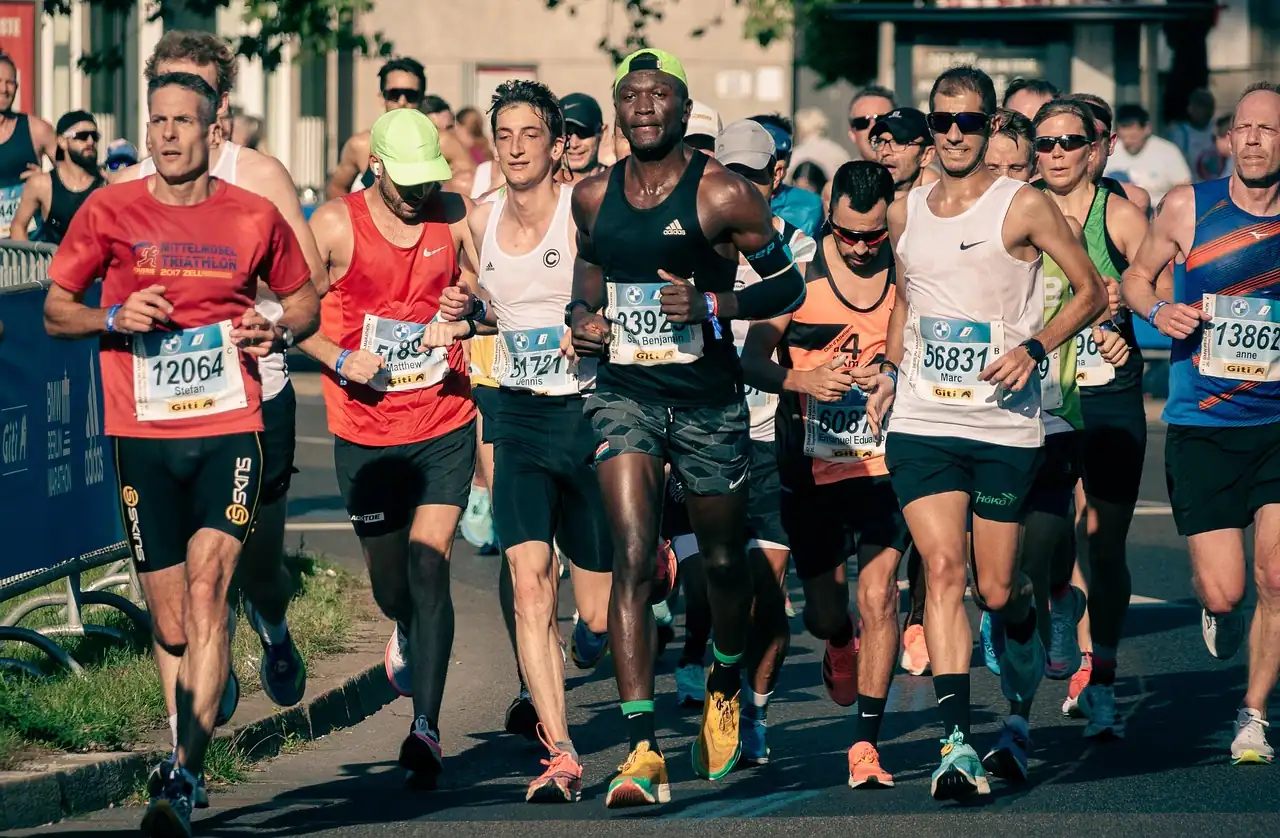
Imagen: wal_172619 / Pixabay
Castellón keeps a very lively race calendar, with events spread between the capital, the coastline and the inland towns. In 2026, the province combines road, mountain, open-water swims and triathlons in a sporting map that is not limited to a few big names: every weekend brings a different start line, with routes ranging from urban 5Ks to 42-kilometre trails, passing through summer night races and charity walks.
Variety is the dominant note. The city of Castelló concentrates major reference events, but the calendar quickly expands toward Benicàssim, Oropesa del Mar, Benicarló, Vinaròs, Artana, Benassal, Cirat or the Vall de Uixó, among other towns. That distribution turns the province into a kind of stepped board: mass events along the Mediterranean corridor and more technical challenges in the Sierra de Espadán, the Maestrat or the rougher inland areas.
A calendar that alternates road, mountain and sea
Castellón’s sporting profile is unique because few territories mix city, mountain and water races so naturally. Road running dominates the big urban distances, with night 5Ks and 10Ks, half marathons and socially minded events. Mountain running, for its part, has gained ground with trails and races over paths, tracks and elevation changes that are already a hallmark of the province. And the Mediterranean adds a third layer, with open-water swims and triathlons that broaden the focus far beyond classic running.
In practice, that diversity also changes the way people compete. A fast course in Benicàssim does not demand the same as a trail in Catí or Artana, nor is an open-water swim in Oropesa del Mar prepared like a 10-kilometre race through the centre of Castelló. The popular races of Castellón do not just share a province; they share a sporting culture in which the calendar adapts to the climate, the terrain and the character of each municipality.
The capital remains a decisive hub. On 22 February 2026, the Marató BP Castelló and the 10K Facsa Ciudad de Castelló are listed, a day that brings together endurance runners and specialists in sustained pace. Few dates draw so much attention in the provincial calendar. Then in March comes the Carrera de la Mujer and, in April, the Vuelta a Pie a la Ciudad de Castelló, two events that reinforce the city’s role as an athletic and social showcase.
The races that set the pace in the capital
Castelló de la Plana continues to function as the epicentre by volume, visibility and tradition. The Marató BP Castelló is the long-distance benchmark, while the city’s 10K offers a more accessible format for those looking for speed and simpler logistics. Both events give shape to the athletic winter and act as a magnet for local runners and visitors alike.
In spring and early summer, the capital’s calendar becomes more varied. On 26 April 2026, the 4th Business Race is held, with 5K and 10K formats, an event that brings together sport and the workplace. And on 16 May comes the 5K and 10K Night Run Addiction, a race that capitalises on one of the most recognisable scenes in Mediterranean running: the start with milder temperatures, the asphalt still warm and a city that changes pace as evening falls.
There is also room for events with a charitable focus. On 6 June 2026, the 5th Ali Martínez Solidarity Race for Organ Donation is listed, one of those events that remind us that popular sport in Castellón is not only about the clock. The social side remains very much present and helps explain why so many races keep a loyal base of participants year after year.
Mountain running gains weight in the inland areas of the province
Trail running has become an essential part of Castellón’s calendar. It is not a passing trend, but a sustained evolution in a province with ideal terrain for it. Catí, Vall de Almonacid, Artana, Benassal, Cirat, Eslida, Vistabella del Maestrat or the Serra d’Irta appear again and again on the map. The result is a calendar that combines physical effort and scenery, with races that take advantage of gradients, paths and wooded areas.
Among the most striking events of 2026 is the Volta de Muntanya de Catí, with 13- and 21-kilometre formats, and the Moriscos Trail in Vall de Almonacid, which offers distances of 15 and 24 kilometres. Added to that is the Woman Trail in the Vall d’Uixó, with 10 kilometres, and the Cursa de Muntanya a Benassal Font de Vida, scheduled for late June with 21 kilometres. Each one follows the same pattern: demanding routes, natural surroundings and a community of runners that is already looking for something more than just adding kilometres.
Summer also keeps its own language in the mountains. The XVII Cursa Vistabella, on 4 August, features 28 kilometres, a respectable distance that demands endurance, focus and heat management. Later on come the Volta a les Fonts d’Eslida and the Marxa a Peu Serra d’Irta, which broaden the range between sporting walk and pure trail running. In Castellón, the inland areas are not just a backdrop; they are a central part of the running story.
The coast brings night races, open-water swims and triathlons
The Castellón coastline shapes another kind of effort. Benicàssim, Oropesa del Mar, Moncofa, Xilxes, Almenara, Vinaròs or Peñíscola appear with summer events that rely on the long light, the sea breeze and the more favourable temperatures at dusk. That is why night races are so popular here: in this province, they are no longer a rarity but a fully established format.
The 10K Nocturna Benicàssim Platges, scheduled for 13 June, and the 10K Nocturno Oropesa del Mar, set for 4 July, are two clear examples. Summer also brings events in Moncofa and Nules, such as the 10K Nocturn Platges de Moncofa and the Trofeu Sant Roc. These are routes designed to be run in less heat, but also with a different atmosphere: more people, more movement along the seafront and a sense of sporting celebration that changes the tone of the day.
Alongside the road races comes the water. The open-water swims in Almassora, Oropesa, Vinaròs, Peñíscola, Xilxes, Moncofa, Almenara or Gurugú beach expand the calendar beyond running, while the triathlons in Castellón, Burriana and Vila-real consolidate a very strong multidisciplinary block between June and July. Although not all of these events are on foot, their presence explains the sporting ecosystem surrounding the province and helps to understand why the calendar is so dynamic.
Key dates in spring and summer 2026
The density of the calendar means each stretch of the year has to be looked at carefully. In June, for example, the 5K Benavites in Castelló, the Petjada. Volta Terme Sant Joan de Moró with two distances, the Trail Cirat #siguelaliebre and the Cursa de Muntanya a Benassal Font de Vida follow one another. The month brings together road, mountain and very different race formats in just a few days.
July is usually the kingdom of night races and open-water swims. The agenda includes the Oropesa race, the Moncofa race, the Alcossebre race, the Nules race and the Carrera entre olivos y pinares in Vall de Almonacid, which offers a more rural and technical profile. Also appearing are the open-water swims in Almassora, Gurugú beach, Fortí in Vinaròs or Orpesa, a block that shows how the Castellón summer shares the spotlight between land and sea.
August does not slow down. The Volta a peu platja d’Almenara, the Volta a Peu Azuliber Alcora, the Cross Ciudad de Segorbe and the Marxa a Peu Serra d’Irta keep the activity going until the end of summer. It is an important detail, because in many provinces the calendar cools off from July onwards, while in Castellón the agenda stays alive in the middle of the heat thanks to the mix of coast, inland areas and schedules adapted to the temperature.
Distances for every profile, from 5K to the marathon
The great value of Castellón’s calendar is its real breadth of distances. It is not just about counting races, but about offering very different levels of demand. Those looking for a first experience have options of 4.2 kilometres, like the Volta a Peu Azuliber Alcora, or 5 kilometres, like the 5K Club Atletisme la Vall or the 5K i 10K Sastre & Ferrando. Those already experienced on the road can look to the night 10Ks or to half marathons on road and mountain terrain.
At the most ambitious end are the 21.097 kilometres, the classic half marathon distance, and the 42.195 kilometres of the marathon, present in events such as Maraclot or the Marató BP Castelló. In between, the calendar leaves very usable ground for intermediate runners, with 13, 15, 16, 19, 21, 24 and 28 kilometres spread across the province. That ladder of distances makes progression easier without forcing runners to leave the province to find a challenge tailored to them.
The variety does not only benefit experienced runners. It also makes the calendar easy to read for those approaching running for the first time, because there are festive events, others with a competitive profile and many with a mix of both. In Castellón, the word popular keeps its original meaning: an open space, with atmosphere, broad participation and formats for almost every pace.
How to read the calendar without getting lost among so many options
The key is to distinguish the type of effort before the name of the race. A flat urban race is not the same as a trail with elevation gain, nor is an open-water swim the same as a night race with heat and humidity. Registration, bib collection and logistics change from one organiser to another, but what really matters for the runner is knowing whether the event fits their level, the time available for preparation and the type of terrain they will face.
Seasonality also matters a great deal. Winter and spring usually concentrate the biggest road events, while summer multiplies the night races and coastal events. By contrast, the inland areas keep a more mountain-oriented rhythm throughout the year, with routes that punish the legs but reward knowledge of the terrain. Castellón does not offer a single calendar; it offers several overlapping calendars, depending on the area, the discipline and the time of year.
That mosaic is especially visible in the capital and its immediate surroundings. Castelló, Burriana, Benicàssim and Oropesa form a column of easily accessible events with strong turnout; the more technical inland areas, with Catí, Benassal, Cirat or Eslida, bring toughness and scenery; and the coastal strip adds night races, sea and summer atmosphere. The province works as a continuous sporting corridor, with very different but connected stages, all tied together by the same passion.
A province that has made running a shared identity
The success of these events is not explained by quantity alone. It also comes down to the way Castellón has managed to blend tradition, landscape and accessibility. Popular races have become a meeting point for clubs, occasional runners, families, organisers and town councils that understand the value of sport as a civic showcase. The result is visible in the calendar: every year new events appear, others return and several are consolidated as part of the local sporting landscape.
The province also offers a very valuable feature for today’s runner: the possibility of choosing between road, trail, mountain, swimming and triathlon without really leaving the map. That breadth helps explain why Castellón appears so often in national calendars. It is not just a place where people run; it is a territory where running coexists with other endurance sports and adapts to the terrain as if it were part of the rules.
In that context, Castellón’s popular races are better read as a network than as a list. Each event adds a piece: the big urban race, the night run by the sea, the trail among pines and stone, the solidarity walk, the summer open-water swim or the winter marathon. The result is a calendar that does not just add dates, but draws the way an entire province understands sport: with continuity, with landscape and with its own identity, recognisable at first glance from bib and shoes.
A calendar that keeps growing between the city and the landscape
The strength of Castellón’s calendar lies in its balance. There are enough events for those who only want a comfortable 5K, and also for those chasing a marathon, a mountain trail or a summer night run. The province does not force you to choose between the sea and the mountains; it offers both, as well as urban road running and an organisational network that has managed to keep the events regular.
That is why Castellón has established itself as a reference for following the evolution of running in the Valencian Community. The major events in the capital set the pace, but the real value lies in the whole: dozens of races spread throughout the year that turn the province into a map of opportunities to compete, enjoy or simply get to know the territory stride by stride. Here, racing is not an isolated event, but a shared habit, and that is the real engine that keeps the calendar alive.
From February to August, and with more events spread across the rest of the year, Castellón confirms that its relationship with running goes far beyond fashion. What you see at every start line, whether by the sea, on a central avenue or on a mountain path, is a province that has made popular sport a stable part of its everyday landscape.



How to prevent thigh chafing: causes and real solutions

Women’s running windbreakers: seven jackets and how to choose

Do more workouts get rid of soreness? A guide for runners

Jaén Half Marathon 2026: Record 3,800 Runners Registered

Men’s short running tights: how to choose the right pair

World Triathlon confirms data breach involving medical data

Izan Edo targets podium at Miyazaki World Cup

María Pérez ranks ninth in World Athletics’ 2026 top ten

Dos Santos, Duplantis and Sawe: World Athlete of the Year finalists

San Silvestre Vallecana 2026: 42,000 places, prices and start times

 Races4 months ago
Valencia Half Marathon 2027: date and registration

 Races4 months ago
Valencia Marathon 2026: entry, ballot and course

 Reviews and Comparisons4 months ago
Asics Gel-Roadmiles 3 for men: review and current price

 Reviews and Comparisons4 months ago
Asics Gel Sonoma 8 Gore-Tex: complete analysis for trail and rain

 Sneakers4 months ago
Saucony Endorphin Pro 4: full review and verdict

 News5 months ago
Strava API 2026: what changes for clubs, challenges and runner apps?

 Reviews and Comparisons5 months ago
Nike Alphafly 3: opinions, sensations, and real key points

 Reviews and Comparisons4 months ago
Under Armour running shoes review 2025-2026: models and key features

 Sports Equipment4 months ago
Shoe sizes in cm: a clear guide to getting the right fit for your footwear

 Sneakers3 months ago
Skechers GO RUN Consistent 2.0 analysis: comfort and limits

 News5 months ago
Valencia Marathon 2026 route: key tips to train and run better

 Sneakers4 months ago
Adidas Adizero Boston 13 for men: review and verdict