News
Where to find trail running races in Valencia and Spain
Calendars, filters, and useful websites to find mountain races in Valencia and throughout Spain.

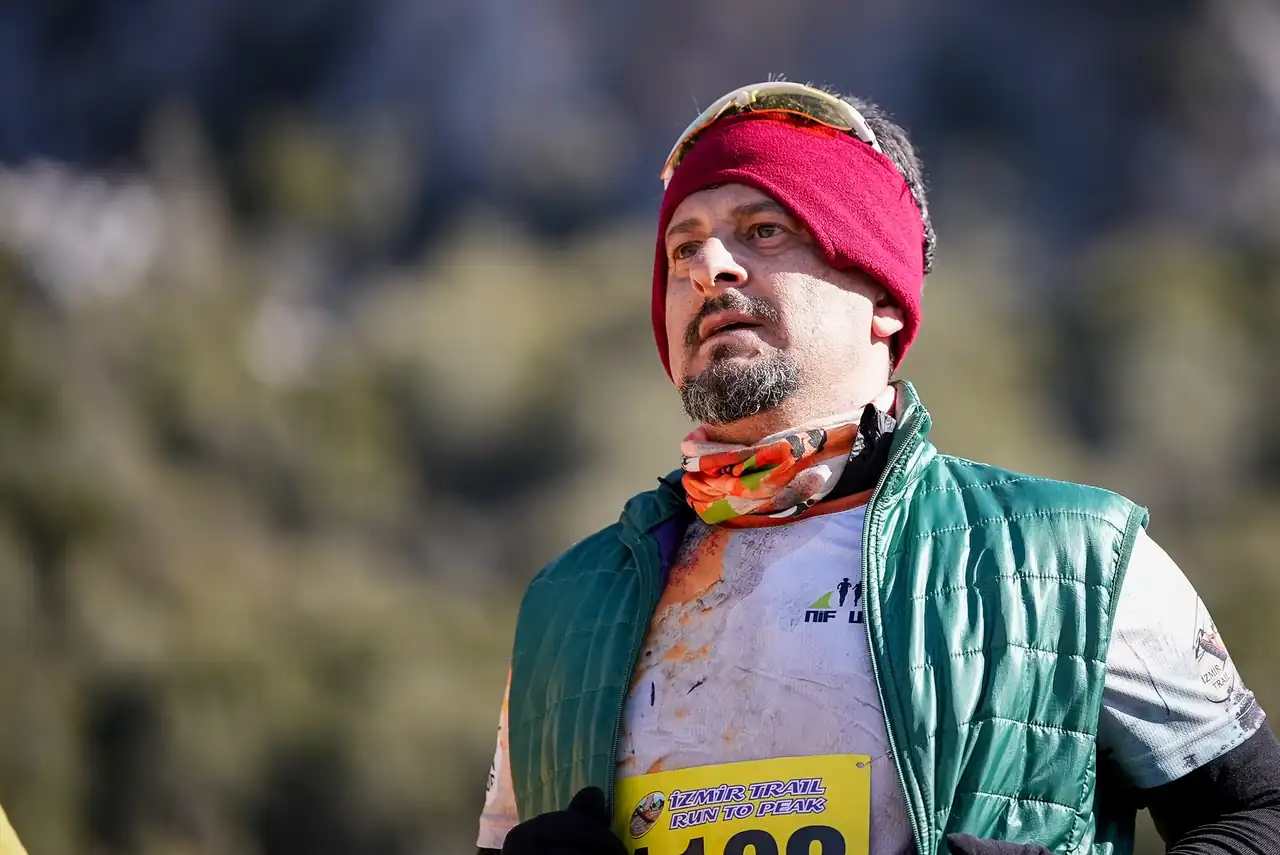
Trail running has become a world of its own within recreational sports: it is no longer enough to look for a single race, but rather it is worth knowing where to look, how to compare calendars, and which sources offer reliable information so you do not miss an entry or a new edition. In the Valencian Community, moreover, the number of events is so high that a runner can go from a short spring race to a mountain ultra in autumn without leaving the same region.
The most useful way to find these races is to combine specialized calendars, results pages, club social media, and the official websites of each organizer. That digital map makes it possible to see dates, distances, elevation gain, terrain type, and, in some cases, the registration status. In a sport where many races change course, quotas, or dates because of weather and logistics, keeping information up to date matters more than design.
Specialized calendars set the starting point
Calendar portals remain the main reference for anyone who wants to find mountain races without spending hours on scattered searches. Their value is not only in gathering events, but also in organizing the season by month, province, and discipline. That makes it possible to locate races in Valencia, Castellón, or Alicante at a glance, but also to compare with other regions if the runner is looking for a specific challenge or a free date in their planning.
Sites such as Runedia, Runática, ClubRunning, or MyChip work with that logic, publishing listings with dates and distances. In the Valencian case, events such as Anfibios Trail de Anna, Leonidas Trail in Sagunto, Anfibios Trail Navarrés, Volta a Peu Gilet, Benicatrail, Sprint Trail Senyera, Trail Castell de Serra, or Otos Trail appear. These are not just names in a row: they form a real map of the season, useful for understanding how the calendar is distributed between summer, autumn, and winter.
The advantage of these calendars is speed. In just a few clicks, the reader can find a race by month, another by municipality, and a third by distance. The drawback, however, is well known: some listings mix disciplines, others are not updated at the same pace, and others show races that have already taken place or are upcoming without enough context. That is why it is best to use the calendar as a compass, not as the only truth.
What information to check before choosing a race
Not all mountain races demand the same thing, even if they share the same generic name. A 9-kilometer race on runnable terrain is nothing like a 34-kilometer race with long climbs and technical sections. That is why, when looking for a trail event, what matters is not just the distance, but also the type of surface, positive elevation gain, the presence of narrow paths, the start time, and the prior experience the course requires.
The most complete calendars add labels that help distinguish whether a race is trail, mountain, cross-country, road, or a hike. That classification is especially useful in the Valencian Community, where popular races coexist with events with an alpine, night, or mixed profile. The Trail Nocturno Subida al Puntal, for example, does not require the same preparation as a flat race on the coast or a long climb with loose-stone sections.
Distance alone can be misleading. A 13-kilometer race can tire you out more than a half marathon if the elevation gain and technical demands are tough. That is why reputable portals include, when possible, data on kilometers, formats, and course conditions. For the runner, that information is the difference between signing up on impulse and choosing with judgment.
The Valencian Community concentrates a very active calendar
Valencia, Castellón, and Alicante support one of the densest trail ecosystems in the country. There are races all year round, although most are concentrated in late summer, autumn, and spring. That pattern is due to the heat, the availability of trails, and the tradition of clubs and local councils that have made the mountains a deeply rooted sporting format.
The 2026 listings show that breadth well: Beniatjar, Picassent, Serra, Finestrat, Gorga, Jalance, Vilafranca, Onda, Montán, Alcoi, or Eslida appear as key points on the map. Some races focus on medium distances, others on longer routes, and others combine several options in the same event. The result is a staggered calendar, almost like a mountain range of small and large peaks, where every weekend can hide a different event.
Valencia province also has a distinctive feature: many races are based in small towns with a strong mountain identity. That gives the calendar a close, less industrial feel than other mass circuits, and it helps the runner find events with a more local touch, trails familiar to the area, and routes that blend sport and landscape. It is no minor detail; in trail running, context is part of the race.
Official websites remain the decisive source
The calendar helps you discover, but the official website confirms. That distinction matters because sensitive information usually changes there before anywhere else: registration fees, entry limits, schedules, mandatory gear, aid stations, final course details, and possible changes due to permits or weather. Once a runner has found an interesting race, the next stop should always be the organizer’s source.
In a living season like trail running, announcements are not static. A race can go from open to sold out in a matter of days if the quota is limited and the town has strong appeal. It may also be postponed for organizational reasons, or a section may change if the mountains have suffered rain, forestry work, or environmental restrictions. The race website is therefore not decorative information; it is the document closest to reality.
This caution avoids common mistakes, such as assuming a date that has already changed, assuming a distance repeats exactly every year, or believing that a night race always keeps the same start time. In trail running, details matter. A 30-minute change in the start can affect temperature, light, and racing strategy more than it seems.
How to read a calendar without getting lost in abbreviations and distances
Mountain calendars use their own grammar. In the same table you may find abbreviations such as 5K, 10K, 21K, 42K, or ultra-distance, as well as terms like KV, hike, walker, or traverse. The key is to interpret each label naturally, but without confusing categories. A road half marathon is not the same as a mountain half marathon with a thousand meters of positive elevation gain.
On the more polished portals, races are cross-referenced with filters by province, discipline, and distance range. That helps refine the search without navigating blindly. If a runner wants an event between 10 and 15 kilometers in Valencia, they only need to scan those ranges and then check whether the profile is faster or more technical. The system seems simple, but it saves time and, above all, prevents choosing with your gut instead of your head.
It is also worth paying attention to the month and not just the race name. Some races are seasonal by nature: some are born with the heat, others are reserved for autumn, when the mountains breathe easier and the runner suffers less from the temperature. In the Valencian Community this is clearly visible: July and August bring night races or short-format events, while September and October usually attract longer distances and more varied terrain.
The search has shifted from the general showcase to fine filtering
A few years ago, reading a long list of events was enough. Now runners want precision. They look for mountain races in a specific province, yes, but they also want to know whether the profile is fast, whether walking is allowed without penalty, whether the entry includes a T-shirt, whether the start pen is unique or wave-based, and whether the route repeats every season. That evolution has pushed calendars to be more visual and more technical at the same time.
Reference sites respond to that demand with extensive databases and filtering tools. Runedia and ClubRunning, for example, sort by province, date, and type of event; Runática mixes registrations and results with a huge archive of events; MyChip gives visibility to specific calls with fixed dates; and specialized trail media add editorial context, race analysis, and season coverage. The search is no longer just a list, but a small radiograph of the circuit.
That change benefits mountain runners, because it reduces the distance between interest and decision. Someone looking for a race no longer needs to jump from forum to forum or rely on word of mouth. They can compare, rule out, and save. In a sport where the calendar is organized as a chain of efforts, that clarity is almost as valuable as a pair of shoes with good grip.
The role of clubs, city councils, and specialized media
Trail races do not live only on aggregator platforms. Many announcements first circulate through club networks, local councils, federations, and sector media. Posters, regulations, schedules, and photos from previous editions are published there, helping place the race in its territory. That information circuit is more handcrafted, but also closer to the race’s origin.
In small towns, the race is often part of local identity. The event is presented not as a product, but as a day that mobilizes volunteers, trails, and local commerce. That is why specialized media, when compiling calendars, also add reports, interviews, and news about runners, giving the reader a fuller view than the simple registration data.
The combination of sources is the best defense against outdated information. A calendar detects the event; the organizer confirms the details; specialized media explain the context; and the club or town council provides practical information. When all those layers align, the user gets a much more accurate picture of the race and its surroundings.
The signs of a good mountain race source
Not every calendar deserves the same trust. There are clear signs that separate a serious database from a mere collection of links. The first is a visible and orderly date; the second, a complete location; the third, a distinction between disciplines; and the fourth, a recent update. If several of these elements are missing, the page serves as guidance, but not as a final reference.
It also adds a lot of value if the source allows filtering by territory or terrain type. In Spain, and especially in Valencia, a pure mountain race is not the same as a mix of road, cross-country, or hike. That difference changes the profile of participants and, therefore, the usefulness of the calendar. The finer the classification, the closer the portal is to the runner’s real needs.
The value of a source is measured by its ability to save work. A good calendar does not force too much interpretation; it presents things clearly. If it also includes distances, results, and links to registration, the reader gains an overview that reduces improvisation. In a sport so dependent on planning, that order is almost a form of mental rest.
The Valencian calendar as a thermometer of Spanish trail running
Searching for trail races in Valencia also helps us understand the national pulse. The region acts as a testing ground for formats: night races, popular events, middle distances, mountain races, and harder mountain challenges. That diversity makes it a very useful window for anyone who wants to follow the evolution of Spanish trail running without limiting themselves to the major international headline events.
In 2026, the listings show an active season spread across the year. July opens with events such as Anfibios Trail de Anna, August adds Leonidas Trail Sagunto and Anfibios Trail Navarrés, September concentrates Benicatrail, Picatrail, or Trail Jalance, and October brings events such as Trail Castell de Serra, Otos Trail, or Trail Millares into the spotlight. You do not need to go far to see variety; you just need to read the calendar carefully.
That map also reveals a simple reality: trail running has become more accessible in terms of information, but not simpler in terms of demand. Runners have more data than ever to choose from, and yet each race retains its own personality. A rocky trail, a short but explosive climb, or a muddy descent can completely change the character of a race. That is precisely why it is worth looking carefully at where to search and which source to consult.
A map that never stops moving
Finding mountain races is no longer solved with a single website. It is built from several layers: calendars, results, specialized media, official pages, and organizers’ social channels. That combination, sometimes chaotic, ultimately draws the most accurate map of current trail running, a sport that lives between the precision of data and the improvisation of the terrain.
In Valencia and throughout Spain, finding races is easier than ever, but choosing well still requires judgment. The date is not everything, the distance is not everything, and the race name even less so. What really matters is reading the calendar like a landscape: with elevation, with shade, with curves, and with small warnings that help you not confuse the trail with the highway.
That is the key to the search: not to accumulate races, but to know where they are, what they are like, and what part of the season they occupy. Whoever masters that reading finds a registration sooner, understands their level better, and builds a meaningful mountain year. In trail running, information does not run by itself; you have to learn to keep pace with it.



How to prevent thigh chafing: causes and real solutions

Women’s running windbreakers: seven jackets and how to choose

Do more workouts get rid of soreness? A guide for runners

Jaén Half Marathon 2026: Record 3,800 Runners Registered

Men’s short running tights: how to choose the right pair

World Triathlon confirms data breach involving medical data

Izan Edo targets podium at Miyazaki World Cup

María Pérez ranks ninth in World Athletics’ 2026 top ten

Dos Santos, Duplantis and Sawe: World Athlete of the Year finalists

San Silvestre Vallecana 2026: 42,000 places, prices and start times

 Races4 months ago
Valencia Half Marathon 2027: date and registration

 Races4 months ago
Valencia Marathon 2026: entry, ballot and course

 Reviews and Comparisons4 months ago
Asics Gel-Roadmiles 3 for men: review and current price

 Reviews and Comparisons4 months ago
Asics Gel Sonoma 8 Gore-Tex: complete analysis for trail and rain

 Sneakers4 months ago
Saucony Endorphin Pro 4: full review and verdict

 News5 months ago
Strava API 2026: what changes for clubs, challenges and runner apps?

 Reviews and Comparisons5 months ago
Nike Alphafly 3: opinions, sensations, and real key points

 Reviews and Comparisons4 months ago
Under Armour running shoes review 2025-2026: models and key features

 Sports Equipment4 months ago
Shoe sizes in cm: a clear guide to getting the right fit for your footwear

 Sneakers3 months ago
Skechers GO RUN Consistent 2.0 analysis: comfort and limits

 News5 months ago
Valencia Marathon 2026 route: key tips to train and run better

 Sneakers4 months ago
Adidas Adizero Boston 13 for men: review and verdict