News
Running in Valencia this summer: new hours, risks and key habits
Routes, schedules, and cool spots to train in the city when the thermometer climbs and the asphalt burns.

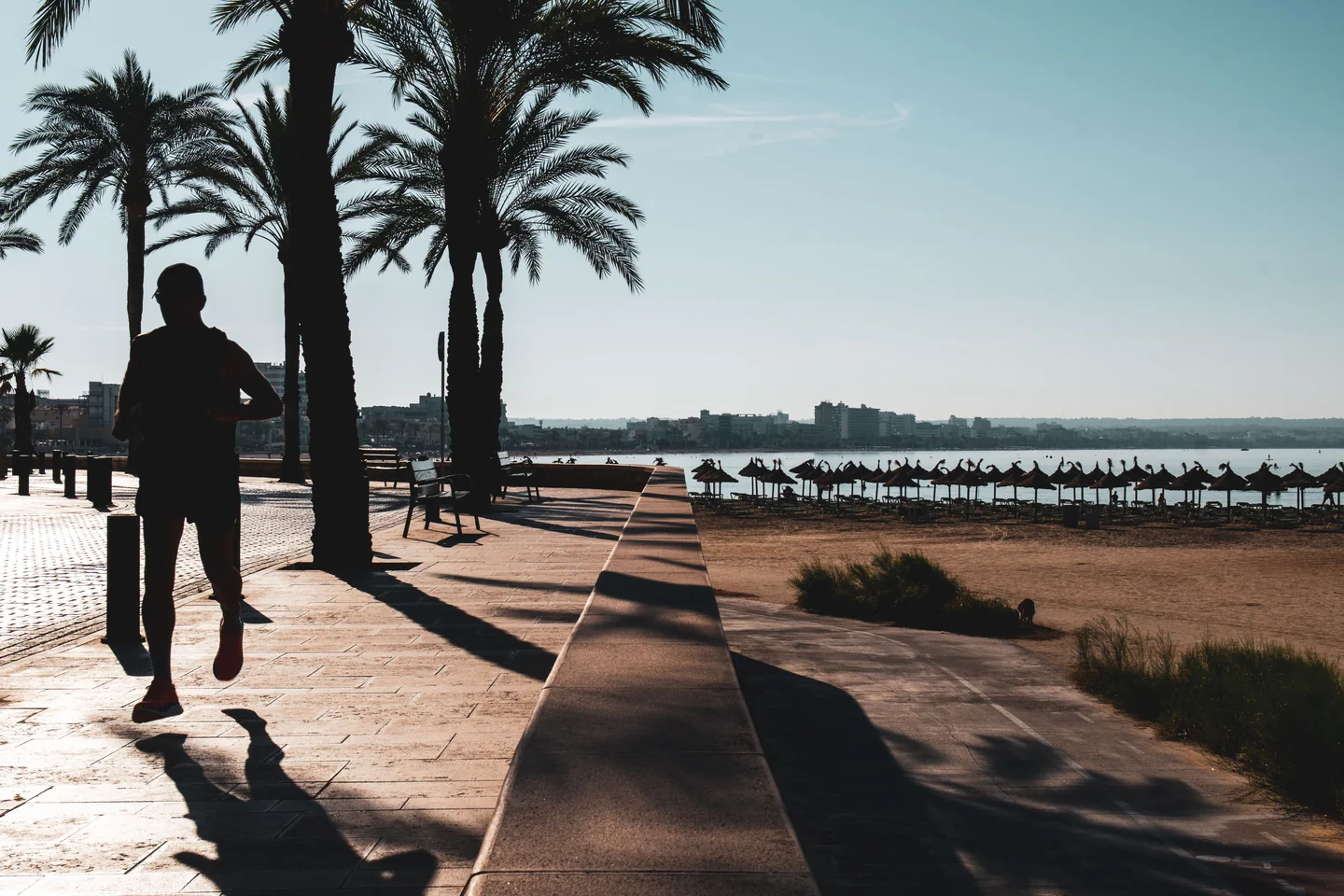
Summer completely changes the way of running in València. The same promenade that in April feels pleasant can, in July, feel like a scorching treadmill under the sun. The city keeps its offer of routes, parks and stretches by the sea, but the useful window for training narrows and the clock takes over: dawn and dusk become the most valuable slots for those who do not want to turn every outing into a test of thermal endurance.
The combination of heat, humidity and solar radiation demands adjusting paces, routes and expectations. In València, where the sea is close and the urban mass holds onto heat well into the night, running in summer is not just about adding kilometers; it is about choosing the terrain well, hydrating with common sense and reading the surroundings as if they were a map of shadows, fountains and breeze. Whoever understands that logic still finds room to train regularly without punishing the body too much.
The city that runs, even in the harshest months
València has a special relationship with running all year round, but in summer that identity becomes more selective. The old Turia riverbed, La Marina, Malva-rosa beach, Dehesa de El Saler or the northern orchard land are still there, although each one changes its face when the heat hits. The most exposed surfaces shine like a hotplate; the tree-lined areas, on the other hand, gain almost strategic value.
That contrast explains why local runners change their routines. Some shorten the distance and others swap asphalt for compact dirt or for a circuit with more trees. The city offers options, yes, but not all of them work the same between June and September. The priority stops being only performance and becomes also heat tolerance, a factor that can send fatigue soaring, raise the heart rate and turn an easy run into a session that is too demanding.
Deep down, the Valencian summer forces you to run intelligently. There is no need to give up training, but it is necessary to understand that the body works differently when the temperature rises and the humidity presses. The thermal sensation, many times, weighs more than the thermometer reading, and that is especially noticeable in open stretches, without shade and with direct sun reflection.
The hours that really make the difference
Heading out before sunrise or waiting until nightfall completely changes the experience. Early in the morning, the city still holds onto some of the night’s coolness, traffic is lighter and the ground has not stored as much heat. It is the kindest moment to link together a steady run, do gentle intervals or complete a controlled long run without fighting the environment. It is no coincidence that many summer routes begin around seven in the morning, or even earlier on the toughest days.
The night slot also gains prominence, especially in wide and well-lit areas. After sunset, La Marina, part of the Turia and several neighborhoods with generous avenues recover a certain comfort for running. Even so, the Valencian night can still feel heavy, with high humidity and a temperature that takes time to drop. That is why night training demands the same respect as morning training: restrained pace, prior hydration and room for the body to adapt.
In between lies a time slot that is almost forbidden in the height of summer. Running at midday or in the first hours of the afternoon raises the risk of overheating and makes the effort shoot up. The Valencian sun does not forgive in summer, and that is much more noticeable on open asphalt, seafront promenades and treeless esplanades. The practical consequence is clear: whoever can, shifts training to the first or last hours of the day.
The old Turia riverbed, a classic that never loses value
Jardí del Túria remains the backbone of urban running in València. Its great advantage is not only its length, but the variety of stretches, the use of gentler surfaces in certain areas and the presence of trees that provide partial shade in many spots. In summer, that shade matters as much as the mileage itself. The 5K circuit in the garden also brings together runners of all levels and makes it fairly easy to adjust distances.
There is an important nuance: not all stretches of the riverbed offer the same protection. The central hours turn some sections into hot corridors, especially where the sun hits directly and the breeze does not get in. That is why the experience changes a lot depending on the time of day. Early on, the Turia can feel like a green, breathable corridor; later, like a wide tunnel where the heat bounces between benches, bridges and open spaces.
The key is to use it with judgment and not out of inertia. In summer, a run in the Turia works better if it is linked with tree-lined areas, the hardest stretch of midday is avoided and it is accepted that the usual pace may not happen. The goal is no longer to fly, but to come through unscathed, keep continuity and preserve sensations. That tactical modesty saves a lot of trouble in July and August.
Marina, beach and seafront promenades: running with the sea nearby does not always cool you down
The coast offers a seductive image, but summer makes it deceptive. Running by the sea has obvious advantages: open spaces, clear horizons, the possibility of linking asphalt, compact sand or promenade, and a certain feeling of openness. However, the proximity of the Mediterranean does not guarantee freshness. On muggy days, humidity can make the effort feel greater than what the stopwatch shows.
La Marina de València and the promenade at Malva-rosa beach allow you to train with clear exposure to the outdoors and, in certain stretches, with a light breeze that helps. They are very attractive routes for anyone who wants to see movement, runners, bicycles and the outline of the port. But they are also spaces with a lot of sun reflection and little protection in some sections, so it is wise to choose them early or once the evening has fallen.
The sand, for its part, deserves a cautious reading. Running on a soft surface changes the mechanics, loads the calves and soleus muscles more, and on the beach it gets even more complicated if the sand is very loose. In summer it can work for a short jog, light technical work or a functional strength session, but it is not usually the best base for long distances. In a hot context, the beach adds physical toughness and sun exposure at the same time.
Areas with more shade and less thermal punishment
Shade becomes a currency throughout the summer. Parks, gardens and tree-lined routes not only soften the impact; they also reduce the thermal load on the body. In València, Parque de Cabecera, some stretches of Parque Central, the Viveros Gardens and various secondary green corridors offer a more bearable alternative than open avenues. They are not miracle routes, but they are more sensible when the heat is pressing.
The orchard land around the metropolitan area, especially in directions such as Alboraia, Campanar or certain paths to the north and west, adds another nuance: less noise, less traffic and a rural feeling that can seem fresher at dawn. The vegetation, the paths between fields and the lower density of concrete mean the body receives less accumulated radiation. You run differently when the landscape lets you breathe.
There is also room for short stretches in neighborhoods and secondary parks, useful for those who are not looking for a long session but for gentle maintenance. In summer, that flexibility is worth gold. A short, repeatable circuit makes it easier to control hydration, shorten exposure to heat and get home before fatigue turns into a burden. The city, seen this way, breaks down into small training opportunities.
Hydration, salts and pace: what really changes
Heat transforms training because the body dehydrates sooner and empties out faster. In València, with high humidity on many summer days, sweat takes longer to evaporate and the feeling of effort rises even when the pace seems controlled. That is why drinking only at the end falls short in medium or long sessions. Hydration before, during and after takes on an importance that is less noticeable in other seasons.
Mineral salts also gain importance when sweating is intense. It is not about complicating every outing, but about understanding that a long run in the heat can drain you more than an equivalent session in spring. Those who go out running with a small bottle, a fountain along the way or a route they know well usually manage the strain better than those who improvise and stray too far from water points. In summer, the surroundings matter almost as much as the legs.
Pace, moreover, should rarely be measured by the same yardstick. Many runners see their heart rate rise several beats per minute in hot and humid conditions. Forcing April’s pace in the middle of July usually brings an ungraceful bill: heavy legs, slow recovery and a feeling of exhaustion that lingers for hours. Adjusting the effort is not giving up; it is accepting the logic of the climate and continuing to train without breaking continuity.
Gear and details you do not notice until they fail
Clothing can become either an ally or an annoyance depending on how well it breathes. In summer, lightweight tops, light technical fabrics and breathable caps help more than it seems. Dark fabric traps heat, overly tight clothing reduces ventilation and a well-chosen visor can save a good part of the sun’s punishment. It seems like a minor detail, but on a long outing the body appreciates it kilo by kilo, or rather, gram by gram.
Shoes also matter, even if their role is less visible. A comfortable fit, a ventilated upper and a sole suited to the terrain make training more bearable. There is no such thing as a summer shoe in the strict sense, but there are models that are fresher and better suited to easy sessions, early runs or urban training on hot asphalt. Thermal comfort often starts with the feet, because they are the ones bearing the friction, the moisture and the repeated impact.
Small habits matter more than they seem. Choosing routes with fountains, carrying some liquid if the outing gets longer, not trying out new gear on the hottest day and avoiding routes with no escape are simple decisions that reduce suffering. Summer does not demand heroics; it demands foresight. And that, in running, is worth as much as a well-made interval workout.
Summer races in València also change the map
The summer calendar keeps the habit of racing alive despite the heat. In the province of València there are popular races, night races, charity events, triathlons, open-water swims and races of very different distances, from 5 kilometers to 10 and beyond. Many are concentrated in June, July and August, with afternoon or evening start times to avoid the sun. That calendar does not just encourage running; it also reshapes training habits during the week.
The logic is easy to see. When a night race or a village race at sunset is approaching, the runner adapts their sessions to that slot and starts to accept that summer is not for heroic times. The atmosphere changes, the streets fill with people and the race is lived more like a sober celebration than a battle against the stopwatch. In summer, Valencian running becomes more social and more tactical.
That diversity of events also explains why the local runner does not disappear in the warm months. They shift, adapt and lower ambitions, but they are still there. The city and its metropolitan area offer enough stimuli not to cut the routine off abruptly. Between night races, road races, stretches by the sea and shaded parks, summer does not empty the calendar: it redistributes it.
Warning signs that should not be normalized
Running in the heat means taking certain body signals seriously. Dizziness, chills despite the high temperature, headache, nausea, a racing pulse or fatigue that arrives earlier than expected are warnings that should not be ignored. Summer can turn an ordinary workout into a risky situation if you keep pushing when the body is already asking for air. At that point, stopping is not a dramatic option, but the logical response.
Dehydration does not always show up dramatically. Sometimes it arrives as a drop in performance, a dry mouth or a feeling of empty legs. Other times, as an unusually slow recovery after a short outing. In the heat, listening to the body matters more than closing the plan at all costs. In a city like València, where the running routine is very much established, that caution does not take away merit; it protects it.
It is also worth remembering that rest between sessions takes on greater weight. Sleeping well, avoiding back-to-back hard efforts in high temperatures and not turning every run into a test of character helps keep training alive throughout the summer. Continuity, in the end, depends on adding up without breaking down.
A summer that rewards intelligence more than epic drama
Running in València during the summer is not won with drama, but with craft. The city offers a wide range of routes, but the heat forces you to read them differently: choose shade, go out early, slow down, drink more and accept that some days all you can do is keep the habit. That adaptation, far from reducing value, shows a more mature runner and one less enslaved by the clock.
València keeps its status as a city made for running even when the thermometer is pressing. What changes is the way of using it. The Turia, La Marina, the urban parks and the coastal strip still offer powerful settings, but summer filters them with harsher light and greater demand. Whoever understands that language can keep training without turning every outing into a fight with the weather.
In the end, the Valencian summer leaves a fairly clear lesson: running here is not about challenging the heat blindly, but about moving with it, around it and, when necessary, in favor of caution. That balance defines the best training style in the most intense months of the year, and explains why the city remains, even in July and August, a reference for anyone who looks at the asphalt with a runner’s mindset.
You may also like: Uphills in summer: strength for runners without spending too much energy.
Este artículo contiene enlaces de afiliado: si compras a través de ellos, se genera una pequeña comisión sin coste adicional para ti. Más información.



How to prevent thigh chafing: causes and real solutions

Women’s running windbreakers: seven jackets and how to choose

Do more workouts get rid of soreness? A guide for runners

Jaén Half Marathon 2026: Record 3,800 Runners Registered

Men’s short running tights: how to choose the right pair

World Triathlon confirms data breach involving medical data

Izan Edo targets podium at Miyazaki World Cup

María Pérez ranks ninth in World Athletics’ 2026 top ten

Dos Santos, Duplantis and Sawe: World Athlete of the Year finalists

San Silvestre Vallecana 2026: 42,000 places, prices and start times

 Races3 months ago
Valencia Half Marathon 2027: date and registration

 Races3 months ago
Valencia Marathon 2026: entry, ballot and course

 Reviews and Comparisons4 months ago
Asics Gel-Roadmiles 3 for men: review and current price

 Reviews and Comparisons4 months ago
Asics Gel Sonoma 8 Gore-Tex: complete analysis for trail and rain

 Sneakers3 months ago
Saucony Endorphin Pro 4: full review and verdict

 News5 months ago
Strava API 2026: what changes for clubs, challenges and runner apps?

 Reviews and Comparisons5 months ago
Nike Alphafly 3: opinions, sensations, and real key points

 Reviews and Comparisons4 months ago
Under Armour running shoes review 2025-2026: models and key features

 Sports Equipment4 months ago
Shoe sizes in cm: a clear guide to getting the right fit for your footwear

 Sneakers3 months ago
Skechers GO RUN Consistent 2.0 analysis: comfort and limits

 News5 months ago
Valencia Marathon 2026 route: key tips to train and run better

 Sneakers4 months ago
Adidas Adizero Boston 13 for men: review and verdict