Training
Uphills in summer: strength for runners without spending too much energy
Areas, schedules, and key tips for gaining elevation in Valencia during the hottest months without punishing the body.

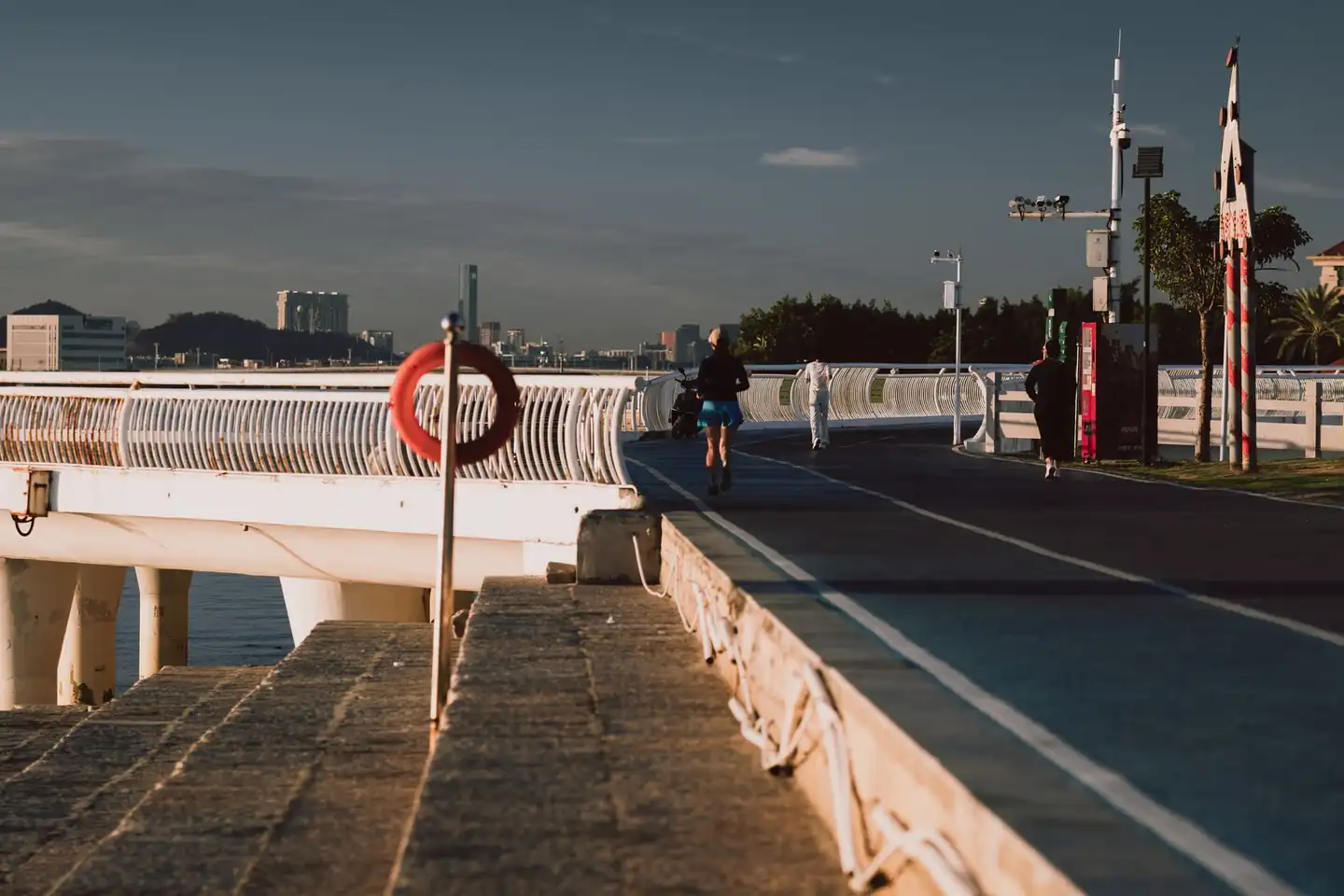
Summer in Valencia does not invite improvisation. The asphalt burns, the humidity weighs like a blanket, and long runs demand adjusting the clock, the intensity, and the route. Even so, working hills is still possible in the city and its surroundings if the hours and spaces are chosen well. The result can even be more interesting than in milder months: less traffic, more silence, and a clearer reading of the effort.
The key is not to pile up climbing meters on a whim, but to understand that heat completely changes the value of each repetition. A short hill at dawn can be a very useful stimulus; the same climb, at midday and with that heavy, stifling heat, turns into an unnecessary bill for the legs and heart rate. Valencia offers settings for both approaches, from urban ramps in the Turia to brief inclines around Cabecera or broader stretches on the slope of the Palau and the bridges of the old riverbed.
Summer turns the hill into precision work
In the warm months, the hill stops being just strength and becomes management. Heat reduces the margin for error, raises heart rate sooner, and speeds up dehydration, so training has to seek quality without turning the session into a battle against the thermometer. In Valencia, where July and August easily go above 30 degrees, the difference between a good session and a bad one can be half an hour.
That is why hill workouts in summer work better when they are short, measured, and discreet. There is no need for an endless session to stimulate glutes, hamstrings, and calves. Brief blocks, wide recoveries, and a reasonably forgiving surface are enough. In a city that is flat by nature, that selection matters even more because every rise has almost the value of a surgical tool.
It is also worth remembering that hills are not only used to gain power. They help improve technique, reinforce posture, and break the monotony of flat runs. In Valencia, where the Turia allows you to run almost in a straight line for kilometers, adding incline once a week in summer can be an effective way to keep sharpness without relying on track sessions or long, scorching routes.
The hours that best fit the Valencian heat
The most sensible window is usually between 6:30 and 8:30 in the morning, when the sun still does not hit hard and the body starts with less thermal stress. In the late afternoon there is also room, especially from 8:00 or 8:30 p.m. onward, although the nighttime humidity can leave a dense feeling, especially near the sea. It is not the same to climb a ramp in the city center as to do it with salty air and hot pavement.
The morning has a very clear advantage: the ground holds less heat and the pulse rises less violently. At that time, a short hill session can perform better than any heroic attempt at midday. By contrast, the end of the day offers another virtue: the body is already awake and usually responds better in the first repetitions. The downside is that the accumulated fatigue of the day often weighs more than it seems.
The hardest days of summer force you to read the body’s signals carefully. A quality workout is not, by definition, a long workout; sometimes, 20 useful minutes at the right moment are worth more than an hour under an aggressive sun. That simple idea changes the way you look at any incline in the city.
The most useful hills inside and near Valencia
The old Turia riverbed is the great urban laboratory for this kind of work. Its flat layout dominates the landscape, but in several spots there are ramps and bridges that make it possible to repeat efforts without leaving the city. The area around Parque de Cabecera offers a longer, more sustained climb, with a sense of continuous elevation gain. It is a good option for anyone looking for strength-endurance work without needing aggressive gradients.
Closer to the center, the four corners of the stretch near the 9 d’Octubre bridge offer a very interesting circuit for alternating uphill and downhill in a relatively compact space. The geometry of the place makes it possible to chain efforts without too much navigation, something useful when the heat does not invite you to lengthen the session. The area around the Palau de la Música also works well, where several short ramps allow you to work power and cadence with a dose of variety.
Another practical area is Campanar and the zone near the large complex in front of the riverbed, where there is a short, even incline that many runners use for brief intervals. It does not impress because of its length, but that is precisely where its value lies: it allows repetition without the session turning into an excursion. In summer, when too much time under the heat reduces quality, a rise of less than 100 meters can be more profitable than a long climb.
Parque de Cabecera, with its profile and the relative shade in certain stretches, is usually one of the most rewarding settings for adding elevation without fully abandoning the logic of an urban run. The green lung in the west of the city also offers a very different feeling of isolation from the City of Arts and Sciences, where the space is more open and the sun hits the pavement harder.
Outside the urban core, the Albufera and the Devesa del Saler add another possibility: paths and trails with small changes in terrain, gentle dunes, and stretches of compact sand. They are not hills in the usual sense, but they do provide a different muscular stimulus, useful for anyone who wants to work ankles and stability without seeking major elevation gain. In summer, however, they require extra caution because of sun exposure and the lower availability of shade in certain stretches.
What kind of session fits best when the thermometer rises
The most sensible work in summer is not usually the most eye-catching. Long, very demanding repetitions make sense at times of year with a mild climate, but in Valencia during July and August it is better to prioritize more controlled stimuli. A classic session can combine a broad warm-up, between 15 and 20 minutes, joint mobility, and several gentle strides before tackling the hills.
The most efficient approach is to repeat short efforts with enough recovery. A hill of 60 to 120 meters, or a climb of 20 to 40 seconds, allows you to work on power without greatly increasing the time exposed to heat. The downhill sections should serve as real recovery, not as added punishment. In summer sessions, the quality of the repetition matters more than the number of sets.
There is also room for mixed formats. An easy run through the Turia can include three or four uphill blocks at specific points, or a brief sequence of hills at the end of a short outing. That combination avoids the rigidity of overly structured sessions and fits better with variable-heat days, when a cloudy morning quickly turns into a heavy midday.
The intensity should be felt, but not overflow. If the session forces you to gasp for air from the very first repetition, the stimulus is going too far. In summer, a good hill workout ends with the feeling of having truly worked, but also with the certainty that there is enough left to repeat it another week without carrying excessive fatigue.
How to protect the body when elevation meets humidity
Hydration is not an accessory. In Valencia, the humidity factor makes fluid loss less obvious, but no less real. The body sweats, the shirt sticks, and the runner may think everything is fine during the first minutes while a silent wear begins to build. Carrying water on slightly longer outings, or planning the route near fountains, completely changes the experience.
Sun protection also takes on obvious importance. Cap, sunglasses, and broad-spectrum sunscreen are not style accessories, but barriers against exposure that wears you down cumulatively. In hill sessions, effort also tends to raise breathing, so breathing hot, dry air for too long increases the feeling of load. Light, pale technical clothing helps more than it seems.
It is worth paying attention to the choice of surface. In summer, a black asphalt hill in full sun absorbs and gives back heat like an iron. That is why compact dirt stretches, partial shade, or tree-lined surroundings have a clear advantage. Not only for comfort, but also for joint and thermal safety. The legs handle elevation better when the ground is not adding unnecessary stress.
Recovery afterward deserves the same care. Finishing the session, walking for a few minutes, and drinking before intense thirst appears helps close the effort without prolonging the stress. On humid hot days, the body takes longer to cool down; that difference can still be noticeable an hour later, when the runner keeps feeling as if summer is on their back like an invisible backpack.
What a runner gains from uphill work during summer
Hills are not only useful for running faster uphill. They also improve overall mechanics, teach you to push with more economy, and strengthen the muscles that support the stride on flat ground. Going uphill tends to organize posture; the stride shortens, arm swing becomes more important, and the torso stabilizes. All of that later translates into a more compact and efficient run.
In a context like Valencia, where flat routes are abundant and major events usually reward speed, incline work acts as a smart counterweight. It does not replace easy runs or flat intervals, but it adds a layer of strength and coordination that can be felt in the second half of the season. Even distance runners benefit from that muscular economy when the time comes to hold steady paces.
In addition, summer is a useful period for building without the pressure of an immediate race. That relative calm allows you to work on the base without obsessing over the stopwatch. Hills help precisely there: they demand concentration, but they do not force you to squeeze the body for too many kilometers. They are brief, specific, and easy to fit into weeks where the heat limits other options.
The mistakes that punish the most at this time of year
The most common one is confusing intensity with sporting value. Making the session harder does not mean getting a better improvement. In summer, insisting on long repetitions, shortening recoveries, or choosing the hottest hours can ruin an entire week. The body needs stimuli, yes, but it also needs room to adapt. The combination of heat, humidity, and elevation does not forgive arrogance.
Another common mistake is looking for hills that are too aggressive. In Valencia there are plenty of subtle spots, but there is no need to turn every workout into a mountain climb. Moderate, repeatable inclines are usually more useful than very steep ramps, because they allow you to maintain technique and posture without overloading the calves or Achilles tendon. What seems less spectacular in theory is often the most effective.
It also fails when someone forgets the surroundings. Some areas are magnificent early in the morning, but uncomfortable once the sun is fully overhead. Others are pleasant because of the shade, although they may be more crowded. In summer, choosing the right time and place is part of the training. The city changes its skin depending on the hour, and the same circuit can go from friendly to hostile in just 90 minutes.
Poorly managed recovery leaves a silent mark. Sleeping little, hydrating late, or chaining hard efforts without enough rest can turn a good session into a backpack of fatigue that is hard to empty. Hill work in summer works better when it is seen as an isolated, well-placed piece, not as a test of resistance to suffering.
A flat city that forces you to think better about every climb
Valencia is, precisely because of its horizontality, a very interesting place to train elevation. The scarcity of hills turns every rise into a valuable resource. There is no mountain nearby, but there are urban structures, bridges, ramps, and parks that make it possible to build quality sessions with a very practical logic. That makes the runner learn to read the city almost like a map of textures.
In summer, that reading becomes even more precise. The shade of a bridge, the orientation of a street, the breeze coming in from the sea, or the humidity trapped in an open stretch all change the value of each kilometer. Training hills in Valencia during the warmest months is, at heart, an exercise in common sense: choose well, push just enough, and let the city work in your favor instead of against you.
One very clear idea remains. Heat does not eliminate incline training; it forces it to be more refined. And in a city like Valencia, where flat terrain dominates but climbs do exist, the difference between a useful session and an excessive one lies in the details. Schedule, route, hydration, and restraint. That quartet, more than any heroics, defines what is worth it in the middle of summer.
The value of a well-chosen session when summer hits hard
A good hill session in Valencia does not need drama. It needs context, patience, and a route that allows repetition without breaking down. Heat forces you to simplify, but also to think more clearly. Anyone who learns to train in those conditions soon discovers that progress does not always come from doing more, but from doing better what actually fits into the day.
That is why summer is not a pause for the Valencian runner. It is a season that changes the language of training. Hills, small or medium, urban or peripheral, become a resource for sporting survival and a way to keep the engine tuned while the city boils. Used well, they are a tool; poorly planned, they are wear and tear. The distance between the two, in Valencia, is usually measured by the time on the clock and the prudence in the legs.
In the end, the city offers enough material for anyone who wants to add elevation without leaving the usual map. The Turia, Cabecera, the bridges, some stretches of Campanar, and the edges of the Albufera are enough to build solid weeks. Summer only asks for one condition: respect the heat as part of the route, not as an obstacle to be ignored.



How to prevent thigh chafing: causes and real solutions

Women’s running windbreakers: seven jackets and how to choose

Do more workouts get rid of soreness? A guide for runners

Jaén Half Marathon 2026: Record 3,800 Runners Registered

Men’s short running tights: how to choose the right pair

World Triathlon confirms data breach involving medical data

Izan Edo targets podium at Miyazaki World Cup

María Pérez ranks ninth in World Athletics’ 2026 top ten

Dos Santos, Duplantis and Sawe: World Athlete of the Year finalists

San Silvestre Vallecana 2026: 42,000 places, prices and start times

 Races3 months ago
Valencia Half Marathon 2027: date and registration

 Races3 months ago
Valencia Marathon 2026: entry, ballot and course

 Reviews and Comparisons4 months ago
Asics Gel-Roadmiles 3 for men: review and current price

 Reviews and Comparisons4 months ago
Asics Gel Sonoma 8 Gore-Tex: complete analysis for trail and rain

 Sneakers3 months ago
Saucony Endorphin Pro 4: full review and verdict

 News5 months ago
Strava API 2026: what changes for clubs, challenges and runner apps?

 Reviews and Comparisons5 months ago
Nike Alphafly 3: opinions, sensations, and real key points

 Reviews and Comparisons4 months ago
Under Armour running shoes review 2025-2026: models and key features

 Sports Equipment4 months ago
Shoe sizes in cm: a clear guide to getting the right fit for your footwear

 Sneakers3 months ago
Skechers GO RUN Consistent 2.0 analysis: comfort and limits

 News5 months ago
Valencia Marathon 2026 route: key tips to train and run better

 Sneakers4 months ago
Adidas Adizero Boston 13 for men: review and verdict