News
Women’s running pants: what to look at before buying before running
Fabrics, fit, pockets and prices: key factors for choosing a women’s running garment without making a mistake in the purchase.

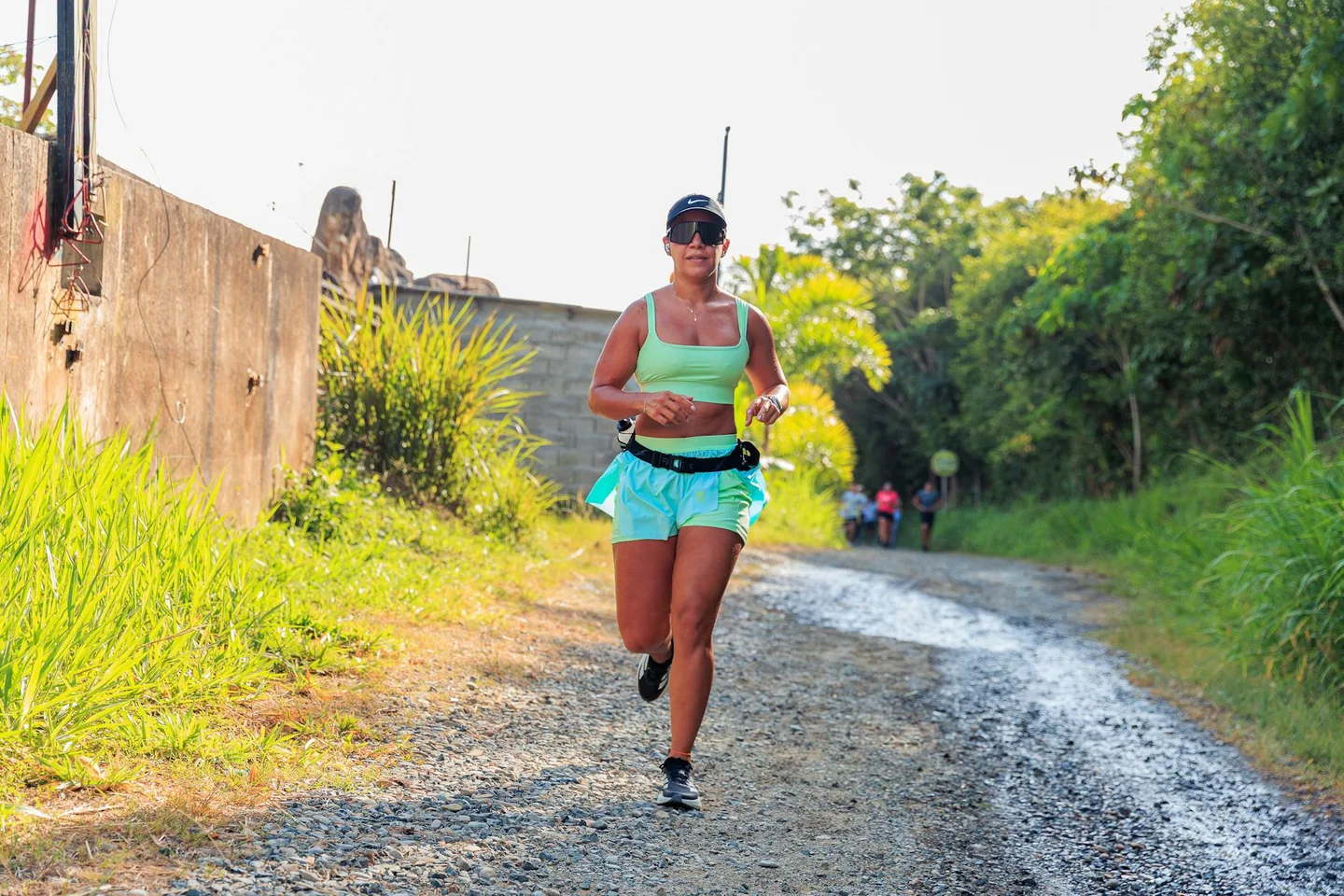
Imagen: CRISTIAN CAMILO ESTRADA / Pexels
The range of women’s running pants has widened to cover almost any need: from ultra-light shorts for intense workouts to long tights for cold days, including 2-in-1 models, garments with an integrated belt and options designed for trail. In the Spanish market, the prices observed in specialized brands range roughly from 19.60 euros in discounted fitness models to 85 euros in high-end references, with a very common band between 34 and 70 euros.
The real difference is no longer just in the length, but in the fabric, the type of waistband, the presence of inner mesh, the number of pockets and the level of support. Nike, adidas, Hoka, Salomon, New Balance, Under Armour, Lurbel or On have fine-tuned their collections so that every runner can find a garment adapted to weather, distance and pace. The right purchase usually depends less on the brand than on how the garment behaves when the effort ramps up, the sweat builds and chafing starts to threaten.
Light fabrics that make the difference on the run
In running apparel, the fabric works like a second skin. The best-rated models rely on technical polyester, elastane and quick-drying blends that wick moisture away quickly and keep weight under control. That combination avoids the sticky feeling, reduces the sudden chill when your heart rate drops and helps keep the garment from turning into a sponge halfway through the workout.
The big brands express it with different commercial names, but the underlying idea is the same: ventilation, stretch and sweat control. Nike uses its Dri-FIT fabrics, adidas turns to moisture-management technologies in its more technical lines, and other brands such as Hoka or Lurbel opt for very light structures and seams designed to minimize friction. In real-world use, this detail matters more than it seems, especially in long sessions or quality workouts with pace changes.
The other major point is breathability. A closed, dense pair of pants may feel firmer to the touch, but on mild or hot days it ends up trapping body heat. That is why many women’s shorts include thinner panels, side slits or an inner mesh lining. That solution, very common in training ranges, creates a noticeable airflow when the stride gets livelier.
Fit, waistband and freedom of movement
A runner’s silhouette changes depending on the purpose of the garment. There are loose models, others that are close-fitting and a broad middle ground where classic-cut sports shorts stand out. In the catalog reviewed, there are references with mid and high rises, designed to stabilize the garment without having to keep adjusting it every minute. There are also more compressive versions, especially in tights, which provide a constant feeling of support.
The waistband, in reality, can decide the whole experience. A narrow elastic tends to dig in and shift more; a wide one distributes pressure better and usually feels more stable in fartlek, long runs or track work. Inner drawstrings, present in several Nike, Salomon or Bikila offerings, add an extra level of adjustment that is useful when the fabric is very light. In a sportswear item, that detail is almost invisible; in a 15-kilometer race, it is not.
Freedom of movement does not depend only on stretch. It is also influenced by the leg cut, the side opening and the way the seams are finished. Models with a slightly wider leg tend to favor a relaxed stride, while shorter and more fitted ones work better at faster paces or in quality sessions. The key is to avoid the fabric fighting the thigh with every step, because chafing eventually imposes its own logic.
Pockets, inner mesh and details that matter in real use
On the product sheet, pockets seem like a minor add-on. In practice, many runners choose a garment for that very reason. Today’s technical shorts include discreet pockets, some with zippers and others elastic, capable of carrying keys, gels, a tissue or a phone on short outings. Nike especially emphasizes this point in several Swift and Tempo versions, while other brands solve storage with a wraparound waistband or small quick-access pockets.
The inner mesh also defines a lot of the garment’s behavior. In 2-in-1 shorts or competition-inspired models, that layer adds containment and helps prevent the fabric from shifting. It also reduces the need for additional high-support underwear, although the real effect depends on the pattern and fit of each brand. In summer, it can also be an advantage for hygiene and comfort, as long as the inner fabric is soft and does not squeeze too much.
Reflective elements become more important as soon as the light drops. They do not change the run, but they do improve visibility in very early sessions or at the end of the day. In many current models they appear in discreet areas, almost invisible at first glance, though enough to break the darkness of a distant headlamp or a car approaching from the shoulder. It is one of those details that are not valued when buying, but are when using.
Reference models and observed price ranges
Among the references that appear most often in store results, several stand out with very different philosophies and prices. The Hoka Glide 4 is listed at around 70 euros, the Nike AeroSwift moves between 75 and 85 euros depending on the version, the Nike Swift appears at around 65 euros and the Nike Tempo Swoosh is around 40 euros. In a more contained range, the Izas Cagliari sits at 40 euros, while the Adidas Adi365 drops to 34 euros on sale in some cases.
There are also mid-range proposals with a very marked identity, such as the On 3 Core Shorts at around 60 euros, the Salomon Sense Aero Stow 4 with a base price close to 80 euros and a one-off discount to 68 euros, or the New Balance Valencia Marathon RC Short 3 at around 65 euros and discounts that bring it close to 45.50 euros. Lurbel, for its part, appears with the Venus Lite Shorts W at around 46 euros, a figure that fits well into the middle tier of the specialized market.
The price range is wide because the intended use is wide too. A short designed for competition or fast paces usually bets on extreme lightness, a more precise fit and more refined materials. One aimed at daily training may prioritize durability, pockets and versatility. The price, therefore, does not only reflect the brand; it also reflects construction, pattern, finishes and, in many cases, a lower weight or better sweat management.
Running, trail and fitness: not everything works for the same thing
In the catalog reviewed, out of 72 women’s products, 61 are geared toward running, 3 toward trail running and 8 toward fitness. That distribution already says a lot about the market: most runners are looking for a garment that can perform on asphalt, track and treadmill, while trail requires a different logic. In the mountains, clothing faces vegetation, elevation gain, wind and sudden temperature changes, so more robust fabrics, more practical pockets and a cut prepared to move with a pack or belt come into play.
Salomon and Rumm bring precisely that more mountain-oriented reading. Their design is usually less flashy and more functional: restrained seams, storage designed to head out with just the essentials and fabrics that tolerate contact with the terrain better. By contrast, fitness lines such as Under Armour UA Tech Play Up or adidas Hyperglam prioritize overall comfort and broader use, suitable for the gym, walking or easy sessions. Their price reflects that too: between 19.60 and 30 euros in the references observed.
Choosing a fitness garment for running is possible, but it does not always pay off. Gym clothing usually offers a good thermal feel and comfort, although it is not always as finely tuned in seams, ventilation or resistance to the repetitive motion of running. For a short session it may work; for intervals or long runs, the difference with a specific garment eventually shows up as chafing, excess heat or lack of stability.
Length changes how the garment behaves
In the most visible part of the market, shorts dominate, but not all of them play the same game. There are mini cuts, 3-inch versions, 6.4-centimeter models and proposals of 7.6 or 8 centimeters. That difference, seemingly small, changes thigh coverage, the feeling of freedom and the likelihood of chafing. On hot days, a short design feels cooler; in long sessions, a slightly more generous leg can offer more security.
Long tights still make sense when temperatures drop or when a more enveloping level of support is desired. The list includes the Nike W Nk Tempo Df Mr 7/8 Pant, an intermediate reference that reaches just above the ankle and balances protection with mobility. There are also two long pants in the general selection, which confirms that demand is not limited to summer. In the Comunitat Valenciana, where the climate invites light garments for much of the year, these longer pieces are reserved mainly for early hours, wind or winter training.
The ideal garment is not always the shortest or the tightest. For runners prone to chafing on the inner thigh, a short tight or a short with technical lining may be more effective than a loose, airy pair of pants. For those who prioritize ventilation, a loose cut and thin fabric may feel more pleasant. In both cases, the answer depends less on aesthetics and more on how the fabric behaves in motion.
How price influences perceived quality
The women’s technical apparel market reveals a clear pattern: entry-level gear covers the basics, mid-range gear refines comfort and high-end gear concentrates innovation, lightness and more sophisticated finishes. A short costing 20 to 30 euros can be perfectly useful for training, especially if use is occasional or moderate. However, once you move to several workouts a week, softer fabrics, flat seams and better-integrated pockets become more noticeable.
The 60 to 85 euro versions usually justify that cost through a mix of design, performance and lower weight. Nike AeroSwift is the clearest example of that approach: very light construction, competition focus and a fit designed to move with almost no distractions. Hoka, On or Salomon operate in a similar space, though with their own nuances. It is not a matter of luxury; it is a matter of trimming everything that is not needed to leave only what helps you run.
By contrast, one-off deals change the value map quite a bit. A discounted model can move from premium territory to a very reasonable purchase, especially if it keeps fabric quality and a well-resolved pattern. That is why in specialized sports stores you find prices of 19.60, 34, 40, 45.50, 52.50, 60, 65, 68, 70, 75 and 85 euros side by side. That spread is not noise; it is the real snapshot of a very segmented market.
Signs of a good purchase before paying
A women’s running garment usually gets it right when it solves three things at once: it does not bother, it does not weigh you down and it does not make you think about it. If the waistband moves, if the fabric sticks to sweat or if the seam becomes noticeable after a few minutes, the piece loses points even if it is from a prestigious brand. Feel matters, yes, but use is what counts. What feels good when you take it out of the bag does not always behave the same after five kilometers and a final climb.
It is also worth looking at the context of use. For intervals and races, the lightest and most compact models usually have the edge because they barely get in the way. For daily training, options with pockets and a somewhat sturdier construction hold up better to the grind and washing. For trail, the priority shifts toward stability and useful storage. And for cold days, a long or 7/8 tight keeps muscle warmth without turning the leg into an immobile block.
Size deserves special attention. In stores, sizes range from 2XS to XL, with some brands even extending to XXL and beyond. Actual availability varies a lot depending on model, color and size, and in many cases the most common units sell out first. That pattern is visible in popular references from Nike, adidas or Under Armour, where S, M and XS sizes tend to concentrate more demand. The right fit is worth more than a flashy label.
What the most present brands in the catalog reveal
The presence of Nike with 21 references and adidas with 17 sets the tone of the category, followed by Under Armour with 12 and New Balance with 6. Hoka appears with 3, Salomon with 2, Lurbel with 2, On with 2 and other names such as Asics, Brooks, Izas, NNormal, Rumm or The North Face round out a very diverse offering. Each one brings a different reading of the same problem: how to dress for running without turning the garment into an obstacle.
Nike stands out for its variety of cuts and for the constant presence of fabrics with inner mesh, pockets and high rises. Adidas tends to move between functionality and a simpler design, with somewhat more contained entry prices in certain references. New Balance bets on models linked to specific events, such as the Valencia Marathon RC Short 3, a piece that connects well with the runner looking for lightness and a competitive nod. Hoka, Salomon and Lurbel bring that more technical and specialized nuance that many users value when the road or trail gets serious.
In short, the catalog confirms that there is no single correct pair of pants. There is the most stable garment for intervals, the coolest for summer, the most useful for trail, the most comfortable for the gym and the most balanced for everyday training. The good choice is usually the one that reduces friction, adapts to the weather and accompanies the stride without demanding attention. In running, that already says a lot.
A small garment with a big impact on the running experience
Women’s running apparel has stopped being a secondary accessory and become a performance piece. Comfort, ventilation and fit influence concentration, body temperature and the feeling of effort. A well-designed pair of pants can make a long outing feel kinder; a poorly chosen one turns every kilometer into a negotiation with the fabric, the heat and the seam.
That is why the market has filled up with very specific solutions, from competition shorts above 80 euros to training options below 30. The range speaks not only of sports fashion, but of a clear evolution toward more considered, more specific garments that are closer to the act of running. In that evolution, runners have gained room to choose with criteria, without being stuck in the short-or-long dichotomy.
The best result usually comes from looking at the garment as a tool. Just as shoes respond to terrain and pace, the pants should align with distance, season and the runner’s preferences. When that equation works, the clothing stops being noticeable. And in running, few things are as valuable as disappearing just when the serious work begins.
Este artículo contiene enlaces de afiliado: si compras a través de ellos, se genera una pequeña comisión sin coste adicional para ti. Más información.



How to prevent thigh chafing: causes and real solutions

Women’s running windbreakers: seven jackets and how to choose

Do more workouts get rid of soreness? A guide for runners

Jaén Half Marathon 2026: Record 3,800 Runners Registered

Men’s short running tights: how to choose the right pair

World Triathlon confirms data breach involving medical data

Izan Edo targets podium at Miyazaki World Cup

María Pérez ranks ninth in World Athletics’ 2026 top ten

Dos Santos, Duplantis and Sawe: World Athlete of the Year finalists

San Silvestre Vallecana 2026: 42,000 places, prices and start times

 Races3 months ago
Valencia Half Marathon 2027: date and registration

 Races3 months ago
Valencia Marathon 2026: entry, ballot and course

 Reviews and Comparisons4 months ago
Asics Gel-Roadmiles 3 for men: review and current price

 Reviews and Comparisons4 months ago
Asics Gel Sonoma 8 Gore-Tex: complete analysis for trail and rain

 Sneakers3 months ago
Saucony Endorphin Pro 4: full review and verdict

 News5 months ago
Strava API 2026: what changes for clubs, challenges and runner apps?

 Reviews and Comparisons5 months ago
Nike Alphafly 3: opinions, sensations, and real key points

 Reviews and Comparisons4 months ago
Under Armour running shoes review 2025-2026: models and key features

 Sports Equipment4 months ago
Shoe sizes in cm: a clear guide to getting the right fit for your footwear

 Sneakers3 months ago
Skechers GO RUN Consistent 2.0 analysis: comfort and limits

 News5 months ago
Valencia Marathon 2026 route: key tips to train and run better

 Sneakers4 months ago
Adidas Adizero Boston 13 for men: review and verdict