Races
3rd Castellbisbal-Montserrat Walk: data and route 2026
Date, departure, elevation gain, schedule, price, and route of the trek that connects Castellbisbal with Montserrat.

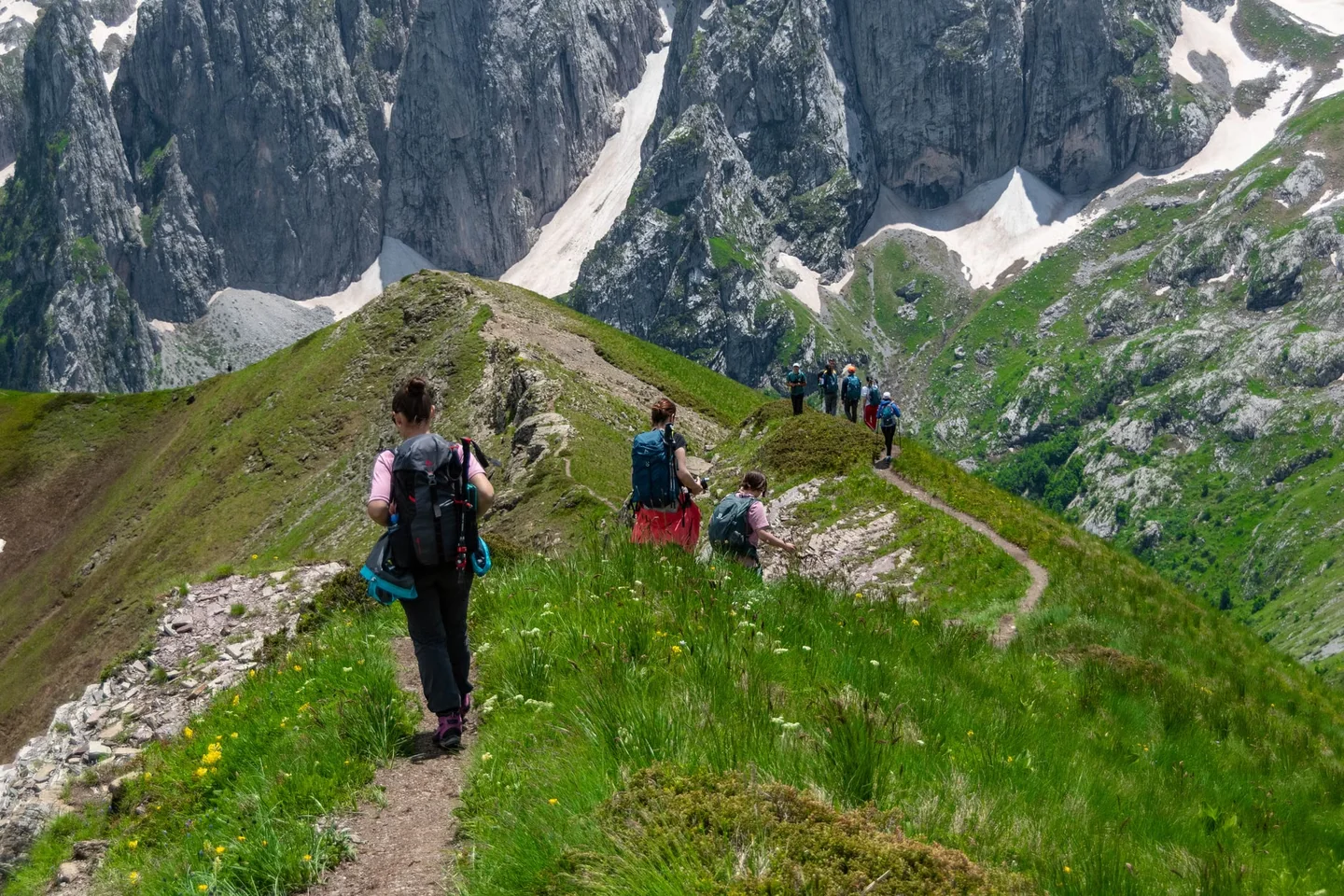
The third edition of the Castellbisbal-Montserrat crossing arrives with the same essence as always and a now recognizable format: an endurance walk, non-competitive, linking Castellbisbal Renfe station with the Monastery of Montserrat along mountain paths. The event is confirmed for Sunday, September 27, 2026, with the start scheduled for 08:00, and it is part of a calendar in which hiking and long walks regain prominence as a sporting, social, and territorial experience.
The proposal stems from a simple yet demanding idea: to keep moving on foot for hours, manage your effort, and reach a finish that feels significant both because of the accumulated exertion and because of the image of the sanctuary at the foot of the mountain. In this edition, the organizers maintain the endurance itinerary format, with a route of about 32.7 kilometers, a positive elevation gain of 1,513 meters, and an accumulated descent of 801 meters, figures that place the event among long marches and endurance mountain routes.
A crossing that gains meaning through its own route
Castellbisbal and Montserrat are not connected only by a line on the map, but by a sequence of changing landscapes that turn the walk into something more than a simple march. Its appeal lies not only in the distance, but in the way the route links urban stretches, mid-mountain paths, trails, and the final approach to the Montserrat massif. That combination explains why these walks have a loyal following: they demand consistency, but they also reward participants with a very clear reading of the territory.
The start from Castellbisbal Renfe station is no small detail. It places the starting point in an accessible location symbolically connected to everyday mobility, as if the route began in the routine of an ordinary day and gradually opened, meter by meter, toward a broader horizon. The arrival at the Monastery of Montserrat adds the visual and emotional counterpoint that has made this destination famous for decades: the silhouette of the mountain, the verticality of the spires, and the end of the effort in a place deeply recognized by hikers and walkers.
The walk is classified as a non-competitive activity, but that does not make it any less sport-oriented. On the contrary: it shifts the focus from the stopwatch to the experience of completing the route within the expected time, in this case with the usual margin of endurance walks. This approach appeals to those who understand effort as a way of measuring their own physical management, not as a race against other participants.
Confirmed details for the 2026 edition
The available practical information makes it possible to reconstruct a fairly accurate picture of the event. The 2026 edition is listed as the third Castellbisbal-Montserrat edition and keeps the organization of Club Muntanyenc l’Hospitalet, the same collective drive that has given continuity to this family of walks. The main reference is the day of September 27, 2026, with logistics concentrated in the morning and a final destination widely known to any hiking enthusiast in Catalonia.
The elevation data help explain the route profile. An accumulated climb of 1,513 meters requires pacing, while the 801 meters of descent are a reminder that leg management does not end with the climbs. In events of this kind, wear and tear is measured not only by the steepest slope, but by the repetition of small changes in pace, the accumulation of hours, and the need to maintain an efficient stride throughout the day.
It is also worth noting that the walk is presented as an activity open to anyone willing to take on the challenge, without the framework of a classic competition or a ranking component. This approach places it within a deeply rooted Catalan hiking tradition: long walks as a test of personal endurance, with refreshment points, time controls, and logistical support, but without a podium logic.
Schedule, start, and finish: what defines the day
The start is set for 08:00 from Castellbisbal, a schedule that gets the day going from early on and allows the central section to be tackled in good light. The decision to start in the morning fits the character of the event and the need to distribute effort more effectively. On routes of this kind, starting early is not just an organizational matter: it is a key element for walking with room to spare, controlling hydration, and avoiding trouble when the body begins to feel the passing hours.
The finish is located at the Monastery of Montserrat, which once again serves as an emotional and topographical reference point. The finish is not just an administrative endpoint; it is a place with its own weight, visible from much of the final stretch and associated with the feeling of having crossed several layers of landscape. In endurance walks, that last stretch often carries special significance, because the sight of the destination does not always mean ease: it often means more effort, more elevation change, and fatigue already settled into the legs.
The maximum times and refreshment points are part of the event’s basic structure, although the reference information is more precise about the number of support points than the exact time limit. In any case, it does mention a network of 7 liquid refreshment points and 7 solid refreshment points, a figure that gives an idea of the logistical attention required by a long crossing of nearly 33 kilometers and a substantial amount of elevation gain.
Price, registration, and participant profile
Registration is listed at prices starting from 25 euros for federated participants and 30 euros for non-federated participants, according to the FEEC reference for the previous edition, a useful figure for placing the entry cost in a moderate range within endurance walks. In the information consulted for 2026, no confirmed variation appears, so the most reliable verifiable figure remains that reference range. A 5-euro discount until August 31 is also mentioned in the previous call, a common incentive in events of this kind to manage demand in advance.
The participant profile is broad, but with an obvious implicit requirement: arriving with a minimum base of physical fitness and a mindset prepared for several hours of walking. You do not need to be an expert hiker to understand the event, but you should accept that the route is neither a short outing nor an urban stroll. The distance, elevation gain, and time on the move turn the day into an accessible endurance challenge, yes, but not a trivial one.
That balance explains part of its appeal. The walk does not require advanced mountain technique or complex navigation skills, but it does require pacing discipline, attention to the terrain, and a sensible relationship with effort. In a context where many sporting activities are sold for their immediacy, this proposal preserves something older and more valuable: the idea that moving forward costs effort, and precisely for that reason, it matters.
The route and its mountain logic
The itinerary links Castellbisbal with Montserrat along mountain paths that, according to the reference information, pass through transition areas between the Vallès surroundings and the approach to the massif. In previous versions of the route, points such as Ullastrell, Olesa de Montserrat, and Collbató have been mentioned, along with sectors near the Coves del Salnitre and the final access to the monastery. There is no need to reduce the route to a list of names to understand its structure: it is a march that gains elevation and character as it gets closer to the destination.
In this kind of crossing, the terrain matters as much as the distance. A well-marked trail may seem benign at first and become a dull strain once the legs have already spent hours working. That is why the value of the organization also lies in signage, control of refreshment points, and the provision of support points. The walk is not improvised; it rests on an invisible choreography that allows each participant to focus on walking, not on solving logistical problems on the fly.
The arrival at Montserrat acts as a kind of natural crowning of the route. It is not a neutral finish: the mountain is recognizable before you step on it, sensed from far away, and ultimately imposes a visually powerful ending. For anyone completing the route, the final stretch usually carries a special weight, as if the landscape were narrowing while the finish grew at the same time as the available energy shrinks.
Refreshment points, safety, and the small engineering of effort
The 7 liquid refreshment points and 7 solid refreshment points are more than a logistical detail: they are a sign of how an endurance walk is designed to remain achievable. On long routes, eating and drinking on time is not an extra, but part of the basic strategy to keep up the pace, avoid energy crashes, and arrive steadily at the finish. The organization of support points also helps break the day into smaller, more manageable mental segments.
The safety margin also appears in other details, such as the presence of a maximum time and the planned return by coach for those who finish the walk. That service, mentioned in previous editions, provides a practical solution to a common need in events of this kind: how to return to the starting point once the crossing is over. Return logistics rarely make headlines, but they are part of the participant’s real experience just as much as the start.
In events of this profile, the body calls for regularity. The first kilometers can lead to a classic mistake: starting too fast because the initial feeling is easy and the group is still packed together. The mountain, however, later takes its toll, and it does so through accumulation. That is why these walks teach, almost without intending to, a useful lesson for any endurance athlete: managing effort is as important as brute strength.
A walk that speaks to running and hiking alike
Although it is not a race, this crossing shares many of the logics of endurance running: the importance of maintaining a steady pace, eating while moving, mentally managing time, and the ability to sustain a long objective without losing composure in the early sections. Anyone who runs or trains for endurance events will recognize that same discipline, only translated into walking pace and a calmer relationship with the landscape.
At the same time, the walk is rooted in a clearly hiking tradition. It does not seek speed or records, but to complete a mountain route with enough time to observe the terrain, coexist with the effort, and understand the path as a collective experience, even though each participant moves at their own pace. That combination places it in a very interesting middle ground between sport and mountain culture.
The appeal of this type of event also has to do with its territorial character. Long walks connect municipalities, green corridors, historic paths, and emblematic destinations with a naturalness that few sporting proposals achieve. In the case of Castellbisbal-Montserrat, the route does not just lead to a famous monastery; it also traces a path along which layers of real use of the territory are visible, from daily transit to hiking tradition.
What its third edition brings to the mountain calendar
The third edition consolidates a format that has already found its place. It is not designed as a fleeting novelty, but as a walk capable of settling into the calendar with its own identity. Its value lies in coherence: a clear start, a long route, a recognizable finish, reasonable logistical support, and a participant profile that knows what they are signing up for. That clarity is a virtue in a landscape saturated with events that sometimes promise more than they ultimately deliver.
The broader context also matters: the recovery of endurance activities after years of disruptions and organizational adjustments in popular sport. The fact that a proposal like this continues to grow and remain alive shows that there is still demand for less frenetic experiences, more closely tied to the terrain and to long-duration effort. The walk does not compete with the landscape; it uses it as an essential part of its identity.
In that sense, the 2026 edition feels more like confirmation than a debut. It confirms that there is room for endurance events that do not need great embellishments, only a well-thought-out route, a powerful destination, and logistics capable of supporting the effort of dozens or hundreds of people during a long morning. Montserrat, in the end, still has a narrative force that few finishes can match.
An appointment that measures endurance at human pace
The 3rd Castellbisbal-Montserrat Walk neatly sums up the appeal of major popular marches: measured effort, recognizable scenery, and a finish full of meaning. There is no stopwatch spectacle or unnecessary drama, just a demanding route that forces you to keep moving with a clear head. Its strength lies precisely there, in the sobriety of the proposal and the power of the final destination.
With a confirmed date, morning start, long route, and serious elevation gain, the 2026 event fits into that kind of event that does not need to invent its own epic. It is enough to get people walking from a specific point and let the terrain do the rest. Castellbisbal and Montserrat, joined by mountain paths, offer a simple sports story to tell and hard to forget: getting far without ever stopping walking.



How to prevent thigh chafing: causes and real solutions

Women’s running windbreakers: seven jackets and how to choose

Do more workouts get rid of soreness? A guide for runners

Jaén Half Marathon 2026: Record 3,800 Runners Registered

Men’s short running tights: how to choose the right pair

World Triathlon confirms data breach involving medical data

Izan Edo targets podium at Miyazaki World Cup

María Pérez ranks ninth in World Athletics’ 2026 top ten

Dos Santos, Duplantis and Sawe: World Athlete of the Year finalists

San Silvestre Vallecana 2026: 42,000 places, prices and start times

 Races4 months ago
Valencia Half Marathon 2027: date and registration

 Races4 months ago
Valencia Marathon 2026: entry, ballot and course

 Reviews and Comparisons4 months ago
Asics Gel-Roadmiles 3 for men: review and current price

 Reviews and Comparisons4 months ago
Asics Gel Sonoma 8 Gore-Tex: complete analysis for trail and rain

 Sneakers4 months ago
Saucony Endorphin Pro 4: full review and verdict

 News5 months ago
Strava API 2026: what changes for clubs, challenges and runner apps?

 Reviews and Comparisons5 months ago
Nike Alphafly 3: opinions, sensations, and real key points

 Reviews and Comparisons4 months ago
Under Armour running shoes review 2025-2026: models and key features

 Sports Equipment4 months ago
Shoe sizes in cm: a clear guide to getting the right fit for your footwear

 Sneakers3 months ago
Skechers GO RUN Consistent 2.0 analysis: comfort and limits

 News5 months ago
Valencia Marathon 2026 route: key tips to train and run better

 Sneakers4 months ago
Adidas Adizero Boston 13 for men: review and verdict