Races
L’Hospitalet – Montserrat Walk 2026: date, start and route
The classic crossing returns by day, with two routes, early schedules, and arrival at the Monestir de Montserrat.

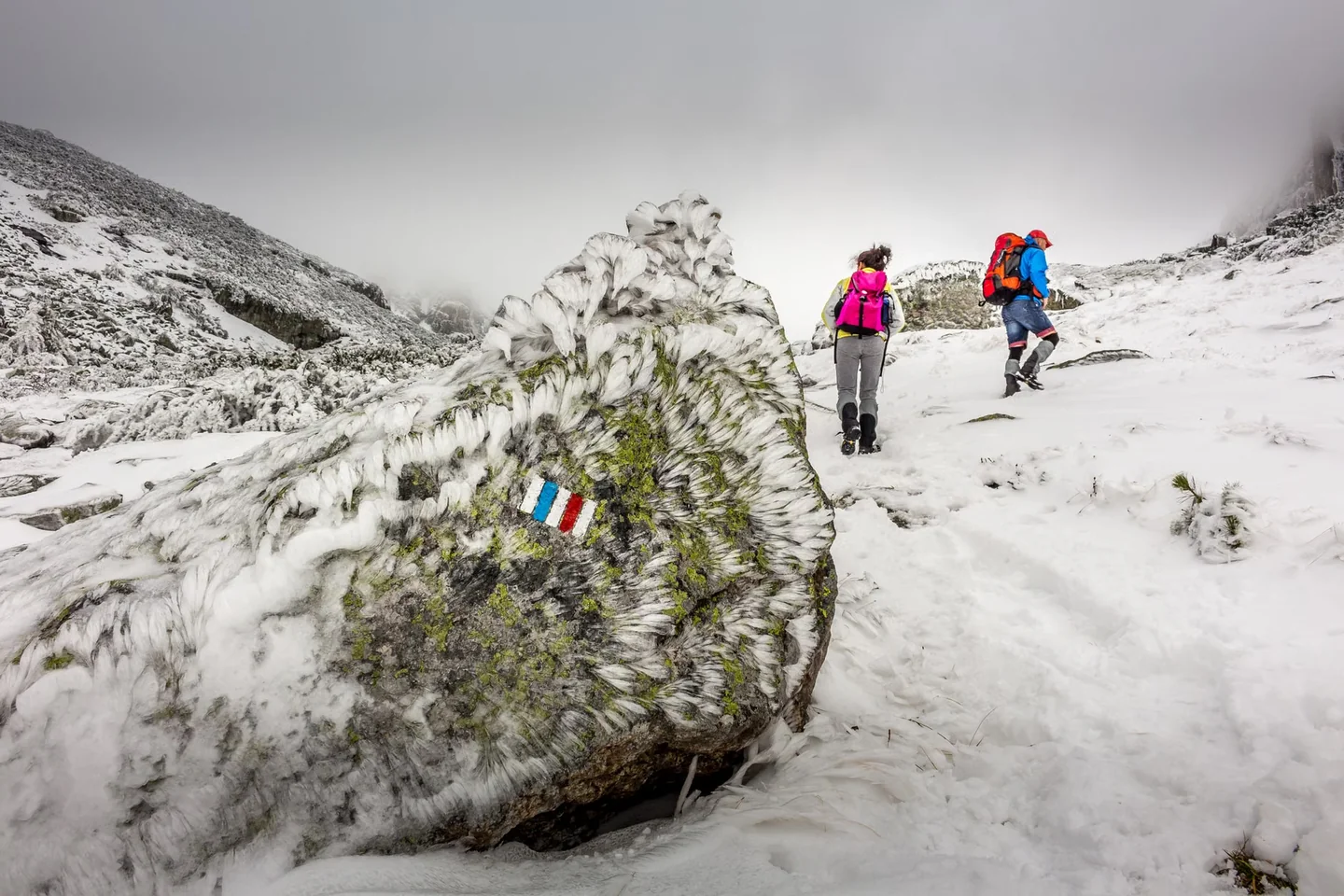
The 20th L’Hospitalet – Montserrat Walk marks the return of an endurance trek that blends distance, orientation, and landscape into a single day. The event is set for Sunday, September 27, 2026, starting at 05:30 from L’Hospitalet de Llobregat and finishing at the Monastery of Montserrat after a long, demanding route entirely on foot.
This is a non-competitive event, but by no means an easy one: the main course covers 55.5 kilometers and accumulates 1,573 meters of positive elevation gain and 858 meters of negative elevation loss, with a maximum time of 14.5 hours. The organizers also keep a shorter version from Castellbisbal, designed for those looking for an equally serious challenge, though over a more manageable distance.
A trek that returns to its place on the calendar
The walk between L’Hospitalet and Montserrat has something of a civic ritual about it. It needs no bib number or stopwatch to command respect: the distance speaks for itself, and so does the destination. In its twentieth edition, the march regains the continuity of an event that was interrupted for years and, on its return, offered a clearer reading of what it means for Catalan hiking: a long-distance route that connects city, plain, and mountain in a single physical narrative.
The most visible change is the daytime format. The event is no longer conceived as a nighttime start, but as a trek in daylight, a decision that completely transforms the experience. The surroundings cease to be a strip of shadows and headlamps and become a legible route, with terrain profiles, farmhouses, tracks, and trails that are easier to distinguish at each stage. That shift improves logistics and also the sporting understanding of the effort.
The 2026 edition retains the character of individual endurance on foot, without a competitive component, but with real demands. In this kind of march, the challenge is not to overtake anyone, but to keep going for hours, manage changes of pace, and reach the end with enough energy. Montserrat then appears not only as a destination, but as a symbol: the point where the fatigue of an entire long morning, sometimes an entire day, comes together.
The essential details of the event
The most important reference for any participant is the schedule. The main start is planned for 05:30 from L’Hospitalet de Llobregat, with arrival at the Monastery of Montserrat. The race, or rather the trek, allows up to 14.5 hours to complete the long route, a wide window that makes it possible to absorb stops, refreshment points, and different paces without losing sight of the final limit.
The main route is 55.5 kilometers long and has a total elevation change of 2,431 meters, split between 1,573 meters of ascent and 858 meters of descent. That figure sums up the nature of the route well: this is neither a flat walk nor a leisurely outing, but a course that becomes progressively more demanding as it leaves the urban area behind and enters increasingly hilly terrain.
The organizers have also set a minimum age of 14 years and предусмотрed the usual services for this kind of long event, with liquid and solid refreshment stations, a commemorative T-shirt, accident insurance for non-licensed participants, and a certificate showing the time taken. These are practical elements, yes, but they are also part of the way a walk of this scale becomes a complete experience, not just a journey from point A to point B.
The route between the city and the mountain
The main route traces a very recognizable transition in the Barcelona metropolitan corridor. It starts in L’Hospitalet and passes through municipalities such as Cornellà, Sant Boi, Santa Coloma de Cervelló, Sant Vicenç dels Horts, Pallejà, Sant Andreu de la Barca, Castellbisbal, Ullastrell, Abrera, Olesa de Montserrat, Esparreguera, and Collbató before reaching the abbey. The march map acts almost like an X-ray of the territory: urban areas, riverbanks, connecting paths, agricultural tracks, and finally the mountain as the closing climb.
This kind of route forces participants to pace themselves wisely. The first kilometers can be deceptive, because the body has not yet fully switched into long-distance mode and the morning moves forward with a calm that can feel forgiving. But the accumulation tells. In a walk of this kind, movement economy matters as much as raw strength: it is wise to walk at a steady cadence, drink before you are thirsty, and eat before you run out of fuel.
Montserrat does not appear all at once. It first hints at itself, then outlines itself, and finally imposes itself with its stone silhouette. That visual progression explains much of the event’s appeal. The destination is not just a point on a map; it is a presence that accompanies the walker during the final stretch, when the legs begin to ask for mercy and the landscape changes character with every meter gained.
The shorter route from Castellbisbal also requires skill
The organizers maintain a second option of 33.7 kilometers starting in Castellbisbal at 08:00, with a limit of 12 hours to complete it. Although shorter, it is neither a lesser walk nor merely an appetizer for the main event. It shares the same destination and part of the same spirit, with the difference that it concentrates the challenge into fewer hours and reduces the overall strain on the body.
Its usefulness is clear: it opens the door to a wider range of participants without diluting the endurance nature of the day. Those who choose this format are not entering a light version of the challenge, but a still-serious route, where prior preparation remains decisive. Fewer kilometers do not mean less attention to hydration, nutrition, or effort control.
The coexistence of both distances helps read the 2026 edition in broader terms. The walk not only revives a tradition, but adapts it to different rhythms and levels of experience. That combination explains better than any slogan why the event continues to draw interest: it respects the harshness of the route, but does not close the door to those who need a shorter option to reach the same finish.
Registration, price, and included services
Registration is open until September 14, and the organizers are offering a 5-euro discount for those who complete registration before August 31. Prices range from 20 to 40 euros, depending on the chosen distance and whether the participant is licensed or a club member. The reference information also lists a price of 30 euros for licensed participants and 35 euros for non-licensed participants in the main event, a range that fits the logic of this kind of mountain event.
The price covers several services that carry real weight on such a long day. They are not decorative extras, but essential support: liquid and solid refreshment stations, a T-shirt, accident insurance for those who are not licensed, a diploma, and the option of returning by coach from Montserrat. That last detail, the organized return, matters almost as much as the early start, because a march of this kind often ends with the body in a different state, and the return transport solves an obvious logistical problem.
It is also stated that access is open to anyone willing to take on the challenge, always within the conditions set by the organizers. In an endurance walk, the value of registration is not measured only by its price, but by what it bundles together: safety, checkpoints, time control, and a minimal structure that gives meaning to the effort. Without that, the trek would lose the consistency that has made it recognizable.
What kind of effort such a march requires
The 20th L’Hospitalet – Montserrat Walk sits in the territory where hiking stops being a Sunday stroll and enters the field of sustained endurance. The elevation data sums up the challenge, but does not exhaust it. What truly weighs is the duration: more than fifty kilometers in motion, with accumulated climbs and descents, and the body forced to manage fuel and concentration for hours.
Physical preparation matters, but mental preparation matters just as much, if not more. Those who have completed similar marches know this well. Fatigue does not arrive all at once; it seeps in like damp through a wall. First it shows up in the sole of the foot, then in the hips, later in the shoulders, until it becomes an inner conversation that demands one step after another. At that point, pace matters more than speed.
That is why long treks are remembered less for the final time than for the sequence of sensations: dawn, the first flat stretches, the rising heat, the sound of soles on the track, the silence of the trails, and, at the end, Montserrat’s shape cut against the horizon. Each section leaves a different mark, and the whole becomes more of a bodily story than a sporting result.
Gear and habits that make the difference on the road
Experience from long-distance events points to simple, well-chosen gear with no excess. A light backpack, enough water to avoid cutting things too close between refreshment points, some energy food, a layer in case the weather changes, and already-broken-in footwear are part of the reasonable minimum. On routes like this, the mistake usually does not come from lack of heroics, but from carrying useless weight or wearing brand-new gear on the day itself.
Shoes or boots must be familiar. The brand matters less than the prior relationship with your feet. Chafing is unforgiving when the body has already accumulated hours, and a badly placed seam can ruin an entire day. The same applies to breathable technical clothing, which becomes more valuable as the effort raises body temperature and sweat stops being a detail and becomes a matter of comfort and prevention.
The liquid and solid refreshment stations provided by the organizers help distribute the load better, but they do not replace personal habits. Drinking regularly, eating small amounts before fatigue sets in, and not pushing too hard in the first kilometers are decisions that translate into fresher legs later on. In a mountain trek with many kilometers, caution is a form of sporting intelligence, not conservatism.
Montserrat as the finish and as the backdrop
The Monastery of Montserrat is not just the finish line. It is also the great backdrop that gives the route its meaning. Its profile, visible on the final approach, acts as a nearly theatrical visual ending, a wall of rock and tradition rising before the walker after hours of progress. Few marches have such a recognizable and territorially meaningful culmination.
Arriving at Montserrat changes the mood. After so many hours of effort, the body still asks for a break, but the mind often anticipates a mixture of relief and satisfaction that is hard to explain precisely. There is the feeling of having crossed a long, changing corridor, of having left the city without losing your bearings, and of having reached a place that seems to be waiting at the end of the day as a silent reward.
In journalistic terms, that is perhaps the key to the walk: it combines concrete organization, clear schedules, and precise figures with a symbolic component that cannot be reduced to statistics. Distance matters, elevation matters, the time limit matters. But so does the story that links L’Hospitalet with Montserrat through mountain paths, joining asphalt, track, and trail in a single act of shared endurance.
A trek that tests legs, mind, and memory
The 20th edition arrives with the maturity of an event that knows its own identity well. It does not try to disguise itself as something else: it is a long, early, demanding walk open to those who accept the commitment to finish it with respect for the terrain and for their own strength. That honesty, in times of increasingly flashy formats, is one of its clearest virtues.
The return of the event in 2026 also reinforces a broader idea within Catalan hiking: endurance events still have a place when they retain usefulness, context, and meaning. There is no artifice here. There is a city that sets itself in motion before dawn, a chain of municipalities that accompanies the progress, and a mountain that waits at the end with the same solidity as always. That, in a long-distance walk, is worth as much as the 55.5-kilometer mark.
The image left by this edition is that of a sober, well-defined challenge with its own narrative. Those who reach Montserrat will not have completed just a route, but a long transition between the initial asphalt and the final stone, between the darkness of the early start and the light of day, between fatigue and arrival. And that is precisely the kind of trek that stays in the memory.
You may also like: 3rd Castellbisbal-Montserrat Walk: data and route 2026.



How to prevent thigh chafing: causes and real solutions

Women’s running windbreakers: seven jackets and how to choose

Do more workouts get rid of soreness? A guide for runners

Jaén Half Marathon 2026: Record 3,800 Runners Registered

Men’s short running tights: how to choose the right pair

World Triathlon confirms data breach involving medical data

Izan Edo targets podium at Miyazaki World Cup

María Pérez ranks ninth in World Athletics’ 2026 top ten

Dos Santos, Duplantis and Sawe: World Athlete of the Year finalists

San Silvestre Vallecana 2026: 42,000 places, prices and start times

 Races4 months ago
Valencia Half Marathon 2027: date and registration

 Reviews and Comparisons4 months ago
Asics Gel-Roadmiles 3 for men: review and current price

 Races4 months ago
Valencia Marathon 2026: entry, ballot and course

 Reviews and Comparisons4 months ago
Asics Gel Sonoma 8 Gore-Tex: complete analysis for trail and rain

 Sneakers4 months ago
Saucony Endorphin Pro 4: full review and verdict

 News5 months ago
Strava API 2026: what changes for clubs, challenges and runner apps?

 Reviews and Comparisons5 months ago
Nike Alphafly 3: opinions, sensations, and real key points

 Reviews and Comparisons4 months ago
Under Armour running shoes review 2025-2026: models and key features

 Sports Equipment4 months ago
Shoe sizes in cm: a clear guide to getting the right fit for your footwear

 Sneakers3 months ago
Skechers GO RUN Consistent 2.0 analysis: comfort and limits

 News5 months ago
Valencia Marathon 2026 route: key tips to train and run better

 Sneakers4 months ago
Adidas Adizero Boston 13 for men: review and verdict