Races
5 km races Madrid 2025: schedule, dates, and key details
Dates, context and key points of the 5-kilometer races in Madrid during 2025.

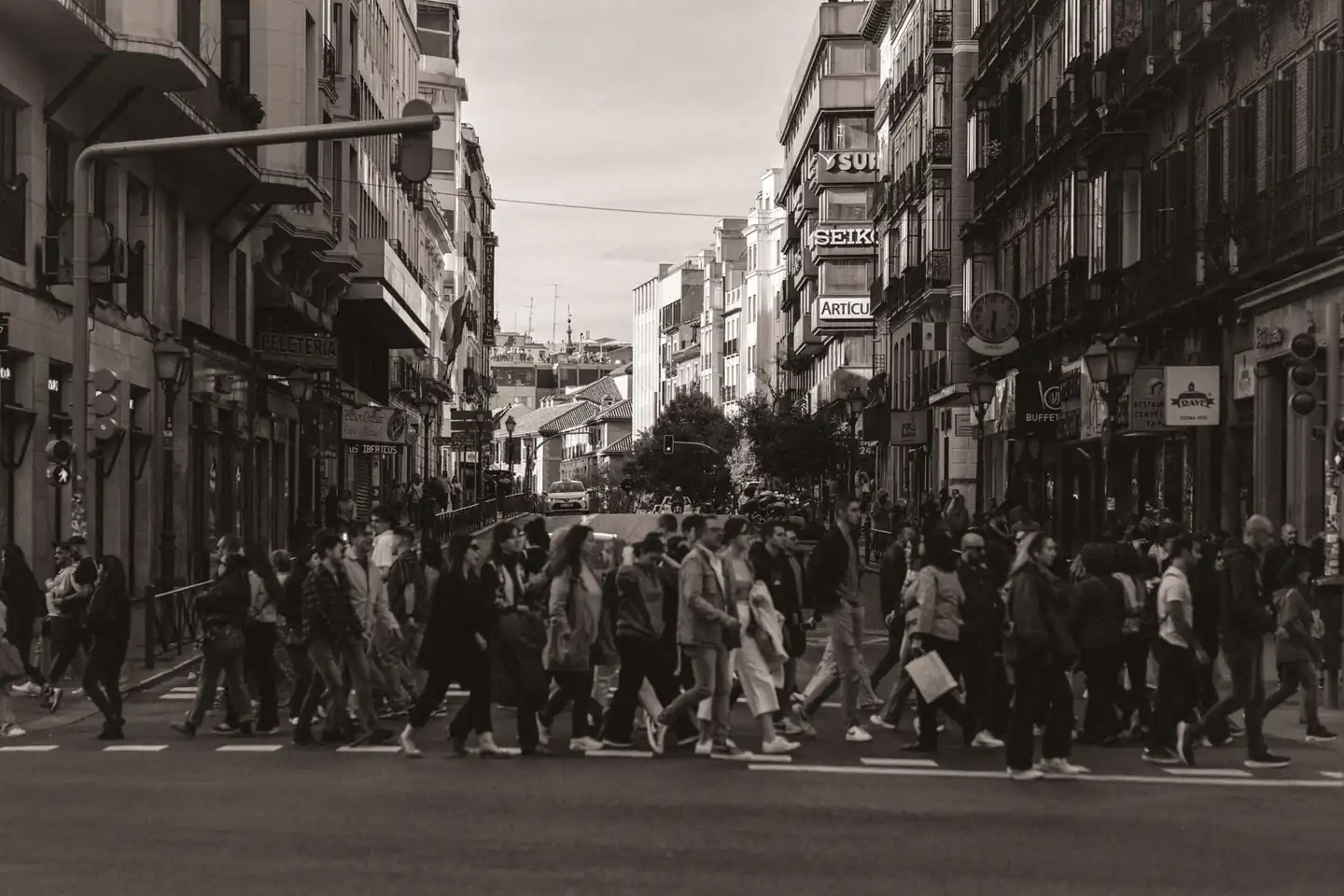
Madrid maintained a very active 2025 schedule for the 5 kilometers, a short distance in appearance, but decisive for measuring popularity, pace, and drawing power. In a city where major mass events, charity races, and neighborhood contests coexist, the 5K serves as the cleanest gateway into the runner calendar: it requires less logistics than a 10K, but it preserves the competitive pulse and the flavor of the street.
Spring marked the most visible stretch of the year, with May 11 as the standout date for the 2025 Madrid Women’s Race, an event with enormous media and social traction in the capital. Around it, the Madrid calendar kept adding urban races, morning-start events, and routes designed for runners looking for speed without losing the city atmosphere. The result was a map of races where the 5K remained a highly sought-after distance for its balance between accessibility and challenge.
A short format that continues to gain ground in the capital
The 5K has ceased to be a secondary distance and has become one of the most useful formats in the Madrid calendar. Its success has a simple explanation: it fits beginner runners, those returning after a break, and athletes who want to work on speed in a real-world setting. In a large and competitive city like Madrid, it also makes it possible to organize events with less logistical impact and very diverse participation.
The five-kilometer race has something of an instant snapshot. It leaves no room to hide. In just over twenty minutes for the fastest runners, or a little longer for those just starting out, it shows how the body responds to sustained effort, how one manages the start, and how much the mind weighs when the clock is pressing. That is why the 5K tends to attract very different profiles: those chasing a personal best, those aiming to finish with good feelings, and those who simply want to take part in a collective day with a street atmosphere.
Madrid, with its mix of wide avenues and compact urban routes, is especially well suited to this type of race. The capital offers settings where the course becomes fast, the crowds cheer along, and the presence of other participants helps maintain pace. It is no coincidence that many popular events opt for short distances or formats that allow runners to get in and out of the effort with a moderate impact on daily life.
The 2025 events that drew the most attention
The 2025 Madrid Women’s Race became one of the year’s benchmarks, taking place on May 11. Although its identity goes far beyond sporting performance, its weight within the city calendar placed it among the season’s most closely followed events. This kind of event does not only bring runners together; it also mobilizes companions, volunteers, the social fabric, and a huge public conversation around urban running.
Alongside that major event, May consolidated itself as an especially busy month for Madrid runners. The public calendar for 2025 also marked May 2 as Community Day, a fact that helps explain why the month saw so much movement in the city and its metropolitan area. Public holidays and long weekends usually boost race scheduling, because they make it possible to set starts at convenient times and bring together more participants without straining work schedules as much.
The logic of the calendar matters almost as much as the course itself. A 5K in Madrid is not understood only by its distance; it is also understood by its date, the weather, and the city’s availability. In May, daylight lasts longer, temperatures are usually kinder than in the middle of summer, and coexistence with other urban activities is easier. All of that favors short-distance races having especially intense life at that time of year.
Why the 5K works so well for the urban runner
The appeal of the 5K lies in its dual nature as both challenge and accessibility. It does not require the commitment of a half marathon or the prolonged preparation of a longer distance, but it is not a minor distance in physiological terms either. To run it well, you need to know how to sustain a high pace, pace the start, and accept that every kilometer counts. That mix makes it especially useful for those who train with little time and want a clear fitness benchmark.
In Madrid, moreover, the 5K often fits a very specific reality: tight schedules, long commutes, and runners looking for full experiences without dedicating the whole morning or afternoon to competition. The short race makes it possible to add participation without the event becoming a complex undertaking. And for organizers, it offers a very flexible sporting product, capable of adding visibility, sponsorship, and family participation in a single day.
There is also a symbolic value that should not be overlooked. Running five kilometers in the city is a way of measuring the sporting health of the environment. If a race draws a large crowd, the message is clear: there is a base, there is enthusiasm, and running remains a socially powerful activity. Madrid has shown that capacity in different formats, and 2025 reaffirmed it with events that filled streets, generated images of compact starts, and strengthened interest in short distances.
The Madrid calendar and the lesson left by 2025
The 5-kilometer races in Madrid during 2025 reflected a stable trend: more interest in urban routes, greater weight for charity races, and a growing presence of events designed for broad audiences. It is not just about times or stopwatches. The 5K has also become a way to enter running culture without excessive barriers, with an affordable physical cost and an immediate reward in the form of experience.
The capital also offers a decisive particularity: its calendar does not depend solely on major marathons or classic 10Ks. There is room for neighborhood races, themed events, and events with a strong participatory component. That diversity makes the 5K work as a bridge between the occasional runner and the regular one, between the person who goes out for a jog two days a week and the one who prepares longer distances with the 5K as a speed test.
In 2025, Madrid once again showed that the city runs for many different reasons. Some people do it for time, others for health, others for social environment, and others for commitment to a cause. The short distance serves all those motivations because it does not impose a single narrative. The same 5K can be competitive for some, symbolic for others, and family-friendly for many. That breadth explains much of its permanence on the calendar.
What the start, pace, and finish reveal in a 5-kilometer race
The 5K does not forgive a messy start. Those who begin too quickly often pay for that burst in the second half; those who start too cautiously sometimes realize it is already too late to make it up. The distance requires a delicate balance, almost like a watchmaker’s, because the margin for maneuver is small. In Madrid, where many races take place in urban settings with constant visual references, that management of effort becomes even more apparent.
The finish line of a 5K gives a very clear reading of fitness level. There is not much time for complex tactics or prolonged changes in strategy. What you see is what you get: legs, breathing, suffering, and mind. That is why the format is so transparent and so useful for understanding a runner’s real level. It also explains why so many athletes use it as a checkpoint race in the middle of the season.
For the general public, that clarity is part of the appeal. A short course offers concentrated intensity and an easy-to-follow narrative. From start to finish, everything happens in a few minutes, like a tracking shot moving through avenues, roundabouts, or urban promenades until it reaches the finish. That immediacy is one of the reasons why five-kilometer races maintain such a strong presence in large cities.
Madrid as a setting: weather, traffic, and race atmosphere
The Madrid urban context shapes every start. Altitude, street width, and surface type can change the feeling of effort more than it seems. In short races, any small incline, turn, or windy stretch is felt right away. That is why the 5K in Madrid is not just about distance; it is also about the environment and how that environment interacts with the runner.
The city offers a very recognizable kind of landscape for anyone who follows Spanish running. There are wide avenues with a sense of openness, areas with large crowds, and stretches where the sound of shoes on asphalt seems to set the event’s rhythm. That atmosphere helps ensure the 5K is experienced not as a formality, but as a brief, concentrated celebration. In 2025, that mix was once again clear in the most followed races.
The atmosphere also matters because it supports those arriving with less experience. In a short race, initial nerves usually fade quickly if the organization works and the course provides clear references. Madrid has shown it can create that climate of confidence: orderly starts, nearby crowds, and a visible finish line. All of this makes many people choose this distance to debut or to return to competition after some time without a bib.
What someone really looks for when tracking 5-kilometer races in Madrid
The search for 5-kilometer races in Madrid in 2025 usually combines three needs: knowing which events took place or will take place, identifying which ones are suitable for first-timers, and finding which ones offer a fast course or a more mass-participation experience. That combination requires careful attention to the calendar, because not all events follow the same logic. Some are purely popular races; others have a marked charitable profile; others are born with a clear club or calendar-focused identity.
The runner interested in this distance also tends to value the exact date, the type of course, and the level of congestion. A 5K with lots of participants can be ideal for the atmosphere, but less comfortable for those seeking a clean start and steady pace. A smaller event can offer the opposite: less noise, more space, and a more controlled experience. Madrid brings together both possibilities, and that variety is a competitive advantage over less dense settings.
Underlying it all is utility. A 5K in the capital serves to assess fitness, enter the calendar, support a cause, or experience running as a social event. In 2025, the city made it clear that this versatility remains intact. And while the rest of the year reserved space for other distances, the short format continued to be a central piece of the Madrid running ecosystem.
A closing note that leaves the door open for the next calendar
The five-kilometer races in Madrid in 2025 confirmed that the short distance has plenty of room to grow. Through its presence, accessibility, and ability to bring together very different profiles, the 5K remains one of the most effective formats in urban running. Its strength lies not in the epic nature of long distances, but in precision: little time, plenty of pace, and an immediate response from the public.
Madrid provided an especially fertile setting for this in 2025, with key dates like May 11 and a spring calendar that encouraged participation. The result was a season in which the 5K not only filled a gap, but also helped explain the health of running in the capital. Where there are well-established short races, there is usually a living community behind them.
And that is the real news: the Madrid 5K is not just about adding bib numbers. It sums up a way of running the city, measuring the collective pulse, and understanding that sometimes five kilometers are enough to tell almost everything important about the runner year.



How to prevent thigh chafing: causes and real solutions

Women’s running windbreakers: seven jackets and how to choose

Do more workouts get rid of soreness? A guide for runners

Jaén Half Marathon 2026: Record 3,800 Runners Registered

Men’s short running tights: how to choose the right pair

World Triathlon confirms data breach involving medical data

Izan Edo targets podium at Miyazaki World Cup

María Pérez ranks ninth in World Athletics’ 2026 top ten

Dos Santos, Duplantis and Sawe: World Athlete of the Year finalists

San Silvestre Vallecana 2026: 42,000 places, prices and start times

 Races3 months ago
Valencia Half Marathon 2027: date and registration

 Races3 months ago
Valencia Marathon 2026: entry, ballot and course

 Reviews and Comparisons4 months ago
Asics Gel-Roadmiles 3 for men: review and current price

 Reviews and Comparisons4 months ago
Asics Gel Sonoma 8 Gore-Tex: complete analysis for trail and rain

 Sneakers3 months ago
Saucony Endorphin Pro 4: full review and verdict

 News5 months ago
Strava API 2026: what changes for clubs, challenges and runner apps?

 Reviews and Comparisons5 months ago
Nike Alphafly 3: opinions, sensations, and real key points

 Reviews and Comparisons4 months ago
Under Armour running shoes review 2025-2026: models and key features

 Sports Equipment4 months ago
Shoe sizes in cm: a clear guide to getting the right fit for your footwear

 Sneakers3 months ago
Skechers GO RUN Consistent 2.0 analysis: comfort and limits

 News5 months ago
Valencia Marathon 2026 route: key tips to train and run better

 Sneakers4 months ago
Adidas Adizero Boston 13 for men: review and verdict