Races
Air Force Marathon: route, distances, and key aspects of the race
The Dayton account combines military history, several distances, and an ending at the air force museum.

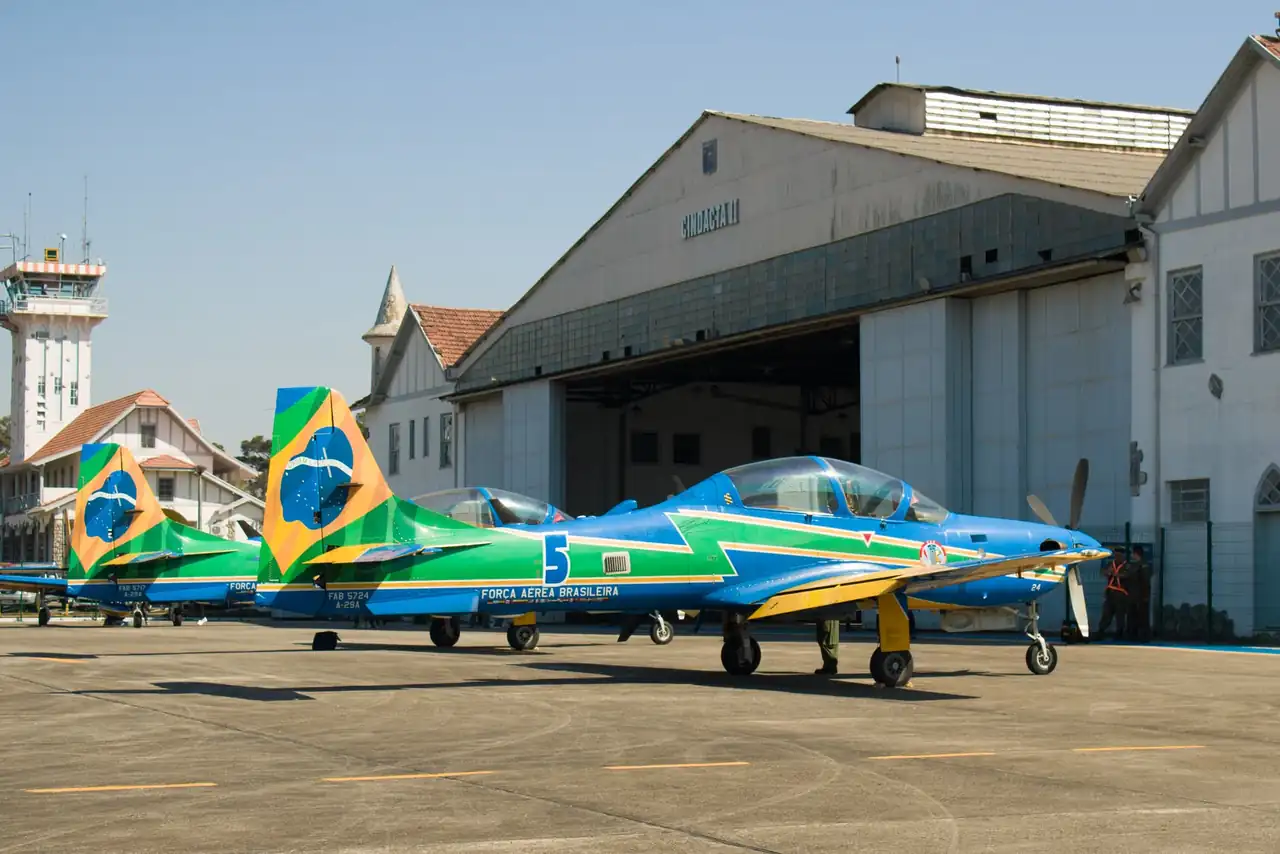
The Air Force Marathon has become one of the most distinctive events on the American calendar for a simple reason: it not only tests legs, it also connects runners with the military and aeronautical history of the United States. Its start and surroundings turn the asphalt into a kind of corridor of memory, with Wright-Patterson Air Force Base and the National Museum of the United States Air Force as backdrop settings.
Since its creation in 1997 to commemorate the 50th anniversary of the Air Force, the Dayton, Ohio, event has grown into a major running weekend with marathon, half marathon, 10K and 5K, along with family-oriented offerings and combined challenges. The main event also has the added appeal of being a Boston qualifier, a detail that increases its competitive interest without diminishing its identity as an event with a personality of its own.
A race born to celebrate a military milestone and turned into a tradition
The story of the Air Force Marathon begins in a very specific context: the celebration of the 50th anniversary of the United States Air Force. That idea from 1997 eventually took shape as an annual race that, over time, has gone from a commemorative act to a major endurance event with thousands of participants and notable importance in the local community. In its early editions it brought together around 2,750 entrants; years later, the number had already comfortably surpassed tens of thousands of runners and spectators.
That growth has not diluted its personality. The race retains an institutional, almost ceremonial feel, yet without losing the popular energy that a large-format event requires. The result is an uncommon mix: a serious, well-organized competition with sporting ambition, but also a celebration open to different types of runners. From the athlete chasing a personal best to the enthusiast who wants to complete their first 10K, everyone finds a place in an event that unfolds like a full set of wings of activities.
The third Saturday in September usually sets the pace for this race. That date is not just a calendar note; it helps explain the kind of atmosphere surrounding the event. Late summer in Ohio usually offers kinder weather than the peak of summer, although in any September race, heat, humidity, or a cool morning can change the script. That variability forces runners to read the day carefully, as pilots do before takeoff.
The course, among hangars, symbols and a museum finish
The most recognizable image of the Air Force Marathon is its route. The course crosses historic areas of Wright-Patterson and Fairborn, with stretches near the Air Force Institute of Technology, the headquarters of Air Force Materiel Command, the Wright-Patterson flight line, and the Wright Brothers Memorial Monument. It is not a decorative circuit or a mere succession of streets; the route is grounded in spaces that tell a story of innovation, aviation, and service.
The finish at the National Museum of the United States Air Force is perhaps the detail that most defines the race. Arriving there means finishing among aircraft, memory, and displays of lasting symbolic weight. For a marathon, that setting matters as much as the terrain. It is not just crossing a finish line: it is completing 42.2 kilometers in a place where aerial epic becomes tangible. Few races turn the finish into an experience so closely tied to the cultural content of the surroundings.
The full marathon has also been designed as a demanding endurance event, suitable for those pursuing serious times. Its certification as a Boston Qualifier adds competitive value and explains why it attracts runners with different ambitions, not necessarily tied to the military setting. Even so, the identity component remains central: here, the clock matters, but the story of the route matters almost as much. The runner does not just move forward; they enter and leave a story.
Distances for different profiles, from 5K to marathon
One of the keys to its growth is the variety of distances. The organizers have opted for a range that includes a marathon, half marathon, 10K and 5K, in addition to shorter races and children’s options in the same setting. That breadth allows the event to avoid being reserved for long-distance specialists. It becomes, rather, a running weekend where very different paces, levels, and goals coexist.
The Friday 5K works as an entry point for those who prefer a more accessible distance or want to experience the atmosphere without facing the strain of the half marathon or marathon. Meanwhile, the main day concentrates the longer starts and shapes the event’s big narrative. This staggered schedule, with races spread over two days, helps the weekend maintain a continuous rhythm, almost like a sequence of carefully coordinated takeoffs and landings.
For runners looking for a more complete experience, the Air Force Marathon has also developed combined challenges. In recent editions, combinations such as the AIM HIGH Challenge have been offered, designed to link several races and earn additional recognition. That kind of format responds to an increasingly visible trend in major races: it is no longer enough to run one distance; it is also valued to build a personal journey over the whole weekend.
Times, registration and fees: what is worth keeping in mind
The most important starts usually take place on Saturday morning. In the 2026 edition, the marathon is scheduled for 6:30 a.m., while the half marathon and 10K share a start time of 7:15 a.m.. The 5K moves to Friday evening, with a start time of 6:30 p.m., and the Tailwind Trot 1K Kids’ Run is set for 6:00 p.m. that same Friday. The marathon is also associated with the coolest morning of the weekend, which is no small thing in a long race.
In terms of registration, the organizers use a tiered pricing structure that rewards early commitment. For 2026, the published fees for the in-person race start at 85 dollars for the marathon in the earliest period and rise to 145 dollars in the final phase of the expo; the half marathon ranges from 75 to 125 dollars; the 10K from 45 to 75 dollars; and the 5K from 30 to 60 dollars. The Tailwind Trot 1K Kids’ Run ranges from 10 to 35 dollars depending on the purchase period.
There are also combined packages and virtual options, with lower prices for those unable to travel. The organization also applies military discounts for veterans, retirees, active-duty personnel, reservists, National Guard members and ROTC from all branches, with a 10-dollar discount on the marathon, half marathon, relay and the main challenge series, or a 5-dollar discount on the 10K and 5K. These are details that help explain the profile of a race closely connected to the military community and, at the same time, open to a broad civilian audience.
A race week that goes far beyond the start line
The value of the Air Force Marathon is not limited to the running itself. The event has been built as a multi-day experience, with a Health & Fitness Expo, pasta dinner, finish line festival and other activities designed to give the race its own pulse before and after the effort. This model reflects a logic now firmly established in destination running: competition is accompanied by socializing, logistics and atmosphere, so that the runner does not just come to run, but to inhabit the place.
The Gourmet Pasta Dinner offers the classic eve ritual of many major marathons, that well-known tradition in which carb loading blends with conversation, weather forecasts and bib-number nerves. The Finish Line Festival, meanwhile, extends the energy of the finish and gives social context to the effort. These are not optional decorations; they are pieces that help the event function as a complete experience, not just an hour and a half of start, mat crossing and medal.
The pre-race expo, bib pickup and weekend organization also make a difference. Recent policies have made it clear that there is no same-day bib pickup for the marathon, half marathon and 10K, except for specific options purchased in advance. That strict approach may seem demanding, but it also brings order to a high-volume event. In a race with thousands of participants, logistics are as important as the course.
What sets it apart from other military-themed marathons
There are many races linked to bases, veterans or military tributes, but few combine historical setting, distance variety and such a clearly defined identity so effectively. The Air Force Marathon does not merely use the name of a powerful institution; its course, venues and narrative are integrated into that universe. That is why the event does not feel forced. It feels coherent, and that is worth gold in a mass-participation race.
Another distinguishing feature is the relationship between tradition and renewal. The race keeps its annual basis, its third week of September, its anchor in Dayton and its museum finish, but each edition adds new nuances: featured aircraft, challenges, adapted categories, virtual options or program expansions. That ability to adjust the offering without breaking its essence explains much of its longevity. In running, as in aviation, the routes that endure are the ones that know how to read the wind.
The international appeal has also grown over the years. The organizers have recorded runners from dozens of countries, a sign that the event no longer relies solely on local or national audiences. The magnetism of the museum, the symbolism of the setting and the race’s reputation as a well-established marathon make Dayton a destination of interest for those seeking races with a story, not just miles.
What this race leaves on the American running map
The Air Force Marathon occupies a very particular place on the U.S. running map because it brings together several elements that rarely fit together so well: a historic air base, a city with a sporting tradition, a recognizable institutional narrative and a program capable of attracting both elites and recreational runners. That combination gives it depth and sets it apart from a simple calendar product.
Its evolution from an anniversary celebration to an event with thousands of participants, economic relevance for the area and a long weekend of activities shows that some races grow when they know how to preserve their original idea. Here, the idea was not just to organize a marathon; it was to tell the story of an air force through physical effort, urban space and technological memory. The result is a race that moves forward like an airplane on the runway: with noise, direction, and an identity that cannot be mistaken for anyone else’s.
That is, at bottom, its greatest journalistic and sporting value: turning each edition into an act of endurance and belonging. In an era when many races seek to stand out through marketing alone, this one does so with territory, history and a finish that carries weight. The medal matters, yes, but so does the place where it is hung and what it represents to have reached it.



How to prevent thigh chafing: causes and real solutions

Women’s running windbreakers: seven jackets and how to choose

Do more workouts get rid of soreness? A guide for runners

Jaén Half Marathon 2026: Record 3,800 Runners Registered

Men’s short running tights: how to choose the right pair

World Triathlon confirms data breach involving medical data

Izan Edo targets podium at Miyazaki World Cup

María Pérez ranks ninth in World Athletics’ 2026 top ten

Dos Santos, Duplantis and Sawe: World Athlete of the Year finalists

San Silvestre Vallecana 2026: 42,000 places, prices and start times

 Races3 months ago
Valencia Half Marathon 2027: date and registration

 Reviews and Comparisons4 months ago
Asics Gel-Roadmiles 3 for men: review and current price

 Races3 months ago
Valencia Marathon 2026: entry, ballot and course

 Reviews and Comparisons4 months ago
Asics Gel Sonoma 8 Gore-Tex: complete analysis for trail and rain

 Sneakers3 months ago
Saucony Endorphin Pro 4: full review and verdict

 News5 months ago
Strava API 2026: what changes for clubs, challenges and runner apps?

 Reviews and Comparisons5 months ago
Nike Alphafly 3: opinions, sensations, and real key points

 Reviews and Comparisons4 months ago
Under Armour running shoes review 2025-2026: models and key features

 Sports Equipment4 months ago
Shoe sizes in cm: a clear guide to getting the right fit for your footwear

 Sneakers3 months ago
Skechers GO RUN Consistent 2.0 analysis: comfort and limits

 News5 months ago
Valencia Marathon 2026 route: key tips to train and run better

 Sneakers4 months ago
Adidas Adizero Boston 13 for men: review and verdict